Logistics, Marine & Aviation · Australia (Perth)

Enable Bunbury Wind Imports and Validate Marine Inspection Readiness

Published May 26, 2026, 6:09 AM AWSTAPACFull category signal
Ask AI
Port of Bunbury in the wind

In 60 seconds

Top move

Port of Bunbury has received a large project cargo shipment for a windfarm, creating immediate staging and heavy‑haul requirements that buyers must absorb into project logistics plans

Key takeaways

  • Port of Bunbury has received a large project cargo shipment for a windfarm, creating immediate staging and heavy‑haul requirements that buyers must absorb into project logistics plans.
  • New remotely operated vehicles (ROVs) in New Zealand are changing how underwater inspections are done, which can shorten or change inspection windows affecting berth release and vessel scheduling.[2]
  • For APAC buyers handling renewable project cargo, the combined effect is more binding operational dependencies: port laydown, road permits and inspection protocols are now active levers for delivery timing and supplier performance.[2]
  • Bunbury’s nearby laydown areas and direct berth access reduce internal transload distance, but close‑in storage increases the need to confirm segregation, crane plans and road convoy windows early.
  • NZ Customs’ ROV roll‑out looks useful for faster inspections but its operational spread and impact on other APAC ports is still emerging; treat broader policy shifts as a directional signal.[2]

What changed since last run

  • New operational event: Port of Bunbury reported arrival and on‑site laydown of a large windfarm component shipment; this is an execution event not present in the prior intelligence-subscription brief.
  • Capability change: NZ Customs introduced three ROVs for underwater inspections, adding a new remote-inspection tool that could affect port inspection workflows.

Key facts

  • Import included more than 180 windfarm components
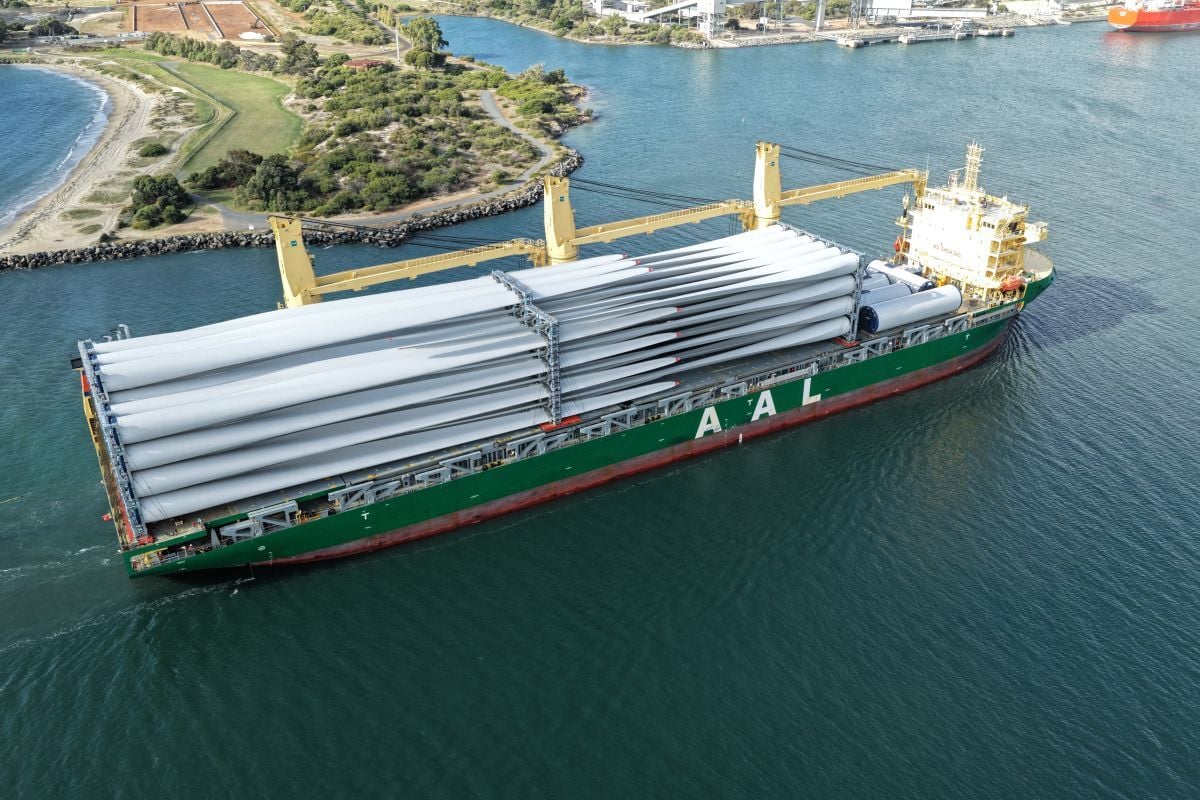
  • One vessel carried 51 turbine blades up to 80 metres long
  • Laydown areas are located within a short distance of the general‑purpose berth
  • Introduction of three new ROVs to enhance underwater inspection capability
  • Intended to advance New Zealand Customs’ capacity for remote vessel inspections

Why it matters

Port of Bunbury has received a large project cargo shipment for a windfarm, creating immediate staging and heavy‑haul requirements that buyers must absorb into project logistics plans. New remotely operated vehicles (ROVs) in New Zealand are changing how underwater inspections are done, which can shorten or change inspection windows affecting berth release and vessel scheduling. For APAC buyers handling renewable project cargo, the combined effect is more binding operational dependencies: port laydown, road permits and inspection protocols are now active levers for delivery timing and supplier performance. Bunbury’s nearby laydown areas and direct berth access reduce internal transload distance, but close‑in storage increases the need to confirm segregation, crane plans and road convoy windows early

Cost / money

  • Specialist road transport and heavy‑lift mobilization for blades and nacelles increases near‑term cost exposure if suppliers quote short‑validity or surge premiums.
  • Faster remote underwater inspections can reduce vessel time alongside the berth and related port occupancy charges, lowering some operating costs where ROVs are accepted in place of physical diver surveys.[2]

Supplier / commercial

  • Heavy‑haul and project‑cargo suppliers gain short‑term leverage over timing and pricing because their availability controls whether the load moves from laydown to site on schedule.
  • Port service providers (stevedores, storage yards) can enforce surge rates or minimum booking terms when laydown capacity is used for large projects, affecting contract negotiation posture.
  • Customs and inspection providers may tighten documentary requirements as ROV inspections become standard; suppliers without clear paperwork could face delays or rework.[2]

Safety / operations

  • Handling turbine blades of extreme length raises specific lifting, spreader and traffic management needs—failure to pre‑approve lift plans increases safety and schedule risk.
  • Laydown areas adjacent to the berth shorten internal moves but require controlled segregation and traffic flows to avoid on‑site incidents during staging.
  • ROV inspections reduce diver exposure and in‑water safety risk, but can surface structural or hull defects that trigger holds and additional in‑port mitigation work.[2]

What to watch

  • Watch whether Bunbury sees a sequence of similar project arrivals; repeated project cargoes will shift supplier availability from ad‑hoc to contracted demand (early sign, verify cadence).
  • Watch for formal adoption of ROV inspections by other APAC ports or flag states; that would change standard inspection timelines and documentary expectations (early sign today).[2]

Top stories

Story 1Thedcn

Port of Bunbury in the wind

Signal strongSource-grounded

What happened

Port of Bunbury received a large shipment of windfarm components, including multiple turbine blades staged in laydown areas close to the berth. The components will be transported by road to the King Rocks site, and the port says its designated laydown areas and berth proximity are enabling this project cargo flow; watch for follow‑on arrivals or schedule tightening that would affect heavy‑haul availability

Buyer takeaway

This is an operational shipment that creates real staging and road‑movement obligations; buyers must confirm service availability and permit windows rather than assuming normal cargo handling suffices

Cost / money

Directional upward pressure on logistics cost is likely due to specialist lifting, convoy permits and potential surge fees from providers when laydown and cranes are booked tightly

Supplier / commercial

Heavy‑haul and project cargo suppliers gain negotiating leverage over timing and short‑notice quotes; capturing their availability in contracts or advance bookings reduces last‑minute premiums

Safety / operations

Very long blades and concentrated laydown use raise specific lift plan, segregation and traffic management needs; lack of pre‑approved safety plans increases the chance of holdups or incidents

What to watch

Verify whether this is a one‑off shipment or the first of several scheduled arrivals; a sequence would shift buying from spot to committed capacity management

Key facts

  • Import included more than 180 windfarm components
  • One vessel carried 51 turbine blades up to 80 metres long
  • Laydown areas are located within a short distance of the general‑purpose berth

Source excerpts

“The Port’s current eight designated laydown areas combine to cover more than 136,000m2 and are just a short distance from our general-purpose berth,” Mr Wilks said. “The laydown access increases the viability of project cargo trade at the port as it means transportation off site can be done as a matter of convenience rather than aligning with shipping movements
News Port of Bunbury in the wind Port of Bunbury windfarm components
Its latest delivery, importing more than 180 windfarm components for King Rocks Wind Farm in the Wheatbelt, arrived on the AAL Shanghai ahead of the AAL Antwerp, carrying 51 turbine blades, each up to 80 metres in length
Story 2Thedcn

NZ Customs going remote

Signal moderateDirectional

What happened

New Zealand Customs has introduced three remotely operated vehicles (ROVs) to perform underwater vessel inspections. The move materially advances the authority’s ability to inspect hulls and appendages remotely; buyers should watch how broadly this practice is accepted and whether documentation or acceptance criteria change for arriving vessels

Buyer takeaway

ROVs reduce reliance on divers and on‑site survey time but may surface issues that create additional rectification work in port; factor both faster clearance potential and new hold triggers into planning

Cost / money

Potential cost reduction from shorter berth occupation exists, but buyers should also budget for follow‑on rectification if ROVs identify defects requiring attention

Supplier / commercial

Inspection service providers and surveyors may need to adapt offerings; suppliers who can interface with ROV outputs gain commercial advantage

Safety / operations

ROVs lower diver exposure and in‑water safety risk, changing the mix of in‑port safety tasks but raising the importance of remote‑inspection data handling and response plans

What to watch

Confirm whether ROV inspections replace or supplement existing protocols and whether acceptance by other APAC ports follows—policy diffusion is possible but not yet certain

Key facts

  • Introduction of three new ROVs to enhance underwater inspection capability
  • Intended to advance New Zealand Customs’ capacity for remote vessel inspections

Source excerpts

News NZ Customs going remote Image: New Zealand Customs Posted by Dale Crisp | 25 May, 2026 THE INTRODUCTION of three new ROVs (remotely-operated vehicle) has substantially advanced NZ Customs’ ability to undertake underwater inspections of vessels in the nation’s ports, the service says
This content is for members only Create a free account with www
News NZ Customs going remote Image: New Zealand Customs Posted by Dale Crisp | 25 May, 2026 THE INTRODUCTION of three new ROVs (remotely-operated vehicle) has substantially advanced NZ Customs’ ability to undertake underwater inspections of vessels in the nation’s ports, the service says. This content is for members only Create a free account with www

VP Snapshot

Executive Risk & Action View

Port of Bunbury has received a large project cargo shipment for a windfarm, creating immediate staging and heavy‑haul requirements that buyers must absorb into project logistics plans.

Overall
55
Cost
61
Supply
79
Schedule
38
Compliance
15

Top signals

30-180dcost

Signal 1: Cost / money

Specialist road transport and heavy‑lift mobilization for blades and nacelles increases near‑term cost exposure if suppliers quote short‑validity or surge premiums.

Signal 2: Cost / money

Faster remote underwater inspections can reduce vessel time alongside the berth and related port occupancy charges, lowering some operating costs where ROVs are accepted in place of physical diver surveys.

0-30dsupply

Signal 3: Supplier / commercial

Heavy‑haul and project‑cargo suppliers gain short‑term leverage over timing and pricing because their availability controls whether the load moves from laydown to site on schedule.

30-180dsupply

Signal 4: Supplier / commercial

Port service providers (stevedores, storage yards) can enforce surge rates or minimum booking terms when laydown capacity is used for large projects, affecting contract negotiation posture.

30-180dcommercial

Signal 5: Supplier / commercial

Customs and inspection providers may tighten documentary requirements as ROV inspections become standard; suppliers without clear paperwork could face delays or rework.

30-180dschedule

Signal 6: Safety / operations

Handling turbine blades of extreme length raises specific lifting, spreader and traffic management needs—failure to pre‑approve lift plans increases safety and schedule risk.

Recommended actions

OpsDue 3d

Confirm berth staging and laydown allocation with Port of Bunbury and request the current staging timetable.

Staging allocation and a dated handover window confirmed with port operations

CategoryDue 3d

Inventory and contact qualified heavy‑haul carriers and crane providers for the King Rocks route and flag any specialist permits needed for blade movements.

List of qualified carriers and permit owners ready for booking

ContractsDue 21d

Ask Contracts to review port and stevedoring terms for surge project cargo, and propose addenda for laydown fees, demurrage triggers and short‑notice booking windows.

Proposed contract addenda to manage surge fees and clarify liability for laydown use

OpsDue 21d

Ops to engage NZ Customs to document ROV inspection protocols and required paperwork so port calls involving ROVs have clear release criteria.

Documented ROV inspection checklist and release criteria for use in voyage planning

CategoryDue 60d

Category to update sourcing templates to include clauses for remote inspection acceptance, surge handling and supplier responsiveness for project cargo.

RFP templates include remote‑inspection acceptance and surge handling requirements

Risk register

RiskTriggerMitigation
Watch whether Bunbury sees a sequence of similar project arrivals; repeated project cargoes will shift supplier availability from ad‑hoc to contracted demand (early sign, verify cadence).Watch whether Bunbury sees a sequence of similar project arrivals; repeated project cargoes will shift supplier availability from ad‑hoc to contracted demand (early sign, verify cadence).Confirm exposure with category, contracts, and operations before the next supplier commitment.
Watch for formal adoption of ROV inspections by other APAC ports or flag states; that would change standard inspection timelines and documentary expectations (early sign today).Watch for formal adoption of ROV inspections by other APAC ports or flag states; that would change standard inspection timelines and documentary expectations (early sign today).Confirm exposure with category, contracts, and operations before the next supplier commitment.

CM Snapshot

Category Manager Decision Detail

Today's priorities

Confirm berth staging and laydown allocation with Port of Bunbury and request the current staging timetable.

because the shipment is already in port and components are in adjacent laydown areas, confirming allocation avoids last‑minute displacement and mobilization cost spikes.

Due 3d

high

CM move

Use this as the immediate supplier or contract action to move before the next sourcing gate.

Inventory and contact qualified heavy‑haul carriers and crane providers for the King Rocks route and flag any specialist permits needed for blade movements.

because turbine blades are very long and need specialist carriers and permits, pre‑securing providers reduces the risk of failed mobilization or premium re‑quotes.

Due 3d

high

CM move

Use this as the immediate supplier or contract action to move before the next sourcing gate.

Ask Contracts to review port and stevedoring terms for surge project cargo, and propose addenda for laydown fees, demurrage triggers and short‑notice booking windows.

because project cargo and concentrated laydown use can change supplier pricing posture and liability exposure, contract clauses should be clarified before the next mobilization.

Due 21d

high

CM move

Use this as the immediate supplier or contract action to move before the next sourcing gate.

Ops to engage NZ Customs to document ROV inspection protocols and required paperwork so port calls involving ROVs have clear release criteria.

because ROVs can change inspection acceptance and release conditions, confirming protocols prevents unexpected holds or additional survey requirements at arrival.

Due 21d

high

CM move

Use this as the immediate supplier or contract action to move before the next sourcing gate.

Supplier radar

Thedcn

high

Observed supplier signal

Heavy‑haul and project‑cargo suppliers gain short‑term leverage over timing and pricing because their availability controls whether the load moves from laydown to site on schedule.

Commercial implication

Heavy‑haul and project‑cargo suppliers gain short‑term leverage over timing and pricing because their availability controls whether the load moves from laydown to site on schedule.

Next step: Validate the source-backed signal with incumbents and alternates before the next award or pricing decision.

Thedcn

high

Observed supplier signal

Port service providers (stevedores, storage yards) can enforce surge rates or minimum booking terms when laydown capacity is used for large projects, affecting contract negotiation posture.

Commercial implication

Port service providers (stevedores, storage yards) can enforce surge rates or minimum booking terms when laydown capacity is used for large projects, affecting contract negotiation posture.

Next step: Validate the source-backed signal with incumbents and alternates before the next award or pricing decision.

Thedcn

high

Observed supplier signal

Customs and inspection providers may tighten documentary requirements as ROV inspections become standard; suppliers without clear paperwork could face delays or rework.

Commercial implication

Customs and inspection providers may tighten documentary requirements as ROV inspections become standard; suppliers without clear paperwork could face delays or rework.

Next step: Validate the source-backed signal with incumbents and alternates before the next award or pricing decision.

Negotiation levers

Confirm berth staging and laydown allocation with Port of Bunbury and request the current staging timetable.

When to use: because the shipment is already in port and components are in adjacent laydown areas, confirming allocation avoids last‑minute displacement and mobilization cost spikes.

Expected outcome: Staging allocation and a dated handover window confirmed with port operations

Commercial mechanism to carry into the next supplier conversation

Inventory and contact qualified heavy‑haul carriers and crane providers for the King Rocks route and flag any specialist permits needed for blade movements.

When to use: because turbine blades are very long and need specialist carriers and permits, pre‑securing providers reduces the risk of failed mobilization or premium re‑quotes.

Expected outcome: List of qualified carriers and permit owners ready for booking

Commercial mechanism to carry into the next supplier conversation

Ask Contracts to review port and stevedoring terms for surge project cargo, and propose addenda for laydown fees, demurrage triggers and short‑notice booking windows.

When to use: because project cargo and concentrated laydown use can change supplier pricing posture and liability exposure, contract clauses should be clarified before the next mobilization.

Expected outcome: Proposed contract addenda to manage surge fees and clarify liability for laydown use

Commercial mechanism to carry into the next supplier conversation

Ops to engage NZ Customs to document ROV inspection protocols and required paperwork so port calls involving ROVs have clear release criteria.

When to use: because ROVs can change inspection acceptance and release conditions, confirming protocols prevents unexpected holds or additional survey requirements at arrival.

Expected outcome: Documented ROV inspection checklist and release criteria for use in voyage planning

Commercial mechanism to carry into the next supplier conversation

Talking points

Port of Bunbury has received a large project cargo shipment for a windfarm, creating immediate staging and heavy‑haul requirements that buyers must absorb into project logistics plans.
New remotely operated vehicles (ROVs) in New Zealand are changing how underwater inspections are done, which can shorten or change inspection windows affecting berth release and vessel scheduling.
For APAC buyers handling renewable project cargo, the combined effect is more binding operational dependencies: port laydown, road permits and inspection protocols are now active levers for delivery timing and supplier performance.
Bunbury’s nearby laydown areas and direct berth access reduce internal transload distance, but close‑in storage increases the need to confirm segregation, crane plans and road convoy windows early.

Supplier radar

SupplierSignalImplicationNext stepConfidence
ThedcnHeavy‑haul and project‑cargo suppliers gain short‑term leverage over timing and pricing because their availability controls whether the load moves from laydown to site on schedule.Heavy‑haul and project‑cargo suppliers gain short‑term leverage over timing and pricing because their availability controls whether the load moves from laydown to site on schedule.Validate the source-backed signal with incumbents and alternates before the next award or pricing decision.high
ThedcnPort service providers (stevedores, storage yards) can enforce surge rates or minimum booking terms when laydown capacity is used for large projects, affecting contract negotiation posture.Port service providers (stevedores, storage yards) can enforce surge rates or minimum booking terms when laydown capacity is used for large projects, affecting contract negotiation posture.Validate the source-backed signal with incumbents and alternates before the next award or pricing decision.high
ThedcnCustoms and inspection providers may tighten documentary requirements as ROV inspections become standard; suppliers without clear paperwork could face delays or rework.Customs and inspection providers may tighten documentary requirements as ROV inspections become standard; suppliers without clear paperwork could face delays or rework.Validate the source-backed signal with incumbents and alternates before the next award or pricing decision.high

Negotiation levers

  • Confirm berth staging and laydown allocation with Port of Bunbury and request the current staging timetable.because the shipment is already in port and components are in adjacent laydown areas, confirming allocation avoids last‑minute displacement and mobilization cost spikes.Staging allocation and a dated handover window confirmed with port operations

    high confidence

  • Inventory and contact qualified heavy‑haul carriers and crane providers for the King Rocks route and flag any specialist permits needed for blade movements.because turbine blades are very long and need specialist carriers and permits, pre‑securing providers reduces the risk of failed mobilization or premium re‑quotes.List of qualified carriers and permit owners ready for booking

    high confidence

  • Ask Contracts to review port and stevedoring terms for surge project cargo, and propose addenda for laydown fees, demurrage triggers and short‑notice booking windows.because project cargo and concentrated laydown use can change supplier pricing posture and liability exposure, contract clauses should be clarified before the next mobilization.Proposed contract addenda to manage surge fees and clarify liability for laydown use

    high confidence

  • Ops to engage NZ Customs to document ROV inspection protocols and required paperwork so port calls involving ROVs have clear release criteria.because ROVs can change inspection acceptance and release conditions, confirming protocols prevents unexpected holds or additional survey requirements at arrival.Documented ROV inspection checklist and release criteria for use in voyage planning

    high confidence

What to do / What to watch

What to do now

  • Confirm berth staging and laydown allocation with Port of Bunbury and request the current staging timetable.

    Why: because the shipment is already in port and components are in adjacent laydown areas, confirming allocation avoids last‑minute displacement and mobilization cost spikes.

    Owner: Ops

    Expected outcome: Staging allocation and a dated handover window confirmed with port operations

  • Inventory and contact qualified heavy‑haul carriers and crane providers for the King Rocks route and flag any specialist permits needed for blade movements.

    Why: because turbine blades are very long and need specialist carriers and permits, pre‑securing providers reduces the risk of failed mobilization or premium re‑quotes.

    Owner: Category

    Expected outcome: List of qualified carriers and permit owners ready for booking

Next few weeks

  • Ask Contracts to review port and stevedoring terms for surge project cargo, and propose addenda for laydown fees, demurrage triggers and short‑notice booking windows.

    Why: because project cargo and concentrated laydown use can change supplier pricing posture and liability exposure, contract clauses should be clarified before the next mobilization.

    Owner: Contracts

    Expected outcome: Proposed contract addenda to manage surge fees and clarify liability for laydown use

  • Ops to engage NZ Customs to document ROV inspection protocols and required paperwork so port calls involving ROVs have clear release criteria.

    Why: because ROVs can change inspection acceptance and release conditions, confirming protocols prevents unexpected holds or additional survey requirements at arrival.

    Owner: Ops

    Expected outcome: Documented ROV inspection checklist and release criteria for use in voyage planning

    [2]

Longer view

  • Category to update sourcing templates to include clauses for remote inspection acceptance, surge handling and supplier responsiveness for project cargo.

    Why: because suppliers and ports that support remote inspection and planned surge handling reduce buyer uptime and logistical risk, embedding this in RFPs secures those capabilities...

    Owner: Category

    Expected outcome: RFP templates include remote‑inspection acceptance and surge handling requirements

    [2]

What to watch

  • Watch whether Bunbury sees a sequence of similar project arrivals; repeated project cargoes will shift supplier availability from ad‑hoc to contracted demand (early sign, verify cadence)
  • Watch for formal adoption of ROV inspections by other APAC ports or flag states; that would change standard inspection timelines and documentary expectations (early sign today)
  • Watch whether Bunbury sees a sequence of similar project arrivals; repeated project cargoes will shift supplier availability from ad‑hoc to contracted demand (early sign, verify cadence).: Watch whether Bunbury sees a sequence of similar project arrivals; repeated project cargoes will shift supplier availability from ad‑hoc to contracted demand (early sign, verify cadence)
  • Watch for formal adoption of ROV inspections by other APAC ports or flag states; that would change standard inspection timelines and documentary expectations (early sign today).: Watch for formal adoption of ROV inspections by other APAC ports or flag states; that would change standard inspection timelines and documentary expectations (early sign today)
  • Port of Bunbury has received a large project cargo shipment for a windfarm, creating immediate staging and heavy‑haul requirements that buyers must absorb into project logistics plans
  • New remotely operated vehicles (ROVs) in New Zealand are changing how underwater inspections are done, which can shorten or change inspection windows affecting berth release and vessel scheduling
  • For APAC buyers handling renewable project cargo, the combined effect is more binding operational dependencies: port laydown, road permits and inspection protocols are now active levers for delivery timing and supplier performance
  • Bunbury’s nearby laydown areas and direct berth access reduce internal transload distance, but close‑in storage increases the need to confirm segregation, crane plans and road convoy windows early

Market pulse

IndexLatestChangeAs of
Dry Bulk Shipping (BDRY) (BDRY)0 +0.00 (+0.00%)May 25, 2026, 10:11 PM
WTI (Fuel) (WTI)71.23 /bbl+0.00 (+0.00%)May 25, 2026, 10:11 PM
FedEx (FDX)285 +0.00 (+0.00%)May 25, 2026, 10:11 PM
UPS (UPS)142 +0.00 (+0.00%)May 25, 2026, 10:11 PM
Maersk (MAERSK)9.5 +0.00 (+0.00%)May 25, 2026, 10:11 PM
  • Dry Bulk Shipping (BDRY): Project cargo arrivals can tighten dry bulk and breakbulk service availability; monitor for related carrier capacity shifts
  • WTI (Fuel): Heavy‑haul road convoys and extended port stays raise fuel exposure for inland moves and vessel auxiliary consumption

Sources

Inline citations jump here. Expand a source to read the excerpt, the AI interpretation, and the original link.

[1] Port of Bunbury in the wind

thedcn.com.au · n.d.

Expand

AI reading

Port of Bunbury received a large shipment of windfarm components, including multiple turbine blades staged in laydown areas close to the berth. The components will be transported by road to the King Rocks site, and the port says its designated laydown areas and berth proximity are enabling this project cargo flow; watch for follow‑on arrivals or schedule tightening that would affect heavy‑haul availability

Buyer takeaway

This is an operational shipment that creates real staging and road‑movement obligations; buyers must confirm service availability and permit windows rather than assuming normal cargo handling suffices

Cost / money

Directional upward pressure on logistics cost is likely due to specialist lifting, convoy permits and potential surge fees from providers when laydown and cranes are booked tightly

Supplier / commercial

Heavy‑haul and project cargo suppliers gain negotiating leverage over timing and short‑notice quotes; capturing their availability in contracts or advance bookings reduces last‑minute premiums

Safety / operations

Very long blades and concentrated laydown use raise specific lift plan, segregation and traffic management needs; lack of pre‑approved safety plans increases the chance of holdups or incidents

What to watch

Verify whether this is a one‑off shipment or the first of several scheduled arrivals; a sequence would shift buying from spot to committed capacity management

Key facts

  • Import included more than 180 windfarm components
  • One vessel carried 51 turbine blades up to 80 metres long
  • Laydown areas are located within a short distance of the general‑purpose berth

Source excerpts

“The Port’s current eight designated laydown areas combine to cover more than 136,000m2 and are just a short distance from our general-purpose berth,” Mr Wilks said. “The laydown access increases the viability of project cargo trade at the port as it means transportation off site can be done as a matter of convenience rather than aligning with shipping movements
News Port of Bunbury in the wind Port of Bunbury windfarm components
Its latest delivery, importing more than 180 windfarm components for King Rocks Wind Farm in the Wheatbelt, arrived on the AAL Shanghai ahead of the AAL Antwerp, carrying 51 turbine blades, each up to 80 metres in length

Used in this brief

  • Port of Bunbury has received a large project cargo shipment for a windfarm, creating immediate staging and heavy‑haul requirements that buyers must absorb into project logistics plans. New remotely operated vehicles (ROVs) in New Zealand are changing how underwater inspections are done, which can shorten or change inspection windows affecting berth release and vessel scheduling. For APAC buyers handling renewable project cargo, the combined effect is more binding operational dependencies: port laydown, road permits and inspection protocols are now active levers for delivery timing and supplier performance. Bunbury’s nearby laydown areas and direct berth access reduce internal transload distance, but close‑in storage increases the need to confirm segregation, crane plans and road convoy windows early
  • Next 72 hours — Confirm berth staging and laydown allocation with Port of Bunbury and request the current staging timetable.. Rationale: because the shipment is already in port and components are in adjacent laydown areas, confirming allocation avoids last‑minute displacement and mobilization cost spikes.. Owner: Ops. KPI: Staging allocation and a dated handover window confirmed with port operations
  • Next 72 hours — Inventory and contact qualified heavy‑haul carriers and crane providers for the King Rocks route and flag any specialist permits needed for blade movements.. Rationale: because turbine blades are very long and need specialist carriers and permits, pre‑securing providers reduces the risk of failed mobilization or premium re‑quotes.. Owner: Category. KPI: List of qualified carriers and permit owners ready for booking
Open original source

[2] NZ Customs going remote

thedcn.com.au · n.d.

Expand

AI reading

New Zealand Customs has introduced three remotely operated vehicles (ROVs) to perform underwater vessel inspections. The move materially advances the authority’s ability to inspect hulls and appendages remotely; buyers should watch how broadly this practice is accepted and whether documentation or acceptance criteria change for arriving vessels

Buyer takeaway

ROVs reduce reliance on divers and on‑site survey time but may surface issues that create additional rectification work in port; factor both faster clearance potential and new hold triggers into planning

Cost / money

Potential cost reduction from shorter berth occupation exists, but buyers should also budget for follow‑on rectification if ROVs identify defects requiring attention

Supplier / commercial

Inspection service providers and surveyors may need to adapt offerings; suppliers who can interface with ROV outputs gain commercial advantage

Safety / operations

ROVs lower diver exposure and in‑water safety risk, changing the mix of in‑port safety tasks but raising the importance of remote‑inspection data handling and response plans

What to watch

Confirm whether ROV inspections replace or supplement existing protocols and whether acceptance by other APAC ports follows—policy diffusion is possible but not yet certain

Key facts

  • Introduction of three new ROVs to enhance underwater inspection capability
  • Intended to advance New Zealand Customs’ capacity for remote vessel inspections

Source excerpts

News NZ Customs going remote Image: New Zealand Customs Posted by Dale Crisp | 25 May, 2026 THE INTRODUCTION of three new ROVs (remotely-operated vehicle) has substantially advanced NZ Customs’ ability to undertake underwater inspections of vessels in the nation’s ports, the service says
This content is for members only Create a free account with www
News NZ Customs going remote Image: New Zealand Customs Posted by Dale Crisp | 25 May, 2026 THE INTRODUCTION of three new ROVs (remotely-operated vehicle) has substantially advanced NZ Customs’ ability to undertake underwater inspections of vessels in the nation’s ports, the service says. This content is for members only Create a free account with www

Used in this brief

  • Next 2-4 weeks — Ops to engage NZ Customs to document ROV inspection protocols and required paperwork so port calls involving ROVs have clear release criteria.. Rationale: because ROVs can change inspection acceptance and release conditions, confirming protocols prevents unexpected holds or additional survey requirements at arrival.. Owner: Ops. KPI: Documented ROV inspection checklist and release criteria for use in voyage planning
  • Watch for formal adoption of ROV inspections by other APAC ports or flag states; that would change standard inspection timelines and documentary expectations (early sign today)
  • Capability change: NZ Customs introduced three ROVs for underwater inspections, adding a new remote-inspection tool that could affect port inspection workflows
Open original source

[3] Dry Bulk Shipping (BDRY)

finance.yahoo.com · n.d.

Expand

[4] WTI (Fuel)

finance.yahoo.com · n.d.

Expand