Oil & Gas / LNG Market Dashboard · Australia (Perth)

Recalibrate APAC sourcing: upstream blocks, LNG progress, rig and fuel shifts

Published May 22, 2026, 6:03 AM AWSTAPACFull category signal
Ask AI
BP, Inpex, CNOOC, and LNG Japan enrich oil & gas arsenal with new Southeast Asian blocks

In 60 seconds

Top move

Signed production-sharing contracts in Indonesia raise realistic near-field development demand that will require subsea tie-ins, local fabrication and faster supplier mobilization near existing Tangguh LNG infrastructure

Key takeaways

  • Signed production-sharing contracts in Indonesia raise realistic near-field development demand that will require subsea tie-ins, local fabrication and faster supplier mobilization near existing Tangguh LNG infrastructure.[3]
  • Progress on Abadi LNG offtake talks increases project probability toward a final investment decision, which will translate into longer-term procurement for pipeline, LNG train and EPC scopes if SPAs/GSA negotiations continue.[2]
  • Factory acceptance testing (FAT) passed for an ammonia-fuel two-stroke engine built into Chinese yard-led vessel production, making alternative‑fuel ship deliveries operationally more real and raising new acceptance, fuel-supply and training requirements.[4]
  • Borr Drilling’s recent rig acquisitions and multi-country contract roll‑on show improved jack-up availability in APAC but also more complex mobilisation sequencing across Thailand, Vietnam and nearby markets.[1]
  • Taken together, these items shift the sourcing focus from purely price to execution: mobilisation windows, contract pass‑throughs, FAT/acceptance language and supplier readiness will matter more than baseline rates over the next procurement cycle.[4]

What changed since last run

  • Added upstream development evidence: BP and partners signed three PSCs in Indonesia, creating concrete near-field tie-in potential versus prior yard/fabrication focus.
  • Abadi LNG moved from conceptual updates to reported offtake agreements in principle, increasing the probability of FID and longer-term procurement needs versus the last brief.
  • Technical validation progressed on alternative-fuel marine propulsion: a second FAT for an ammonia two-stroke engine confirms yard production and testing activity that was previously only thematic.

Key facts

  • Three PSCs signed in Indonesia
  • Two blocks located near BP‑operated Tangguh LNG
  • Agreements in principle reached with multiple offtakers
  • Includes pipeline gas supply agreement in principle
  • Second FAT completed for ammonia two‑stroke engine
  • Engine to be installed on a 25,000m3 LPG/ammonia carrier built in China

Why it matters

Signed production-sharing contracts in Indonesia raise realistic near-field development demand that will require subsea tie-ins, local fabrication and faster supplier mobilization near existing Tangguh LNG infrastructure. Progress on Abadi LNG offtake talks increases project probability toward a final investment decision, which will translate into longer-term procurement for pipeline, LNG train and EPC scopes if SPAs/GSA negotiations continue. Factory acceptance testing (FAT) passed for an ammonia-fuel two-stroke engine built into Chinese yard-led vessel production, making alternative‑fuel ship deliveries operationally more real and raising new acceptance, fuel-supply and training requirements. Borr Drilling’s recent rig acquisitions and multi-country contract roll‑on show improved jack-up availability in APAC but also more complex mobilisation sequencing across Thailand, Vietnam and nearby markets

Cost / money

  • Near-field PSCs reduce some transport and long-lead logistics per development by enabling tie‑backs, but they will trigger immediate demand for subsea hardware and local fabrication spend as projects enter early development.[3]
  • Abadi offtake progress shifts commercial risk toward long‑term procurement exposures (pipeline and LNG train CAPEX) and raises the likelihood that suppliers will seek pass‑throughs for fuel, transport and commodity inputs in SPA/GSA negotiations.[2]

Supplier / commercial

  • Ammonia-engine FAT makes yards and engine suppliers able to demand firmer acceptance testing, warranty and spare‑parts terms tied to new fuel systems; expect negotiating focus on FAT scope and fuel-supply guarantees.[4]
  • Borr Drilling’s rig purchases and contract backlog improve equipment availability but give rig owners leverage over mobilisation windows and shorter quote validity periods—buyers should expect firmer mobilisation milestones.[1]
  • BP/Inpex blocks located near existing Tangguh LNG infrastructure concentrate demand among local suppliers and may tilt awards toward partners with existing regional relationships or integrated service offerings.[3]

Safety / operations

  • Ammonia‑fuelled vessel programs introduce different commissioning, crew training and on‑board safety verification needs that must be captured in FAT and handover protocols to avoid start‑up delays.[4]
  • Near‑field developments increase coordination needs for subsea installation windows, permitting and environmental controls; misaligned schedules create real risk of costly rework or delayed production start.[3]

What to watch

  • Watch for SPA/GSA clauses that shift price or transport pass‑through risk to buyers during Abadi negotiations — early reports show 'agreements in principle' but contract language can materially change supplier pricing posture.[2]
  • Watch yard slot pressure in China as ammonia‑capable vessel builds join routine newbuild demand; overlapping schedules could compress delivery windows or raise premiums for expedited work.[4]

Top stories

Story 1Offshore EnergyMay 21, 2026

BP, Inpex, CNOOC, and LNG Japan enrich oil & gas arsenal with new Southeast Asian blocks

Signal strongSource-grounded

What happened

BP and partners signed three production‑sharing contracts for Indonesian offshore blocks that sit near existing Tangguh LNG infrastructure. The proximity makes short‑cycle tie‑ins and shared infrastructure options operationally realistic rather than theoretical. Watch whether operators push follow‑on exploration or early development well schedules that force supplier mobilisation

Buyer takeaway

Treat these PSCs as near‑term demand, not just strategic acreage, because adjacency to Tangguh makes tie‑in and early development economically and operationally feasible

Cost / money

Expect upstream procurement to shift toward subsea hardware, short‑cycle fabrication and local logistic spend rather than only long‑lead topside modules

Supplier / commercial

Local and regional suppliers with existing Tangguh relationships gain positional leverage for early scopes and logistics; expect preference for integrated packages

Safety / operations

Operational windows for subsea installation and permitting need alignment early; misalignment risks costly rework or delayed start‑up

What to watch

Watch operator development timelines and any split of scope to local JV partners that could change the incumbent supplier list

Key facts

  • Three PSCs signed in Indonesia
  • Two blocks located near BP‑operated Tangguh LNG

Source excerpts

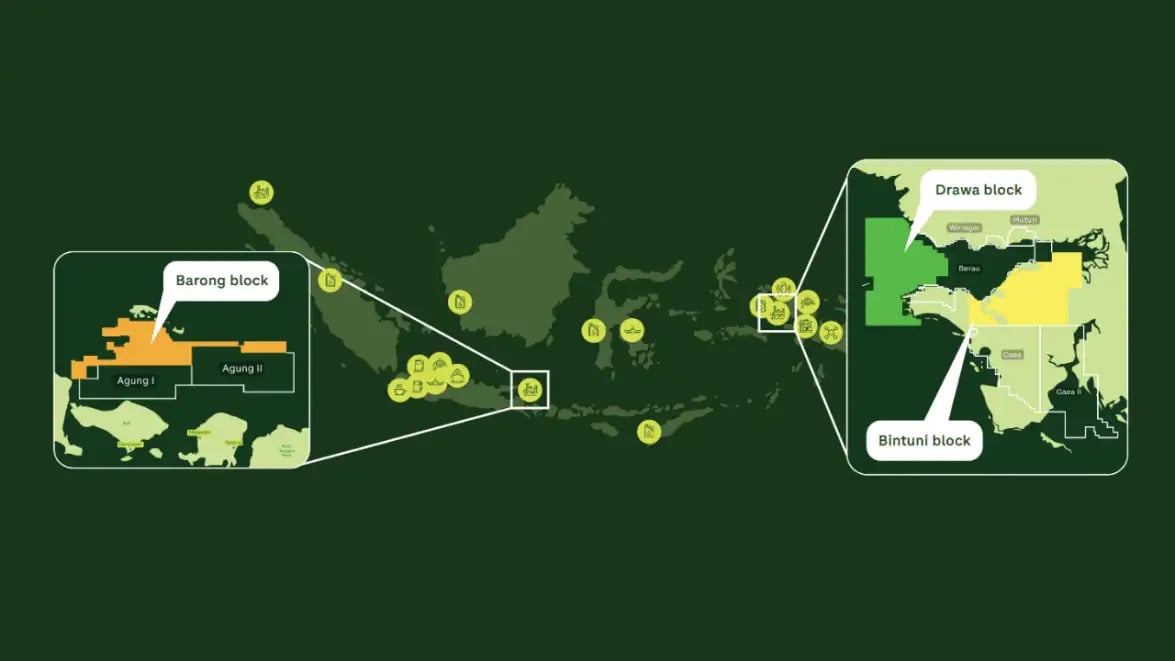
Two of the latest PSCs are for the Bintuni and Drawa exploration blocks, which are located near the existing BP-operated Tangguh LNG in Papua Barat, creating potential for short-cycle development
Indonesian block map; Source: BP The three new PSCs bring the UK firm’s total participation in oil and gas blocks in Indonesia to 11. Two of the latest PSCs are for the Bintuni and Drawa exploration blocks, which are located near the existing BP-operated Tangguh LNG in Papua Barat, creating potential for short-cycle development
The Japanese player and its partner anticipate an early transition to development and production if exploration activities are successful
Story 2Offshore EnergyMay 21, 2026

Offtake talks move forward for Southeast Asia’s $20 billion LNG project

Signal moderateSource-grounded

What happened

Inpex reports progress on Abadi LNG offtake talks and agreements in principle with several customers and domestic pipeline buyers. The company says these offtake steps are an important milestone toward a final investment decision and to covering a significant portion of anticipated production. Watch the SPA/GSA negotiation details that will determine pricing pass‑throughs and buyer obligations

Buyer takeaway

Treat offtake progress as a signal to prepare commercial templates for long‑term supply and construction contracts because FID probability is higher

Cost / money

Long‑term offtakes shift capex commitment forward and can affect pricing pass‑through terms for transport, feed gas and construction inputs

Supplier / commercial

EPC and pipeline suppliers will seek clarity on volume commitments and may price in pass‑throughs or longer mobilisation lead times

Safety / operations

Large onshore and offshore construction will need integrated HSE plans across pipeline and LNG train contractors to avoid interface delays

What to watch

Signal is meaningful but not final—watch the detailed SPA/GSA commercial terms for cost pass‑throughs and delivery obligations

Key facts

  • Agreements in principle reached with multiple offtakers
  • Includes pipeline gas supply agreement in principle

Source excerpts

Home Fossil Energy Offtake talks move forward for Southeast Asia’s $20 billion LNG project May 21, 2026, by Japan’s exploration and production (E&P) company Inpex has shed light on the progress made in advancing discussions for liquefied natural gas (LNG) and pipeline gas offtake deals from a planned LNG project in Indonesia’s Masela block, which is seen as a way to fortify Southeast Asia’s energy security. Abadi LNG; Source: Inpex Inpex has reached multiple agreements in principle with energy players, includin
The Abadi gas field is anticipated to support efficient development and stable production of LNG and pipeline gas over the long term
The firm claims that the agreements in principle relating to LNG offtake represent an important milestone for the project and contribute to steady progress toward a final investment decision (FID)
Story 3Offshore EnergyMay 21, 2026

Ammonia-fueled two-stroke engine passes second FAT

Signal strongSource-grounded

What happened

An ammonia‑fuelled two‑stroke marine engine passed a second factory acceptance test, validating performance on a 52‑bore platform intended for an ammonia/LPG carrier. The FAT included emissions and stability checks and was completed in the presence of a classification society, supporting imminent installation plans at Chinese shipyards. Watch yard delivery slots and the required FAT/handover protocols that buyers will need to accept technical risk

Buyer takeaway

Treat the FAT outcome as a production readiness signal for ammonia vessels and update acceptance tests and commissioning checklists accordingly

Cost / money

New fuel systems create potential for higher acceptance and spare‑parts costs and may require dedicated crew training budgets

Supplier / commercial

Yards and engine OEMs can insist on tight FAT acceptance language and may limit warranty scope until operational data is available

Safety / operations

Ammonia handling changes commissioning, on‑board safety equipment and emergency response plans compared with conventional fuels

What to watch

Watch for compressed yard delivery windows and supplier requests to limit warranty or to insert extended acceptance testing periods

Key facts

  • Second FAT completed for ammonia two‑stroke engine
  • Engine to be installed on a 25,000m3 LPG/ammonia carrier built in China

Source excerpts

Home Clean Fuel Ammonia-fueled two-stroke engine passes second FAT May 21, 2026, by Following what was described as the world’s first type approval (TAT) and factory acceptance testing (FAT) for this type of engine some three months ago, Swiss marine power company WinGD has completed another FAT for its ammonia-fueled two-stroke marine engine
The engine will be installed on the first vessel for Tianjin Southwest Maritime in a series of four LPG/ammonia carriers currently under construction at CSSC Huangpu Wenchong Shipbuilding in China
NOx emissions during ammonia operation were significantly lower than those from conventional fuels, while N2O emissions remained minimal, contributing to an improved overall greenhouse gas profile
Story 4Offshore EnergyMay 21, 2026

Borr Drilling’s CEO: Middle East conflict brings uncertainty but empowers long-term rig outlook

Signal strongSource-grounded

What happened

Borr Drilling completed multiple rig acquisitions and has secured a series of contracts that increased its regional backlog, with rigs shifting between jobs in APAC and Africa. Several jack‑ups have moved directly between contracts in Thailand, Vietnam and other regional markets, illustrating active mobilisation and redeployment patterns. Watch mobilisation dates and bareboat/charter terms that may affect firm availability for new project awards

Buyer takeaway

Treat rig availability as fluid: acquisitions increase supply but also concentrate negotiating power around mobilisation windows and short quote validity

Cost / money

Improved fleet size can stabilise dayrate pressure but mobilisation and demobilisation costs and timing will drive near‑term premiums

Supplier / commercial

Rig owners may push firmer mobilisation milestones and shorter bid validity to protect sequencing across contracts

Safety / operations

Frequent redeployments require verification of local permits, local workforce readiness and pre‑mobilisation safety checks to avoid lift delays

What to watch

Watch for tight mobilisation cascade effects across neighbouring contracts that can cause slip or force premium expedited mobilisations

Key facts

  • Multiple premium jack‑up acquisitions completed
  • New contracts added to regional backlog with immediate redeployments

Source excerpts

Home Fossil Energy Borr Drilling’s CEO: Middle East conflict brings uncertainty but empowers long-term rig outlook Borr Drilling, an offshore drilling player with its corporate base in Bermuda, has secured 13 contracts year-to-date, enhancing its backlog by adding 2,250 days and $274 million in jack-up rig deals. Ran jack-up rig; Credit: Borr Drilling Borr Drilling completed the acquisition of five premium jack-up rigs from Noble Corporation in January 2026 for a total purchase price of $360 million
Gulf where operations were expected to start in February. However, start-up was delayed by additional contract preparation work and regulatory approvals
Our full-year 2026 contract coverage increased to 71% at an average day rate of approximately $137,000 and coverage in the second half of the year now stands at 65%, as compared to 48% in our prior earnings report. “In the first quarter, we entered into an agreement for the acquisition of five premium jack-up rigs through a new joint venture in Mexico with an attractive valuation and financing structure

VP Snapshot

Executive Risk & Action View

Signed production-sharing contracts in Indonesia raise realistic near-field development demand that will require subsea tie-ins, local fabrication and faster supplier mobilization near existing Tangguh LNG infrastructure.

Overall
50
Cost
79
Supply
97
Schedule
20
Compliance
15

Top signals

0-30dcost

Signal 1: Cost / money

Near-field PSCs reduce some transport and long-lead logistics per development by enabling tie‑backs, but they will trigger immediate demand for subsea hardware and local fabrication spend as projects enter early development.

30-180dcost

Signal 2: Cost / money

Abadi offtake progress shifts commercial risk toward long‑term procurement exposures (pipeline and LNG train CAPEX) and raises the likelihood that suppliers will seek pass‑throughs for fuel, transport and commodity inputs in SPA/GSA negotiations.

30-180dsupply

Signal 3: Supplier / commercial

Ammonia-engine FAT makes yards and engine suppliers able to demand firmer acceptance testing, warranty and spare‑parts terms tied to new fuel systems; expect negotiating focus on FAT scope and fuel-supply guarantees.

Signal 6: Safety / operations

Ammonia‑fuelled vessel programs introduce different commissioning, crew training and on‑board safety verification needs that must be captured in FAT and handover protocols to avoid start‑up delays.

0-30dsupply

Signal 4: Supplier / commercial

Borr Drilling’s rig purchases and contract backlog improve equipment availability but give rig owners leverage over mobilisation windows and shorter quote validity periods—buyers should expect firmer mobilisation milestones.

30-180dcommercial

Signal 5: Supplier / commercial

BP/Inpex blocks located near existing Tangguh LNG infrastructure concentrate demand among local suppliers and may tilt awards toward partners with existing regional relationships or integrated service offerings.

Recommended actions

CategoryDue 3d

Request operator confirmation of development intent and likely early scope (tie‑ins, subsea, local fabrication) for the new Indonesian PSCs.

Updated early‑scope register and shortlist of suppliers to engage for preliminary RFIs

ContractsDue 3d

Ask shipyard and engine vendors for an updated FAT-to-delivery timeline and any outstanding acceptance conditions for ammonia‑fuelled vessels under construction in China.

Delivery and FAT milestone register to inform contracting and logistics plans

ContractsDue 21d

Issue contract amendments or template clauses that tighten mobilisation milestones, define FAT acceptance criteria for new fuel systems, and limit pass‑through exposure in upcom...

Revised clause set ready for inclusion in RFPs and commercial evaluations

CategoryDue 21d

Run a short vendor readiness sweep for jack‑up and subsea installation contractors to capture availability, mobilisation lead times, quote validity and required certifications.

Ranked supplier availability register with mobilisation risk flags

OpsDue 60d

Plan supplier audits and updated FAT/handover protocols for ammonia‑capable vessels, including crew training, spare‑parts provisioning and onshore fuel‑handling interfaces.

Supplier readiness matrix, FAT checklist and training schedule to support handover

Risk register

RiskTriggerMitigation
Watch for SPA/GSA clauses that shift price or transport pass‑through risk to buyers during Abadi negotiations — early reports show 'agreements in principle' but contract language can materially change supplier pricing posture.Watch for SPA/GSA clauses that shift price or transport pass‑through risk to buyers during Abadi negotiations — early reports show 'agreements in principle' but contract language can materially change supplier pricing posture.Confirm exposure with category, contracts, and operations before the next supplier commitment.
Watch yard slot pressure in China as ammonia‑capable vessel builds join routine newbuild demand; overlapping schedules could compress delivery windows or raise premiums for expedited work.Watch yard slot pressure in China as ammonia‑capable vessel builds join routine newbuild demand; overlapping schedules could compress delivery windows or raise premiums for expedited work.Confirm exposure with category, contracts, and operations before the next supplier commitment.

CM Snapshot

Category Manager Decision Detail

Today's priorities

Request operator confirmation of development intent and likely early scope (tie‑ins, subsea, local fabrication) for the new Indonesian PSCs.

Do this because the PSCs create a near‑field development signal that affects which suppliers must be mobilised and which scopes need tendering first.

Due 3d

high

CM move

Use this as the immediate supplier or contract action to move before the next sourcing gate.

Ask shipyard and engine vendors for an updated FAT-to-delivery timeline and any outstanding acceptance conditions for ammonia‑fuelled vessels under construction in China.

Do this because a completed FAT signals transition to installation and commissioning steps where contractual milestones and spare‑parts lists must be locked down.

Due 3d

high

CM move

Use this as the immediate supplier or contract action to move before the next sourcing gate.

Issue contract amendments or template clauses that tighten mobilisation milestones, define FAT acceptance criteria for new fuel systems, and limit pass‑through exposure in upcom...

Do this because Abadi offtake progress and new ammonia engine builds increase the chance suppliers will try to pass cost and schedule risk back to buyers during awards.

Due 21d

high

CM move

Use this as the immediate supplier or contract action to move before the next sourcing gate.

Run a short vendor readiness sweep for jack‑up and subsea installation contractors to capture availability, mobilisation lead times, quote validity and required certifications.

Do this because Borr Drilling’s fleet changes and active regional contracts alter equipment availability and supplier leverage during award negotiations.

Due 21d

high

CM move

Use this as the immediate supplier or contract action to move before the next sourcing gate.

Supplier radar

Offshore Energy

high

Observed supplier signal

Ammonia-engine FAT makes yards and engine suppliers able to demand firmer acceptance testing, warranty and spare‑parts terms tied to new fuel systems; expect negotiating focus on FAT scope and fuel-supply guarantees.

Commercial implication

Ammonia-engine FAT makes yards and engine suppliers able to demand firmer acceptance testing, warranty and spare‑parts terms tied to new fuel systems; expect negotiating focus on FAT scope and fuel-supply guarantees.

Next step: Validate the source-backed signal with incumbents and alternates before the next award or pricing decision.

Offshore Energy

high

Observed supplier signal

Borr Drilling’s rig purchases and contract backlog improve equipment availability but give rig owners leverage over mobilisation windows and shorter quote validity periods—buyers should expect firmer mobilisation milestones.

Commercial implication

Borr Drilling’s rig purchases and contract backlog improve equipment availability but give rig owners leverage over mobilisation windows and shorter quote validity periods—buyers should expect firmer mobilisation milestones.

Next step: Validate the source-backed signal with incumbents and alternates before the next award or pricing decision.

Offshore Energy

high

Observed supplier signal

BP/Inpex blocks located near existing Tangguh LNG infrastructure concentrate demand among local suppliers and may tilt awards toward partners with existing regional relationships or integrated service offerings.

Commercial implication

BP/Inpex blocks located near existing Tangguh LNG infrastructure concentrate demand among local suppliers and may tilt awards toward partners with existing regional relationships or integrated service offerings.

Next step: Validate the source-backed signal with incumbents and alternates before the next award or pricing decision.

Negotiation levers

Request operator confirmation of development intent and likely early scope (tie‑ins, subsea, local fabrication) for the new Indonesian PSCs.

When to use: Do this because the PSCs create a near‑field development signal that affects which suppliers must be mobilised and which scopes need tendering first.

Expected outcome: Updated early‑scope register and shortlist of suppliers to engage for preliminary RFIs

Commercial mechanism to carry into the next supplier conversation

Ask shipyard and engine vendors for an updated FAT-to-delivery timeline and any outstanding acceptance conditions for ammonia‑fuelled vessels under construction in China.

When to use: Do this because a completed FAT signals transition to installation and commissioning steps where contractual milestones and spare‑parts lists must be locked down.

Expected outcome: Delivery and FAT milestone register to inform contracting and logistics plans

Commercial mechanism to carry into the next supplier conversation

Issue contract amendments or template clauses that tighten mobilisation milestones, define FAT acceptance criteria for new fuel systems, and limit pass‑through exposure in upcom...

When to use: Do this because Abadi offtake progress and new ammonia engine builds increase the chance suppliers will try to pass cost and schedule risk back to buyers during awards.

Expected outcome: Revised clause set ready for inclusion in RFPs and commercial evaluations

Commercial mechanism to carry into the next supplier conversation

Run a short vendor readiness sweep for jack‑up and subsea installation contractors to capture availability, mobilisation lead times, quote validity and required certifications.

When to use: Do this because Borr Drilling’s fleet changes and active regional contracts alter equipment availability and supplier leverage during award negotiations.

Expected outcome: Ranked supplier availability register with mobilisation risk flags

Commercial mechanism to carry into the next supplier conversation

Talking points

Signed production-sharing contracts in Indonesia raise realistic near-field development demand that will require subsea tie-ins, local fabrication and faster supplier mobilization near existing Tangguh LNG infrastructure.
Progress on Abadi LNG offtake talks increases project probability toward a final investment decision, which will translate into longer-term procurement for pipeline, LNG train and EPC scopes if SPAs/GSA negotiations continue.
Factory acceptance testing (FAT) passed for an ammonia-fuel two-stroke engine built into Chinese yard-led vessel production, making alternative‑fuel ship deliveries operationally more real and raising new acceptance, fuel-supply and training requirements.
Borr Drilling’s recent rig acquisitions and multi-country contract roll‑on show improved jack-up availability in APAC but also more complex mobilisation sequencing across Thailand, Vietnam and nearby markets.

Supplier radar

SupplierSignalImplicationNext stepConfidence
Offshore EnergyAmmonia-engine FAT makes yards and engine suppliers able to demand firmer acceptance testing, warranty and spare‑parts terms tied to new fuel systems; expect negotiating focus on FAT scope and fuel-supply guarantees.Ammonia-engine FAT makes yards and engine suppliers able to demand firmer acceptance testing, warranty and spare‑parts terms tied to new fuel systems; expect negotiating focus on FAT scope and fuel-supply guarantees.Validate the source-backed signal with incumbents and alternates before the next award or pricing decision.high
Offshore EnergyBorr Drilling’s rig purchases and contract backlog improve equipment availability but give rig owners leverage over mobilisation windows and shorter quote validity periods—buyers should expect firmer mobilisation milestones.Borr Drilling’s rig purchases and contract backlog improve equipment availability but give rig owners leverage over mobilisation windows and shorter quote validity periods—buyers should expect firmer mobilisation milestones.Validate the source-backed signal with incumbents and alternates before the next award or pricing decision.high
Offshore EnergyBP/Inpex blocks located near existing Tangguh LNG infrastructure concentrate demand among local suppliers and may tilt awards toward partners with existing regional relationships or integrated service offerings.BP/Inpex blocks located near existing Tangguh LNG infrastructure concentrate demand among local suppliers and may tilt awards toward partners with existing regional relationships or integrated service offerings.Validate the source-backed signal with incumbents and alternates before the next award or pricing decision.high

Negotiation levers

  • Request operator confirmation of development intent and likely early scope (tie‑ins, subsea, local fabrication) for the new Indonesian PSCs.Do this because the PSCs create a near‑field development signal that affects which suppliers must be mobilised and which scopes need tendering first.Updated early‑scope register and shortlist of suppliers to engage for preliminary RFIs

    high confidence

  • Ask shipyard and engine vendors for an updated FAT-to-delivery timeline and any outstanding acceptance conditions for ammonia‑fuelled vessels under construction in China.Do this because a completed FAT signals transition to installation and commissioning steps where contractual milestones and spare‑parts lists must be locked down.Delivery and FAT milestone register to inform contracting and logistics plans

    high confidence

  • Issue contract amendments or template clauses that tighten mobilisation milestones, define FAT acceptance criteria for new fuel systems, and limit pass‑through exposure in upcom...Do this because Abadi offtake progress and new ammonia engine builds increase the chance suppliers will try to pass cost and schedule risk back to buyers during awards.Revised clause set ready for inclusion in RFPs and commercial evaluations

    high confidence

  • Run a short vendor readiness sweep for jack‑up and subsea installation contractors to capture availability, mobilisation lead times, quote validity and required certifications.Do this because Borr Drilling’s fleet changes and active regional contracts alter equipment availability and supplier leverage during award negotiations.Ranked supplier availability register with mobilisation risk flags

    high confidence

What to do / What to watch

What to do now

  • Request operator confirmation of development intent and likely early scope (tie‑ins, subsea, local fabrication) for the new Indonesian PSCs.

    Why: Do this because the PSCs create a near‑field development signal that affects which suppliers must be mobilised and which scopes need tendering first.

    Owner: Category

    Expected outcome: Updated early‑scope register and shortlist of suppliers to engage for preliminary RFIs

    [3]
  • Ask shipyard and engine vendors for an updated FAT-to-delivery timeline and any outstanding acceptance conditions for ammonia‑fuelled vessels under construction in China.

    Why: Do this because a completed FAT signals transition to installation and commissioning steps where contractual milestones and spare‑parts lists must be locked down.

    Owner: Contracts

    Expected outcome: Delivery and FAT milestone register to inform contracting and logistics plans

    [4]

Next few weeks

  • Issue contract amendments or template clauses that tighten mobilisation milestones, define FAT acceptance criteria for new fuel systems, and limit pass‑through exposure in upcom...

    Why: Do this because Abadi offtake progress and new ammonia engine builds increase the chance suppliers will try to pass cost and schedule risk back to buyers during awards.

    Owner: Contracts

    Expected outcome: Revised clause set ready for inclusion in RFPs and commercial evaluations

    [2]
  • Run a short vendor readiness sweep for jack‑up and subsea installation contractors to capture availability, mobilisation lead times, quote validity and required certifications.

    Why: Do this because Borr Drilling’s fleet changes and active regional contracts alter equipment availability and supplier leverage during award negotiations.

    Owner: Category

    Expected outcome: Ranked supplier availability register with mobilisation risk flags

    [1]

Longer view

  • Plan supplier audits and updated FAT/handover protocols for ammonia‑capable vessels, including crew training, spare‑parts provisioning and onshore fuel‑handling interfaces.

    Why: Do this because technical validation (FAT) is now complete and operational readiness gaps left unaddressed will create start‑up delays or increased warranty claims.

    Owner: Ops

    Expected outcome: Supplier readiness matrix, FAT checklist and training schedule to support handover

    [4]

What to watch

  • Watch for SPA/GSA clauses that shift price or transport pass‑through risk to buyers during Abadi negotiations — early reports show 'agreements in principle' but contract language can materially change supplier pricing posture
  • Watch yard slot pressure in China as ammonia‑capable vessel builds join routine newbuild demand; overlapping schedules could compress delivery windows or raise premiums for expedited work
  • Watch for SPA/GSA clauses that shift price or transport pass‑through risk to buyers during Abadi negotiations — early reports show 'agreements in principle' but contract language can materially change supplier pricing posture.: Watch for SPA/GSA clauses that shift price or transport pass‑through risk to buyers during Abadi negotiations — early reports show 'agreements in principle' but contract language can materially change supplier pricing posture
  • Watch yard slot pressure in China as ammonia‑capable vessel builds join routine newbuild demand; overlapping schedules could compress delivery windows or raise premiums for expedited work.: Watch yard slot pressure in China as ammonia‑capable vessel builds join routine newbuild demand; overlapping schedules could compress delivery windows or raise premiums for expedited work
  • Signed production-sharing contracts in Indonesia raise realistic near-field development demand that will require subsea tie-ins, local fabrication and faster supplier mobilization near existing Tangguh LNG infrastructure
  • Progress on Abadi LNG offtake talks increases project probability toward a final investment decision, which will translate into longer-term procurement for pipeline, LNG train and EPC scopes if SPAs/GSA negotiations continue
  • Factory acceptance testing (FAT) passed for an ammonia-fuel two-stroke engine built into Chinese yard-led vessel production, making alternative‑fuel ship deliveries operationally more real and raising new acceptance, fuel-supply and training requirements
  • Borr Drilling’s recent rig acquisitions and multi-country contract roll‑on show improved jack-up availability in APAC but also more complex mobilisation sequencing across Thailand, Vietnam and nearby markets

Market pulse

IndexLatestChangeAs of
WTI Crude (WTI)71.23 /bbl+0.00 (+0.00%)May 21, 2026, 10:05 PM
Brent Crude (BRENT)74.89 /bbl+0.00 (+0.00%)May 21, 2026, 10:05 PM
Natural Gas (NG)3.12 /MMBtu+0.00 (+0.00%)May 21, 2026, 10:05 PM
Henry Hub Gas (NG)3.12 /MMBtu+0.00 (+0.00%)May 21, 2026, 10:05 PM
Cheniere (LNG) (LNG)185 +0.00 (+0.00%)May 21, 2026, 10:05 PM
Brent Crude (BRENT)74.89 /bbl+0.00 (+0.00%)May 21, 2026, 10:05 PM
  • Cheniere (LNG): Abadi offtake progress supports longer‑term LNG project demand and increases the need to lock commercial and pass‑through terms
  • Dry Bulk Shipping (BDRY): Rig redeployments and vessel construction activity affect dry‑bulk and specialised vessel availability for mobilisation and heavy transport

Sources

Inline citations jump here. Expand a source to read the excerpt, the AI interpretation, and the original link.

[1] Borr Drilling’s CEO: Middle East conflict brings uncertainty but empowers long-term rig outlook

offshore-energy.biz · May 21, 2026

Expand

AI reading

Borr Drilling completed multiple rig acquisitions and has secured a series of contracts that increased its regional backlog, with rigs shifting between jobs in APAC and Africa. Several jack‑ups have moved directly between contracts in Thailand, Vietnam and other regional markets, illustrating active mobilisation and redeployment patterns. Watch mobilisation dates and bareboat/charter terms that may affect firm availability for new project awards

Buyer takeaway

Treat rig availability as fluid: acquisitions increase supply but also concentrate negotiating power around mobilisation windows and short quote validity

Cost / money

Improved fleet size can stabilise dayrate pressure but mobilisation and demobilisation costs and timing will drive near‑term premiums

Supplier / commercial

Rig owners may push firmer mobilisation milestones and shorter bid validity to protect sequencing across contracts

Safety / operations

Frequent redeployments require verification of local permits, local workforce readiness and pre‑mobilisation safety checks to avoid lift delays

What to watch

Watch for tight mobilisation cascade effects across neighbouring contracts that can cause slip or force premium expedited mobilisations

Key facts

  • Multiple premium jack‑up acquisitions completed
  • New contracts added to regional backlog with immediate redeployments

Source excerpts

Home Fossil Energy Borr Drilling’s CEO: Middle East conflict brings uncertainty but empowers long-term rig outlook Borr Drilling, an offshore drilling player with its corporate base in Bermuda, has secured 13 contracts year-to-date, enhancing its backlog by adding 2,250 days and $274 million in jack-up rig deals. Ran jack-up rig; Credit: Borr Drilling Borr Drilling completed the acquisition of five premium jack-up rigs from Noble Corporation in January 2026 for a total purchase price of $360 million
Gulf where operations were expected to start in February. However, start-up was delayed by additional contract preparation work and regulatory approvals
Our full-year 2026 contract coverage increased to 71% at an average day rate of approximately $137,000 and coverage in the second half of the year now stands at 65%, as compared to 48% in our prior earnings report. “In the first quarter, we entered into an agreement for the acquisition of five premium jack-up rigs through a new joint venture in Mexico with an attractive valuation and financing structure

Used in this brief

  • Supplier / commercial: Borr Drilling’s rig purchases and contract backlog improve equipment availability but give rig owners leverage over mobilisation windows and shorter quote validity periods—buyers should expect firmer mobilisation milestones
  • Safety / operations: Near‑field developments increase coordination needs for subsea installation windows, permitting and environmental controls; misaligned schedules create real risk of costly rework or delayed production start
  • Next 2-4 weeks — Run a short vendor readiness sweep for jack‑up and subsea installation contractors to capture availability, mobilisation lead times, quote validity and required certifications.. Rationale: Do this because Borr Drilling’s fleet changes and active regional contracts alter equipment availability and supplier leverage during award negotiations.. Owner: Category. KPI: Ranked supplier availability register with mobilisation risk flags
Open original source

[2] Offtake talks move forward for Southeast Asia’s $20 billion LNG project

offshore-energy.biz · May 21, 2026

Expand

AI reading

Inpex reports progress on Abadi LNG offtake talks and agreements in principle with several customers and domestic pipeline buyers. The company says these offtake steps are an important milestone toward a final investment decision and to covering a significant portion of anticipated production. Watch the SPA/GSA negotiation details that will determine pricing pass‑throughs and buyer obligations

Buyer takeaway

Treat offtake progress as a signal to prepare commercial templates for long‑term supply and construction contracts because FID probability is higher

Cost / money

Long‑term offtakes shift capex commitment forward and can affect pricing pass‑through terms for transport, feed gas and construction inputs

Supplier / commercial

EPC and pipeline suppliers will seek clarity on volume commitments and may price in pass‑throughs or longer mobilisation lead times

Safety / operations

Large onshore and offshore construction will need integrated HSE plans across pipeline and LNG train contractors to avoid interface delays

What to watch

Signal is meaningful but not final—watch the detailed SPA/GSA commercial terms for cost pass‑throughs and delivery obligations

Key facts

  • Agreements in principle reached with multiple offtakers
  • Includes pipeline gas supply agreement in principle

Source excerpts

Home Fossil Energy Offtake talks move forward for Southeast Asia’s $20 billion LNG project May 21, 2026, by Japan’s exploration and production (E&P) company Inpex has shed light on the progress made in advancing discussions for liquefied natural gas (LNG) and pipeline gas offtake deals from a planned LNG project in Indonesia’s Masela block, which is seen as a way to fortify Southeast Asia’s energy security. Abadi LNG; Source: Inpex Inpex has reached multiple agreements in principle with energy players, includin
The Abadi gas field is anticipated to support efficient development and stable production of LNG and pipeline gas over the long term
The firm claims that the agreements in principle relating to LNG offtake represent an important milestone for the project and contribute to steady progress toward a final investment decision (FID)

Used in this brief

  • Signed production-sharing contracts in Indonesia raise realistic near-field development demand that will require subsea tie-ins, local fabrication and faster supplier mobilization near existing Tangguh LNG infrastructure. Progress on Abadi LNG offtake talks increases project probability toward a final investment decision, which will translate into longer-term procurement for pipeline, LNG train and EPC scopes if SPAs/GSA negotiations continue. Factory acceptance testing (FAT) passed for an ammonia-fuel two-stroke engine built into Chinese yard-led vessel production, making alternative‑fuel ship deliveries operationally more real and raising new acceptance, fuel-supply and training requirements. Borr Drilling’s recent rig acquisitions and multi-country contract roll‑on show improved jack-up availability in APAC but also more complex mobilisation sequencing across Thailand, Vietnam and nearby markets
  • Cost / money: Abadi offtake progress shifts commercial risk toward long‑term procurement exposures (pipeline and LNG train CAPEX) and raises the likelihood that suppliers will seek pass‑throughs for fuel, transport and commodity inputs in SPA/GSA negotiations
  • Next 2-4 weeks — Issue contract amendments or template clauses that tighten mobilisation milestones, define FAT acceptance criteria for new fuel systems, and limit pass‑through exposure in upcom.... Rationale: Do this because Abadi offtake progress and new ammonia engine builds increase the chance suppliers will try to pass cost and schedule risk back to buyers during awards.. Owner: Contracts. KPI: Revised clause set ready for inclusion in RFPs and commercial evaluations
Open original source

[3] BP, Inpex, CNOOC, and LNG Japan enrich oil & gas arsenal with new Southeast Asian blocks

offshore-energy.biz · May 21, 2026

Expand

AI reading

BP and partners signed three production‑sharing contracts for Indonesian offshore blocks that sit near existing Tangguh LNG infrastructure. The proximity makes short‑cycle tie‑ins and shared infrastructure options operationally realistic rather than theoretical. Watch whether operators push follow‑on exploration or early development well schedules that force supplier mobilisation

Buyer takeaway

Treat these PSCs as near‑term demand, not just strategic acreage, because adjacency to Tangguh makes tie‑in and early development economically and operationally feasible

Cost / money

Expect upstream procurement to shift toward subsea hardware, short‑cycle fabrication and local logistic spend rather than only long‑lead topside modules

Supplier / commercial

Local and regional suppliers with existing Tangguh relationships gain positional leverage for early scopes and logistics; expect preference for integrated packages

Safety / operations

Operational windows for subsea installation and permitting need alignment early; misalignment risks costly rework or delayed start‑up

What to watch

Watch operator development timelines and any split of scope to local JV partners that could change the incumbent supplier list

Key facts

  • Three PSCs signed in Indonesia
  • Two blocks located near BP‑operated Tangguh LNG

Source excerpts

Two of the latest PSCs are for the Bintuni and Drawa exploration blocks, which are located near the existing BP-operated Tangguh LNG in Papua Barat, creating potential for short-cycle development
Indonesian block map; Source: BP The three new PSCs bring the UK firm’s total participation in oil and gas blocks in Indonesia to 11. Two of the latest PSCs are for the Bintuni and Drawa exploration blocks, which are located near the existing BP-operated Tangguh LNG in Papua Barat, creating potential for short-cycle development
The Japanese player and its partner anticipate an early transition to development and production if exploration activities are successful

Used in this brief

  • Supplier / commercial: BP/Inpex blocks located near existing Tangguh LNG infrastructure concentrate demand among local suppliers and may tilt awards toward partners with existing regional relationships or integrated service offerings
  • Next 72 hours — Request operator confirmation of development intent and likely early scope (tie‑ins, subsea, local fabrication) for the new Indonesian PSCs.. Rationale: Do this because the PSCs create a near‑field development signal that affects which suppliers must be mobilised and which scopes need tendering first.. Owner: Category. KPI: Updated early‑scope register and shortlist of suppliers to engage for preliminary RFIs
  • Added upstream development evidence: BP and partners signed three PSCs in Indonesia, creating concrete near-field tie-in potential versus prior yard/fabrication focus
Open original source

[4] Ammonia-fueled two-stroke engine passes second FAT

offshore-energy.biz · May 21, 2026

Expand

AI reading

An ammonia‑fuelled two‑stroke marine engine passed a second factory acceptance test, validating performance on a 52‑bore platform intended for an ammonia/LPG carrier. The FAT included emissions and stability checks and was completed in the presence of a classification society, supporting imminent installation plans at Chinese shipyards. Watch yard delivery slots and the required FAT/handover protocols that buyers will need to accept technical risk

Buyer takeaway

Treat the FAT outcome as a production readiness signal for ammonia vessels and update acceptance tests and commissioning checklists accordingly

Cost / money

New fuel systems create potential for higher acceptance and spare‑parts costs and may require dedicated crew training budgets

Supplier / commercial

Yards and engine OEMs can insist on tight FAT acceptance language and may limit warranty scope until operational data is available

Safety / operations

Ammonia handling changes commissioning, on‑board safety equipment and emergency response plans compared with conventional fuels

What to watch

Watch for compressed yard delivery windows and supplier requests to limit warranty or to insert extended acceptance testing periods

Key facts

  • Second FAT completed for ammonia two‑stroke engine
  • Engine to be installed on a 25,000m3 LPG/ammonia carrier built in China

Source excerpts

Home Clean Fuel Ammonia-fueled two-stroke engine passes second FAT May 21, 2026, by Following what was described as the world’s first type approval (TAT) and factory acceptance testing (FAT) for this type of engine some three months ago, Swiss marine power company WinGD has completed another FAT for its ammonia-fueled two-stroke marine engine
The engine will be installed on the first vessel for Tianjin Southwest Maritime in a series of four LPG/ammonia carriers currently under construction at CSSC Huangpu Wenchong Shipbuilding in China
NOx emissions during ammonia operation were significantly lower than those from conventional fuels, while N2O emissions remained minimal, contributing to an improved overall greenhouse gas profile

Used in this brief

  • Supplier / commercial: Ammonia-engine FAT makes yards and engine suppliers able to demand firmer acceptance testing, warranty and spare‑parts terms tied to new fuel systems; expect negotiating focus on FAT scope and fuel-supply guarantees
  • Next 72 hours — Ask shipyard and engine vendors for an updated FAT-to-delivery timeline and any outstanding acceptance conditions for ammonia‑fuelled vessels under construction in China.. Rationale: Do this because a completed FAT signals transition to installation and commissioning steps where contractual milestones and spare‑parts lists must be locked down.. Owner: Contracts. KPI: Delivery and FAT milestone register to inform contracting and logistics plans
  • Next quarter — Plan supplier audits and updated FAT/handover protocols for ammonia‑capable vessels, including crew training, spare‑parts provisioning and onshore fuel‑handling interfaces.. Rationale: Do this because technical validation (FAT) is now complete and operational readiness gaps left unaddressed will create start‑up delays or increased warranty claims.. Owner: Ops. KPI: Supplier readiness matrix, FAT checklist and training schedule to support handover
Open original source

[5] Cheniere (LNG)

finance.yahoo.com · n.d.

Expand

[6] Dry Bulk Shipping (BDRY)

finance.yahoo.com · n.d.

Expand