Wells Materials & OCTG · Australia (Perth)

Address mobilisation, fuel and local‑supply pressures for APAC wells materials

Published May 20, 2026, 6:08 AM AWSTAPACFull category signal
Ask AI
Austrack Equipment sends out the big guns

In 60 seconds

Top move

Long‑haul heavy‑equipment moves are operationally real and carry mobilisation premiums: a 120‑ton excavator shipment required police/pilot escorts, push–pull prime movers and complex route planning, which directly translates into higher transport cost and lead‑time risk for heavy plant mobilisation

Key takeaways

  • Long‑haul heavy‑equipment moves are operationally real and carry mobilisation premiums: a 120‑ton excavator shipment required police/pilot escorts, push–pull prime movers and complex route planning, which directly translates into higher transport cost and lead‑time risk for heavy plant mobilisation.[3]
  • Federal Budget fuel security measures expand government buying and financing for diesel and freight support, lowering the immediate risk of a supply shock but creating a new channel through which policy can change logistics pricing or availability.[1]
  • Public projects that emphasise local economic and social outcomes (Fitzroy‑Gladstone pipeline shortlist) increase the procurement advantage for contractors with verified local supply chains, workforce programs and community engagement credentials.[2]
  • In practical terms for OCTG and wells materials: expect mobilisation line‑items (escorts, specialised transport, route surveys) to appear in quotes, and for schedule risk to rise on long‑distance plant moves unless suppliers document lead times and transport plans.[3]
  • Taken together, these items point to two procurement levers to watch: tighten mobilisation and pass‑through clauses in contracts, and prioritise suppliers with local execution capacity — the supplier reaction to these signals will determine near‑term cost pressure.[1]

What changed since last run

  • Added concrete heavy‑move evidence: Austrack’s 120‑ton excavator shipment documents escort and push–pull movement needs that concretely raise mobilisation cost and scheduling risk versus prior general mobilisation not...
  • Federal Budget fuel security allocations appeared as a new policy lever that could change diesel availability and freight finance flows compared with prior focus on supplier allocation alone (Article 3).
  • Public‑project recognition (Fitzroy‑Gladstone shortlist) upgrades local‑supply and social‑outcomes credentials from background considerations to active commercial advantages on tendered infrastructure work (Article 4).

Key facts

  • 120‑ton excavator moved to central Queensland mine
  • Required pilot and police escorts and push–pull prime movers
  • Long‑distance haul with specialised transport planning
  • Budget measures include government support to increase diesel and jet fuel reserves
  • Programmes to support private storage and freight resilience via finance facilities
  • Budgeted funding allocated to national fuel security initiatives

Why it matters

Long‑haul heavy‑equipment moves are operationally real and carry mobilisation premiums: a 120‑ton excavator shipment required police/pilot escorts, push–pull prime movers and complex route planning, which directly translates into higher transport cost and lead‑time risk for heavy plant mobilisation. Federal Budget fuel security measures expand government buying and financing for diesel and freight support, lowering the immediate risk of a supply shock but creating a new channel through which policy can change logistics pricing or availability. Public projects that emphasise local economic and social outcomes (Fitzroy‑Gladstone pipeline shortlist) increase the procurement advantage for contractors with verified local supply chains, workforce programs and community engagement credentials. In practical terms for OCTG and wells materials: expect mobilisation line‑items (escorts, specialised transport, route surveys) to appear in quotes, and for schedule risk to rise on long‑distance plant moves unless suppliers document lead times and transport plans

Cost / money

  • Escort requirements, specialised prime movers and long‑haul logistics increase direct mobilisation line items and likely push day‑rate baselines for owned heavy plant deployments.[3]
  • Government purchases and financing for fuel and freight reduce short‑term shortage risk but can create transient market distortions that suppliers may pass through as higher logistics surcharges or longer payment terms.[1]
  • Projects prioritising local economic outcomes can change how bids are scored, favouring suppliers that absorb some mobilisation overhead through local presence rather than passing full costs to buyers.[2]

Supplier / commercial

  • Suppliers owning heavy fleets or with regional yards can tighten delivery windows and demand staged‑delivery clauses to lock allocation, moving bargaining leverage toward capacity‑rich providers.[3]
  • Contractors that document community engagement, local hiring plans and regional supply‑chain links gain a commercial edge on public‑led projects and may charge a premium for certified local delivery.[2]
  • Government‑backed fuel or freight facilities change supplier financing optics: some vendors may prefer contracts tied to export‑finance or government guarantees, shifting who bears mobilisation credit risk.[1]

Safety / operations

  • Heavy‑move operations add road‑safety and permitting dependencies (police/pilot escorts, route surveys) that must be contracted and insured before mobilisation to avoid schedule holds.[3]
  • Projects emphasising social and workforce wellbeing increase pre‑mobilisation requirements such as inductions, local hiring checks and community liaison activities that extend the effective lead time for crews.[2]

What to watch

  • Watch for suppliers to shorten quote validity or add staged‑delivery clauses for heavy‑plant work as a way to secure allocation and avoid back‑to‑back transport exposure.[3]
  • Watch whether government fuel purchases translate into direct supplier pass‑through clauses or changed payment/financing expectations in freight contracts.[1]
  • Watch tenders for evidence that local‑content or community outcome scoring is being applied; if present, adjust supplier shortlists to avoid late rejections on non‑commercial grounds.[2]

Top stories

Story 1The Australian PipelinerMay 11, 2026

Austrack Equipment sends out the big guns

Signal strongSource-grounded

What happened

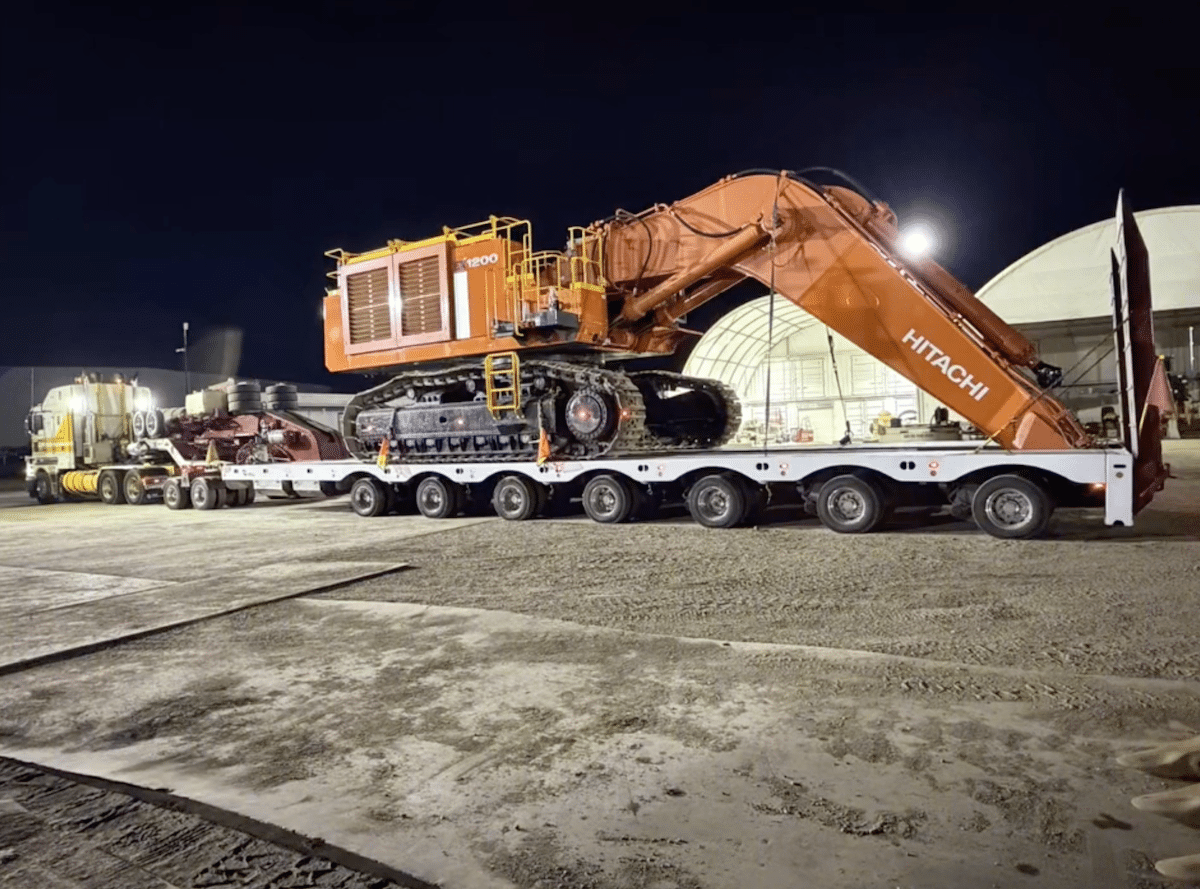
Austrack Equipment transported the biggest excavator in its fleet to a central Queensland mine, using pilot and police escorts and a push–pull prime‑mover setup to handle the load. The operation required coordinated transport planning, significant horsepower, and long‑distance movement, making the mobilise‑and‑deliver aspect operationally complex. For procurement, watch supplier declarations on escort needs and route surveys—it’s a direct trigger for mobilisation cost and schedule clauses

Buyer takeaway

Treat heavy moves as a discrete mobilisation risk: transport method, escort needs and prime‑mover arrangements must be part of supplier bids

Cost / money

Mobilisation line‑items (escorts, route surveys, specialised prime movers) will raise bid baselines and can create scheduling premiums

Supplier / commercial

Vendors with owned fleets or local staging yards can demand staged delivery windows and shorter quote validity to protect allocation

Safety / operations

On‑road and route‑survey safety dependencies rise with heavy moves; failure to contract permits/escorts in advance causes schedule holds

What to watch

Watch suppliers shortening quote validity or adding staged‑delivery clauses for heavy plant to protect scarce transport slots

Key facts

  • 120‑ton excavator moved to central Queensland mine
  • Required pilot and police escorts and push–pull prime movers
  • Long‑distance haul with specialised transport planning

Source excerpts

The transport arrangements required both pilot and police escorts. In addition, the huge horsepower requirements to handle the heavy load were met by lead and trailing prime movers in a push-pull set up
In addition, the huge horsepower requirements to handle the heavy load were met by lead and trailing prime movers in a push-pull set up
The transport arrangements required both pilot and police escorts
Story 2The Australian PipelinerMay 19, 2026

What does the Budget mean for energy?

Signal moderateDirectional

What happened

APGA commentary on the Federal Budget highlights large fuel security measures, including expanded diesel and jet fuel reserves and finance facilities to secure additional fuel and support private storage. The state is using government finance to shore up logistics and fuel resilience, which can reduce short‑term shortage risk but may alter supplier pricing and financing behaviour. Monitor how freight contractors and fuel suppliers change surcharge and payment expectations

Buyer takeaway

Assume policy interventions will affect logistics pricing and payment terms; explicitly ask suppliers how government facilities influence their offers

Cost / money

Government buying and finance can create temporary distortions in spot logistics pricing and may lead to new surcharge behaviours

Supplier / commercial

Suppliers may prefer contracts tied to government‑backed finance or change invoicing terms; expect shifts in commercial packaging of logistics services

Safety / operations

Indirect: better fuel availability reduces operational stoppage risk, but reliance on state mechanisms can shift who manages resilience

What to watch

Watch whether supplier contracts begin to reference government fuel facilities or change pass‑through language for fuel and freight

Key facts

  • Budget measures include government support to increase diesel and jet fuel reserves
  • Programmes to support private storage and freight resilience via finance facilities
  • Budgeted funding allocated to national fuel security initiatives

Source excerpts

2b – Australian Fuel Security Reserve to increase fuel reserves to 50 days. $1b – Economic Resilience Program via the National Reconstruction Fund Corporation – to support freight, fuel, fertiliser and other critical supply chains $54
$3. 2b – Australian Fuel Security Reserve to increase fuel reserves to 50 days
9b over five years from 2025–26 for the National Fuel Security Plan, including $7. 5b – Fuel and Fertiliser Security Facility – enabling Export Finance Australia to secure over 450m litres of additional diesel and around 100m litres of additional jet fuel while supporting private sector storage
Story 3The Australian PipelinerMay 18, 2026

Fitzroy to Gladstone pipeline shortlisted for national sustainability awards

Signal moderateDirectional

What happened

The Fitzroy to Gladstone pipeline project was shortlisted for national sustainability awards for its economic and social outcomes, highlighting strong local supplier engagement and community partnering. The recognition signals procurement emphasis on workforce inclusion, local business participation and lasting regional benefits for major infrastructure projects. For buyers, this means tenders may increasingly reward documented local delivery and social outcome credentials

Buyer takeaway

Prioritise suppliers who can demonstrate local content, community engagement and workforce wellbeing plans when bidding for public projects

Cost / money

Meeting local‑content and community requirements can increase bid preparation cost and may shift price baselines

Supplier / commercial

Contractors with demonstrated social outcomes can win on non‑price criteria; be ready to score and verify claims during evaluation

Safety / operations

Stronger local engagement typically brings more rigorous induction and wellbeing requirements, impacting mobilisation timing

What to watch

Limited‑relevance warning: award shortlisting is recognition, not a policy change; verify whether tenders apply new scoring before changing supplier strategy

Key facts

  • Shortlisted for Excellence in Economic Outcomes and Excellence in Social Outcomes
  • Project credited for local business engagement and workforce participation
  • Principal contractor involved: McConnell Dowell BMD Joint Venture

Source excerpts

” The Excellence in Economic Outcomes category acknowledges the project’s contribution to regional supply chains, workforce participation and the protection of economic activity in one of Australia’s key industrial regions. The Excellence in Social Outcomes category recognises the project’s commitment to community engagement, partnerships with Traditional Owners, and a strong focus on workforce wellbeing and inclusion
“The shortlisting recognises the work undertaken to support local businesses, create employment opportunities and engage meaningfully with communities and Traditional Owners
The Fitzroy to Gladstone pipeline (FGP) has been shortlisted in two categories at the 2026 Infrastructure Sustainability Council Awards — Excellence in Economic Outcomes and Excellence in Social Outcomes. The recognition highlights the project’s strong contribution to economic growth, community outcomes and long-term water security for the Gladstone region and Central Queensland

VP Snapshot

Executive Risk & Action View

Long‑haul heavy‑equipment moves are operationally real and carry mobilisation premiums: a 120‑ton excavator shipment required police/pilot escorts, push–pull prime movers and complex route planning, which directly translates into higher transport cost and lead‑time risk for heavy plant mobilisation.

Overall
47
Cost
79
Supply
79
Schedule
56
Compliance
15

Top signals

30-180dcost

Signal 1: Cost / money

Escort requirements, specialised prime movers and long‑haul logistics increase direct mobilisation line items and likely push day‑rate baselines for owned heavy plant deployments.

Signal 3: Cost / money

Projects prioritising local economic outcomes can change how bids are scored, favouring suppliers that absorb some mobilisation overhead through local presence rather than passing full costs to buyers.

180d+cost

Signal 2: Cost / money

Government purchases and financing for fuel and freight reduce short‑term shortage risk but can create transient market distortions that suppliers may pass through as higher logistics surcharges or longer payment terms.

30-180dsupply

Signal 4: Supplier / commercial

Suppliers owning heavy fleets or with regional yards can tighten delivery windows and demand staged‑delivery clauses to lock allocation, moving bargaining leverage toward capacity‑rich providers.

Signal 5: Supplier / commercial

Contractors that document community engagement, local hiring plans and regional supply‑chain links gain a commercial edge on public‑led projects and may charge a premium for certified local delivery.

30-180dcommercial

Signal 6: Supplier / commercial

Government‑backed fuel or freight facilities change supplier financing optics: some vendors may prefer contracts tied to export‑finance or government guarantees, shifting who bears mobilisation credit risk.

Recommended actions

CategoryDue 3d

Ask shortlisted heavy‑plant and transport suppliers to submit declared transport methods, escort requirements, route‑survey lead times and any regulatory approvals needed for lo...

Updated supplier register with declared mobilisation needs and lead‑time notes for scoring

CategoryDue 3d

Verify fuel and logistics contingency plans with primary freight partners, asking explicitly whether government fuel purchases or export‑finance facilities affect delivery windo...

Documented position from freight partners on fuel exposure and any expected pass‑through or payment changes

ContractsDue 21d

Instruct Contracts to add minimum quote‑validity clauses and explicit caps or approval steps for mobilisation pass‑throughs and escort charges in RFQs for heavy‑plant and OCTG s...

RFQ/contract template that limits surprise mobilisation charges and clarifies approval process for escorts and route surveys

CategoryDue 21d

Run a supplier capability check focused on local execution: require evidence of regional yards, local workforce programmes, and community engagement credentials for suppliers co...

Shortlist annotated with verified local‑execution credentials and recommended preferred suppliers for public tenders

CategoryDue 60d

Run a capability and allocation mapping exercise for heavy plant, owned fleets and long‑haul transport providers to support framework agreements that include mobilisation SLAs a...

Capability matrix and proposed framework terms that limit mobilisation risk and clarify allocation commitments

LegalDue 60d

Ask Legal to review contract pass‑through language and force‑majeure/price‑adjustment clauses to handle government interventions in fuel or logistics markets.

Updated contract playbook with approved pass‑through limits and trigger definitions for fuel or policy interventions

Risk register

RiskTriggerMitigation
Watch for suppliers to shorten quote validity or add staged‑delivery clauses for heavy‑plant work as a way to secure allocation and avoid back‑to‑back transport exposure.Watch for suppliers to shorten quote validity or add staged‑delivery clauses for heavy‑plant work as a way to secure allocation and avoid back‑to‑back transport exposure.Confirm exposure with category, contracts, and operations before the next supplier commitment.
Watch whether government fuel purchases translate into direct supplier pass‑through clauses or changed payment/financing expectations in freight contracts.Watch whether government fuel purchases translate into direct supplier pass‑through clauses or changed payment/financing expectations in freight contracts.Confirm exposure with category, contracts, and operations before the next supplier commitment.
Watch tenders for evidence that local‑content or community outcome scoring is being applied; if present, adjust supplier shortlists to avoid late rejections on non‑commercial grounds.Watch tenders for evidence that local‑content or community outcome scoring is being applied; if present, adjust supplier shortlists to avoid late rejections on non‑commercial grounds.Confirm exposure with category, contracts, and operations before the next supplier commitment.

CM Snapshot

Category Manager Decision Detail

Today's priorities

Ask shortlisted heavy‑plant and transport suppliers to submit declared transport methods, escort requirements, route‑survey lead times and any regulatory approvals needed for lo...

Act because the cited source changes the timing, capacity, or commercial assumptions behind the next sourcing decision.

Due 3d

high

CM move

Use this as the immediate supplier or contract action to move before the next sourcing gate.

Verify fuel and logistics contingency plans with primary freight partners, asking explicitly whether government fuel purchases or export‑finance facilities affect delivery windo...

Act because the cited source changes the timing, capacity, or commercial assumptions behind the next sourcing decision.

Due 3d

high

CM move

Use this as the immediate supplier or contract action to move before the next sourcing gate.

Instruct Contracts to add minimum quote‑validity clauses and explicit caps or approval steps for mobilisation pass‑throughs and escort charges in RFQs for heavy‑plant and OCTG s...

Act because the cited source changes the timing, capacity, or commercial assumptions behind the next sourcing decision.

Due 21d

high

CM move

Use this as the immediate supplier or contract action to move before the next sourcing gate.

Run a supplier capability check focused on local execution: require evidence of regional yards, local workforce programmes, and community engagement credentials for suppliers co...

Act because the cited source changes the timing, capacity, or commercial assumptions behind the next sourcing decision.

Due 21d

high

CM move

Use this as the immediate supplier or contract action to move before the next sourcing gate.

Supplier radar

The Australian Pipeliner

high

Observed supplier signal

Suppliers owning heavy fleets or with regional yards can tighten delivery windows and demand staged‑delivery clauses to lock allocation, moving bargaining leverage toward capacity‑rich providers.

Commercial implication

Suppliers owning heavy fleets or with regional yards can tighten delivery windows and demand staged‑delivery clauses to lock allocation, moving bargaining leverage toward capacity‑rich providers.

Next step: Validate the source-backed signal with incumbents and alternates before the next award or pricing decision.

The Australian Pipeliner

high

Observed supplier signal

Contractors that document community engagement, local hiring plans and regional supply‑chain links gain a commercial edge on public‑led projects and may charge a premium for certified local delivery.

Commercial implication

Contractors that document community engagement, local hiring plans and regional supply‑chain links gain a commercial edge on public‑led projects and may charge a premium for certified local delivery.

Next step: Validate the source-backed signal with incumbents and alternates before the next award or pricing decision.

The Australian Pipeliner

high

Observed supplier signal

Government‑backed fuel or freight facilities change supplier financing optics: some vendors may prefer contracts tied to export‑finance or government guarantees, shifting who bears mobilisation credit risk.

Commercial implication

Government‑backed fuel or freight facilities change supplier financing optics: some vendors may prefer contracts tied to export‑finance or government guarantees, shifting who bears mobilisation credit risk.

Next step: Validate the source-backed signal with incumbents and alternates before the next award or pricing decision.

Negotiation levers

Ask shortlisted heavy‑plant and transport suppliers to submit declared transport methods, escort requirements, route‑survey lead times and any regulatory approvals needed for lo...

When to use: Act because the cited source changes the timing, capacity, or commercial assumptions behind the next sourcing decision.

Expected outcome: Updated supplier register with declared mobilisation needs and lead‑time notes for scoring

Commercial mechanism to carry into the next supplier conversation

Verify fuel and logistics contingency plans with primary freight partners, asking explicitly whether government fuel purchases or export‑finance facilities affect delivery windo...

When to use: Act because the cited source changes the timing, capacity, or commercial assumptions behind the next sourcing decision.

Expected outcome: Documented position from freight partners on fuel exposure and any expected pass‑through or payment changes

Commercial mechanism to carry into the next supplier conversation

Instruct Contracts to add minimum quote‑validity clauses and explicit caps or approval steps for mobilisation pass‑throughs and escort charges in RFQs for heavy‑plant and OCTG s...

When to use: Act because the cited source changes the timing, capacity, or commercial assumptions behind the next sourcing decision.

Expected outcome: RFQ/contract template that limits surprise mobilisation charges and clarifies approval process for escorts and route surveys

Commercial mechanism to carry into the next supplier conversation

Run a supplier capability check focused on local execution: require evidence of regional yards, local workforce programmes, and community engagement credentials for suppliers co...

When to use: Act because the cited source changes the timing, capacity, or commercial assumptions behind the next sourcing decision.

Expected outcome: Shortlist annotated with verified local‑execution credentials and recommended preferred suppliers for public tenders

Commercial mechanism to carry into the next supplier conversation

Talking points

Long‑haul heavy‑equipment moves are operationally real and carry mobilisation premiums: a 120‑ton excavator shipment required police/pilot escorts, push–pull prime movers and complex route planning, which directly translates into higher transport cost and lead‑time risk for heavy plant mobilisation.
Federal Budget fuel security measures expand government buying and financing for diesel and freight support, lowering the immediate risk of a supply shock but creating a new channel through which policy can change logistics pricing or availability.
Public projects that emphasise local economic and social outcomes (Fitzroy‑Gladstone pipeline shortlist) increase the procurement advantage for contractors with verified local supply chains, workforce programs and community engagement credentials.
In practical terms for OCTG and wells materials: expect mobilisation line‑items (escorts, specialised transport, route surveys) to appear in quotes, and for schedule risk to rise on long‑distance plant moves unless suppliers document lead times and transport plans.

Supplier radar

SupplierSignalImplicationNext stepConfidence
The Australian PipelinerSuppliers owning heavy fleets or with regional yards can tighten delivery windows and demand staged‑delivery clauses to lock allocation, moving bargaining leverage toward capacity‑rich providers.Suppliers owning heavy fleets or with regional yards can tighten delivery windows and demand staged‑delivery clauses to lock allocation, moving bargaining leverage toward capacity‑rich providers.Validate the source-backed signal with incumbents and alternates before the next award or pricing decision.high
The Australian PipelinerContractors that document community engagement, local hiring plans and regional supply‑chain links gain a commercial edge on public‑led projects and may charge a premium for certified local delivery.Contractors that document community engagement, local hiring plans and regional supply‑chain links gain a commercial edge on public‑led projects and may charge a premium for certified local delivery.Validate the source-backed signal with incumbents and alternates before the next award or pricing decision.high
The Australian PipelinerGovernment‑backed fuel or freight facilities change supplier financing optics: some vendors may prefer contracts tied to export‑finance or government guarantees, shifting who bears mobilisation credit risk.Government‑backed fuel or freight facilities change supplier financing optics: some vendors may prefer contracts tied to export‑finance or government guarantees, shifting who bears mobilisation credit risk.Validate the source-backed signal with incumbents and alternates before the next award or pricing decision.high

Negotiation levers

  • Ask shortlisted heavy‑plant and transport suppliers to submit declared transport methods, escort requirements, route‑survey lead times and any regulatory approvals needed for lo...Act because the cited source changes the timing, capacity, or commercial assumptions behind the next sourcing decision.Updated supplier register with declared mobilisation needs and lead‑time notes for scoring

    high confidence

  • Verify fuel and logistics contingency plans with primary freight partners, asking explicitly whether government fuel purchases or export‑finance facilities affect delivery windo...Act because the cited source changes the timing, capacity, or commercial assumptions behind the next sourcing decision.Documented position from freight partners on fuel exposure and any expected pass‑through or payment changes

    high confidence

  • Instruct Contracts to add minimum quote‑validity clauses and explicit caps or approval steps for mobilisation pass‑throughs and escort charges in RFQs for heavy‑plant and OCTG s...Act because the cited source changes the timing, capacity, or commercial assumptions behind the next sourcing decision.RFQ/contract template that limits surprise mobilisation charges and clarifies approval process for escorts and route surveys

    high confidence

  • Run a supplier capability check focused on local execution: require evidence of regional yards, local workforce programmes, and community engagement credentials for suppliers co...Act because the cited source changes the timing, capacity, or commercial assumptions behind the next sourcing decision.Shortlist annotated with verified local‑execution credentials and recommended preferred suppliers for public tenders

    high confidence

What to do / What to watch

What to do now

  • Ask shortlisted heavy‑plant and transport suppliers to submit declared transport methods, escort requirements, route‑survey lead times and any regulatory approvals needed for lo...

    Why: Act because the cited source changes the timing, capacity, or commercial assumptions behind the next sourcing decision.

    Owner: Category

    Expected outcome: Updated supplier register with declared mobilisation needs and lead‑time notes for scoring

    [3]
  • Verify fuel and logistics contingency plans with primary freight partners, asking explicitly whether government fuel purchases or export‑finance facilities affect delivery windo...

    Why: Act because the cited source changes the timing, capacity, or commercial assumptions behind the next sourcing decision.

    Owner: Category

    Expected outcome: Documented position from freight partners on fuel exposure and any expected pass‑through or payment changes

    [1]

Next few weeks

  • Instruct Contracts to add minimum quote‑validity clauses and explicit caps or approval steps for mobilisation pass‑throughs and escort charges in RFQs for heavy‑plant and OCTG s...

    Why: Act because the cited source changes the timing, capacity, or commercial assumptions behind the next sourcing decision.

    Owner: Contracts

    Expected outcome: RFQ/contract template that limits surprise mobilisation charges and clarifies approval process for escorts and route surveys

    [3]
  • Run a supplier capability check focused on local execution: require evidence of regional yards, local workforce programmes, and community engagement credentials for suppliers co...

    Why: Act because the cited source changes the timing, capacity, or commercial assumptions behind the next sourcing decision.

    Owner: Category

    Expected outcome: Shortlist annotated with verified local‑execution credentials and recommended preferred suppliers for public tenders

    [2]

Longer view

  • Run a capability and allocation mapping exercise for heavy plant, owned fleets and long‑haul transport providers to support framework agreements that include mobilisation SLAs a...

    Why: Act because the cited source changes the timing, capacity, or commercial assumptions behind the next sourcing decision.

    Owner: Category

    Expected outcome: Capability matrix and proposed framework terms that limit mobilisation risk and clarify allocation commitments

    [3][1]
  • Ask Legal to review contract pass‑through language and force‑majeure/price‑adjustment clauses to handle government interventions in fuel or logistics markets.

    Why: Act because the cited source changes the timing, capacity, or commercial assumptions behind the next sourcing decision.

    Owner: Legal

    Expected outcome: Updated contract playbook with approved pass‑through limits and trigger definitions for fuel or policy interventions

    [1]

What to watch

  • Watch for suppliers to shorten quote validity or add staged‑delivery clauses for heavy‑plant work as a way to secure allocation and avoid back‑to‑back transport exposure
  • Watch whether government fuel purchases translate into direct supplier pass‑through clauses or changed payment/financing expectations in freight contracts
  • Watch tenders for evidence that local‑content or community outcome scoring is being applied; if present, adjust supplier shortlists to avoid late rejections on non‑commercial grounds
  • Watch for suppliers to shorten quote validity or add staged‑delivery clauses for heavy‑plant work as a way to secure allocation and avoid back‑to‑back transport exposure.: Watch for suppliers to shorten quote validity or add staged‑delivery clauses for heavy‑plant work as a way to secure allocation and avoid back‑to‑back transport exposure
  • Watch whether government fuel purchases translate into direct supplier pass‑through clauses or changed payment/financing expectations in freight contracts.: Watch whether government fuel purchases translate into direct supplier pass‑through clauses or changed payment/financing expectations in freight contracts
  • Watch tenders for evidence that local‑content or community outcome scoring is being applied; if present, adjust supplier shortlists to avoid late rejections on non‑commercial grounds.: Watch tenders for evidence that local‑content or community outcome scoring is being applied; if present, adjust supplier shortlists to avoid late rejections on non‑commercial grounds
  • Long‑haul heavy‑equipment moves are operationally real and carry mobilisation premiums: a 120‑ton excavator shipment required police/pilot escorts, push–pull prime movers and complex route planning, which directly translates into higher transport cost and lead‑time risk for heavy plant mobilisation
  • Federal Budget fuel security measures expand government buying and financing for diesel and freight support, lowering the immediate risk of a supply shock but creating a new channel through which policy can change logistics pricing or availability

Market pulse

IndexLatestChangeAs of
HRC Steel (HRC)740 /ton+0.00 (+0.00%)May 19, 2026, 10:10 PM
Copper (COPPER)3.85 /lb+0.00 (+0.00%)May 19, 2026, 10:10 PM
Iron Ore (IRON)108.5 /t+0.00 (+0.00%)May 19, 2026, 10:10 PM
Tenaris (TS)32 +0.00 (+0.00%)May 19, 2026, 10:10 PM
  • HRC Steel: HRC steel movements impact OCTG coil and plate costs; mobilisation and transport premiums will add to landed cost when steel inputs are moved long distances
  • Tenaris: Tenaris (pipe maker) pricing and supply posture influence OCTG availability; expect manufacturers to reflect mobilisation and fuel cost shifts in lead times and quotes

Sources

Inline citations jump here. Expand a source to read the excerpt, the AI interpretation, and the original link.

[1] What does the Budget mean for energy?

pipeliner.com.au · May 19, 2026

Expand

AI reading

APGA commentary on the Federal Budget highlights large fuel security measures, including expanded diesel and jet fuel reserves and finance facilities to secure additional fuel and support private storage. The state is using government finance to shore up logistics and fuel resilience, which can reduce short‑term shortage risk but may alter supplier pricing and financing behaviour. Monitor how freight contractors and fuel suppliers change surcharge and payment expectations

Buyer takeaway

Assume policy interventions will affect logistics pricing and payment terms; explicitly ask suppliers how government facilities influence their offers

Cost / money

Government buying and finance can create temporary distortions in spot logistics pricing and may lead to new surcharge behaviours

Supplier / commercial

Suppliers may prefer contracts tied to government‑backed finance or change invoicing terms; expect shifts in commercial packaging of logistics services

Safety / operations

Indirect: better fuel availability reduces operational stoppage risk, but reliance on state mechanisms can shift who manages resilience

What to watch

Watch whether supplier contracts begin to reference government fuel facilities or change pass‑through language for fuel and freight

Key facts

  • Budget measures include government support to increase diesel and jet fuel reserves
  • Programmes to support private storage and freight resilience via finance facilities
  • Budgeted funding allocated to national fuel security initiatives

Source excerpts

2b – Australian Fuel Security Reserve to increase fuel reserves to 50 days. $1b – Economic Resilience Program via the National Reconstruction Fund Corporation – to support freight, fuel, fertiliser and other critical supply chains $54
$3. 2b – Australian Fuel Security Reserve to increase fuel reserves to 50 days
9b over five years from 2025–26 for the National Fuel Security Plan, including $7. 5b – Fuel and Fertiliser Security Facility – enabling Export Finance Australia to secure over 450m litres of additional diesel and around 100m litres of additional jet fuel while supporting private sector storage

Used in this brief

  • Next 72 hours — Verify fuel and logistics contingency plans with primary freight partners, asking explicitly whether government fuel purchases or export‑finance facilities affect delivery windo.... Rationale: Act because the cited source changes the timing, capacity, or commercial assumptions behind the next sourcing decision.. Owner: Category. KPI: Documented position from freight partners on fuel exposure and any expected pass‑through or payment changes
  • Next quarter — Ask Legal to review contract pass‑through language and force‑majeure/price‑adjustment clauses to handle government interventions in fuel or logistics markets.. Rationale: Act because the cited source changes the timing, capacity, or commercial assumptions behind the next sourcing decision.. Owner: Legal. KPI: Updated contract playbook with approved pass‑through limits and trigger definitions for fuel or policy interventions
  • Watch whether government fuel purchases translate into direct supplier pass‑through clauses or changed payment/financing expectations in freight contracts
Open original source

[2] Fitzroy to Gladstone pipeline shortlisted for national sustainability awards

pipeliner.com.au · May 18, 2026

Expand

AI reading

The Fitzroy to Gladstone pipeline project was shortlisted for national sustainability awards for its economic and social outcomes, highlighting strong local supplier engagement and community partnering. The recognition signals procurement emphasis on workforce inclusion, local business participation and lasting regional benefits for major infrastructure projects. For buyers, this means tenders may increasingly reward documented local delivery and social outcome credentials

Buyer takeaway

Prioritise suppliers who can demonstrate local content, community engagement and workforce wellbeing plans when bidding for public projects

Cost / money

Meeting local‑content and community requirements can increase bid preparation cost and may shift price baselines

Supplier / commercial

Contractors with demonstrated social outcomes can win on non‑price criteria; be ready to score and verify claims during evaluation

Safety / operations

Stronger local engagement typically brings more rigorous induction and wellbeing requirements, impacting mobilisation timing

What to watch

Limited‑relevance warning: award shortlisting is recognition, not a policy change; verify whether tenders apply new scoring before changing supplier strategy

Key facts

  • Shortlisted for Excellence in Economic Outcomes and Excellence in Social Outcomes
  • Project credited for local business engagement and workforce participation
  • Principal contractor involved: McConnell Dowell BMD Joint Venture

Source excerpts

” The Excellence in Economic Outcomes category acknowledges the project’s contribution to regional supply chains, workforce participation and the protection of economic activity in one of Australia’s key industrial regions. The Excellence in Social Outcomes category recognises the project’s commitment to community engagement, partnerships with Traditional Owners, and a strong focus on workforce wellbeing and inclusion
“The shortlisting recognises the work undertaken to support local businesses, create employment opportunities and engage meaningfully with communities and Traditional Owners
The Fitzroy to Gladstone pipeline (FGP) has been shortlisted in two categories at the 2026 Infrastructure Sustainability Council Awards — Excellence in Economic Outcomes and Excellence in Social Outcomes. The recognition highlights the project’s strong contribution to economic growth, community outcomes and long-term water security for the Gladstone region and Central Queensland

Used in this brief

  • Next 2-4 weeks — Run a supplier capability check focused on local execution: require evidence of regional yards, local workforce programmes, and community engagement credentials for suppliers co.... Rationale: Act because the cited source changes the timing, capacity, or commercial assumptions behind the next sourcing decision.. Owner: Category. KPI: Shortlist annotated with verified local‑execution credentials and recommended preferred suppliers for public tenders
  • Watch tenders for evidence that local‑content or community outcome scoring is being applied; if present, adjust supplier shortlists to avoid late rejections on non‑commercial grounds
  • Public‑project recognition (Fitzroy‑Gladstone shortlist) upgrades local‑supply and social‑outcomes credentials from background considerations to active commercial advantages on tendered infrastructure work (Article 4)
Open original source

[3] Austrack Equipment sends out the big guns

pipeliner.com.au · May 11, 2026

Expand

AI reading

Austrack Equipment transported the biggest excavator in its fleet to a central Queensland mine, using pilot and police escorts and a push–pull prime‑mover setup to handle the load. The operation required coordinated transport planning, significant horsepower, and long‑distance movement, making the mobilise‑and‑deliver aspect operationally complex. For procurement, watch supplier declarations on escort needs and route surveys—it’s a direct trigger for mobilisation cost and schedule clauses

Buyer takeaway

Treat heavy moves as a discrete mobilisation risk: transport method, escort needs and prime‑mover arrangements must be part of supplier bids

Cost / money

Mobilisation line‑items (escorts, route surveys, specialised prime movers) will raise bid baselines and can create scheduling premiums

Supplier / commercial

Vendors with owned fleets or local staging yards can demand staged delivery windows and shorter quote validity to protect allocation

Safety / operations

On‑road and route‑survey safety dependencies rise with heavy moves; failure to contract permits/escorts in advance causes schedule holds

What to watch

Watch suppliers shortening quote validity or adding staged‑delivery clauses for heavy plant to protect scarce transport slots

Key facts

  • 120‑ton excavator moved to central Queensland mine
  • Required pilot and police escorts and push–pull prime movers
  • Long‑distance haul with specialised transport planning

Source excerpts

The transport arrangements required both pilot and police escorts. In addition, the huge horsepower requirements to handle the heavy load were met by lead and trailing prime movers in a push-pull set up
In addition, the huge horsepower requirements to handle the heavy load were met by lead and trailing prime movers in a push-pull set up
The transport arrangements required both pilot and police escorts

Used in this brief

  • Long‑haul heavy‑equipment moves are operationally real and carry mobilisation premiums: a 120‑ton excavator shipment required police/pilot escorts, push–pull prime movers and complex route planning, which directly translates into higher transport cost and lead‑time risk for heavy plant mobilisation. Federal Budget fuel security measures expand government buying and financing for diesel and freight support, lowering the immediate risk of a supply shock but creating a new channel through which policy can change logistics pricing or availability. Public projects that emphasise local economic and social outcomes (Fitzroy‑Gladstone pipeline shortlist) increase the procurement advantage for contractors with verified local supply chains, workforce programs and community engagement credentials. In practical terms for OCTG and wells materials: expect mobilisation line‑items (escorts, specialised transport, route surveys) to appear in quotes, and for schedule risk to rise on long‑distance plant moves unless suppliers document lead times and transport plans
  • Cost / money: Escort requirements, specialised prime movers and long‑haul logistics increase direct mobilisation line items and likely push day‑rate baselines for owned heavy plant deployments
  • Safety / operations: Heavy‑move operations add road‑safety and permitting dependencies (police/pilot escorts, route surveys) that must be contracted and insured before mobilisation to avoid schedule holds
Open original source

[4] HRC Steel

cmegroup.com · n.d.

Expand

[5] Tenaris

finance.yahoo.com · n.d.

Expand