Plug & Abandonment / Decommissioning · Australia (Perth)

Secure P&A Mobilisation Against Tightening Vessel and Yard Capacity

Published May 19, 2026, 6:06 AM AWSTAPACFull category signal
Ask AI
Offshore Natural Gas News

In 60 seconds

Top move

A named APAC award for subsea control umbilicals in Australia (Amplitude Energy → JDR) is a concrete execution signal that will pull local installer and yard capacity into production work, reducing optional slots for plug & abandonment (P&A)

Key takeaways

  • A named APAC award for subsea control umbilicals in Australia (Amplitude Energy → JDR) is a concrete execution signal that will pull local installer and yard capacity into production work, reducing optional slots for plug & abandonment (P&A).[4]
  • Owners are converting and committing vessels and rigs to longer campaigns or fuel retrofits, which reduces short‑notice availability of specialist tonnage P&A relies on and shifts commercial leverage toward suppliers.[2]
  • Fleet investment into renewables and long cable campaigns (new high‑capacity cable‑laying orders) will absorb specialist subsea/heavy‑lift capacity over time, tightening the pool of service providers contestable for decommissioning windows.[3]
  • Operationally real details: the Australian umbilicals award ties local installer capacity to a slipping production and installation schedule, and an ammonia conversion on a PSV introduces new fuel and certification dependencies buyers must track.[4][1]
  • This is a normal‑signal day for the category — factual awards and vessel programmes shift sourcing levers but do not create an immediate P&A stoppage; plan to verify supplier commitments rather than assume free capacity.[4]

What changed since last run

  • New APAC execution signal: Amplitude Energy awarded subsea control umbilicals to JDR for an Australian gas project, creating a local installer demand that was not in the prior brief .
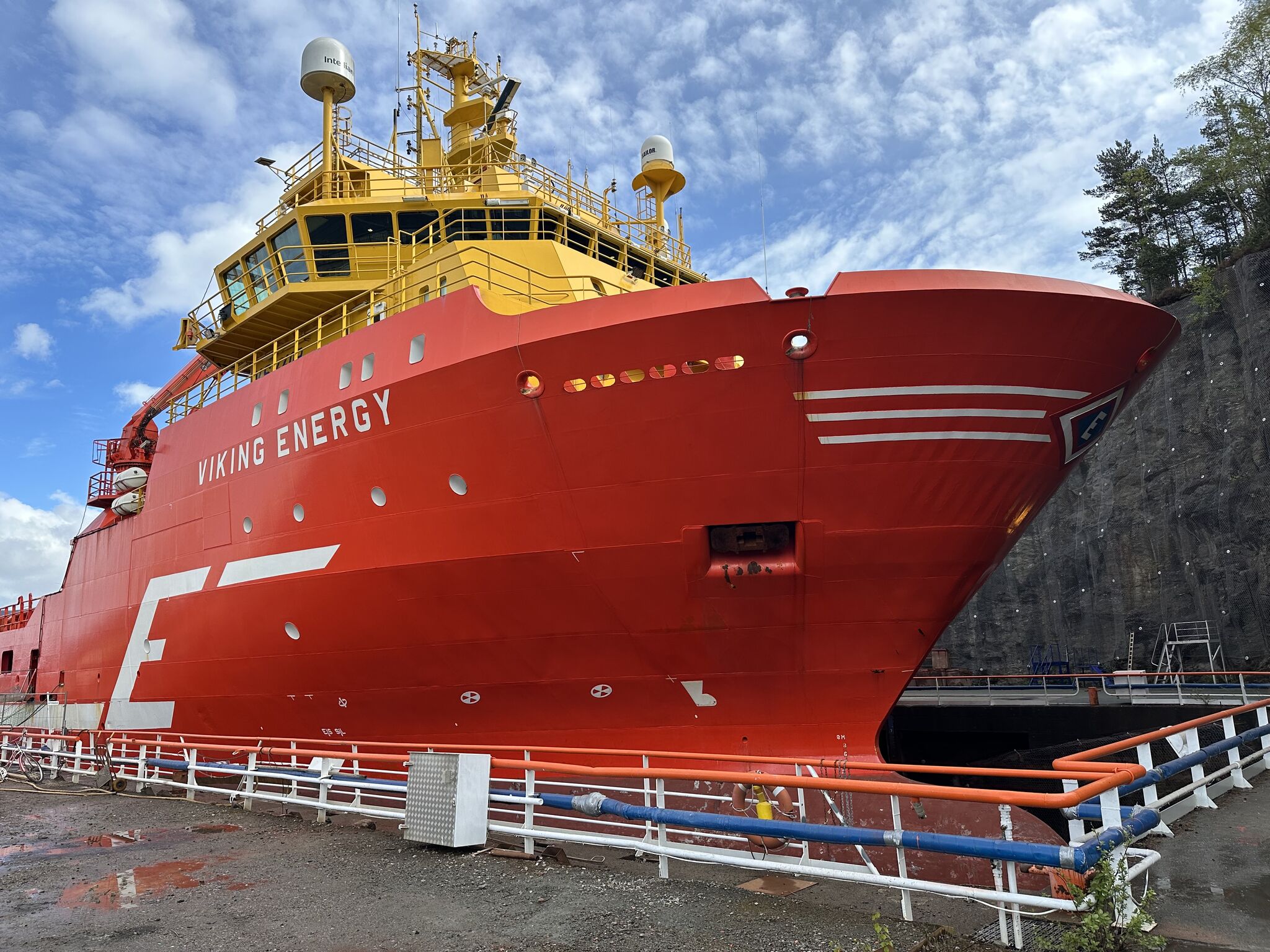
  • Vessel readiness change: Eidesvik has started an ammonia dual‑fuel retrofit on a PSV, introducing new fuel and certification dependencies for vessel nominations that were absent before .
  • Fleet absorption signal: Boskalis placed a CLV newbuild order that further locks specialist cable and heavy‑lift capacity into renewables-driven campaigns, reducing medium‑term contestability for P&A scopes .

Key facts

  • Production license for the Annie gas field off Australia
  • Subsea control umbilicals contract awarded to JDR
  • Local installation work shifts into execution and bookings
  • PSV docked for ammonia dual‑fuel retrofit
  • Work includes ammonia tank installation and dual‑fuel engines
  • Retrofit completion planned for autumn, affecting availability

Why it matters

A named APAC award for subsea control umbilicals in Australia (Amplitude Energy → JDR) is a concrete execution signal that will pull local installer and yard capacity into production work, reducing optional slots for plug & abandonment (P&A). Owners are converting and committing vessels and rigs to longer campaigns or fuel retrofits, which reduces short‑notice availability of specialist tonnage P&A relies on and shifts commercial leverage toward suppliers. Fleet investment into renewables and long cable campaigns (new high‑capacity cable‑laying orders) will absorb specialist subsea/heavy‑lift capacity over time, tightening the pool of service providers contestable for decommissioning windows. Operationally real details: the Australian umbilicals award ties local installer capacity to a slipping production and installation schedule, and an ammonia conversion on a PSV introduces new fuel and certification dependencies buyers must track

Cost / money

  • Local subsea installation awards reduce available yard and installer slots in APAC and directionally raise mobilisation and charter premiums when P&A windows overlap with production work.[4]
  • Longer rig commitments and multi‑year vessel charters remove spot supply, reducing buyer leverage and making last‑minute mobilisation and cancellation exposure more expensive.[2]
  • Fuel conversions (ammonia/double‑fuel) create new cost lines for specialised logistics and downtime that owners can push into pass‑throughs unless contracts explicitly cap them.[1]

Supplier / commercial

  • Suppliers awarded production work will prioritise firm slots and shorten quote validity windows, making it harder to secure flexible P&A call‑offs at competitive rates.[4]
  • Newbuilds and long renewables campaigns create commercial preference for multi‑year customers, so shipowners will favour bundled, longer‑term contracts over short P&A nominations.[3]

Safety / operations

  • Ammonia dual‑fuel retrofits introduce distinct HSE requirements and new crew competencies; nominating a retrofitted vessel without a technical annex can lengthen mobilisation checks and introduce compliance risk.[1]
  • Compressed windows where production installation and decommissioning overlap increase the risk of rushed HSE steps (competency checks, HAZID handovers) unless contractual schedule buffers or hold points are preserved.[4]

What to watch

  • Watch whether the Australian umbilicals schedule leads contractors to lock yard bookings that conflict with planned P&A mobilisations — this will directly affect heavy‑lift and termination availability.[4]
  • Verify announced retrofit timelines and regulatory approvals for ammonia conversions; undisclosed or slipped retrofit work can remove PSVs from availability at short notice.[1]

Top stories

Story 1Offshore Engineer

Offshore Natural Gas News

Signal strongSource-grounded

What happened

Amplitude Energy secured a production license and awarded subsea control umbilicals to JDR for an Australian gas project, moving the scope from planning toward execution. The award ties local installer and yard capacity to production installation schedules that will compete with P&A mobilisation. Watch whether follow‑on installation dates and yard bookings overlap planned decommissioning windows

Buyer takeaway

Treat this as a firm local demand signal because a named supplier award indicates work is moving into execution and will claim installer and yard capacity

Cost / money

Directional upward pressure on mobilisation and charter premiums when production installation windows overlap P&A scopes

Supplier / commercial

Awarded suppliers will prioritise firm production slots and may shorten quote validity for competing P&A bids

Safety / operations

Overlap of installation and decommissioning activity increases need to protect HSE schedule buffers (competency checks, permits)

What to watch

Confirm yard bookings and install dates versus planned P&A windows to avoid late conflicts

Key facts

  • Production license for the Annie gas field off Australia
  • Subsea control umbilicals contract awarded to JDR
  • Local installation work shifts into execution and bookings

Source excerpts

The models suggest these projects have fragile economics… JDR Nets Subsea Umbilicals Deal for Australian Gas Project Apr 30, 2026 Amplitude Energy has awarded a contract to JDR Cable Systems to supply subsea control umbilicals for its East Coast Supply Project offshore Victoria, aimed at supporting gas delivery to southeastern Australia
The transaction, completed ahead of schedule… Romanian Neptun Deep Black Sea Gas Project Begins to Lay Pipeline May 04, 2026 Work has begun to lay pipelines for Romania's Neptun Deep Black Sea gas project, one of the European Union's most significant energy deposits with an estimated 100 billion cubic meters of recoverable gas. Once it starts producing gas in 2027… Equinor Extends Drilling Agreements for Norwegian Continental Shelf May 04, 2026 Equinor is extending key supplier agreements with a combined value o
The permit is for wellbore 34/10-56 S in production license 050 HS… Amplitude Energy Secures Production License for Annie Gas Field off Australia May 07, 2026 Amplitude Energy, formerly Cooper Energy, has received production license VIC/L37 for the Annie offshore gas field in Australia’s Otway Basin, with first gas targeted in 2028
Story 2Offshore EnergyMay 18, 2026

Eidesvik's PSV begins journey to ammonia-powered operations

Signal moderateDirectional

What happened

Eidesvik has begun converting a platform‑supply vessel to ammonia dual‑fuel, including tank and engine installation and structural work. The retrofit changes fuel logistics, crew certification needs and short‑term availability for offshore support; completion is planned for the autumn. Watch regulatory approvals and retrofit timing that could temporarily remove a PSV from the available fleet

Buyer takeaway

Flag vessels undergoing fuel conversions as a mobilisation risk because conversions create temporary unavailability and new certification requirements

Cost / money

Retrofit downtime and specialised fuel logistics can create pass‑through costs unless contracts cap them

Supplier / commercial

Owners with retrofit programmes may prioritise longer or higher‑margin contracts, reducing short‑notice nominations for P&A

Safety / operations

Ammonia handling and dual‑fuel operations require updated emergency procedures and crew training that extend mobilisation checks

What to watch

Track conversion schedules and regulatory assessments; undisclosed retrofit timing can cause late disqualifications

Key facts

  • PSV docked for ammonia dual‑fuel retrofit
  • Work includes ammonia tank installation and dual‑fuel engines
  • Retrofit completion planned for autumn, affecting availability

Source excerpts

Work to be carried out includes prefabrication of steel and piping systems, major structural modifications, installation and integration of a new ammonia dual-fuel engine, ammonia tank and fuel systems, and technical upgrades
Work to be carried out includes prefabrication of steel and piping systems, major structural modifications, installation and integration of a new ammonia dual-fuel engine, ammonia tank and fuel systems, and technical upgrades. Wärtsilä Marine will deliver its 25 dual-fuel engine capable of operating on ammonia and marine gas oil, while Breeze Ship Design is responsible for ship design and engineering
According to Eidesvik, upon completion of the retrofit, Viking Energy will be the first offshore vessel to be able to operate on ammonia, and this is the first actual project in the industry testing out ammonia as fuel for a vessel in normal operation
Story 3Offshore EnergyMay 18, 2026

Boskalis orders new cable-laying vessel for offshore wind, interconnector markets

Signal strongSource-grounded

What happened

Boskalis ordered a high‑capacity cable‑laying vessel designed to support long‑distance HVDC and offshore wind projects, with large cable carousels and extended campaign capability. The newbuild will enter service in the medium term and absorb specialist subsea and heavy‑lift capacity into renewables programmes. Watch delivery timing and major wind tenders that could lock the vessel into multi‑year campaigns and reduce contestability for P&A

Buyer takeaway

Expect specialist cable and heavy‑lift capacity to be absorbed by renewables unless buyers secure slots early or define fallbacks

Cost / money

Shift of specialist vessels to wind projects reduces contestability and can lift day rates or mobilisation premiums for P&A

Supplier / commercial

Shipowners will favour multi‑year or higher‑margin contracts, shrinking the pool of short‑notice suppliers for decommissioning tasks

Safety / operations

Long‑distance cable operations require different tooling and crew competence, limiting cross‑utilisation without re‑mobilisation

What to watch

Monitor newbuild delivery schedules and large wind tenders that could lock the vessel into multi‑year campaigns

Key facts

  • New high‑capacity cable‑laying vessel ordered for offshore wind and interconnectors
  • Design includes two 12,000‑ton carousels (24,000‑ton total capacity)
  • Vessel scheduled to enter service in the medium term, absorbing specialist capacity

Source excerpts

The newbuild CLV will feature two 12,000-ton cable carousels, including a concentric carousel, giving the vessel a total cable carrying capacity of 24,000 tons
The newbuild CLV will feature two 12,000-ton cable carousels, including a concentric carousel, giving the vessel a total cable carrying capacity of 24,000 tons. Boskalis said the design will enable the installation of longer continuous cable sections, reducing the need for offshore joints
Home Vessels & Vehicles Boskalis orders new cable-laying vessel for offshore wind, interconnector markets May 18, 2026, by Boskalis will invest in a new high-capacity cable-laying vessel (CLV) targeting the offshore wind and interconnector markets, the company said on May 18. Image: Boskalis According to the company, the vessel is designed to support growing demand for long-distance cable installation, particularly for high-voltage direct current (HVDC) cables, driven by the electrification of energy demand and
Story 4Offshore EnergyMay 18, 2026

ADES’ 2014-built rig turns one-year North Sea gig into three-year drilling job

Signal moderateSource-grounded

What happened

ADES converted a one‑year North Sea rig assignment into a multi‑year firm contract, preserving optional extensions but adding firm term commitment for the operator. This removes a potentially flexible rig from the spot pool and signals tighter global rig availability for callers needing jack‑ups or drilling support. Watch whether owners replicate this behaviour in other regions, which would reduce flexible rig options for P&A sourcing

Buyer takeaway

Treat multi‑year rig extensions as a supply constraint because they lock capacity that might otherwise be available for short‑notice P&A needs

Cost / money

Longer firm charters reduce spot supply and increase mobilisation premiums for work requiring drilling rigs or jack‑ups

Supplier / commercial

Rig owners gain leverage to push for extended charters, cancellation fees and stricter slot‑confirmation terms

Safety / operations

Longer campaigns stabilise crew competency but reduce flexibility to reassign rigs into late P&A windows

What to watch

Confirm consent dependencies and any pass‑through clauses in rig charters that could shift mobilisation risk onto buyers

Key facts

  • One‑year firm converted into a three‑year firm term for the rig contract
  • Rig moved to continue drilling follow‑on wells with measured depth targets reported
  • Extension preserves optional extension terms while increasing firm commitment

Source excerpts

The rig owner explains that this converts the initial one-year firm term into a three-year firm term, while maintaining the same optional terms
This contract extension comes shortly after ADES announced a one-year firm contract for its Main Pass IV standard jack-up rig in Nigeria
Shelf Drilling Winner jack-up rig; Source: Shelf Drilling; now part of ADES ADES has won a contract extension for the Shelf Drilling Winner rig with Tenaz Energy in the Netherlands, allowing the jack-up to continue carrying out operations in the Dutch North Sea. The rig owner explains that this converts the initial one-year firm term into a three-year firm term, while maintaining the same optional terms

VP Snapshot

Executive Risk & Action View

A named APAC award for subsea control umbilicals in Australia (Amplitude Energy → JDR) is a concrete execution signal that will pull local installer and yard capacity into production work, reducing optional slots for plug & abandonment (P&A).

Overall
51
Cost
79
Supply
79
Schedule
38
Compliance
15

Top signals

30-180dcost

Signal 1: Cost / money

Local subsea installation awards reduce available yard and installer slots in APAC and directionally raise mobilisation and charter premiums when P&A windows overlap with production work.

Signal 3: Cost / money

Fuel conversions (ammonia/double‑fuel) create new cost lines for specialised logistics and downtime that owners can push into pass‑throughs unless contracts explicitly cap them.

180d+cost

Signal 2: Cost / money

Longer rig commitments and multi‑year vessel charters remove spot supply, reducing buyer leverage and making last‑minute mobilisation and cancellation exposure more expensive.

30-180dcommercial

Signal 4: Supplier / commercial

Suppliers awarded production work will prioritise firm slots and shorten quote validity windows, making it harder to secure flexible P&A call‑offs at competitive rates.

180d+commercial

Signal 5: Supplier / commercial

Newbuilds and long renewables campaigns create commercial preference for multi‑year customers, so shipowners will favour bundled, longer‑term contracts over short P&A nominations.

30-180dsupply

Signal 6: Safety / operations

Ammonia dual‑fuel retrofits introduce distinct HSE requirements and new crew competencies; nominating a retrofitted vessel without a technical annex can lengthen mobilisation checks and introduce compliance risk.

Recommended actions

ContractsDue 3d

Ask shortlisted subsea installers, yards and vessel owners to reconfirm in writing their current slot availability, quote validity and any mobilisation pass‑through clauses.

Documented supplier confirmations of slot availability, quote lifetimes, and mobilisation pass‑through terms to inform near‑term call‑offs.

CategoryDue 3d

Request nominated vessel owners declare planned retrofits, fuel capability changes, and crew certification status for any vessel you may nominate for P&A work.

Supplier declarations on retrofit schedules and crew certification to avoid last‑minute disqualifications at mobilisation.

ContractsDue 21d

Update tender and nomination templates to score slot confirmation mechanics, cancellation fees, fuel‑capability constraints and pass‑through exposure explicitly.

Revised tender templates that quantify slot certainty, cancellation exposure, and fuel/certification constraints during bid evaluation.

LegalDue 21d

Build a technical safety annex for alternative‑fuel vessels that allocates responsibility for fuel supply, handling, training and emergency response before accepting a nomination.

Standard safety annex available to attach to nominations that clarifies certification, emergency procedures and cost responsibilities.

OpsDue 60d

Run a regional mobilisation capacity scan across APAC yards, local fabrication providers and specialist vessel owners to map timing conflicts between production, renewables and...

Regional capacity register showing yard and specialist vessel lead‑time exposure and recommended fallback suppliers or sequencing mitigations.

CategoryDue 60d

Prepare a P&A framework RFP that embeds slot confirmation mechanics, caps on mobilisation pass‑throughs and fallback nomination rights for critical subcontracted scopes.

Draft framework RFP ready for market testing to lock slot confirmation mechanics and limit mobilisation cost pass‑through exposure.

Risk register

RiskTriggerMitigation
Watch whether the Australian umbilicals schedule leads contractors to lock yard bookings that conflict with planned P&A mobilisations — this will directly affect heavy‑lift and termination availability.Watch whether the Australian umbilicals schedule leads contractors to lock yard bookings that conflict with planned P&A mobilisations — this will directly affect heavy‑lift and termination availability.Confirm exposure with category, contracts, and operations before the next supplier commitment.
Verify announced retrofit timelines and regulatory approvals for ammonia conversions; undisclosed or slipped retrofit work can remove PSVs from availability at short notice.Verify announced retrofit timelines and regulatory approvals for ammonia conversions; undisclosed or slipped retrofit work can remove PSVs from availability at short notice.Confirm exposure with category, contracts, and operations before the next supplier commitment.

CM Snapshot

Category Manager Decision Detail

Today's priorities

Ask shortlisted subsea installers, yards and vessel owners to reconfirm in writing their current slot availability, quote validity and any mobilisation pass‑through clauses.

Do this because the Amplitude/JDR award and recent contract extensions change immediate capacity assumptions and we need written confirmations before issuing P&A call‑offs.

Due 3d

high

CM move

Use this as the immediate supplier or contract action to move before the next sourcing gate.

Request nominated vessel owners declare planned retrofits, fuel capability changes, and crew certification status for any vessel you may nominate for P&A work.

Do this because announced fuel conversions (ammonia dual‑fuel) create new readiness, certification, and emergency‑response dependencies that affect mobilisation timing.

Due 3d

high

CM move

Use this as the immediate supplier or contract action to move before the next sourcing gate.

Update tender and nomination templates to score slot confirmation mechanics, cancellation fees, fuel‑capability constraints and pass‑through exposure explicitly.

Do this because longer firm charters and new fuel capabilities are shifting commercial levers; scoring these items lets procurement compare bundled offers fairly and protect mob...

Due 21d

high

CM move

Use this as the immediate supplier or contract action to move before the next sourcing gate.

Build a technical safety annex for alternative‑fuel vessels that allocates responsibility for fuel supply, handling, training and emergency response before accepting a nomination.

Do this because ammonia‑capable conversions change HSE and supply‑chain responsibility and must be contractually allocated to avoid operational gaps on site.

Due 21d

high

CM move

Use this as the immediate supplier or contract action to move before the next sourcing gate.

Supplier radar

Offshore Engineer

high

Observed supplier signal

Suppliers awarded production work will prioritise firm slots and shorten quote validity windows, making it harder to secure flexible P&A call‑offs at competitive rates.

Commercial implication

Suppliers awarded production work will prioritise firm slots and shorten quote validity windows, making it harder to secure flexible P&A call‑offs at competitive rates.

Next step: Validate the source-backed signal with incumbents and alternates before the next award or pricing decision.

Offshore Energy

high

Observed supplier signal

Newbuilds and long renewables campaigns create commercial preference for multi‑year customers, so shipowners will favour bundled, longer‑term contracts over short P&A nominations.

Commercial implication

Newbuilds and long renewables campaigns create commercial preference for multi‑year customers, so shipowners will favour bundled, longer‑term contracts over short P&A nominations.

Next step: Validate the source-backed signal with incumbents and alternates before the next award or pricing decision.

Negotiation levers

Ask shortlisted subsea installers, yards and vessel owners to reconfirm in writing their current slot availability, quote validity and any mobilisation pass‑through clauses.

When to use: Do this because the Amplitude/JDR award and recent contract extensions change immediate capacity assumptions and we need written confirmations before issuing P&A call‑offs.

Expected outcome: Documented supplier confirmations of slot availability, quote lifetimes, and mobilisation pass‑through terms to inform near‑term call‑offs.

Commercial mechanism to carry into the next supplier conversation

Request nominated vessel owners declare planned retrofits, fuel capability changes, and crew certification status for any vessel you may nominate for P&A work.

When to use: Do this because announced fuel conversions (ammonia dual‑fuel) create new readiness, certification, and emergency‑response dependencies that affect mobilisation timing.

Expected outcome: Supplier declarations on retrofit schedules and crew certification to avoid last‑minute disqualifications at mobilisation.

Commercial mechanism to carry into the next supplier conversation

Update tender and nomination templates to score slot confirmation mechanics, cancellation fees, fuel‑capability constraints and pass‑through exposure explicitly.

When to use: Do this because longer firm charters and new fuel capabilities are shifting commercial levers; scoring these items lets procurement compare bundled offers fairly and protect mob...

Expected outcome: Revised tender templates that quantify slot certainty, cancellation exposure, and fuel/certification constraints during bid evaluation.

Commercial mechanism to carry into the next supplier conversation

Build a technical safety annex for alternative‑fuel vessels that allocates responsibility for fuel supply, handling, training and emergency response before accepting a nomination.

When to use: Do this because ammonia‑capable conversions change HSE and supply‑chain responsibility and must be contractually allocated to avoid operational gaps on site.

Expected outcome: Standard safety annex available to attach to nominations that clarifies certification, emergency procedures and cost responsibilities.

Commercial mechanism to carry into the next supplier conversation

Talking points

A named APAC award for subsea control umbilicals in Australia (Amplitude Energy → JDR) is a concrete execution signal that will pull local installer and yard capacity into production work, reducing optional slots for plug & abandonment (P&A).
Owners are converting and committing vessels and rigs to longer campaigns or fuel retrofits, which reduces short‑notice availability of specialist tonnage P&A relies on and shifts commercial leverage toward suppliers.
Fleet investment into renewables and long cable campaigns (new high‑capacity cable‑laying orders) will absorb specialist subsea/heavy‑lift capacity over time, tightening the pool of service providers contestable for decommissioning windows.
Operationally real details: the Australian umbilicals award ties local installer capacity to a slipping production and installation schedule, and an ammonia conversion on a PSV introduces new fuel and certification dependencies buyers must track.

Supplier radar

SupplierSignalImplicationNext stepConfidence
Offshore EngineerSuppliers awarded production work will prioritise firm slots and shorten quote validity windows, making it harder to secure flexible P&A call‑offs at competitive rates.Suppliers awarded production work will prioritise firm slots and shorten quote validity windows, making it harder to secure flexible P&A call‑offs at competitive rates.Validate the source-backed signal with incumbents and alternates before the next award or pricing decision.high
Offshore EnergyNewbuilds and long renewables campaigns create commercial preference for multi‑year customers, so shipowners will favour bundled, longer‑term contracts over short P&A nominations.Newbuilds and long renewables campaigns create commercial preference for multi‑year customers, so shipowners will favour bundled, longer‑term contracts over short P&A nominations.Validate the source-backed signal with incumbents and alternates before the next award or pricing decision.high

Negotiation levers

  • Ask shortlisted subsea installers, yards and vessel owners to reconfirm in writing their current slot availability, quote validity and any mobilisation pass‑through clauses.Do this because the Amplitude/JDR award and recent contract extensions change immediate capacity assumptions and we need written confirmations before issuing P&A call‑offs.Documented supplier confirmations of slot availability, quote lifetimes, and mobilisation pass‑through terms to inform near‑term call‑offs.

    high confidence

  • Request nominated vessel owners declare planned retrofits, fuel capability changes, and crew certification status for any vessel you may nominate for P&A work.Do this because announced fuel conversions (ammonia dual‑fuel) create new readiness, certification, and emergency‑response dependencies that affect mobilisation timing.Supplier declarations on retrofit schedules and crew certification to avoid last‑minute disqualifications at mobilisation.

    high confidence

  • Update tender and nomination templates to score slot confirmation mechanics, cancellation fees, fuel‑capability constraints and pass‑through exposure explicitly.Do this because longer firm charters and new fuel capabilities are shifting commercial levers; scoring these items lets procurement compare bundled offers fairly and protect mob...Revised tender templates that quantify slot certainty, cancellation exposure, and fuel/certification constraints during bid evaluation.

    high confidence

  • Build a technical safety annex for alternative‑fuel vessels that allocates responsibility for fuel supply, handling, training and emergency response before accepting a nomination.Do this because ammonia‑capable conversions change HSE and supply‑chain responsibility and must be contractually allocated to avoid operational gaps on site.Standard safety annex available to attach to nominations that clarifies certification, emergency procedures and cost responsibilities.

    high confidence

What to do / What to watch

What to do now

  • Ask shortlisted subsea installers, yards and vessel owners to reconfirm in writing their current slot availability, quote validity and any mobilisation pass‑through clauses.

    Why: Do this because the Amplitude/JDR award and recent contract extensions change immediate capacity assumptions and we need written confirmations before issuing P&A call‑offs.

    Owner: Contracts

    Expected outcome: Documented supplier confirmations of slot availability, quote lifetimes, and mobilisation pass‑through terms to inform near‑term call‑offs.

    [4]
  • Request nominated vessel owners declare planned retrofits, fuel capability changes, and crew certification status for any vessel you may nominate for P&A work.

    Why: Do this because announced fuel conversions (ammonia dual‑fuel) create new readiness, certification, and emergency‑response dependencies that affect mobilisation timing.

    Owner: Category

    Expected outcome: Supplier declarations on retrofit schedules and crew certification to avoid last‑minute disqualifications at mobilisation.

    [1]

Next few weeks

  • Update tender and nomination templates to score slot confirmation mechanics, cancellation fees, fuel‑capability constraints and pass‑through exposure explicitly.

    Why: Do this because longer firm charters and new fuel capabilities are shifting commercial levers; scoring these items lets procurement compare bundled offers fairly and protect mob...

    Owner: Contracts

    Expected outcome: Revised tender templates that quantify slot certainty, cancellation exposure, and fuel/certification constraints during bid evaluation.

    [2]
  • Build a technical safety annex for alternative‑fuel vessels that allocates responsibility for fuel supply, handling, training and emergency response before accepting a nomination.

    Why: Do this because ammonia‑capable conversions change HSE and supply‑chain responsibility and must be contractually allocated to avoid operational gaps on site.

    Owner: Legal

    Expected outcome: Standard safety annex available to attach to nominations that clarifies certification, emergency procedures and cost responsibilities.

    [1]

Longer view

  • Run a regional mobilisation capacity scan across APAC yards, local fabrication providers and specialist vessel owners to map timing conflicts between production, renewables and...

    Why: Do this because newbuilds and awarded production contracts are absorbing specialist assets; a capacity register lets us pre‑book critical slots or nominate fallbacks.

    Owner: Ops

    Expected outcome: Regional capacity register showing yard and specialist vessel lead‑time exposure and recommended fallback suppliers or sequencing mitigations.

    [3]
  • Prepare a P&A framework RFP that embeds slot confirmation mechanics, caps on mobilisation pass‑throughs and fallback nomination rights for critical subcontracted scopes.

    Why: Do this because supplier behaviour is trending toward longer charters and tighter quote windows, and a framework can protect buyer flexibility and limit unexpected cost pass‑thr...

    Owner: Category

    Expected outcome: Draft framework RFP ready for market testing to lock slot confirmation mechanics and limit mobilisation cost pass‑through exposure.

    [2]

What to watch

  • Watch whether the Australian umbilicals schedule leads contractors to lock yard bookings that conflict with planned P&A mobilisations — this will directly affect heavy‑lift and termination availability
  • Verify announced retrofit timelines and regulatory approvals for ammonia conversions; undisclosed or slipped retrofit work can remove PSVs from availability at short notice
  • Watch whether the Australian umbilicals schedule leads contractors to lock yard bookings that conflict with planned P&A mobilisations — this will directly affect heavy‑lift and termination availability.: Watch whether the Australian umbilicals schedule leads contractors to lock yard bookings that conflict with planned P&A mobilisations — this will directly affect heavy‑lift and termination availability
  • Verify announced retrofit timelines and regulatory approvals for ammonia conversions; undisclosed or slipped retrofit work can remove PSVs from availability at short notice.: Verify announced retrofit timelines and regulatory approvals for ammonia conversions; undisclosed or slipped retrofit work can remove PSVs from availability at short notice
  • A named APAC award for subsea control umbilicals in Australia (Amplitude Energy → JDR) is a concrete execution signal that will pull local installer and yard capacity into production work, reducing optional slots for plug & abandonment (P&A)
  • Owners are converting and committing vessels and rigs to longer campaigns or fuel retrofits, which reduces short‑notice availability of specialist tonnage P&A relies on and shifts commercial leverage toward suppliers
  • Fleet investment into renewables and long cable campaigns (new high‑capacity cable‑laying orders) will absorb specialist subsea/heavy‑lift capacity over time, tightening the pool of service providers contestable for decommissioning windows
  • Operationally real details: the Australian umbilicals award ties local installer capacity to a slipping production and installation schedule, and an ammonia conversion on a PSV introduces new fuel and certification dependencies buyers must track

Market pulse

IndexLatestChangeAs of
WTI Crude (WTI)71.23 /bbl+0.00 (+0.00%)May 18, 2026, 10:10 PM
Brent Crude (BRENT)74.89 /bbl+0.00 (+0.00%)May 18, 2026, 10:10 PM
Natural Gas (NG)3.12 /MMBtu+0.00 (+0.00%)May 18, 2026, 10:10 PM
Baltic Dry (BDI)1,245 pts+0.00 (+0.00%)May 18, 2026, 10:10 PM
  • Natural Gas: APAC gas project activity increases offshore execution demand that can compete with P&A vessel and yard schedules
  • Baltic Dry: Dry‑bulk and shipping rate trends affect marine mobilisation costs and charter availability; monitor for pressure on premiums

Sources

Inline citations jump here. Expand a source to read the excerpt, the AI interpretation, and the original link.

[1] Eidesvik's PSV begins journey to ammonia-powered operations

offshore-energy.biz · May 18, 2026

Expand

AI reading

Eidesvik has begun converting a platform‑supply vessel to ammonia dual‑fuel, including tank and engine installation and structural work. The retrofit changes fuel logistics, crew certification needs and short‑term availability for offshore support; completion is planned for the autumn. Watch regulatory approvals and retrofit timing that could temporarily remove a PSV from the available fleet

Buyer takeaway

Flag vessels undergoing fuel conversions as a mobilisation risk because conversions create temporary unavailability and new certification requirements

Cost / money

Retrofit downtime and specialised fuel logistics can create pass‑through costs unless contracts cap them

Supplier / commercial

Owners with retrofit programmes may prioritise longer or higher‑margin contracts, reducing short‑notice nominations for P&A

Safety / operations

Ammonia handling and dual‑fuel operations require updated emergency procedures and crew training that extend mobilisation checks

What to watch

Track conversion schedules and regulatory assessments; undisclosed retrofit timing can cause late disqualifications

Key facts

  • PSV docked for ammonia dual‑fuel retrofit
  • Work includes ammonia tank installation and dual‑fuel engines
  • Retrofit completion planned for autumn, affecting availability

Source excerpts

Work to be carried out includes prefabrication of steel and piping systems, major structural modifications, installation and integration of a new ammonia dual-fuel engine, ammonia tank and fuel systems, and technical upgrades
Work to be carried out includes prefabrication of steel and piping systems, major structural modifications, installation and integration of a new ammonia dual-fuel engine, ammonia tank and fuel systems, and technical upgrades. Wärtsilä Marine will deliver its 25 dual-fuel engine capable of operating on ammonia and marine gas oil, while Breeze Ship Design is responsible for ship design and engineering
According to Eidesvik, upon completion of the retrofit, Viking Energy will be the first offshore vessel to be able to operate on ammonia, and this is the first actual project in the industry testing out ammonia as fuel for a vessel in normal operation

Used in this brief

  • Cost / money: Fuel conversions (ammonia/double‑fuel) create new cost lines for specialised logistics and downtime that owners can push into pass‑throughs unless contracts explicitly cap them
  • Safety / operations: Ammonia dual‑fuel retrofits introduce distinct HSE requirements and new crew competencies; nominating a retrofitted vessel without a technical annex can lengthen mobilisation checks and introduce compliance risk
  • Next 72 hours — Request nominated vessel owners declare planned retrofits, fuel capability changes, and crew certification status for any vessel you may nominate for P&A work.. Rationale: Do this because announced fuel conversions (ammonia dual‑fuel) create new readiness, certification, and emergency‑response dependencies that affect mobilisation timing.. Owner: Category. KPI: Supplier declarations on retrofit schedules and crew certification to avoid last‑minute disqualifications at mobilisation
Open original source

[2] ADES’ 2014-built rig turns one-year North Sea gig into three-year drilling job

offshore-energy.biz · May 18, 2026

Expand

AI reading

ADES converted a one‑year North Sea rig assignment into a multi‑year firm contract, preserving optional extensions but adding firm term commitment for the operator. This removes a potentially flexible rig from the spot pool and signals tighter global rig availability for callers needing jack‑ups or drilling support. Watch whether owners replicate this behaviour in other regions, which would reduce flexible rig options for P&A sourcing

Buyer takeaway

Treat multi‑year rig extensions as a supply constraint because they lock capacity that might otherwise be available for short‑notice P&A needs

Cost / money

Longer firm charters reduce spot supply and increase mobilisation premiums for work requiring drilling rigs or jack‑ups

Supplier / commercial

Rig owners gain leverage to push for extended charters, cancellation fees and stricter slot‑confirmation terms

Safety / operations

Longer campaigns stabilise crew competency but reduce flexibility to reassign rigs into late P&A windows

What to watch

Confirm consent dependencies and any pass‑through clauses in rig charters that could shift mobilisation risk onto buyers

Key facts

  • One‑year firm converted into a three‑year firm term for the rig contract
  • Rig moved to continue drilling follow‑on wells with measured depth targets reported
  • Extension preserves optional extension terms while increasing firm commitment

Source excerpts

The rig owner explains that this converts the initial one-year firm term into a three-year firm term, while maintaining the same optional terms
This contract extension comes shortly after ADES announced a one-year firm contract for its Main Pass IV standard jack-up rig in Nigeria
Shelf Drilling Winner jack-up rig; Source: Shelf Drilling; now part of ADES ADES has won a contract extension for the Shelf Drilling Winner rig with Tenaz Energy in the Netherlands, allowing the jack-up to continue carrying out operations in the Dutch North Sea. The rig owner explains that this converts the initial one-year firm term into a three-year firm term, while maintaining the same optional terms

Used in this brief

  • Next 2-4 weeks — Update tender and nomination templates to score slot confirmation mechanics, cancellation fees, fuel‑capability constraints and pass‑through exposure explicitly.. Rationale: Do this because longer firm charters and new fuel capabilities are shifting commercial levers; scoring these items lets procurement compare bundled offers fairly and protect mob.... Owner: Contracts. KPI: Revised tender templates that quantify slot certainty, cancellation exposure, and fuel/certification constraints during bid evaluation
  • Next quarter — Prepare a P&A framework RFP that embeds slot confirmation mechanics, caps on mobilisation pass‑throughs and fallback nomination rights for critical subcontracted scopes.. Rationale: Do this because supplier behaviour is trending toward longer charters and tighter quote windows, and a framework can protect buyer flexibility and limit unexpected cost pass‑thr.... Owner: Category. KPI: Draft framework RFP ready for market testing to lock slot confirmation mechanics and limit mobilisation cost pass‑through exposure
  • ADES converted a one‑year North Sea rig assignment into a multi‑year firm contract, preserving optional extensions but adding firm term commitment for the operator. This removes a potentially flexible rig from the spot pool and signals tighter global rig availability for callers needing jack‑ups or drilling support. Watch whether owners replicate this behaviour in other regions, which would reduce flexible rig options for P&A sourcing
Open original source

[3] Boskalis orders new cable-laying vessel for offshore wind, interconnector markets

offshore-energy.biz · May 18, 2026

Expand

AI reading

Boskalis ordered a high‑capacity cable‑laying vessel designed to support long‑distance HVDC and offshore wind projects, with large cable carousels and extended campaign capability. The newbuild will enter service in the medium term and absorb specialist subsea and heavy‑lift capacity into renewables programmes. Watch delivery timing and major wind tenders that could lock the vessel into multi‑year campaigns and reduce contestability for P&A

Buyer takeaway

Expect specialist cable and heavy‑lift capacity to be absorbed by renewables unless buyers secure slots early or define fallbacks

Cost / money

Shift of specialist vessels to wind projects reduces contestability and can lift day rates or mobilisation premiums for P&A

Supplier / commercial

Shipowners will favour multi‑year or higher‑margin contracts, shrinking the pool of short‑notice suppliers for decommissioning tasks

Safety / operations

Long‑distance cable operations require different tooling and crew competence, limiting cross‑utilisation without re‑mobilisation

What to watch

Monitor newbuild delivery schedules and large wind tenders that could lock the vessel into multi‑year campaigns

Key facts

  • New high‑capacity cable‑laying vessel ordered for offshore wind and interconnectors
  • Design includes two 12,000‑ton carousels (24,000‑ton total capacity)
  • Vessel scheduled to enter service in the medium term, absorbing specialist capacity

Source excerpts

The newbuild CLV will feature two 12,000-ton cable carousels, including a concentric carousel, giving the vessel a total cable carrying capacity of 24,000 tons
The newbuild CLV will feature two 12,000-ton cable carousels, including a concentric carousel, giving the vessel a total cable carrying capacity of 24,000 tons. Boskalis said the design will enable the installation of longer continuous cable sections, reducing the need for offshore joints
Home Vessels & Vehicles Boskalis orders new cable-laying vessel for offshore wind, interconnector markets May 18, 2026, by Boskalis will invest in a new high-capacity cable-laying vessel (CLV) targeting the offshore wind and interconnector markets, the company said on May 18. Image: Boskalis According to the company, the vessel is designed to support growing demand for long-distance cable installation, particularly for high-voltage direct current (HVDC) cables, driven by the electrification of energy demand and

Used in this brief

  • Next quarter — Run a regional mobilisation capacity scan across APAC yards, local fabrication providers and specialist vessel owners to map timing conflicts between production, renewables and.... Rationale: Do this because newbuilds and awarded production contracts are absorbing specialist assets; a capacity register lets us pre‑book critical slots or nominate fallbacks.. Owner: Ops. KPI: Regional capacity register showing yard and specialist vessel lead‑time exposure and recommended fallback suppliers or sequencing mitigations
  • Fleet absorption signal: Boskalis placed a CLV newbuild order that further locks specialist cable and heavy‑lift capacity into renewables-driven campaigns, reducing medium‑term contestability for P&A scopes
  • Boskalis ordered a high‑capacity cable‑laying vessel designed to support long‑distance HVDC and offshore wind projects, with large cable carousels and extended campaign capability. The newbuild will enter service in the medium term and absorb specialist subsea and heavy‑lift capacity into renewables programmes. Watch delivery timing and major wind tenders that could lock the vessel into multi‑year campaigns and reduce contestability for P&A
Open original source

[4] Offshore Natural Gas News

oedigital.com · n.d.

Expand

AI reading

Amplitude Energy secured a production license and awarded subsea control umbilicals to JDR for an Australian gas project, moving the scope from planning toward execution. The award ties local installer and yard capacity to production installation schedules that will compete with P&A mobilisation. Watch whether follow‑on installation dates and yard bookings overlap planned decommissioning windows

Buyer takeaway

Treat this as a firm local demand signal because a named supplier award indicates work is moving into execution and will claim installer and yard capacity

Cost / money

Directional upward pressure on mobilisation and charter premiums when production installation windows overlap P&A scopes

Supplier / commercial

Awarded suppliers will prioritise firm production slots and may shorten quote validity for competing P&A bids

Safety / operations

Overlap of installation and decommissioning activity increases need to protect HSE schedule buffers (competency checks, permits)

What to watch

Confirm yard bookings and install dates versus planned P&A windows to avoid late conflicts

Key facts

  • Production license for the Annie gas field off Australia
  • Subsea control umbilicals contract awarded to JDR
  • Local installation work shifts into execution and bookings

Source excerpts

The models suggest these projects have fragile economics… JDR Nets Subsea Umbilicals Deal for Australian Gas Project Apr 30, 2026 Amplitude Energy has awarded a contract to JDR Cable Systems to supply subsea control umbilicals for its East Coast Supply Project offshore Victoria, aimed at supporting gas delivery to southeastern Australia
The transaction, completed ahead of schedule… Romanian Neptun Deep Black Sea Gas Project Begins to Lay Pipeline May 04, 2026 Work has begun to lay pipelines for Romania's Neptun Deep Black Sea gas project, one of the European Union's most significant energy deposits with an estimated 100 billion cubic meters of recoverable gas. Once it starts producing gas in 2027… Equinor Extends Drilling Agreements for Norwegian Continental Shelf May 04, 2026 Equinor is extending key supplier agreements with a combined value o
The permit is for wellbore 34/10-56 S in production license 050 HS… Amplitude Energy Secures Production License for Annie Gas Field off Australia May 07, 2026 Amplitude Energy, formerly Cooper Energy, has received production license VIC/L37 for the Annie offshore gas field in Australia’s Otway Basin, with first gas targeted in 2028

Used in this brief

  • A named APAC award for subsea control umbilicals in Australia (Amplitude Energy → JDR) is a concrete execution signal that will pull local installer and yard capacity into production work, reducing optional slots for plug & abandonment (P&A). Owners are converting and committing vessels and rigs to longer campaigns or fuel retrofits, which reduces short‑notice availability of specialist tonnage P&A relies on and shifts commercial leverage toward suppliers. Fleet investment into renewables and long cable campaigns (new high‑capacity cable‑laying orders) will absorb specialist subsea/heavy‑lift capacity over time, tightening the pool of service providers contestable for decommissioning windows. Operationally real details: the Australian umbilicals award ties local installer capacity to a slipping production and installation schedule, and an ammonia conversion on a PSV introduces new fuel and certification dependencies buyers must track
  • Next 72 hours — Ask shortlisted subsea installers, yards and vessel owners to reconfirm in writing their current slot availability, quote validity and any mobilisation pass‑through clauses.. Rationale: Do this because the Amplitude/JDR award and recent contract extensions change immediate capacity assumptions and we need written confirmations before issuing P&A call‑offs.. Owner: Contracts. KPI: Documented supplier confirmations of slot availability, quote lifetimes, and mobilisation pass‑through terms to inform near‑term call‑offs
  • Watch whether the Australian umbilicals schedule leads contractors to lock yard bookings that conflict with planned P&A mobilisations — this will directly affect heavy‑lift and termination availability
Open original source

[5] Natural Gas

finance.yahoo.com · n.d.

Expand

[6] Baltic Dry

finance.yahoo.com · n.d.

Expand