Operations & Maintenance Services · Australia (Perth)

Adopt New Inline Inspection Tools to Reduce Pipeline Downtime Risks

Published May 18, 2026, 6:04 AM AWSTAPACFull category signal
Ask AI
Cokebusters unveils single-bodied UT in-line inspection tool

In 60 seconds

Top move

A compact single‑body ultrasonic inline inspection (ILI) tool now exists that can run through tight bends using existing inline valves, which changes mobilisation needs and could reduce planned downtime if buyers validate launcher compatibility ahead of campaigns

Key takeaways

  • A compact single‑body ultrasonic inline inspection (ILI) tool now exists that can run through tight bends using existing inline valves, which changes mobilisation needs and could reduce planned downtime if buyers validate launcher compatibility ahead of campaigns.[3]
  • Progress on manufacture and final testing of marine renewable components (wave power PTO modules and electrical modules) shifts some execution risk into supplier factory acceptance and transport; buyers should treat supplier test records and handling plans as procurement levers.[2]
  • A UAE shipbuilding consortium is forming to aggregate local fabrication, steel and marine engineering capacity; this can expand the regional pool for vessel repair and fabrication but may also change bid dynamics and local‑content expectations for nearby APAC operations.[1]
  • Reliability and training platforms are publishing condition‑monitoring and work‑execution resources that help teams use higher‑density inspection data, but this is thematic guidance rather than an immediate supplier shift — treat as capability building for procurement and Ops.[4]
  • None of today's items force immediate contract re‑writes for APAC O&M, but together they create procurement priorities: verify new inspection tool interfaces, require FAT/test proof for specialty marine equipment, and reassess regional vessel sourcing options.[3]

What changed since last run

  • New single‑body UT inline inspection tool entered deployment reports (article 1), which is a new inspection capability since the prior brief.
  • Fabrication and final testing progress reported for CETO wave energy PTO modules (article 4) adds a supplier manufacturing development not previously flagged.
  • Formation of a UAE shipbuilding consortium (article 5) is a new regional supplier coordination development since the last run.

Key facts

  • Designed for 6‑inch pipeline runs
  • Up to 60,000 wall‑thickness readings per linear metre reported
  • Deployed in a 1,853‑metre multiphase pipeline trial
  • Completed fabrication of primary mooring connectors and electrical module fit‑out
  • Final fabrication underway on three PTO module frames
  • Planned back‑to‑back PTO testing at supplier test facility before integration

Why it matters

A compact single‑body ultrasonic inline inspection (ILI) tool now exists that can run through tight bends using existing inline valves, which changes mobilisation needs and could reduce planned downtime if buyers validate launcher compatibility ahead of campaigns. Progress on manufacture and final testing of marine renewable components (wave power PTO modules and electrical modules) shifts some execution risk into supplier factory acceptance and transport; buyers should treat supplier test records and handling plans as procurement levers. A UAE shipbuilding consortium is forming to aggregate local fabrication, steel and marine engineering capacity; this can expand the regional pool for vessel repair and fabrication but may also change bid dynamics and local‑content expectations for nearby APAC operations. Reliability and training platforms are publishing condition‑monitoring and work‑execution resources that help teams use higher‑density inspection data, but this is thematic guidance rather than an immediate supplier shift — treat as capability building for procurement and Ops

Cost / money

  • Using existing inline valves as launch/receive points reduces the need for dedicated launcher/receiver rental and can lower mobilisation capex and downtime OPEX if field compatibility checks are done early.[3]
  • Serialising PTO module fabrication and centralized FATs shifts some cost exposure into longer lead‑time supplier work and transport handling; buyers may see more stable pricing but less elasticity on rush mobilisations.[2]

Supplier / commercial

  • Inspection vendors who adopt the new single‑body ILI may gain first‑mover commercial leverage for complex runs and could shorten quote validity or add mobilisation annexes to protect specialised tooling availability.[3]
  • The UAE shipbuilding consortium can create larger, coordinated procurement pipelines and improve supplier capacity statements, which helps buyers source complex hull/fabrication work locally but may compress competitive windows.[1]

Safety / operations

  • Higher‑density ultrasonic readings improve defect detection accuracy only if Ops and reliability teams have test acceptance criteria and technician training to interpret the data and translate it into work orders.[3]
  • Final integrated testing of electrical and PTO modules means installation risks move from design to transport and interface stages; without verified FAT records and handling plans, field integration and commissioning can create safety and downtime exposure.[2]

What to watch

  • Watch for inspection suppliers packaging launch/receive logistics with the ILI run to capture mobilisation margins and narrow available bidders for a given window.[3]
  • Watch whether the UAE consortium introduces preferential local content or coordinated bid pipelines that change access for non‑local contractors on regional vessel work.[1]

Top stories

Story 1The Australian PipelinerMay 11, 2026

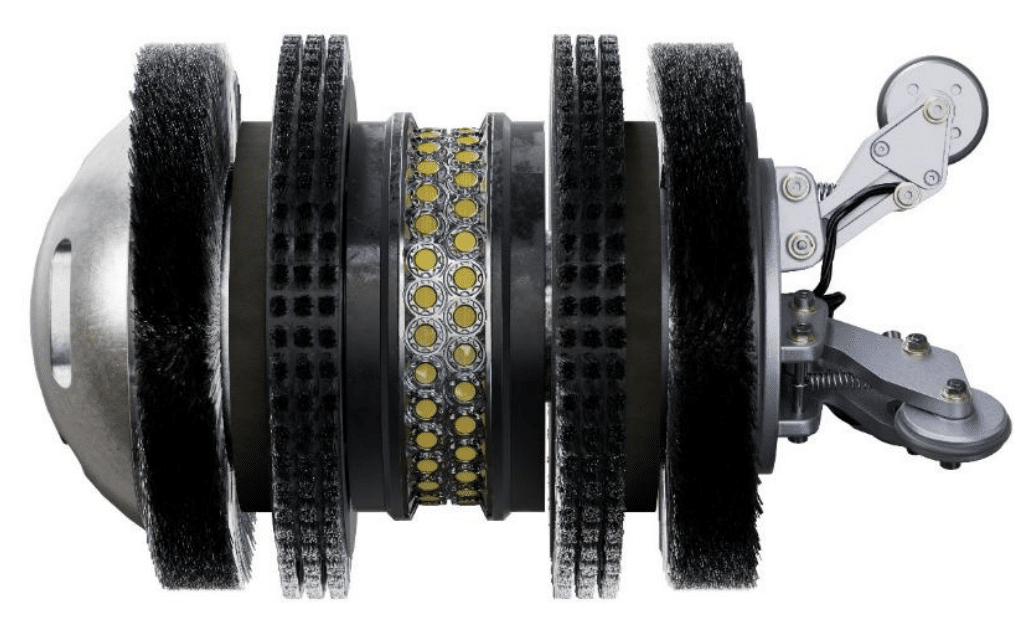
Cokebusters unveils single-bodied UT in-line inspection tool

Signal strongSource-grounded

What happened

Cokebusters launched a compact single‑bodied ultrasonic inline inspection tool that integrates an odometer and can collect very high‑density wall‑thickness readings while navigating tight bends. The design aims to let operators use existing inline valves as launch and receive points, which reduces the need for dedicated launchers and can lower project downtime if field trials confirm compatibility. Watch whether inspection service providers adopt it widely and start imposing new mobilisation or data‑delivery terms

Buyer takeaway

Treat this as an actionable capability change: it can reduce launcher rentals and downtime but only if buyers validate valve launch points and data formats ahead of campaigns

Cost / money

Potential to lower mobilisation and downtime OPEX by avoiding dedicated launcher/receiver gear when valve points are compatible

Supplier / commercial

Vendors owning the tool may shorten quote windows or add mobilisation annexes to protect tool bookings and recoup specialised run margins

Safety / operations

Higher positional accuracy helps defect prioritisation but requires acceptance testing and trained technicians to avoid misinterpreting dense data into unsafe work scopes

What to watch

Watch whether vendors package launch/receive logistics or restrict third‑party access to new tooling, which narrows competitive options

Key facts

  • Designed for 6‑inch pipeline runs
  • Up to 60,000 wall‑thickness readings per linear metre reported
  • Deployed in a 1,853‑metre multiphase pipeline trial

Source excerpts

The lighter, free-swimming design is intended to reduce operational downtime and lower project costs by enabling the use of existing inline valves as launch and receive points
Pipeline inspection specialist Cokebusters has developed a new single-bodied ultrasonic in-line inspection (ILI) tool designed to improve defect detection and axial positioning in complex pipeline systems
The client later compared the reported defect locations against previous inspection data generated by conventional multi-bodied inspection tools
Story 2Offshore EnergyMay 15, 2026

'Many key components' manufactured for BiMEP-destined wave energy unit

Signal moderateSource-grounded

What happened

Carnegie Clean Energy and partners have completed fabrication of many key components for a scaled CETO wave energy unit, including electrical modules and major metalwork. The PTO module frames are entering final testing phases with an upcoming back‑to‑back testing program at supplier facilities before integration and deployment; buyers should track FAT outcomes and transport/installation plans

Buyer takeaway

Treat supplier FATs and transport handling plans as contract levers to control installation and commissioning risk

Cost / money

Concentration of final manufacture can stabilise pricing but may increase exposure to lead‑time and transport handling costs

Supplier / commercial

Suppliers with completed modules can insist on firm delivery and installation windows; procurement should require test evidence before acceptance

Safety / operations

Integrated electrical modules and mechanical PTOs require documented FATs and transport handling to avoid damage and commissioning delays

What to watch

Watch for slip in test schedules or incomplete handling plans that push risk into field integration

Key facts

  • Completed fabrication of primary mooring connectors and electrical module fit‑out
  • Final fabrication underway on three PTO module frames
  • Planned back‑to‑back PTO testing at supplier test facility before integration

Source excerpts

In the coming months, the team will undertake the final back-to-back PTO testing regime of PTO modules at SKF in Germany before they are integrated into the buoyant actuator in the Basque Country, ready for deployment. Carnegie notes that the testing regime is important to ensure the mechanical and electrical systems are validated against modelling and ready for final integration and deployment of the CETO unit
In the coming months, the team will undertake the final back-to-back PTO testing regime of PTO modules at SKF in Germany before they are integrated into the buoyant actuator in the Basque Country, ready for deployment
Home Marine Energy ‘Many key components’ manufactured for BiMEP-destined wave energy unit May 15, 2026, by Carnegie Clean Energy and its supply chain partners have completed the fabrication and manufacture of many key components of the scaled CETO wave energy unit to be deployed at Biscay Marine Energy Platform (BiMEP) as part of the ACHIEVE Programme, with the final component fabrication work packages underway
Story 3Offshore EnergyMay 15, 2026

Industry players unite to form UAE’s first shipbuilding consortium

Signal moderateDirectional

What happened

Several UAE maritime and fabrication firms have formed the country's first shipbuilding consortium to better coordinate project pipelines, procurement, and delivery capability across shipyards and steel producers. The move aims to increase local scale and visibility of project pipelines, which will affect how buyers source complex vessel fabrication and repair in the Gulf region

Buyer takeaway

Map consortium capabilities now to determine when regional sourcing is commercially preferable to long‑haul repairs

Cost / money

Local capacity may reduce cross‑border logistics and demobilisation costs for vessel work, but consortium coordination could narrow bidder pools

Supplier / commercial

Consortium members can present combined capability statements that change RFx scoring and local‑content negotiation leverage

Safety / operations

Local fabrication can shorten repair windows but buyers must confirm certified welding, NDT, and quality management systems

What to watch

Watch whether consortium coordination leads to preferential pipelines or bid coordination that reduces competition for non‑local firms

Key facts

  • Consortium includes shipbuilding, steel production, and marine engineering firms
  • Led by maritime cluster participants and AD Ports Group affiliates
  • Positioned to support larger and more complex local projects

Source excerpts

Home Green Marine Industry players unite to form UAE’s first shipbuilding consortium May 15, 2026, by A group of national industry players has come together to form the first shipbuilders consortium in the United Arab Emirates (UAE), which will work toward aligning national shipbuilding capabilities to drive maritime innovation and growth. Source: AD Ports Group According to AD Ports, the initiative is designed to strengthen coordination across the domestic maritime sector and provide opportunities for small and
Home Green Marine Industry players unite to form UAE’s first shipbuilding consortium May 15, 2026, by A group of national industry players has come together to form the first shipbuilders consortium in the United Arab Emirates (UAE), which will work toward aligning national shipbuilding capabilities to drive maritime innovation and growth
The aim is to enhance collaboration and strengthen the UAE’s position in the maritime industrial sector and improve visibility across project pipelines, enable more efficient procurement, and support coordinated execution, increasing delivery capability and overall sector competitiveness across the full maritime value chain
Story 4Reliabilityweb

Reliability tv on Reliabilityweb's site

Signal limitedDirectional

What happened

Reliabilityweb is promoting on‑demand training and certification content for condition monitoring, maintenance leadership, and digitalisation, which supports organisations wanting to mature monitoring programmes and turn high‑accuracy data into actionable work. This is useful background for teams planning to use denser inspection outputs, but it is primarily capability building, not a direct supplier market change

Buyer takeaway

Use training and certification requirements as part of acceptance criteria for suppliers and internal teams when adopting higher‑density inspection tools

Cost / money

Training is an investment that reduces the risk of misdiagnosed defects but is a separate cost line rather than a supplier charge

Supplier / commercial

Buyers can require supplier technicians to hold relevant certifications or provide joint training as part of SOWs

Safety / operations

Better trained technicians reduce misinterpretation of inspection data and lower the chance of unsafe workscopes being issued

What to watch

This is thematic; training availability alone doesn't solve data integration or contractor availability gaps

Key facts

  • On‑demand workshop and certification programs for maintenance and reliability roles
  • Covers condition monitoring, work execution, and digitalisation strategy

Source excerpts

Sign Up Please use your business email address if applicable Uptime Academy Workshop Study SystemEmpower your journey to maintenance mastery, anytime, anywhere. Introducing the Reliabilityweb Workshop Study System (WSS), your on-demand gateway to world-class training for the Certified Reliability Leader (CRL), Certified Maintenance Manager (CMM), and Lubrication Leader Badge (LLB) programs
Introducing the Reliabilityweb Workshop Study System (WSS), your on-demand gateway to world-class training for the Certified Reliability Leader (CRL), Certified Maintenance Manager (CMM), and Lubrication Leader Badge (LLB) programs. Reliability Engineering For MaintenanceAsset Condition ManagementWork Execution ManagementLeadership for ReliabilityIOT Digitalization Strategy and ImplementationThe International Maintenance ConferenceThe Reliability ConferenceThe MaximoWorld Conference
Introducing the Reliabilityweb Workshop Study System (WSS), your on-demand gateway to world-class training for the Certified Reliability Leader (CRL), Certified Maintenance Manager (CMM), and Lubrication Leader Badge (LLB) programs

VP Snapshot

Executive Risk & Action View

A compact single‑body ultrasonic inline inspection (ILI) tool now exists that can run through tight bends using existing inline valves, which changes mobilisation needs and could reduce planned downtime if buyers validate launcher compatibility ahead of campaigns.

Overall
60
Cost
61
Supply
61
Schedule
38
Compliance
15

Top signals

30-180dcost

Signal 1: Cost / money

Using existing inline valves as launch/receive points reduces the need for dedicated launcher/receiver rental and can lower mobilisation capex and downtime OPEX if field compatibility checks are done early.

180d+cost

Signal 2: Cost / money

Serialising PTO module fabrication and centralized FATs shifts some cost exposure into longer lead‑time supplier work and transport handling; buyers may see more stable pricing but less elasticity on rush mobilisations.

0-30dsupply

Signal 3: Supplier / commercial

Inspection vendors who adopt the new single‑body ILI may gain first‑mover commercial leverage for complex runs and could shorten quote validity or add mobilisation annexes to protect specialised tooling availability.

30-180dsupply

Signal 4: Supplier / commercial

The UAE shipbuilding consortium can create larger, coordinated procurement pipelines and improve supplier capacity statements, which helps buyers source complex hull/fabrication work locally but may compress competitive windows.

30-180dsupplier

Signal 5: Safety / operations

Higher‑density ultrasonic readings improve defect detection accuracy only if Ops and reliability teams have test acceptance criteria and technician training to interpret the data and translate it into work orders.

30-180dschedule

Signal 6: Safety / operations

Final integrated testing of electrical and PTO modules means installation risks move from design to transport and interface stages; without verified FAT records and handling plans, field integration and commissioning can create safety and downtime exposure.

Recommended actions

CategoryDue 3d

Flag the new single‑body ILI capability in the category supplier register and request tool compatibility and calibration certificates from incumbent inspection vendors.

Updated supplier register with declared tool availability and calibration proof for targeted pipeline geometries

ContractsDue 21d

Require factory acceptance test (FAT) reports, transport‑handling plans, and onshore installation procedures as pass/fail attachments to RFx for any marine renewable PTO or elec...

RFx templates include mandatory FAT and transport/installation submissions that reduce scope ambiguity at mobilisation

CategoryDue 21d

Issue a market query to regional shipyards including UAE consortium members to map vessel repair/TAS (turnaround support) capability, lead times, and local‑content terms for APA...

Sourcing matrix showing consortium members’ capabilities and commercial terms for vessel repair/retrofit options

ContractsDue 60d

Update inspection RFx and SOW templates to include explicit launcher compatibility checks, data deliverable formats, and interpreter training requirements tied to acceptance mil...

Contracts include acceptance criteria for ILI data integrity, axial positioning accuracy, and supplier‑provided technician training plans

Risk register

RiskTriggerMitigation
Watch for inspection suppliers packaging launch/receive logistics with the ILI run to capture mobilisation margins and narrow available bidders for a given window.Watch for inspection suppliers packaging launch/receive logistics with the ILI run to capture mobilisation margins and narrow available bidders for a given window.Confirm exposure with category, contracts, and operations before the next supplier commitment.
Watch whether the UAE consortium introduces preferential local content or coordinated bid pipelines that change access for non‑local contractors on regional vessel work.Watch whether the UAE consortium introduces preferential local content or coordinated bid pipelines that change access for non‑local contractors on regional vessel work.Confirm exposure with category, contracts, and operations before the next supplier commitment.

CM Snapshot

Category Manager Decision Detail

Today's priorities

Flag the new single‑body ILI capability in the category supplier register and request tool compatibility and calibration certificates from incumbent inspection vendors.

Act because the tool changes launcher and valve compatibility needs and you must know which vendors can actually run it through your asset geometries before planning downtime.

Due 3d

high

CM move

Use this as the immediate supplier or contract action to move before the next sourcing gate.

Require factory acceptance test (FAT) reports, transport‑handling plans, and onshore installation procedures as pass/fail attachments to RFx for any marine renewable PTO or elec...

Do this because reported completion of key PTO and electrical modules transfers test and handling risk to the buyer unless FAT and handling plans are contractually required.

Due 21d

high

CM move

Use this as the immediate supplier or contract action to move before the next sourcing gate.

Issue a market query to regional shipyards including UAE consortium members to map vessel repair/TAS (turnaround support) capability, lead times, and local‑content terms for APA...

Act because the consortium formation may expand near‑region capacity and affect sourcing economics for repairs and fabrications used by APAC fleets.

Due 21d

high

CM move

Use this as the immediate supplier or contract action to move before the next sourcing gate.

Update inspection RFx and SOW templates to include explicit launcher compatibility checks, data deliverable formats, and interpreter training requirements tied to acceptance mil...

Do this because higher‑density UT outputs from new tools are only useful if data format, positioning accuracy, and technician proficiency are contractually enforceable before si...

Due 60d

high

CM move

Use this as the immediate supplier or contract action to move before the next sourcing gate.

Supplier radar

The Australian Pipeliner

high

Observed supplier signal

Inspection vendors who adopt the new single‑body ILI may gain first‑mover commercial leverage for complex runs and could shorten quote validity or add mobilisation annexes to protect specialised tooling availability.

Commercial implication

Inspection vendors who adopt the new single‑body ILI may gain first‑mover commercial leverage for complex runs and could shorten quote validity or add mobilisation annexes to protect specialised tooling availability.

Next step: Validate the source-backed signal with incumbents and alternates before the next award or pricing decision.

Offshore Energy

high

Observed supplier signal

The UAE shipbuilding consortium can create larger, coordinated procurement pipelines and improve supplier capacity statements, which helps buyers source complex hull/fabrication work locally but may compress competitive windows.

Commercial implication

The UAE shipbuilding consortium can create larger, coordinated procurement pipelines and improve supplier capacity statements, which helps buyers source complex hull/fabrication work locally but may compress competitive windows.

Next step: Validate the source-backed signal with incumbents and alternates before the next award or pricing decision.

Negotiation levers

Flag the new single‑body ILI capability in the category supplier register and request tool compatibility and calibration certificates from incumbent inspection vendors.

When to use: Act because the tool changes launcher and valve compatibility needs and you must know which vendors can actually run it through your asset geometries before planning downtime.

Expected outcome: Updated supplier register with declared tool availability and calibration proof for targeted pipeline geometries

Commercial mechanism to carry into the next supplier conversation

Require factory acceptance test (FAT) reports, transport‑handling plans, and onshore installation procedures as pass/fail attachments to RFx for any marine renewable PTO or elec...

When to use: Do this because reported completion of key PTO and electrical modules transfers test and handling risk to the buyer unless FAT and handling plans are contractually required.

Expected outcome: RFx templates include mandatory FAT and transport/installation submissions that reduce scope ambiguity at mobilisation

Commercial mechanism to carry into the next supplier conversation

Issue a market query to regional shipyards including UAE consortium members to map vessel repair/TAS (turnaround support) capability, lead times, and local‑content terms for APA...

When to use: Act because the consortium formation may expand near‑region capacity and affect sourcing economics for repairs and fabrications used by APAC fleets.

Expected outcome: Sourcing matrix showing consortium members’ capabilities and commercial terms for vessel repair/retrofit options

Commercial mechanism to carry into the next supplier conversation

Update inspection RFx and SOW templates to include explicit launcher compatibility checks, data deliverable formats, and interpreter training requirements tied to acceptance mil...

When to use: Do this because higher‑density UT outputs from new tools are only useful if data format, positioning accuracy, and technician proficiency are contractually enforceable before si...

Expected outcome: Contracts include acceptance criteria for ILI data integrity, axial positioning accuracy, and supplier‑provided technician training plans

Commercial mechanism to carry into the next supplier conversation

Talking points

A compact single‑body ultrasonic inline inspection (ILI) tool now exists that can run through tight bends using existing inline valves, which changes mobilisation needs and could reduce planned downtime if buyers validate launcher compatibility ahead of campaigns.
Progress on manufacture and final testing of marine renewable components (wave power PTO modules and electrical modules) shifts some execution risk into supplier factory acceptance and transport; buyers should treat supplier test records and handling plans as procurement levers.
A UAE shipbuilding consortium is forming to aggregate local fabrication, steel and marine engineering capacity; this can expand the regional pool for vessel repair and fabrication but may also change bid dynamics and local‑content expectations for nearby APAC operations.
Reliability and training platforms are publishing condition‑monitoring and work‑execution resources that help teams use higher‑density inspection data, but this is thematic guidance rather than an immediate supplier shift — treat as capability building for procurement and Ops.

Supplier radar

SupplierSignalImplicationNext stepConfidence
The Australian PipelinerInspection vendors who adopt the new single‑body ILI may gain first‑mover commercial leverage for complex runs and could shorten quote validity or add mobilisation annexes to protect specialised tooling availability.Inspection vendors who adopt the new single‑body ILI may gain first‑mover commercial leverage for complex runs and could shorten quote validity or add mobilisation annexes to protect specialised tooling availability.Validate the source-backed signal with incumbents and alternates before the next award or pricing decision.high
Offshore EnergyThe UAE shipbuilding consortium can create larger, coordinated procurement pipelines and improve supplier capacity statements, which helps buyers source complex hull/fabrication work locally but may compress competitive windows.The UAE shipbuilding consortium can create larger, coordinated procurement pipelines and improve supplier capacity statements, which helps buyers source complex hull/fabrication work locally but may compress competitive windows.Validate the source-backed signal with incumbents and alternates before the next award or pricing decision.high

Negotiation levers

  • Flag the new single‑body ILI capability in the category supplier register and request tool compatibility and calibration certificates from incumbent inspection vendors.Act because the tool changes launcher and valve compatibility needs and you must know which vendors can actually run it through your asset geometries before planning downtime.Updated supplier register with declared tool availability and calibration proof for targeted pipeline geometries

    high confidence

  • Require factory acceptance test (FAT) reports, transport‑handling plans, and onshore installation procedures as pass/fail attachments to RFx for any marine renewable PTO or elec...Do this because reported completion of key PTO and electrical modules transfers test and handling risk to the buyer unless FAT and handling plans are contractually required.RFx templates include mandatory FAT and transport/installation submissions that reduce scope ambiguity at mobilisation

    high confidence

  • Issue a market query to regional shipyards including UAE consortium members to map vessel repair/TAS (turnaround support) capability, lead times, and local‑content terms for APA...Act because the consortium formation may expand near‑region capacity and affect sourcing economics for repairs and fabrications used by APAC fleets.Sourcing matrix showing consortium members’ capabilities and commercial terms for vessel repair/retrofit options

    high confidence

  • Update inspection RFx and SOW templates to include explicit launcher compatibility checks, data deliverable formats, and interpreter training requirements tied to acceptance mil...Do this because higher‑density UT outputs from new tools are only useful if data format, positioning accuracy, and technician proficiency are contractually enforceable before si...Contracts include acceptance criteria for ILI data integrity, axial positioning accuracy, and supplier‑provided technician training plans

    high confidence

What to do / What to watch

What to do now

  • Flag the new single‑body ILI capability in the category supplier register and request tool compatibility and calibration certificates from incumbent inspection vendors.

    Why: Act because the tool changes launcher and valve compatibility needs and you must know which vendors can actually run it through your asset geometries before planning downtime.

    Owner: Category

    Expected outcome: Updated supplier register with declared tool availability and calibration proof for targeted pipeline geometries

    [3]

Next few weeks

  • Require factory acceptance test (FAT) reports, transport‑handling plans, and onshore installation procedures as pass/fail attachments to RFx for any marine renewable PTO or elec...

    Why: Do this because reported completion of key PTO and electrical modules transfers test and handling risk to the buyer unless FAT and handling plans are contractually required.

    Owner: Contracts

    Expected outcome: RFx templates include mandatory FAT and transport/installation submissions that reduce scope ambiguity at mobilisation

    [2]
  • Issue a market query to regional shipyards including UAE consortium members to map vessel repair/TAS (turnaround support) capability, lead times, and local‑content terms for APA...

    Why: Act because the consortium formation may expand near‑region capacity and affect sourcing economics for repairs and fabrications used by APAC fleets.

    Owner: Category

    Expected outcome: Sourcing matrix showing consortium members’ capabilities and commercial terms for vessel repair/retrofit options

    [1]

Longer view

  • Update inspection RFx and SOW templates to include explicit launcher compatibility checks, data deliverable formats, and interpreter training requirements tied to acceptance mil...

    Why: Do this because higher‑density UT outputs from new tools are only useful if data format, positioning accuracy, and technician proficiency are contractually enforceable before si...

    Owner: Contracts

    Expected outcome: Contracts include acceptance criteria for ILI data integrity, axial positioning accuracy, and supplier‑provided technician training plans

    [3]

What to watch

  • Watch for inspection suppliers packaging launch/receive logistics with the ILI run to capture mobilisation margins and narrow available bidders for a given window
  • Watch whether the UAE consortium introduces preferential local content or coordinated bid pipelines that change access for non‑local contractors on regional vessel work
  • Watch for inspection suppliers packaging launch/receive logistics with the ILI run to capture mobilisation margins and narrow available bidders for a given window.: Watch for inspection suppliers packaging launch/receive logistics with the ILI run to capture mobilisation margins and narrow available bidders for a given window
  • Watch whether the UAE consortium introduces preferential local content or coordinated bid pipelines that change access for non‑local contractors on regional vessel work.: Watch whether the UAE consortium introduces preferential local content or coordinated bid pipelines that change access for non‑local contractors on regional vessel work
  • A compact single‑body ultrasonic inline inspection (ILI) tool now exists that can run through tight bends using existing inline valves, which changes mobilisation needs and could reduce planned downtime if buyers validate launcher compatibility ahead of campaigns
  • Progress on manufacture and final testing of marine renewable components (wave power PTO modules and electrical modules) shifts some execution risk into supplier factory acceptance and transport; buyers should treat supplier test records and handling plans as procurement levers
  • A UAE shipbuilding consortium is forming to aggregate local fabrication, steel and marine engineering capacity; this can expand the regional pool for vessel repair and fabrication but may also change bid dynamics and local‑content expectations for nearby APAC operations
  • Reliability and training platforms are publishing condition‑monitoring and work‑execution resources that help teams use higher‑density inspection data, but this is thematic guidance rather than an immediate supplier shift — treat as capability building for procurement and Ops

Market pulse

IndexLatestChangeAs of
WTI Crude (WTI)71.23 /bbl+0.00 (+0.00%)May 17, 2026, 10:06 PM
Brent Crude (BRENT)74.89 /bbl+0.00 (+0.00%)May 17, 2026, 10:06 PM
Natural Gas (NG)3.12 /MMBtu+0.00 (+0.00%)May 17, 2026, 10:06 PM
Johnson Controls (JCI)65 +0.00 (+0.00%)May 17, 2026, 10:06 PM
  • WTI Crude: Crude price direction affects offshore mobilisation and charter rates; monitor when planning vessel lifts for inspection campaigns
  • Johnson Controls: Equipment OEM index useful proxy for condition‑monitoring platform demand and digitalisation procurement posture

Sources

Inline citations jump here. Expand a source to read the excerpt, the AI interpretation, and the original link.

[1] Industry players unite to form UAE’s first shipbuilding consortium

offshore-energy.biz · May 15, 2026

Expand

AI reading

Several UAE maritime and fabrication firms have formed the country's first shipbuilding consortium to better coordinate project pipelines, procurement, and delivery capability across shipyards and steel producers. The move aims to increase local scale and visibility of project pipelines, which will affect how buyers source complex vessel fabrication and repair in the Gulf region

Buyer takeaway

Map consortium capabilities now to determine when regional sourcing is commercially preferable to long‑haul repairs

Cost / money

Local capacity may reduce cross‑border logistics and demobilisation costs for vessel work, but consortium coordination could narrow bidder pools

Supplier / commercial

Consortium members can present combined capability statements that change RFx scoring and local‑content negotiation leverage

Safety / operations

Local fabrication can shorten repair windows but buyers must confirm certified welding, NDT, and quality management systems

What to watch

Watch whether consortium coordination leads to preferential pipelines or bid coordination that reduces competition for non‑local firms

Key facts

  • Consortium includes shipbuilding, steel production, and marine engineering firms
  • Led by maritime cluster participants and AD Ports Group affiliates
  • Positioned to support larger and more complex local projects

Source excerpts

Home Green Marine Industry players unite to form UAE’s first shipbuilding consortium May 15, 2026, by A group of national industry players has come together to form the first shipbuilders consortium in the United Arab Emirates (UAE), which will work toward aligning national shipbuilding capabilities to drive maritime innovation and growth. Source: AD Ports Group According to AD Ports, the initiative is designed to strengthen coordination across the domestic maritime sector and provide opportunities for small and
Home Green Marine Industry players unite to form UAE’s first shipbuilding consortium May 15, 2026, by A group of national industry players has come together to form the first shipbuilders consortium in the United Arab Emirates (UAE), which will work toward aligning national shipbuilding capabilities to drive maritime innovation and growth
The aim is to enhance collaboration and strengthen the UAE’s position in the maritime industrial sector and improve visibility across project pipelines, enable more efficient procurement, and support coordinated execution, increasing delivery capability and overall sector competitiveness across the full maritime value chain

Used in this brief

  • Supplier / commercial: The UAE shipbuilding consortium can create larger, coordinated procurement pipelines and improve supplier capacity statements, which helps buyers source complex hull/fabrication work locally but may compress competitive windows
  • Next 2-4 weeks — Issue a market query to regional shipyards including UAE consortium members to map vessel repair/TAS (turnaround support) capability, lead times, and local‑content terms for APA.... Rationale: Act because the consortium formation may expand near‑region capacity and affect sourcing economics for repairs and fabrications used by APAC fleets.. Owner: Category. KPI: Sourcing matrix showing consortium members’ capabilities and commercial terms for vessel repair/retrofit options
  • Watch whether the UAE consortium introduces preferential local content or coordinated bid pipelines that change access for non‑local contractors on regional vessel work
Open original source

[2] 'Many key components' manufactured for BiMEP-destined wave energy unit

offshore-energy.biz · May 15, 2026

Expand

AI reading

Carnegie Clean Energy and partners have completed fabrication of many key components for a scaled CETO wave energy unit, including electrical modules and major metalwork. The PTO module frames are entering final testing phases with an upcoming back‑to‑back testing program at supplier facilities before integration and deployment; buyers should track FAT outcomes and transport/installation plans

Buyer takeaway

Treat supplier FATs and transport handling plans as contract levers to control installation and commissioning risk

Cost / money

Concentration of final manufacture can stabilise pricing but may increase exposure to lead‑time and transport handling costs

Supplier / commercial

Suppliers with completed modules can insist on firm delivery and installation windows; procurement should require test evidence before acceptance

Safety / operations

Integrated electrical modules and mechanical PTOs require documented FATs and transport handling to avoid damage and commissioning delays

What to watch

Watch for slip in test schedules or incomplete handling plans that push risk into field integration

Key facts

  • Completed fabrication of primary mooring connectors and electrical module fit‑out
  • Final fabrication underway on three PTO module frames
  • Planned back‑to‑back PTO testing at supplier test facility before integration

Source excerpts

In the coming months, the team will undertake the final back-to-back PTO testing regime of PTO modules at SKF in Germany before they are integrated into the buoyant actuator in the Basque Country, ready for deployment. Carnegie notes that the testing regime is important to ensure the mechanical and electrical systems are validated against modelling and ready for final integration and deployment of the CETO unit
In the coming months, the team will undertake the final back-to-back PTO testing regime of PTO modules at SKF in Germany before they are integrated into the buoyant actuator in the Basque Country, ready for deployment
Home Marine Energy ‘Many key components’ manufactured for BiMEP-destined wave energy unit May 15, 2026, by Carnegie Clean Energy and its supply chain partners have completed the fabrication and manufacture of many key components of the scaled CETO wave energy unit to be deployed at Biscay Marine Energy Platform (BiMEP) as part of the ACHIEVE Programme, with the final component fabrication work packages underway

Used in this brief

  • Safety / operations: Final integrated testing of electrical and PTO modules means installation risks move from design to transport and interface stages; without verified FAT records and handling plans, field integration and commissioning can create safety and downtime exposure
  • Next 2-4 weeks — Require factory acceptance test (FAT) reports, transport‑handling plans, and onshore installation procedures as pass/fail attachments to RFx for any marine renewable PTO or elec.... Rationale: Do this because reported completion of key PTO and electrical modules transfers test and handling risk to the buyer unless FAT and handling plans are contractually required.. Owner: Contracts. KPI: RFx templates include mandatory FAT and transport/installation submissions that reduce scope ambiguity at mobilisation
  • Fabrication and final testing progress reported for CETO wave energy PTO modules (article 4) adds a supplier manufacturing development not previously flagged
Open original source

[3] Cokebusters unveils single-bodied UT in-line inspection tool

pipeliner.com.au · May 11, 2026

Expand

AI reading

Cokebusters launched a compact single‑bodied ultrasonic inline inspection tool that integrates an odometer and can collect very high‑density wall‑thickness readings while navigating tight bends. The design aims to let operators use existing inline valves as launch and receive points, which reduces the need for dedicated launchers and can lower project downtime if field trials confirm compatibility. Watch whether inspection service providers adopt it widely and start imposing new mobilisation or data‑delivery terms

Buyer takeaway

Treat this as an actionable capability change: it can reduce launcher rentals and downtime but only if buyers validate valve launch points and data formats ahead of campaigns

Cost / money

Potential to lower mobilisation and downtime OPEX by avoiding dedicated launcher/receiver gear when valve points are compatible

Supplier / commercial

Vendors owning the tool may shorten quote windows or add mobilisation annexes to protect tool bookings and recoup specialised run margins

Safety / operations

Higher positional accuracy helps defect prioritisation but requires acceptance testing and trained technicians to avoid misinterpreting dense data into unsafe work scopes

What to watch

Watch whether vendors package launch/receive logistics or restrict third‑party access to new tooling, which narrows competitive options

Key facts

  • Designed for 6‑inch pipeline runs
  • Up to 60,000 wall‑thickness readings per linear metre reported
  • Deployed in a 1,853‑metre multiphase pipeline trial

Source excerpts

The lighter, free-swimming design is intended to reduce operational downtime and lower project costs by enabling the use of existing inline valves as launch and receive points
Pipeline inspection specialist Cokebusters has developed a new single-bodied ultrasonic in-line inspection (ILI) tool designed to improve defect detection and axial positioning in complex pipeline systems
The client later compared the reported defect locations against previous inspection data generated by conventional multi-bodied inspection tools

Used in this brief

  • Cost / money: Using existing inline valves as launch/receive points reduces the need for dedicated launcher/receiver rental and can lower mobilisation capex and downtime OPEX if field compatibility checks are done early
  • Supplier / commercial: Inspection vendors who adopt the new single‑body ILI may gain first‑mover commercial leverage for complex runs and could shorten quote validity or add mobilisation annexes to protect specialised tooling availability
  • Next 72 hours — Flag the new single‑body ILI capability in the category supplier register and request tool compatibility and calibration certificates from incumbent inspection vendors.. Rationale: Act because the tool changes launcher and valve compatibility needs and you must know which vendors can actually run it through your asset geometries before planning downtime.. Owner: Category. KPI: Updated supplier register with declared tool availability and calibration proof for targeted pipeline geometries
Open original source

[4] Reliability tv on Reliabilityweb's site

reliabilityweb.com · n.d.

Expand

AI reading

Reliabilityweb is promoting on‑demand training and certification content for condition monitoring, maintenance leadership, and digitalisation, which supports organisations wanting to mature monitoring programmes and turn high‑accuracy data into actionable work. This is useful background for teams planning to use denser inspection outputs, but it is primarily capability building, not a direct supplier market change

Buyer takeaway

Use training and certification requirements as part of acceptance criteria for suppliers and internal teams when adopting higher‑density inspection tools

Cost / money

Training is an investment that reduces the risk of misdiagnosed defects but is a separate cost line rather than a supplier charge

Supplier / commercial

Buyers can require supplier technicians to hold relevant certifications or provide joint training as part of SOWs

Safety / operations

Better trained technicians reduce misinterpretation of inspection data and lower the chance of unsafe workscopes being issued

What to watch

This is thematic; training availability alone doesn't solve data integration or contractor availability gaps

Key facts

  • On‑demand workshop and certification programs for maintenance and reliability roles
  • Covers condition monitoring, work execution, and digitalisation strategy

Source excerpts

Sign Up Please use your business email address if applicable Uptime Academy Workshop Study SystemEmpower your journey to maintenance mastery, anytime, anywhere. Introducing the Reliabilityweb Workshop Study System (WSS), your on-demand gateway to world-class training for the Certified Reliability Leader (CRL), Certified Maintenance Manager (CMM), and Lubrication Leader Badge (LLB) programs
Introducing the Reliabilityweb Workshop Study System (WSS), your on-demand gateway to world-class training for the Certified Reliability Leader (CRL), Certified Maintenance Manager (CMM), and Lubrication Leader Badge (LLB) programs. Reliability Engineering For MaintenanceAsset Condition ManagementWork Execution ManagementLeadership for ReliabilityIOT Digitalization Strategy and ImplementationThe International Maintenance ConferenceThe Reliability ConferenceThe MaximoWorld Conference
Introducing the Reliabilityweb Workshop Study System (WSS), your on-demand gateway to world-class training for the Certified Reliability Leader (CRL), Certified Maintenance Manager (CMM), and Lubrication Leader Badge (LLB) programs

Used in this brief

  • Reliabilityweb is promoting on‑demand training and certification content for condition monitoring, maintenance leadership, and digitalisation, which supports organisations wanting to mature monitoring programmes and turn high‑accuracy data into actionable work. This is useful background for teams planning to use denser inspection outputs, but it is primarily capability building, not a direct supplier market change
  • Buyer bottom line: invest in reliability training aligned to new inspection outputs so technicians and planners can convert richer data into actionable maintenance tasks
  • Use training and certification requirements as part of acceptance criteria for suppliers and internal teams when adopting higher‑density inspection tools
Open original source

[5] WTI Crude

finance.yahoo.com · n.d.

Expand

[6] Johnson Controls

finance.yahoo.com · n.d.

Expand