Projects (EPC/EPCM & Construction) · Australia (Perth)

Reassess APAC mobilisation and supplier commitments framework contract

Published May 17, 2026, 6:00 AM AWSTAPACFull category signal
Ask AI
Inpex coming aboard Australia’s huge multibillion-dollar gas project

In 60 seconds

Top move

Inpex entering the Browse joint venture is a durable demand signal for Australian offshore workstreams that will affect long‑lead mobilisation, charters and fabrication planning

Key takeaways

  • Inpex entering the Browse joint venture is a durable demand signal for Australian offshore workstreams that will affect long‑lead mobilisation, charters and fabrication planning.[2]
  • Petronas awarding a five‑year tubular running services contract to a local supplier signals buyers in the region are formalising multi‑year local sourcing, changing how bidders must propose mobilisation and local partnerships.[3]
  • A successful arbitration for Solstad Offshore improves vessel‑owner liquidity, which reduces near‑term downside for CSV availability but also makes owners likelier to hold firmer hire and mobilisation terms.[1]
  • Australia’s budget measures to speed approvals and ease drilling costs lower operating pressure for contractors, improving the baseline for tender pricing—state implementation timing will determine real procurement benefit.[4]
  • These developments are directional rather than immediate: Browse participation and contract awards are conditional on approvals and JV sign‑offs, so treat tighter supplier posture as early upward pressure until approvals clear.[2]

What changed since last run

  • New JV participant: Inpex has signed an SPA to acquire a material participating interest in the Browse JV, adding a concrete buyer participant to what the prior brief flagged as a tightening mobilisation lane (source 2).
  • Local long‑term contracting: Petronas’ five‑year TRS award confirms regional buyers are moving to multi‑year local service contracts, which changes sourcing levers compared with the prior brief's early signs of shorte...
  • Vessel liquidity change: Arbitration outcome in Solstad’s favour released material cash to the owner, improving prospects for CSV commitment and reducing a previously flagged downside to vessel availability (source 3).

Key facts

  • SPA to acquire a 10.67% participating interest in the Browse JV
  • Includes Brecknock, Calliance and Torosa fields offshore Western Australia
  • Completion conditional on regulatory and JV approvals
  • Arbitration awarded ~USD 13 million in charter hire plus ~USD 1.5 million interest
  • Normand Maximus: 178m CSV with 900t AHC crane and large personnel capacity
  • Vessel has a LoI for work starting in 2027 with a firm period through 2029 and an option

Why it matters

Inpex entering the Browse joint venture is a durable demand signal for Australian offshore workstreams that will affect long‑lead mobilisation, charters and fabrication planning. Petronas awarding a five‑year tubular running services contract to a local supplier signals buyers in the region are formalising multi‑year local sourcing, changing how bidders must propose mobilisation and local partnerships. A successful arbitration for Solstad Offshore improves vessel‑owner liquidity, which reduces near‑term downside for CSV availability but also makes owners likelier to hold firmer hire and mobilisation terms. Australia’s budget measures to speed approvals and ease drilling costs lower operating pressure for contractors, improving the baseline for tender pricing—state implementation timing will determine real procurement benefit

Cost / money

  • Browse JV participation increases competition for heavy marine services and fabrication, which can push mobilisation premiums and conditional hire terms upward as suppliers prioritise long‑run JV work.[2]
  • Local multi‑year service awards reduce freight and import pass‑throughs but can lock procurement into local pricing bands and labour structures, reducing short‑term repricing flexibility for buyers.[3]
  • Improved owner liquidity from arbitration outcomes reduces the likelihood of distressed asset availability, meaning buyers should not rely on opportunistic discounted charters to fill mobilisation gaps.[1]

Supplier / commercial

  • Suppliers facing a clearer Browse pipeline can tighten quote validity windows and require provisional holds or deposits; buyers will need to secure provisional commitments during bids.[2]
  • Regional NOCs awarding long‑tenor local contracts signal evaluation criteria that favour local capability—non‑local bidders should surface partnership or local presence models early in pre‑qualification.[3]
  • Vessel owners with stronger balance sheets are more likely to press for stricter cancellation and deposit recovery terms rather than deep rate discounts to win work.[1]

Safety / operations

  • Large offshore developments raise simultaneous operations (SIMOPS) and heavy‑lift sequencing risk; procurement must bake FAT, sea‑trial and mobilisation acceptance gates into schedules to avoid handover delays.[2]
  • Longer service contracts enable suppliers to plan training and maintenance cycles, which can improve on‑site safety if contracts include clear competency and equipment upkeep KPIs.[3]

What to watch

  • Browse SPA completion and related project timelines are conditional on regulatory and JV approvals; don’t assume immediate procurement windows until approvals are confirmed.[2]
  • State‑level implementation of Australia’s budget reforms will vary; monitor jurisdictional bilateral agreements because they determine whether approval timelines actually shorten for project tenders.[4]

Top stories

Story 1Offshore EnergyMay 15, 2026

Inpex coming aboard Australia’s huge multibillion-dollar gas project

Signal strongSource-grounded

What happened

Japan’s Inpex has signed an SPA to acquire a participating interest in the Browse joint venture offshore Western Australia. The transaction is conditional on regulatory and JV approvals and transfers a material participating interest that strengthens the project’s buyer base. Watch regulatory clearances and JV approvals to see when procurement windows and long‑lead commitments solidify

Buyer takeaway

Treat this as a medium‑to‑long‑term hardening of offshore demand that will influence vessel, fabrication and logistics planning once approvals progress

Cost / money

Directional upward pressure on mobilisation and heavy‑lift costs as suppliers prioritise long‑term JV work over ad‑hoc tenders

Supplier / commercial

Suppliers should expect tighter quote validity windows and stronger conditional commitments from operators; buyers must secure provisional holds or clarity on mobilisation sequencing

Safety / operations

Large offshore developments increase SIMOPS and mobilisation complexity—buyers must embed FAT, sea trials and coordinated SIMOPS gates into contract schedules

What to watch

Approvals are conditional; do not assume immediate schedule certainty—monitor regulatory notifications and JV approvals closely

Key facts

  • SPA to acquire a 10.67% participating interest in the Browse JV
  • Includes Brecknock, Calliance and Torosa fields offshore Western Australia
  • Completion conditional on regulatory and JV approvals

Source excerpts

The completion of the transaction is conditional on several matters, including regulatory and Browse joint venture approvals
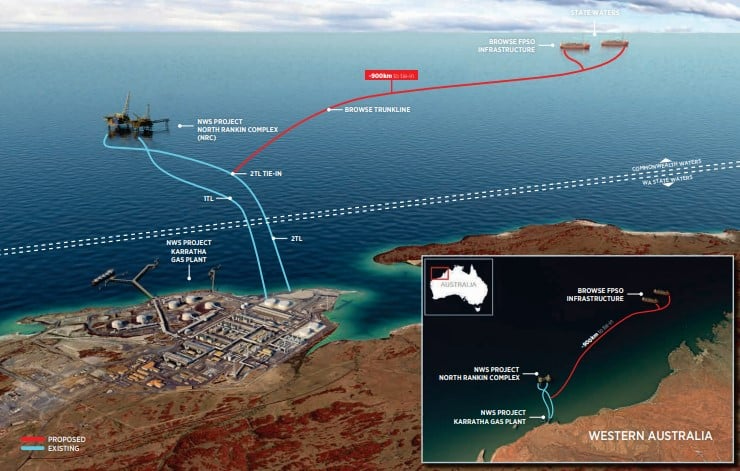
Home Fossil Energy Inpex coming aboard Australia’s huge multibillion-dollar gas project May 15, 2026, by Japan’s exploration and production (E&P) company Inpex has set the wheels in motion to join an offshore development project, which is described as Australia’s largest untapped conventional gas resource. Browse to North-West Shelf project development concept; Source: Woodside The Japanese player, through its subsidiary, Inpex Mirai Upstream, has entered into a sales and purchase agreement (SPA) to acquire a 10
The completion of the transaction is conditional on several matters, including regulatory and Browse joint venture approvals. The Browse fields, which were discovered between 1971 and 2000, are estimated to contain a combined contingent resource of about 13
Story 2Offshore EnergyMay 15, 2026

Solstad Offshore comes out as winner in CSV legal battle

Signal strongSource-grounded

What happened

The contract will begin in the first quarter of 2027, for a firm period until Q1 2029, and also includes an option for potential extension to Q1 2030. As a result of the ruling, Solstad will receive approximately $13 million in charter hire, in addition to an awarded interest compensation of approximately $1

Buyer takeaway

Expect owners with recovered cash to hold rate and availability terms more firmly; distressed discounts may be less available

Cost / money

Improved owner liquidity reduces the likelihood of steep discounts on vessel hire; buyers may need to budget for firmer dayrates or mobilisation premiums

Supplier / commercial

Owners can negotiate from a stronger balance‑sheet position, potentially tightening cancellation windows and deposit recovery terms

Safety / operations

A financially stable owner is more likely to keep maintenance and crewing standards current, which benefits operational safety if contracts include competency requirements

What to watch

Watch whether owners re‑negotiate LOIs or adjust option exercise terms now that the financial outcome is favourable

Key facts

  • Arbitration awarded ~USD 13 million in charter hire plus ~USD 1.5 million interest
  • Normand Maximus: 178m CSV with 900t AHC crane and large personnel capacity
  • Vessel has a LoI for work starting in 2027 with a firm period through 2029 and an option

Source excerpts

Source: Solstad Solstad reported yesterday, May 14, that arbitration proceedings related to a disputed charter hire in 2024 for the construction support vessel (CSV) Normand Maximus have been concluded in its favor
As a result of the ruling, Solstad will receive approximately $13 million in charter hire, in addition to an awarded interest compensation of approximately $1
Normand Maximus is 178 meters long and can accommodate up to 180 people. It features a 900t AHC crane and 550t VLS and is said to be the largest vessel in the Solstad fleet
Story 3Offshore EnergyMay 15, 2026

Petronas picks local tubular running services provider for next five years

Signal strongSource-grounded

What happened

Petronas has awarded a five‑year tubular running services (TRS) contract to a Malaysian provider, enabling the supplier to optimise local resource deployment and infrastructure use. The award signals preference for local multi‑year service continuity and predictable mobilisation windows. Monitor whether other APAC buyers adopt similar evaluation criteria that will favour local capability or JV arrangements

Buyer takeaway

Local multi‑year awards reduce short‑term supply risk but can narrow bidder pools; include local capability assessments in pre‑qualification

Cost / money

Local sourcing can lower freight and mobilisation premiums but may lock buyers into local pricing bands and labour cost structures

Supplier / commercial

Regional suppliers with local infrastructure will be advantaged on mobilisation windows and will push for longer commitments and availability‑based pricing

Safety / operations

Longer service terms allow suppliers to invest in training and maintenance cycles, improving on‑site safety if enforced by contract KPIs

What to watch

Non‑local bidders may face sole‑source disadvantages unless they present credible local partnership or capability build plans

Key facts

  • Five‑year TRS contract awarded to a Malaysian provider
  • Contract cited as allowing optimisation of local resource deployment and infrastructure
  • Supplier positions the award as a predictable revenue contributor

Source excerpts

Home Subsea Petronas picks local tubular running services provider for next five years May 15, 2026, by Malaysia’s state-owned oil & gas heavyweight Petronas has awarded a local company a five-year contract for the delivery of tubular running services (TRS)
According to Destini, the five-year duration allows it to optimize its resource deployment and leverage established local infrastructure to drive cost-efficiencies for Petronas
The contract will serve as a consistent contributor to the group’s energy division performance over the next five years
Story 4Australian MiningMay 15, 2026

Budget reforms welcomed as industry pushes for exploration backing

Signal moderateDirectional

What happened

Australia’s federal budget includes measures to streamline project approvals, ease drilling costs and back critical minerals, which industry groups say will improve assessment timelines and contractor certainty. The reforms can lower operating pressure and improve tender pricing stability where states implement bilateral arrangements. Watch state‑level rollouts and AI‑assisted assessment milestones to see if approval‑to‑mobilisation timelines actually accelerate

Buyer takeaway

Regulatory streamlining can shorten approval‑to‑mobilisation timelines where states implement reforms; procurement should monitor implementation milestones

Cost / money

Temporary drilling cost measures and fuel relief reduce operating pressure for contractors, improving tender pricing stability for buyers

Supplier / commercial

Drilling contractors may increase provisional capacity commitments if approval pathways look more predictable

Safety / operations

Faster approvals should not bypass safety gates; include explicit safety and environmental acceptance requirements in any accelerated procurement track

What to watch

Implementation depends on state‑level bilateral agreements—timetable and impact will vary by jurisdiction

Key facts

  • Budget supports faster project assessment pathways and temporary drilling cost relief
  • Industry groups highlighted potential use of AI‑assisted assessment processes
  • Measures include support for critical minerals and a strategic minerals reserve

Source excerpts

” AMEC said practical bilateral agreements between the Commonwealth and states will now be key to ensuring the reforms deliver faster approvals while maintaining environmental standards
Australia’s mining and exploration industry has continued to welcome the Australian Government’s 2026–27 Federal Budget, with the sector pointing to stronger fuel security, streamlined project approvals and support for critical minerals as key measures expected to support long-term industry growth while improving certainty for operators across Australia
“A strategic reserve is, in effect, a buyer of last resort for critical minerals,” Miller said

VP Snapshot

Executive Risk & Action View

Inpex entering the Browse joint venture is a durable demand signal for Australian offshore workstreams that will affect long‑lead mobilisation, charters and fabrication planning.

Overall
62
Cost
100
Supply
25
Schedule
20
Compliance
15

Top signals

30-180dcost

Signal 1: Cost / money

Browse JV participation increases competition for heavy marine services and fabrication, which can push mobilisation premiums and conditional hire terms upward as suppliers prioritise long‑run JV work.

Signal 2: Cost / money

Local multi‑year service awards reduce freight and import pass‑throughs but can lock procurement into local pricing bands and labour structures, reducing short‑term repricing flexibility for buyers.

Signal 6: Supplier / commercial

Vessel owners with stronger balance sheets are more likely to press for stricter cancellation and deposit recovery terms rather than deep rate discounts to win work.

0-30dcost

Signal 3: Cost / money

Improved owner liquidity from arbitration outcomes reduces the likelihood of distressed asset availability, meaning buyers should not rely on opportunistic discounted charters to fill mobilisation gaps.

30-180dcommercial

Signal 4: Supplier / commercial

Suppliers facing a clearer Browse pipeline can tighten quote validity windows and require provisional holds or deposits; buyers will need to secure provisional commitments during bids.

Signal 5: Supplier / commercial

Regional NOCs awarding long‑tenor local contracts signal evaluation criteria that favour local capability—non‑local bidders should surface partnership or local presence models early in pre‑qualification.

Recommended actions

ContractsDue 3d

Audit live RFQs and shortlist documents for mobilisation, charter and local‑sourcing clauses; flag any tenders lacking clear FAT/sea‑trial and mobilisation acceptance gates.

Updated RFQ checklist with flagged contracts missing mobilisation, charter, or local‑sourcing clauses

CategoryDue 21d

Issue targeted RFIs to preferred yards, heavy‑lift providers and regional TRS vendors to confirm capacity windows, provisional hold options, and conditional quote validity periods.

Supplier capacity matrix and provisional hold statements to use when sequencing tenders and mobilisation plans

CategoryDue 21d

Engage shortlisted local APAC suppliers and potential JV partners to map localisation options for tubular, running and installation services before issuing tenders.

List of vetted local partner options and commercial models to include in upcoming RFQs

OpsDue 60d

Redesign tender lotting and contract templates to separate leased/chartered assets from installation and fabrication lots, and include enforceable FAT, sea‑trial and mobilisatio...

Tender templates and mobilisation playbook updated with lot separation and explicit FAT/sea‑trial acceptance gates

Risk register

RiskTriggerMitigation
Browse SPA completion and related project timelines are conditional on regulatory and JV approvals; don’t assume immediate procurement windows until approvals are confirmed.Browse SPA completion and related project timelines are conditional on regulatory and JV approvals; don’t assume immediate procurement windows until approvals are confirmed.Confirm exposure with category, contracts, and operations before the next supplier commitment.
State‑level implementation of Australia’s budget reforms will vary; monitor jurisdictional bilateral agreements because they determine whether approval timelines actually shorten for project tenders.State‑level implementation of Australia’s budget reforms will vary; monitor jurisdictional bilateral agreements because they determine whether approval timelines actually shorten for project tenders.Confirm exposure with category, contracts, and operations before the next supplier commitment.

CM Snapshot

Category Manager Decision Detail

Today's priorities

Audit live RFQs and shortlist documents for mobilisation, charter and local‑sourcing clauses; flag any tenders lacking clear FAT/sea‑trial and mobilisation acceptance gates.

because Inpex’s Browse participation and recent multi‑year TRS awards increase supplier leverage and local preference, verifying RFQs prevents committing without explicit mobili...

Due 3d

high

CM move

Use this as the immediate supplier or contract action to move before the next sourcing gate.

Issue targeted RFIs to preferred yards, heavy‑lift providers and regional TRS vendors to confirm capacity windows, provisional hold options, and conditional quote validity periods.

because a firmer Browse pipeline and stronger vessel‑owner balance sheets can tighten availability and shorten quote validity, collecting formal capacity commitments will inform...

Due 21d

high

CM move

Use this as the immediate supplier or contract action to move before the next sourcing gate.

Engage shortlisted local APAC suppliers and potential JV partners to map localisation options for tubular, running and installation services before issuing tenders.

because Petronas’ multi‑year local award shows buyers value local capability, early mapping preserves competition and reveals where local partnerships are required to meet tende...

Due 21d

high

CM move

Use this as the immediate supplier or contract action to move before the next sourcing gate.

Redesign tender lotting and contract templates to separate leased/chartered assets from installation and fabrication lots, and include enforceable FAT, sea‑trial and mobilisatio...

because longer‑term JV commitments and local multi‑year contracts change who holds delivery and handover risk, separating lots and formalising acceptance gates preserves buyer l...

Due 60d

high

CM move

Use this as the immediate supplier or contract action to move before the next sourcing gate.

Supplier radar

Offshore Energy

high

Observed supplier signal

Suppliers facing a clearer Browse pipeline can tighten quote validity windows and require provisional holds or deposits; buyers will need to secure provisional commitments during bids.

Commercial implication

Suppliers facing a clearer Browse pipeline can tighten quote validity windows and require provisional holds or deposits; buyers will need to secure provisional commitments during bids.

Next step: Validate the source-backed signal with incumbents and alternates before the next award or pricing decision.

Offshore Energy

high

Observed supplier signal

Regional NOCs awarding long‑tenor local contracts signal evaluation criteria that favour local capability—non‑local bidders should surface partnership or local presence models early in pre‑qualification.

Commercial implication

Regional NOCs awarding long‑tenor local contracts signal evaluation criteria that favour local capability—non‑local bidders should surface partnership or local presence models early in pre‑qualification.

Next step: Validate the source-backed signal with incumbents and alternates before the next award or pricing decision.

Offshore Energy

high

Observed supplier signal

Vessel owners with stronger balance sheets are more likely to press for stricter cancellation and deposit recovery terms rather than deep rate discounts to win work.

Commercial implication

Vessel owners with stronger balance sheets are more likely to press for stricter cancellation and deposit recovery terms rather than deep rate discounts to win work.

Next step: Validate the source-backed signal with incumbents and alternates before the next award or pricing decision.

Negotiation levers

Audit live RFQs and shortlist documents for mobilisation, charter and local‑sourcing clauses; flag any tenders lacking clear FAT/sea‑trial and mobilisation acceptance gates.

When to use: because Inpex’s Browse participation and recent multi‑year TRS awards increase supplier leverage and local preference, verifying RFQs prevents committing without explicit mobili...

Expected outcome: Updated RFQ checklist with flagged contracts missing mobilisation, charter, or local‑sourcing clauses

Commercial mechanism to carry into the next supplier conversation

Issue targeted RFIs to preferred yards, heavy‑lift providers and regional TRS vendors to confirm capacity windows, provisional hold options, and conditional quote validity periods.

When to use: because a firmer Browse pipeline and stronger vessel‑owner balance sheets can tighten availability and shorten quote validity, collecting formal capacity commitments will inform...

Expected outcome: Supplier capacity matrix and provisional hold statements to use when sequencing tenders and mobilisation plans

Commercial mechanism to carry into the next supplier conversation

Engage shortlisted local APAC suppliers and potential JV partners to map localisation options for tubular, running and installation services before issuing tenders.

When to use: because Petronas’ multi‑year local award shows buyers value local capability, early mapping preserves competition and reveals where local partnerships are required to meet tende...

Expected outcome: List of vetted local partner options and commercial models to include in upcoming RFQs

Commercial mechanism to carry into the next supplier conversation

Redesign tender lotting and contract templates to separate leased/chartered assets from installation and fabrication lots, and include enforceable FAT, sea‑trial and mobilisatio...

When to use: because longer‑term JV commitments and local multi‑year contracts change who holds delivery and handover risk, separating lots and formalising acceptance gates preserves buyer l...

Expected outcome: Tender templates and mobilisation playbook updated with lot separation and explicit FAT/sea‑trial acceptance gates

Commercial mechanism to carry into the next supplier conversation

Talking points

Inpex entering the Browse joint venture is a durable demand signal for Australian offshore workstreams that will affect long‑lead mobilisation, charters and fabrication planning.
Petronas awarding a five‑year tubular running services contract to a local supplier signals buyers in the region are formalising multi‑year local sourcing, changing how bidders must propose mobilisation and local partnerships.
A successful arbitration for Solstad Offshore improves vessel‑owner liquidity, which reduces near‑term downside for CSV availability but also makes owners likelier to hold firmer hire and mobilisation terms.
Australia’s budget measures to speed approvals and ease drilling costs lower operating pressure for contractors, improving the baseline for tender pricing—state implementation timing will determine real procurement benefit.

Supplier radar

SupplierSignalImplicationNext stepConfidence
Offshore EnergySuppliers facing a clearer Browse pipeline can tighten quote validity windows and require provisional holds or deposits; buyers will need to secure provisional commitments during bids.Suppliers facing a clearer Browse pipeline can tighten quote validity windows and require provisional holds or deposits; buyers will need to secure provisional commitments during bids.Validate the source-backed signal with incumbents and alternates before the next award or pricing decision.high
Offshore EnergyRegional NOCs awarding long‑tenor local contracts signal evaluation criteria that favour local capability—non‑local bidders should surface partnership or local presence models early in pre‑qualification.Regional NOCs awarding long‑tenor local contracts signal evaluation criteria that favour local capability—non‑local bidders should surface partnership or local presence models early in pre‑qualification.Validate the source-backed signal with incumbents and alternates before the next award or pricing decision.high
Offshore EnergyVessel owners with stronger balance sheets are more likely to press for stricter cancellation and deposit recovery terms rather than deep rate discounts to win work.Vessel owners with stronger balance sheets are more likely to press for stricter cancellation and deposit recovery terms rather than deep rate discounts to win work.Validate the source-backed signal with incumbents and alternates before the next award or pricing decision.high

Negotiation levers

  • Audit live RFQs and shortlist documents for mobilisation, charter and local‑sourcing clauses; flag any tenders lacking clear FAT/sea‑trial and mobilisation acceptance gates.because Inpex’s Browse participation and recent multi‑year TRS awards increase supplier leverage and local preference, verifying RFQs prevents committing without explicit mobili...Updated RFQ checklist with flagged contracts missing mobilisation, charter, or local‑sourcing clauses

    high confidence

  • Issue targeted RFIs to preferred yards, heavy‑lift providers and regional TRS vendors to confirm capacity windows, provisional hold options, and conditional quote validity periods.because a firmer Browse pipeline and stronger vessel‑owner balance sheets can tighten availability and shorten quote validity, collecting formal capacity commitments will inform...Supplier capacity matrix and provisional hold statements to use when sequencing tenders and mobilisation plans

    high confidence

  • Engage shortlisted local APAC suppliers and potential JV partners to map localisation options for tubular, running and installation services before issuing tenders.because Petronas’ multi‑year local award shows buyers value local capability, early mapping preserves competition and reveals where local partnerships are required to meet tende...List of vetted local partner options and commercial models to include in upcoming RFQs

    high confidence

  • Redesign tender lotting and contract templates to separate leased/chartered assets from installation and fabrication lots, and include enforceable FAT, sea‑trial and mobilisatio...because longer‑term JV commitments and local multi‑year contracts change who holds delivery and handover risk, separating lots and formalising acceptance gates preserves buyer l...Tender templates and mobilisation playbook updated with lot separation and explicit FAT/sea‑trial acceptance gates

    high confidence

What to do / What to watch

What to do now

  • Audit live RFQs and shortlist documents for mobilisation, charter and local‑sourcing clauses; flag any tenders lacking clear FAT/sea‑trial and mobilisation acceptance gates.

    Why: because Inpex’s Browse participation and recent multi‑year TRS awards increase supplier leverage and local preference, verifying RFQs prevents committing without explicit mobili...

    Owner: Contracts

    Expected outcome: Updated RFQ checklist with flagged contracts missing mobilisation, charter, or local‑sourcing clauses

    [2]

Next few weeks

  • Issue targeted RFIs to preferred yards, heavy‑lift providers and regional TRS vendors to confirm capacity windows, provisional hold options, and conditional quote validity periods.

    Why: because a firmer Browse pipeline and stronger vessel‑owner balance sheets can tighten availability and shorten quote validity, collecting formal capacity commitments will inform...

    Owner: Category

    Expected outcome: Supplier capacity matrix and provisional hold statements to use when sequencing tenders and mobilisation plans

    [2][1]
  • Engage shortlisted local APAC suppliers and potential JV partners to map localisation options for tubular, running and installation services before issuing tenders.

    Why: because Petronas’ multi‑year local award shows buyers value local capability, early mapping preserves competition and reveals where local partnerships are required to meet tende...

    Owner: Category

    Expected outcome: List of vetted local partner options and commercial models to include in upcoming RFQs

    [3]

Longer view

  • Redesign tender lotting and contract templates to separate leased/chartered assets from installation and fabrication lots, and include enforceable FAT, sea‑trial and mobilisatio...

    Why: because longer‑term JV commitments and local multi‑year contracts change who holds delivery and handover risk, separating lots and formalising acceptance gates preserves buyer l...

    Owner: Ops

    Expected outcome: Tender templates and mobilisation playbook updated with lot separation and explicit FAT/sea‑trial acceptance gates

    [2][3]

What to watch

  • Browse SPA completion and related project timelines are conditional on regulatory and JV approvals; don’t assume immediate procurement windows until approvals are confirmed
  • State‑level implementation of Australia’s budget reforms will vary; monitor jurisdictional bilateral agreements because they determine whether approval timelines actually shorten for project tenders
  • Browse SPA completion and related project timelines are conditional on regulatory and JV approvals; don’t assume immediate procurement windows until approvals are confirmed.: Browse SPA completion and related project timelines are conditional on regulatory and JV approvals; don’t assume immediate procurement windows until approvals are confirmed
  • State‑level implementation of Australia’s budget reforms will vary; monitor jurisdictional bilateral agreements because they determine whether approval timelines actually shorten for project tenders.: State‑level implementation of Australia’s budget reforms will vary; monitor jurisdictional bilateral agreements because they determine whether approval timelines actually shorten for project tenders
  • Inpex entering the Browse joint venture is a durable demand signal for Australian offshore workstreams that will affect long‑lead mobilisation, charters and fabrication planning
  • Petronas awarding a five‑year tubular running services contract to a local supplier signals buyers in the region are formalising multi‑year local sourcing, changing how bidders must propose mobilisation and local partnerships
  • A successful arbitration for Solstad Offshore improves vessel‑owner liquidity, which reduces near‑term downside for CSV availability but also makes owners likelier to hold firmer hire and mobilisation terms
  • Australia’s budget measures to speed approvals and ease drilling costs lower operating pressure for contractors, improving the baseline for tender pricing—state implementation timing will determine real procurement benefit

Market pulse

IndexLatestChangeAs of
Henry Hub Gas (NG)3.12 /MMBtu+0.00 (+0.00%)May 16, 2026, 10:04 PM
Cheniere (LNG) (LNG)185 +0.00 (+0.00%)May 16, 2026, 10:04 PM
Brent Crude (BRENT)74.89 /bbl+0.00 (+0.00%)May 16, 2026, 10:04 PM
Fluor Corp (FLR)42 +0.00 (+0.00%)May 16, 2026, 10:04 PM
KBR Inc (KBR)58 +0.00 (+0.00%)May 16, 2026, 10:04 PM
  • Henry Hub Gas: Henry Hub gas movements affect offshore gas project economics and contractor appetite; watch for shifts that could influence Browse timing and contractor bids
  • Brent Crude: Brent crude shifts alter fuel and marine transport cost assumptions for APAC projects and can change bidders’ mobilisation pricing and fuel surcharge pass‑throughs

Sources

Inline citations jump here. Expand a source to read the excerpt, the AI interpretation, and the original link.

[1] Solstad Offshore comes out as winner in CSV legal battle

offshore-energy.biz · May 15, 2026

Expand

AI reading

The contract will begin in the first quarter of 2027, for a firm period until Q1 2029, and also includes an option for potential extension to Q1 2030. As a result of the ruling, Solstad will receive approximately $13 million in charter hire, in addition to an awarded interest compensation of approximately $1

Buyer takeaway

Expect owners with recovered cash to hold rate and availability terms more firmly; distressed discounts may be less available

Cost / money

Improved owner liquidity reduces the likelihood of steep discounts on vessel hire; buyers may need to budget for firmer dayrates or mobilisation premiums

Supplier / commercial

Owners can negotiate from a stronger balance‑sheet position, potentially tightening cancellation windows and deposit recovery terms

Safety / operations

A financially stable owner is more likely to keep maintenance and crewing standards current, which benefits operational safety if contracts include competency requirements

What to watch

Watch whether owners re‑negotiate LOIs or adjust option exercise terms now that the financial outcome is favourable

Key facts

  • Arbitration awarded ~USD 13 million in charter hire plus ~USD 1.5 million interest
  • Normand Maximus: 178m CSV with 900t AHC crane and large personnel capacity
  • Vessel has a LoI for work starting in 2027 with a firm period through 2029 and an option

Source excerpts

Source: Solstad Solstad reported yesterday, May 14, that arbitration proceedings related to a disputed charter hire in 2024 for the construction support vessel (CSV) Normand Maximus have been concluded in its favor
As a result of the ruling, Solstad will receive approximately $13 million in charter hire, in addition to an awarded interest compensation of approximately $1
Normand Maximus is 178 meters long and can accommodate up to 180 people. It features a 900t AHC crane and 550t VLS and is said to be the largest vessel in the Solstad fleet

Used in this brief

  • Vessel liquidity change: Arbitration outcome in Solstad’s favour released material cash to the owner, improving prospects for CSV commitment and reducing a previously flagged downside to vessel availability (source 3)
  • The contract will begin in the first quarter of 2027, for a firm period until Q1 2029, and also includes an option for potential extension to Q1 2030. As a result of the ruling, Solstad will receive approximately $13 million in charter hire, in addition to an awarded interest compensation of approximately $1
  • Buyer bottom line: recovered cash for vessel owners reduces near‑term downside to availability but can harden commercial terms for new hires
Open original source

[2] Inpex coming aboard Australia’s huge multibillion-dollar gas project

offshore-energy.biz · May 15, 2026

Expand

AI reading

Japan’s Inpex has signed an SPA to acquire a participating interest in the Browse joint venture offshore Western Australia. The transaction is conditional on regulatory and JV approvals and transfers a material participating interest that strengthens the project’s buyer base. Watch regulatory clearances and JV approvals to see when procurement windows and long‑lead commitments solidify

Buyer takeaway

Treat this as a medium‑to‑long‑term hardening of offshore demand that will influence vessel, fabrication and logistics planning once approvals progress

Cost / money

Directional upward pressure on mobilisation and heavy‑lift costs as suppliers prioritise long‑term JV work over ad‑hoc tenders

Supplier / commercial

Suppliers should expect tighter quote validity windows and stronger conditional commitments from operators; buyers must secure provisional holds or clarity on mobilisation sequencing

Safety / operations

Large offshore developments increase SIMOPS and mobilisation complexity—buyers must embed FAT, sea trials and coordinated SIMOPS gates into contract schedules

What to watch

Approvals are conditional; do not assume immediate schedule certainty—monitor regulatory notifications and JV approvals closely

Key facts

  • SPA to acquire a 10.67% participating interest in the Browse JV
  • Includes Brecknock, Calliance and Torosa fields offshore Western Australia
  • Completion conditional on regulatory and JV approvals

Source excerpts

The completion of the transaction is conditional on several matters, including regulatory and Browse joint venture approvals
Home Fossil Energy Inpex coming aboard Australia’s huge multibillion-dollar gas project May 15, 2026, by Japan’s exploration and production (E&P) company Inpex has set the wheels in motion to join an offshore development project, which is described as Australia’s largest untapped conventional gas resource. Browse to North-West Shelf project development concept; Source: Woodside The Japanese player, through its subsidiary, Inpex Mirai Upstream, has entered into a sales and purchase agreement (SPA) to acquire a 10
The completion of the transaction is conditional on several matters, including regulatory and Browse joint venture approvals. The Browse fields, which were discovered between 1971 and 2000, are estimated to contain a combined contingent resource of about 13

Used in this brief

  • What to watch: Browse SPA completion and related project timelines are conditional on regulatory and JV approvals; don’t assume immediate procurement windows until approvals are confirmed
  • Next 72 hours — Audit live RFQs and shortlist documents for mobilisation, charter and local‑sourcing clauses; flag any tenders lacking clear FAT/sea‑trial and mobilisation acceptance gates.. Rationale: because Inpex’s Browse participation and recent multi‑year TRS awards increase supplier leverage and local preference, verifying RFQs prevents committing without explicit mobili.... Owner: Contracts. KPI: Updated RFQ checklist with flagged contracts missing mobilisation, charter, or local‑sourcing clauses
  • Next 2-4 weeks — Issue targeted RFIs to preferred yards, heavy‑lift providers and regional TRS vendors to confirm capacity windows, provisional hold options, and conditional quote validity periods.. Rationale: because a firmer Browse pipeline and stronger vessel‑owner balance sheets can tighten availability and shorten quote validity, collecting formal capacity commitments will inform.... Owner: Category. KPI: Supplier capacity matrix and provisional hold statements to use when sequencing tenders and mobilisation plans
Open original source

[3] Petronas picks local tubular running services provider for next five years

offshore-energy.biz · May 15, 2026

Expand

AI reading

Petronas has awarded a five‑year tubular running services (TRS) contract to a Malaysian provider, enabling the supplier to optimise local resource deployment and infrastructure use. The award signals preference for local multi‑year service continuity and predictable mobilisation windows. Monitor whether other APAC buyers adopt similar evaluation criteria that will favour local capability or JV arrangements

Buyer takeaway

Local multi‑year awards reduce short‑term supply risk but can narrow bidder pools; include local capability assessments in pre‑qualification

Cost / money

Local sourcing can lower freight and mobilisation premiums but may lock buyers into local pricing bands and labour cost structures

Supplier / commercial

Regional suppliers with local infrastructure will be advantaged on mobilisation windows and will push for longer commitments and availability‑based pricing

Safety / operations

Longer service terms allow suppliers to invest in training and maintenance cycles, improving on‑site safety if enforced by contract KPIs

What to watch

Non‑local bidders may face sole‑source disadvantages unless they present credible local partnership or capability build plans

Key facts

  • Five‑year TRS contract awarded to a Malaysian provider
  • Contract cited as allowing optimisation of local resource deployment and infrastructure
  • Supplier positions the award as a predictable revenue contributor

Source excerpts

Home Subsea Petronas picks local tubular running services provider for next five years May 15, 2026, by Malaysia’s state-owned oil & gas heavyweight Petronas has awarded a local company a five-year contract for the delivery of tubular running services (TRS)
According to Destini, the five-year duration allows it to optimize its resource deployment and leverage established local infrastructure to drive cost-efficiencies for Petronas
The contract will serve as a consistent contributor to the group’s energy division performance over the next five years

Used in this brief

  • Inpex entering the Browse joint venture is a durable demand signal for Australian offshore workstreams that will affect long‑lead mobilisation, charters and fabrication planning. Petronas awarding a five‑year tubular running services contract to a local supplier signals buyers in the region are formalising multi‑year local sourcing, changing how bidders must propose mobilisation and local partnerships. A successful arbitration for Solstad Offshore improves vessel‑owner liquidity, which reduces near‑term downside for CSV availability but also makes owners likelier to hold firmer hire and mobilisation terms. Australia’s budget measures to speed approvals and ease drilling costs lower operating pressure for contractors, improving the baseline for tender pricing—state implementation timing will determine real procurement benefit
  • Next 2-4 weeks — Engage shortlisted local APAC suppliers and potential JV partners to map localisation options for tubular, running and installation services before issuing tenders.. Rationale: because Petronas’ multi‑year local award shows buyers value local capability, early mapping preserves competition and reveals where local partnerships are required to meet tende.... Owner: Category. KPI: List of vetted local partner options and commercial models to include in upcoming RFQs
  • Local long‑term contracting: Petronas’ five‑year TRS award confirms regional buyers are moving to multi‑year local service contracts, which changes sourcing levers compared with the prior brief's early signs of shorte
Open original source

[4] Budget reforms welcomed as industry pushes for exploration backing

australianmining.com.au · May 15, 2026

Expand

AI reading

Australia’s federal budget includes measures to streamline project approvals, ease drilling costs and back critical minerals, which industry groups say will improve assessment timelines and contractor certainty. The reforms can lower operating pressure and improve tender pricing stability where states implement bilateral arrangements. Watch state‑level rollouts and AI‑assisted assessment milestones to see if approval‑to‑mobilisation timelines actually accelerate

Buyer takeaway

Regulatory streamlining can shorten approval‑to‑mobilisation timelines where states implement reforms; procurement should monitor implementation milestones

Cost / money

Temporary drilling cost measures and fuel relief reduce operating pressure for contractors, improving tender pricing stability for buyers

Supplier / commercial

Drilling contractors may increase provisional capacity commitments if approval pathways look more predictable

Safety / operations

Faster approvals should not bypass safety gates; include explicit safety and environmental acceptance requirements in any accelerated procurement track

What to watch

Implementation depends on state‑level bilateral agreements—timetable and impact will vary by jurisdiction

Key facts

  • Budget supports faster project assessment pathways and temporary drilling cost relief
  • Industry groups highlighted potential use of AI‑assisted assessment processes
  • Measures include support for critical minerals and a strategic minerals reserve

Source excerpts

” AMEC said practical bilateral agreements between the Commonwealth and states will now be key to ensuring the reforms deliver faster approvals while maintaining environmental standards
Australia’s mining and exploration industry has continued to welcome the Australian Government’s 2026–27 Federal Budget, with the sector pointing to stronger fuel security, streamlined project approvals and support for critical minerals as key measures expected to support long-term industry growth while improving certainty for operators across Australia
“A strategic reserve is, in effect, a buyer of last resort for critical minerals,” Miller said

Used in this brief

  • State‑level implementation of Australia’s budget reforms will vary; monitor jurisdictional bilateral agreements because they determine whether approval timelines actually shorten for project tenders
  • Australia’s federal budget includes measures to streamline project approvals, ease drilling costs and back critical minerals, which industry groups say will improve assessment timelines and contractor certainty. The reforms can lower operating pressure and improve tender pricing stability where states implement bilateral arrangements. Watch state‑level rollouts and AI‑assisted assessment milestones to see if approval‑to‑mobilisation timelines actually accelerate
  • Buyer bottom line: national reform reduces a key drag on remote projects, but state implementation determines how fast procurement windows shorten
Open original source

[5] Henry Hub Gas

finance.yahoo.com · n.d.

Expand

[6] Brent Crude

finance.yahoo.com · n.d.

Expand