Operations & Maintenance Services · Australia (Perth)

Recalibrate O&M sourcing for new inspection tools and local fleets

Published May 15, 2026, 6:04 AM AWSTAPACFull category signal
Ask AI
Cokebusters unveils single-bodied UT in-line inspection tool

In 60 seconds

Top move

A new single‑body ultrasonic inline inspection tool materially changes pipeline inspection logistics: it can avoid dedicated launchers and reduce downtime if positional accuracy is validated

Key takeaways

  • A new single‑body ultrasonic inline inspection tool materially changes pipeline inspection logistics: it can avoid dedicated launchers and reduce downtime if positional accuracy is validated.[5]
  • Deepwater project FEEDs and port expansion plans from large upstream developers create predictable long‑lead demand for subsea transport & installation and marine warranty services.[4]
  • Continued tight rig and survey vessel markets — shown by recent jack‑up awards and maintenance survey mobilisations — keep mobilisation risk and supplier pass‑through exposure elevated for O&M that depends on vessel time.[1][3]
  • Procurement consequences are concrete: update RFx pre‑quals for new inspection tooling, add mobilisation and warranty language for SURF/T&I scopes, and track vessel/rig availability in cost modelling.[5][4][1]
  • Some items are regional but operationally relevant to APAC O&M: survey vessel scheduling and compact ILI tools affect mobilization windows and contractor selection even when the original jobs are outside APAC.[3][5]

What changed since last run

  • Added a technology development: Cokebusters’ single‑body ultrasonic ILI tool that changes launcher/receiver requirements and suggests a pilot‑first adoption approach (article 3).
  • Added operational sequencing signal: TotalEnergies’ finalized FEED and port expansion notes point to upcoming SURF and installation demand that should be treated as long‑lead pipeline/installation sourcing (article 1).
  • Added fleet tightness evidence: ADES’ jack‑up award and Fugro’s near‑term geophysical survey illustrate continued vessel/rig mobilisation pressure that affects O&M scheduling and pass‑through exposure (articles 5 and 2).

Key facts

  • FEED finalised, supporting progress toward FID
  • Project design includes subsea development concept and port expansion planning
  • Operator has signalled firmed capital cost estimates supporting execution readiness
  • Geophysical coverage includes multibeam echo sounder and sidescan sonar along the interconnec
  • Vessel operations scheduled within a short weather‑dependent window
  • Survey supports maintenance of a long‑in‑service HVDC interconnector

Why it matters

A new single‑body ultrasonic inline inspection tool materially changes pipeline inspection logistics: it can avoid dedicated launchers and reduce downtime if positional accuracy is validated. Deepwater project FEEDs and port expansion plans from large upstream developers create predictable long‑lead demand for subsea transport & installation and marine warranty services. Continued tight rig and survey vessel markets — shown by recent jack‑up awards and maintenance survey mobilisations — keep mobilisation risk and supplier pass‑through exposure elevated for O&M that depends on vessel time. Procurement consequences are concrete: update RFx pre‑quals for new inspection tooling, add mobilisation and warranty language for SURF/T&I scopes, and track vessel/rig availability in cost modelling

Cost / money

  • Switching to single‑body ILI tools can reduce mobilisation and downtime costs by removing the need for dedicated launchers and receivers, but savings depend on proven positional accuracy and calibration records.[5]
  • FEED completion on large deepwater projects increases likelihood of long‑lead procurement for subsea umbilicals, risers and transport vessels, shifting near‑term cashflow toward mobilisation and fabrication pass‑throughs.[4]
  • Jack‑up contract awards and active vessel surveys keep vessel day‑rate pressure elevated; expect higher pass‑through and mobilisation annexes in tenders that require temporary vessel support.[1][3]

Supplier / commercial

  • New inspection tool vendors enter the competitive set, which can reduce dependence on legacy multi‑body ILI providers but requires adjusted pre‑qualification criteria and trial evidence expectations.[5]
  • Marine warranty and T&I specialists will be in demand as deepwater projects progress from FEED to execution; buyers who lock multi‑service packages early may gain schedule certainty but also concentrate supplier dependency.[4]
  • Survey and drilling contractors with recent awards signal continued utilisation — expect shorter quote validity, mobilisation caveats, and stronger negotiation posture on scheduling and cancellation terms.[3][1]

Safety / operations

  • Single‑body ILI tooling reduces heavy launcher/receiver operations and associated handling risks, but safety depends on validated odometer positional data and updated HSE controls during trial runs.[5]
  • Near‑term vessel survey windows (weather‑dependent) require tighter HSE and logistic planning for shore support and crew rotations to avoid fatigue and schedule slips during maintenance windows.[3]

What to watch

  • Watch for suppliers to include mobilisation annexes and short quote validity for SURF and vessel‑backed scopes as FEEDs firm — these commercial terms can shift cost and schedule risk to buyers.[4]
  • Verify positional accuracy and calibration records for any non‑standard ILI tool before awarding primary inspection scopes; limited field deployments mean pilots are prudent to avoid rework.[5]

Top stories

Story 1Offshore EnergyMay 14, 2026

TotalEnergies’ 750-million-barrel project offshore Namibia targets first oil in 2030

Signal strongSource-grounded

What happened

TotalEnergies finalised FEED for a major deepwater development off Namibia and signals readiness to move toward a final investment decision. The article highlights port expansion plans and a local content focus that make SURF, transport and marine warranty services operationally real as FEED turns to execution. Watch whether contracting windows for T&I and MWS open on the FEED‑to‑FID cadence

Buyer takeaway

Treat FEED completion as a source‑grounded signal to start long‑lead SURF and MWS engagement rather than waiting for FID

Cost / money

Expect mobilisation and fabrication pass‑throughs as long‑lead items are tendered; early engagement lets buyers set warranty and spare‑parts positions

Supplier / commercial

MWS and T&I firms gain leverage during FEED‑to‑execution windows; bundling services may secure schedule but increases single‑supplier exposure

Safety / operations

Large SURF campaigns raise uptime dependency on certified fleets and MWS approvals; early HSE alignment reduces offshore execution risk

What to watch

Watch contracting windows for mobilisation annexes, pass‑through clauses and local content requirements that change award economics

Key facts

  • FEED finalised, supporting progress toward FID
  • Project design includes subsea development concept and port expansion planning
  • Operator has signalled firmed capital cost estimates supporting execution readiness

Source excerpts

The project design incorporates measures to minimize emissions intensity, including reinjection of associated gas and a stated development objective of maintaining a comparatively low upstream emissions profile for a deepwater project. As the project maturation continues, Namibia is preparing for potential offshore oil and gas development
5%. Venus, which is described by the operator and the government as the anchor project for the country’s first deepwater oil development, is considered to be a fully appraised discovery with a defined development concept, entailing a large-scale deepwater subsea system tied back to a floating production, storage, and offloading vessel (FPSO), consistent with comparable deepwater developments globally
While typical execution risks remain for a frontier offshore development, ongoing regulatory engagement, a finalized FEED package and firmed capital cost estimates support continued progress towards FID,” highlighted Meren
Story 2Offshore EnergyMay 14, 2026

Fugro set for maintenance survey of 40-year-old interconnector

Signal moderateSource-grounded

What happened

Fugro is scheduled to carry out a geophysical maintenance survey of a 40‑year‑old HVDC interconnector in the North Sea using a dedicated geophysical vessel. The job is weather‑sensitive with a narrow working window, making vessel selection, timing and on‑board survey capabilities operationally relevant. Watch for any NtM updates that change survey timing and vessel re‑use options

Buyer takeaway

Treat scheduled geophysical surveys as real short‑term vessel commitments that can conflict with O&M vessel needs

Cost / money

Weather‑dependent windows increase risk of overtime and remobilisation pass‑throughs for vessel‑based scopes

Supplier / commercial

Survey contractors will price around vessel availability and may use short quote validity or mobilisation caveats

Safety / operations

Survey operations are weather constrained and require tight HSE planning for crew shifts and equipment handling

What to watch

Watch Notices to Mariners and contractor NtMs for changes to windows that affect adjacent mobilisation plans

Key facts

  • Geophysical coverage includes multibeam echo sounder and sidescan sonar along the interconnec
  • Vessel operations scheduled within a short weather‑dependent window
  • Survey supports maintenance of a long‑in‑service HVDC interconnector

Source excerpts

Home Subsea Fugro set for maintenance survey of 40-year-old interconnector May 14, 2026, by Fugro is set to deploy its geophysical vessel in a couple of days to carry out a maintenance survey of an interconnector between France and the UK that has been operating since 1986
The survey will include the full coverage of dedicated survey lines with a geophysical survey system, multibeam echo sounder and towed sidescan sonar, and will provide seabed bathymetry and sidescan sonar data along the route. The 54-meter-long vessel is expected to carry out the operations from May 16 to May 20, depending on the weather conditions and work progress
The 54-meter-long vessel is expected to carry out the operations from May 16 to May 20, depending on the weather conditions and work progress
Story 3The Australian PipelinerMay 11, 2026

Cokebusters unveils single-bodied UT in-line inspection tool

Signal moderateSource-grounded

What happened

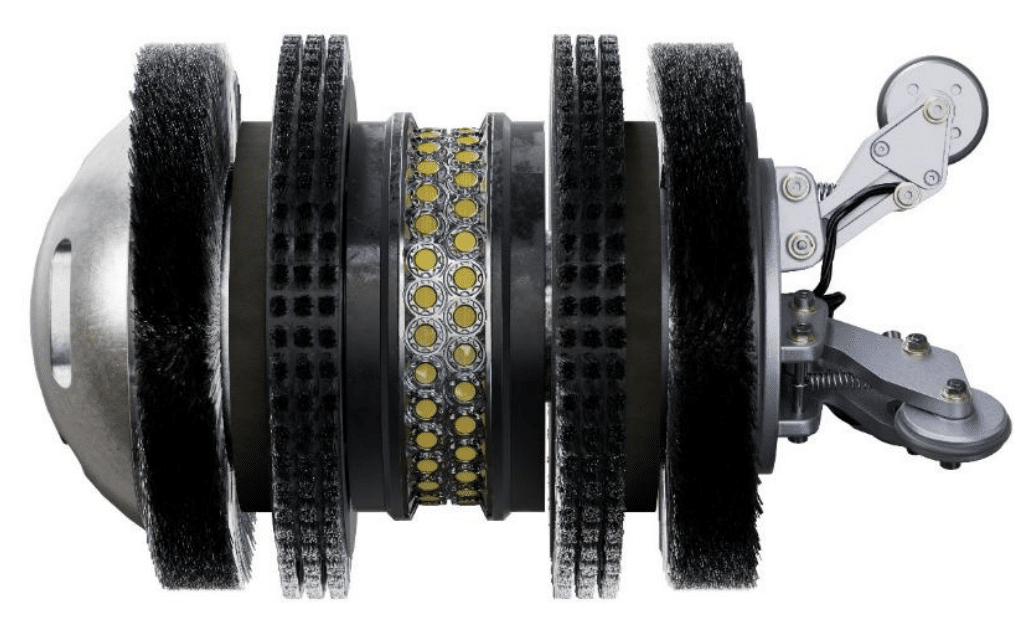
Cokebusters unveiled a compact single‑bodied ultrasonic inline inspection tool that integrates an odometer for improved axial positioning and claims high‑density wall‑thickness readings. The tool is designed to navigate tight bends and use existing inline valves as launch/receive points, which changes launcher logistics and mobilisation needs. Watch pilot deployments to confirm positional accuracy and calibration under real pipeline conditions

Buyer takeaway

Consider the tool a credible entrant that can reduce operational disruption if pilot validation confirms accuracy

Cost / money

Potential to reduce mobilisation and downtime costs by avoiding dedicated launchers and receivers

Supplier / commercial

Shifts inspection competition toward specialist compact‑tool vendors and requires updated pre‑qual criteria

Safety / operations

Reduces heavy handling risks but requires verified odometer calibration and HSE controls during trials

What to watch

Limited deployment history means buyer adoption should follow a structured pilot and evidence‑based acceptance

Key facts

  • Up to 60,000 wall‑thickness readings per linear metre
  • Integrated odometer and multiple measuring wheels to improve axial positioning
  • Designed to enable launch/receive via existing inline valves

Source excerpts

Pipeline inspection specialist Cokebusters has developed a new single-bodied ultrasonic in-line inspection (ILI) tool designed to improve defect detection and axial positioning in complex pipeline systems. The compact inspection tool integrates an odometer directly into the ultrasonic inspection assembly, allowing operators to gather up to 60,000 wall-thickness readings per linear metre while accurately correlating each measurement to its position along the pipeline
According to the company, the new design addresses several limitations associated with traditional multi-bodied inspection tools, which can struggle to navigate tight-radius bends and often require dedicated launchers and receivers. The lighter, free-swimming design is intended to reduce operational downtime and lower project costs by enabling the use of existing inline valves as launch and receive points
Image: MK5 6" In-line inspection tool with Odometer. Image: Cokebusters
Story 4Offshore EnergyMay 14, 2026

Norwegian oil & gas cash flow surpasses $74 billion as investment bill hits $30.71B

Signal moderateDirectional

What happened

Norwegian oil & gas cash flow and planned investment levels show a healthy upstream spend environment that supports sustained supplier activity and local supply‑industry demand. The operational reality is continued contract flow and employment for supply firms on the Norwegian Continental Shelf, which keeps global supplier capacity engaged. Watch whether increased NCS activity pulls specialist contractors away from other regions during overlapping windows

Buyer takeaway

Treat higher upstream investment in established basins as a material factor in supplier capacity planning for specialist O&M services

Cost / money

Sustained activity can tighten specialist labour and equipment markets, lifting supplier pricing posture on scarce services

Supplier / commercial

Suppliers with strong local demand may prioritise incumbent or higher‑margin regional work over new awards elsewhere

Safety / operations

High activity levels require ongoing verification of contractor fatigue management and competence as utilisation rises

What to watch

Watch for reallocations of specialist crews and equipment from APAC opportunities to higher‑paying regions

Key facts

  • Reported high net cash flow supporting sector investment
  • Industry investment keeps local supply industry active and contracting
  • Activity levels support continued demand for specialist services

Source excerpts

The decisions we make today will have an impact on the long-term production of oil and gas on the Norwegian Continental Shelf. ” Related Article According to the Norwegian government, industrial activity on the NCS provides the basis for significant employment and activity in the local supply industry, which needs a continuous stream of new contracts going forward to maintain value creation, expertise, and employment in the country
The government elaborates that the investment in the petroleum sector is estimated to be around 283 billion NOK (approximately $30
” Related Article According to the Norwegian government, industrial activity on the NCS provides the basis for significant employment and activity in the local supply industry, which needs a continuous stream of new contracts going forward to maintain value creation, expertise, and employment in the country
Story 5Offshore EnergyMay 14, 2026

ADES’ 1982-built rig scoops up multimillion-dollar drilling gig in Nigerian waters

Signal strongSource-grounded

What happened

ADES secured a firm term jack‑up drilling contract in Nigerian waters, illustrating continued commercial demand for jack‑up rigs and owner backlog visibility. The rig award is operationally real because it ties up a platform for an extended campaign and highlights market tightness for certain rig classes. Watch how regional jack‑up utilisation affects mobilization windows and day‑rate negotiations for campaigns that require similar assets

Buyer takeaway

Treat recent jack‑up awards as confirmation of constrained rig availability that affects scheduling and mobilisation pricing for O&M that coordinates with drilling

Cost / money

Tight rig markets translate to mobilisation premiums and possible pass‑through of owner backlog costs

Supplier / commercial

Rig owners can demand favourable mobilisation terms and limited cancellation flexibility during tight utilisation periods

Safety / operations

Extended rig campaigns increase the importance of coordinated HSE and crew rotation planning with O&M interventions

What to watch

Watch for mobilisation caveats and limited cancellation windows in rig and vessel contracts

Key facts

  • Firm term jack‑up contract awarded to ADES for Nigerian operations
  • Contract start and mobilisation planning underway following prior work completion
  • Award cited as evidence of structurally tight jack‑up market

Source excerpts

ADES’ 300-feet Main Pass IV jack-up rig has been booked for operations offshore Nigeria; Credit: Shelf Drilling, now part of ADES ADES has secured a one-year firm contract for its Main Pass IV standard jack-up rig in Nigeria, with an additional one-year unpriced option
The rig owner explains that operations under the new contract are expected to start in the third quarter of 2026
Home Fossil Energy ADES’ 1982-built rig scoops up multimillion-dollar drilling gig in Nigerian waters May 14, 2026, by ADES Holding Company, which is part of Saudi Arabia-headquartered ADES Group, has won a new offshore drilling assignment for one of its jack-up rigs off the coast of Nigeria. ADES’ 300-feet Main Pass IV jack-up rig has been booked for operations offshore Nigeria; Credit: Shelf Drilling, now part of ADES ADES has secured a one-year firm contract for its Main Pass IV standard jack-up rig in Niger

VP Snapshot

Executive Risk & Action View

A new single‑body ultrasonic inline inspection tool materially changes pipeline inspection logistics: it can avoid dedicated launchers and reduce downtime if positional accuracy is validated.

Overall
57
Cost
97
Supply
43
Schedule
38
Compliance
15

Top signals

30-180dcost

Signal 1: Cost / money

Switching to single‑body ILI tools can reduce mobilisation and downtime costs by removing the need for dedicated launchers and receivers, but savings depend on proven positional accuracy and calibration records.

Signal 2: Cost / money

FEED completion on large deepwater projects increases likelihood of long‑lead procurement for subsea umbilicals, risers and transport vessels, shifting near‑term cashflow toward mobilisation and fabrication pass‑throughs.

Signal 3: Cost / money

Jack‑up contract awards and active vessel surveys keep vessel day‑rate pressure elevated; expect higher pass‑through and mobilisation annexes in tenders that require temporary vessel support.

30-180dcommercial

Signal 4: Supplier / commercial

New inspection tool vendors enter the competitive set, which can reduce dependence on legacy multi‑body ILI providers but requires adjusted pre‑qualification criteria and trial evidence expectations.

Signal 6: Supplier / commercial

Survey and drilling contractors with recent awards signal continued utilisation — expect shorter quote validity, mobilisation caveats, and stronger negotiation posture on scheduling and cancellation terms.

30-180dschedule

Signal 5: Supplier / commercial

Marine warranty and T&I specialists will be in demand as deepwater projects progress from FEED to execution; buyers who lock multi‑service packages early may gain schedule certainty but also concentrate supplier dependency.

Recommended actions

ContractsDue 3d

Add a technical pre‑qualification checkpoint for single‑body ILI tools to upcoming inspection RFx templates.

RFx templates require vendors to submit calibration, odometer validation and a pilot plan before award

CategoryDue 3d

Flag long‑lead SURF and MWS (marine warranty surveyor) requirements in the project pipeline register for any FEED‑finalised deepwater developments.

Project register includes SURF/MWS long‑lead flags to guide sourcing prioritisation and early supplier outreach

OpsDue 21d

Run a controlled pilot inspection using a single‑body ILI tool on a low‑critical pipeline segment with Ops and HSE present.

Pilot report documenting axial positioning accuracy, mobilisation time savings and HSE observations to inform procurement decisions

ContractsDue 21d

Negotiate mobilisation and cancellation annexes into upcoming vessel/T&I RFx templates and include pass‑through clarity for fuel and port charges.

RFx/frame templates include mobilisation, cancellation and pass‑through clauses to limit buyer exposure in tender awards

ContractsDue 60d

Prepare a SURF/T&I sourcing playbook that pre‑qualifies MWS firms, identifies preferred transport fleets, and defines warranty and spare‑parts obligations for modular subsea sco...

SURF/T&I playbook ready for insertion into RFx to speed awards and standardise risk transfer and warranty terms

CategoryDue 60d

Model supplier exposure for vessel/rig‑dependent O&M campaigns and incorporate mobilisation premium assumptions into budget scenarios.

Budget scenarios reflect mobilisation and vessel availability risk to guide award timing and contingency allocation

Risk register

RiskTriggerMitigation
Watch for suppliers to include mobilisation annexes and short quote validity for SURF and vessel‑backed scopes as FEEDs firm — these commercial terms can shift cost and schedule risk to buyers.Watch for suppliers to include mobilisation annexes and short quote validity for SURF and vessel‑backed scopes as FEEDs firm — these commercial terms can shift cost and schedule risk to buyers.Confirm exposure with category, contracts, and operations before the next supplier commitment.
Verify positional accuracy and calibration records for any non‑standard ILI tool before awarding primary inspection scopes; limited field deployments mean pilots are prudent to avoid rework.Verify positional accuracy and calibration records for any non‑standard ILI tool before awarding primary inspection scopes; limited field deployments mean pilots are prudent to avoid rework.Confirm exposure with category, contracts, and operations before the next supplier commitment.

CM Snapshot

Category Manager Decision Detail

Today's priorities

Add a technical pre‑qualification checkpoint for single‑body ILI tools to upcoming inspection RFx templates.

Do this because the Cokebusters tool changes launcher/receive logistics and because requiring calibration and trial records now prevents operational surprises at mobilisation.

Due 3d

high

CM move

Use this as the immediate supplier or contract action to move before the next sourcing gate.

Flag long‑lead SURF and MWS (marine warranty surveyor) requirements in the project pipeline register for any FEED‑finalised deepwater developments.

Do this because TotalEnergies’ FEED completion signals upcoming T&I and MWS demand and because early flagging lets category teams start fabricator and MWS engagement sooner.

Due 3d

high

CM move

Use this as the immediate supplier or contract action to move before the next sourcing gate.

Run a controlled pilot inspection using a single‑body ILI tool on a low‑critical pipeline segment with Ops and HSE present.

Do this because limited deployments elsewhere mean positional accuracy and HSE performance must be proven and because a pilot will show whether launcher infrastructure and timel...

Due 21d

high

CM move

Use this as the immediate supplier or contract action to move before the next sourcing gate.

Negotiate mobilisation and cancellation annexes into upcoming vessel/T&I RFx templates and include pass‑through clarity for fuel and port charges.

Do this because vessel and jack‑up awards indicate constrained availability and because explicit annexes reduce downstream cost surprises and protect schedule commitments.

Due 21d

high

CM move

Use this as the immediate supplier or contract action to move before the next sourcing gate.

Supplier radar

The Australian Pipeliner

high

Observed supplier signal

New inspection tool vendors enter the competitive set, which can reduce dependence on legacy multi‑body ILI providers but requires adjusted pre‑qualification criteria and trial evidence expectations.

Commercial implication

New inspection tool vendors enter the competitive set, which can reduce dependence on legacy multi‑body ILI providers but requires adjusted pre‑qualification criteria and trial evidence expectations.

Next step: Validate the source-backed signal with incumbents and alternates before the next award or pricing decision.

Offshore Energy

high

Observed supplier signal

Marine warranty and T&I specialists will be in demand as deepwater projects progress from FEED to execution; buyers who lock multi‑service packages early may gain schedule certainty but also concentrate supplier dependency.

Commercial implication

Marine warranty and T&I specialists will be in demand as deepwater projects progress from FEED to execution; buyers who lock multi‑service packages early may gain schedule certainty but also concentrate supplier dependency.

Next step: Validate the source-backed signal with incumbents and alternates before the next award or pricing decision.

Offshore Energy

high

Observed supplier signal

Survey and drilling contractors with recent awards signal continued utilisation — expect shorter quote validity, mobilisation caveats, and stronger negotiation posture on scheduling and cancellation terms.

Commercial implication

Survey and drilling contractors with recent awards signal continued utilisation — expect shorter quote validity, mobilisation caveats, and stronger negotiation posture on scheduling and cancellation terms.

Next step: Validate the source-backed signal with incumbents and alternates before the next award or pricing decision.

Negotiation levers

Add a technical pre‑qualification checkpoint for single‑body ILI tools to upcoming inspection RFx templates.

When to use: Do this because the Cokebusters tool changes launcher/receive logistics and because requiring calibration and trial records now prevents operational surprises at mobilisation.

Expected outcome: RFx templates require vendors to submit calibration, odometer validation and a pilot plan before award

Commercial mechanism to carry into the next supplier conversation

Flag long‑lead SURF and MWS (marine warranty surveyor) requirements in the project pipeline register for any FEED‑finalised deepwater developments.

When to use: Do this because TotalEnergies’ FEED completion signals upcoming T&I and MWS demand and because early flagging lets category teams start fabricator and MWS engagement sooner.

Expected outcome: Project register includes SURF/MWS long‑lead flags to guide sourcing prioritisation and early supplier outreach

Commercial mechanism to carry into the next supplier conversation

Run a controlled pilot inspection using a single‑body ILI tool on a low‑critical pipeline segment with Ops and HSE present.

When to use: Do this because limited deployments elsewhere mean positional accuracy and HSE performance must be proven and because a pilot will show whether launcher infrastructure and timel...

Expected outcome: Pilot report documenting axial positioning accuracy, mobilisation time savings and HSE observations to inform procurement decisions

Commercial mechanism to carry into the next supplier conversation

Negotiate mobilisation and cancellation annexes into upcoming vessel/T&I RFx templates and include pass‑through clarity for fuel and port charges.

When to use: Do this because vessel and jack‑up awards indicate constrained availability and because explicit annexes reduce downstream cost surprises and protect schedule commitments.

Expected outcome: RFx/frame templates include mobilisation, cancellation and pass‑through clauses to limit buyer exposure in tender awards

Commercial mechanism to carry into the next supplier conversation

Talking points

A new single‑body ultrasonic inline inspection tool materially changes pipeline inspection logistics: it can avoid dedicated launchers and reduce downtime if positional accuracy is validated.
Deepwater project FEEDs and port expansion plans from large upstream developers create predictable long‑lead demand for subsea transport & installation and marine warranty services.
Continued tight rig and survey vessel markets — shown by recent jack‑up awards and maintenance survey mobilisations — keep mobilisation risk and supplier pass‑through exposure elevated for O&M that depends on vessel time.
Procurement consequences are concrete: update RFx pre‑quals for new inspection tooling, add mobilisation and warranty language for SURF/T&I scopes, and track vessel/rig availability in cost modelling.

Supplier radar

SupplierSignalImplicationNext stepConfidence
The Australian PipelinerNew inspection tool vendors enter the competitive set, which can reduce dependence on legacy multi‑body ILI providers but requires adjusted pre‑qualification criteria and trial evidence expectations.New inspection tool vendors enter the competitive set, which can reduce dependence on legacy multi‑body ILI providers but requires adjusted pre‑qualification criteria and trial evidence expectations.Validate the source-backed signal with incumbents and alternates before the next award or pricing decision.high
Offshore EnergyMarine warranty and T&I specialists will be in demand as deepwater projects progress from FEED to execution; buyers who lock multi‑service packages early may gain schedule certainty but also concentrate supplier dependency.Marine warranty and T&I specialists will be in demand as deepwater projects progress from FEED to execution; buyers who lock multi‑service packages early may gain schedule certainty but also concentrate supplier dependency.Validate the source-backed signal with incumbents and alternates before the next award or pricing decision.high
Offshore EnergySurvey and drilling contractors with recent awards signal continued utilisation — expect shorter quote validity, mobilisation caveats, and stronger negotiation posture on scheduling and cancellation terms.Survey and drilling contractors with recent awards signal continued utilisation — expect shorter quote validity, mobilisation caveats, and stronger negotiation posture on scheduling and cancellation terms.Validate the source-backed signal with incumbents and alternates before the next award or pricing decision.high

Negotiation levers

  • Add a technical pre‑qualification checkpoint for single‑body ILI tools to upcoming inspection RFx templates.Do this because the Cokebusters tool changes launcher/receive logistics and because requiring calibration and trial records now prevents operational surprises at mobilisation.RFx templates require vendors to submit calibration, odometer validation and a pilot plan before award

    high confidence

  • Flag long‑lead SURF and MWS (marine warranty surveyor) requirements in the project pipeline register for any FEED‑finalised deepwater developments.Do this because TotalEnergies’ FEED completion signals upcoming T&I and MWS demand and because early flagging lets category teams start fabricator and MWS engagement sooner.Project register includes SURF/MWS long‑lead flags to guide sourcing prioritisation and early supplier outreach

    high confidence

  • Run a controlled pilot inspection using a single‑body ILI tool on a low‑critical pipeline segment with Ops and HSE present.Do this because limited deployments elsewhere mean positional accuracy and HSE performance must be proven and because a pilot will show whether launcher infrastructure and timel...Pilot report documenting axial positioning accuracy, mobilisation time savings and HSE observations to inform procurement decisions

    high confidence

  • Negotiate mobilisation and cancellation annexes into upcoming vessel/T&I RFx templates and include pass‑through clarity for fuel and port charges.Do this because vessel and jack‑up awards indicate constrained availability and because explicit annexes reduce downstream cost surprises and protect schedule commitments.RFx/frame templates include mobilisation, cancellation and pass‑through clauses to limit buyer exposure in tender awards

    high confidence

What to do / What to watch

What to do now

  • Add a technical pre‑qualification checkpoint for single‑body ILI tools to upcoming inspection RFx templates.

    Why: Do this because the Cokebusters tool changes launcher/receive logistics and because requiring calibration and trial records now prevents operational surprises at mobilisation.

    Owner: Contracts

    Expected outcome: RFx templates require vendors to submit calibration, odometer validation and a pilot plan before award

    [5]
  • Flag long‑lead SURF and MWS (marine warranty surveyor) requirements in the project pipeline register for any FEED‑finalised deepwater developments.

    Why: Do this because TotalEnergies’ FEED completion signals upcoming T&I and MWS demand and because early flagging lets category teams start fabricator and MWS engagement sooner.

    Owner: Category

    Expected outcome: Project register includes SURF/MWS long‑lead flags to guide sourcing prioritisation and early supplier outreach

    [4]

Next few weeks

  • Run a controlled pilot inspection using a single‑body ILI tool on a low‑critical pipeline segment with Ops and HSE present.

    Why: Do this because limited deployments elsewhere mean positional accuracy and HSE performance must be proven and because a pilot will show whether launcher infrastructure and timel...

    Owner: Ops

    Expected outcome: Pilot report documenting axial positioning accuracy, mobilisation time savings and HSE observations to inform procurement decisions

    [5]
  • Negotiate mobilisation and cancellation annexes into upcoming vessel/T&I RFx templates and include pass‑through clarity for fuel and port charges.

    Why: Do this because vessel and jack‑up awards indicate constrained availability and because explicit annexes reduce downstream cost surprises and protect schedule commitments.

    Owner: Contracts

    Expected outcome: RFx/frame templates include mobilisation, cancellation and pass‑through clauses to limit buyer exposure in tender awards

    [1][3]

Longer view

  • Prepare a SURF/T&I sourcing playbook that pre‑qualifies MWS firms, identifies preferred transport fleets, and defines warranty and spare‑parts obligations for modular subsea sco...

    Why: Do this because FEED‑to‑execution timelines for large deepwater projects create concentrated demand for T&I services and because a playbook accelerates negotiations and protects...

    Owner: Contracts

    Expected outcome: SURF/T&I playbook ready for insertion into RFx to speed awards and standardise risk transfer and warranty terms

    [4]
  • Model supplier exposure for vessel/rig‑dependent O&M campaigns and incorporate mobilisation premium assumptions into budget scenarios.

    Why: Do this because recent rig and survey awards show persistent vessel demand and because modelling mobilisation premiums now helps set realistic budgets and contingency provisions.

    Owner: Category

    Expected outcome: Budget scenarios reflect mobilisation and vessel availability risk to guide award timing and contingency allocation

    [1][3]

What to watch

  • Watch for suppliers to include mobilisation annexes and short quote validity for SURF and vessel‑backed scopes as FEEDs firm — these commercial terms can shift cost and schedule risk to buyers
  • Verify positional accuracy and calibration records for any non‑standard ILI tool before awarding primary inspection scopes; limited field deployments mean pilots are prudent to avoid rework
  • Watch for suppliers to include mobilisation annexes and short quote validity for SURF and vessel‑backed scopes as FEEDs firm — these commercial terms can shift cost and schedule risk to buyers.: Watch for suppliers to include mobilisation annexes and short quote validity for SURF and vessel‑backed scopes as FEEDs firm — these commercial terms can shift cost and schedule risk to buyers
  • Verify positional accuracy and calibration records for any non‑standard ILI tool before awarding primary inspection scopes; limited field deployments mean pilots are prudent to avoid rework.: Verify positional accuracy and calibration records for any non‑standard ILI tool before awarding primary inspection scopes; limited field deployments mean pilots are prudent to avoid rework
  • A new single‑body ultrasonic inline inspection tool materially changes pipeline inspection logistics: it can avoid dedicated launchers and reduce downtime if positional accuracy is validated
  • Deepwater project FEEDs and port expansion plans from large upstream developers create predictable long‑lead demand for subsea transport & installation and marine warranty services
  • Continued tight rig and survey vessel markets — shown by recent jack‑up awards and maintenance survey mobilisations — keep mobilisation risk and supplier pass‑through exposure elevated for O&M that depends on vessel time
  • Procurement consequences are concrete: update RFx pre‑quals for new inspection tooling, add mobilisation and warranty language for SURF/T&I scopes, and track vessel/rig availability in cost modelling

Market pulse

IndexLatestChangeAs of
WTI Crude (WTI)71.23 /bbl+0.00 (+0.00%)May 14, 2026, 10:08 PM
Brent Crude (BRENT)74.89 /bbl+0.00 (+0.00%)May 14, 2026, 10:08 PM
Natural Gas (NG)3.12 /MMBtu+0.00 (+0.00%)May 14, 2026, 10:08 PM
Johnson Controls (JCI)65 +0.00 (+0.00%)May 14, 2026, 10:08 PM
  • Natural Gas: Natural gas/LNG dynamics support interest in modular LNG and influence demand for gas‑related O&M and EPCM services
  • Brent Crude: Crude price trends affect upstream CAPEX and therefore the timing and intensity of O&M and SURF contracting windows

Sources

Inline citations jump here. Expand a source to read the excerpt, the AI interpretation, and the original link.

[1] ADES’ 1982-built rig scoops up multimillion-dollar drilling gig in Nigerian waters

offshore-energy.biz · May 14, 2026

Expand

AI reading

ADES secured a firm term jack‑up drilling contract in Nigerian waters, illustrating continued commercial demand for jack‑up rigs and owner backlog visibility. The rig award is operationally real because it ties up a platform for an extended campaign and highlights market tightness for certain rig classes. Watch how regional jack‑up utilisation affects mobilization windows and day‑rate negotiations for campaigns that require similar assets

Buyer takeaway

Treat recent jack‑up awards as confirmation of constrained rig availability that affects scheduling and mobilisation pricing for O&M that coordinates with drilling

Cost / money

Tight rig markets translate to mobilisation premiums and possible pass‑through of owner backlog costs

Supplier / commercial

Rig owners can demand favourable mobilisation terms and limited cancellation flexibility during tight utilisation periods

Safety / operations

Extended rig campaigns increase the importance of coordinated HSE and crew rotation planning with O&M interventions

What to watch

Watch for mobilisation caveats and limited cancellation windows in rig and vessel contracts

Key facts

  • Firm term jack‑up contract awarded to ADES for Nigerian operations
  • Contract start and mobilisation planning underway following prior work completion
  • Award cited as evidence of structurally tight jack‑up market

Source excerpts

ADES’ 300-feet Main Pass IV jack-up rig has been booked for operations offshore Nigeria; Credit: Shelf Drilling, now part of ADES ADES has secured a one-year firm contract for its Main Pass IV standard jack-up rig in Nigeria, with an additional one-year unpriced option
The rig owner explains that operations under the new contract are expected to start in the third quarter of 2026
Home Fossil Energy ADES’ 1982-built rig scoops up multimillion-dollar drilling gig in Nigerian waters May 14, 2026, by ADES Holding Company, which is part of Saudi Arabia-headquartered ADES Group, has won a new offshore drilling assignment for one of its jack-up rigs off the coast of Nigeria. ADES’ 300-feet Main Pass IV jack-up rig has been booked for operations offshore Nigeria; Credit: Shelf Drilling, now part of ADES ADES has secured a one-year firm contract for its Main Pass IV standard jack-up rig in Niger

Used in this brief

  • Next 2-4 weeks — Negotiate mobilisation and cancellation annexes into upcoming vessel/T&I RFx templates and include pass‑through clarity for fuel and port charges.. Rationale: Do this because vessel and jack‑up awards indicate constrained availability and because explicit annexes reduce downstream cost surprises and protect schedule commitments.. Owner: Contracts. KPI: RFx/frame templates include mobilisation, cancellation and pass‑through clauses to limit buyer exposure in tender awards
  • Next quarter — Model supplier exposure for vessel/rig‑dependent O&M campaigns and incorporate mobilisation premium assumptions into budget scenarios.. Rationale: Do this because recent rig and survey awards show persistent vessel demand and because modelling mobilisation premiums now helps set realistic budgets and contingency provisions.. Owner: Category. KPI: Budget scenarios reflect mobilisation and vessel availability risk to guide award timing and contingency allocation
  • Added fleet tightness evidence: ADES’ jack‑up award and Fugro’s near‑term geophysical survey illustrate continued vessel/rig mobilisation pressure that affects O&M scheduling and pass‑through exposure (articles 5 and 2)
Open original source

[2] Norwegian oil & gas cash flow surpasses $74 billion as investment bill hits $30.71B

offshore-energy.biz · May 14, 2026

Expand

AI reading

Norwegian oil & gas cash flow and planned investment levels show a healthy upstream spend environment that supports sustained supplier activity and local supply‑industry demand. The operational reality is continued contract flow and employment for supply firms on the Norwegian Continental Shelf, which keeps global supplier capacity engaged. Watch whether increased NCS activity pulls specialist contractors away from other regions during overlapping windows

Buyer takeaway

Treat higher upstream investment in established basins as a material factor in supplier capacity planning for specialist O&M services

Cost / money

Sustained activity can tighten specialist labour and equipment markets, lifting supplier pricing posture on scarce services

Supplier / commercial

Suppliers with strong local demand may prioritise incumbent or higher‑margin regional work over new awards elsewhere

Safety / operations

High activity levels require ongoing verification of contractor fatigue management and competence as utilisation rises

What to watch

Watch for reallocations of specialist crews and equipment from APAC opportunities to higher‑paying regions

Key facts

  • Reported high net cash flow supporting sector investment
  • Industry investment keeps local supply industry active and contracting
  • Activity levels support continued demand for specialist services

Source excerpts

The decisions we make today will have an impact on the long-term production of oil and gas on the Norwegian Continental Shelf. ” Related Article According to the Norwegian government, industrial activity on the NCS provides the basis for significant employment and activity in the local supply industry, which needs a continuous stream of new contracts going forward to maintain value creation, expertise, and employment in the country
The government elaborates that the investment in the petroleum sector is estimated to be around 283 billion NOK (approximately $30
” Related Article According to the Norwegian government, industrial activity on the NCS provides the basis for significant employment and activity in the local supply industry, which needs a continuous stream of new contracts going forward to maintain value creation, expertise, and employment in the country

Used in this brief

  • Norwegian oil & gas cash flow and planned investment levels show a healthy upstream spend environment that supports sustained supplier activity and local supply‑industry demand. The operational reality is continued contract flow and employment for supply firms on the Norwegian Continental Shelf, which keeps global supplier capacity engaged. Watch whether increased NCS activity pulls specialist contractors away from other regions during overlapping windows
  • Buyer bottom line: strong upstream investment in established basins sustains supplier utilisation and can influence global availability of specialist O&M contractors
  • Treat higher upstream investment in established basins as a material factor in supplier capacity planning for specialist O&M services
Open original source

[3] Fugro set for maintenance survey of 40-year-old interconnector

offshore-energy.biz · May 14, 2026

Expand

AI reading

Fugro is scheduled to carry out a geophysical maintenance survey of a 40‑year‑old HVDC interconnector in the North Sea using a dedicated geophysical vessel. The job is weather‑sensitive with a narrow working window, making vessel selection, timing and on‑board survey capabilities operationally relevant. Watch for any NtM updates that change survey timing and vessel re‑use options

Buyer takeaway

Treat scheduled geophysical surveys as real short‑term vessel commitments that can conflict with O&M vessel needs

Cost / money

Weather‑dependent windows increase risk of overtime and remobilisation pass‑throughs for vessel‑based scopes

Supplier / commercial

Survey contractors will price around vessel availability and may use short quote validity or mobilisation caveats

Safety / operations

Survey operations are weather constrained and require tight HSE planning for crew shifts and equipment handling

What to watch

Watch Notices to Mariners and contractor NtMs for changes to windows that affect adjacent mobilisation plans

Key facts

  • Geophysical coverage includes multibeam echo sounder and sidescan sonar along the interconnec
  • Vessel operations scheduled within a short weather‑dependent window
  • Survey supports maintenance of a long‑in‑service HVDC interconnector

Source excerpts

Home Subsea Fugro set for maintenance survey of 40-year-old interconnector May 14, 2026, by Fugro is set to deploy its geophysical vessel in a couple of days to carry out a maintenance survey of an interconnector between France and the UK that has been operating since 1986
The survey will include the full coverage of dedicated survey lines with a geophysical survey system, multibeam echo sounder and towed sidescan sonar, and will provide seabed bathymetry and sidescan sonar data along the route. The 54-meter-long vessel is expected to carry out the operations from May 16 to May 20, depending on the weather conditions and work progress
The 54-meter-long vessel is expected to carry out the operations from May 16 to May 20, depending on the weather conditions and work progress

Used in this brief

  • Fugro is scheduled to carry out a geophysical maintenance survey of a 40‑year‑old HVDC interconnector in the North Sea using a dedicated geophysical vessel. The job is weather‑sensitive with a narrow working window, making vessel selection, timing and on‑board survey capabilities operationally relevant. Watch for any NtM updates that change survey timing and vessel re‑use options
  • Buyer bottom line: survey campaigns with narrow weather windows increase dependence on available vessels and shorten mobilisation flexibility for adjacent O&M activities
  • Treat scheduled geophysical surveys as real short‑term vessel commitments that can conflict with O&M vessel needs
Open original source

[4] TotalEnergies’ 750-million-barrel project offshore Namibia targets first oil in 2030

offshore-energy.biz · May 14, 2026

Expand

AI reading

TotalEnergies finalised FEED for a major deepwater development off Namibia and signals readiness to move toward a final investment decision. The article highlights port expansion plans and a local content focus that make SURF, transport and marine warranty services operationally real as FEED turns to execution. Watch whether contracting windows for T&I and MWS open on the FEED‑to‑FID cadence

Buyer takeaway

Treat FEED completion as a source‑grounded signal to start long‑lead SURF and MWS engagement rather than waiting for FID

Cost / money

Expect mobilisation and fabrication pass‑throughs as long‑lead items are tendered; early engagement lets buyers set warranty and spare‑parts positions

Supplier / commercial

MWS and T&I firms gain leverage during FEED‑to‑execution windows; bundling services may secure schedule but increases single‑supplier exposure

Safety / operations

Large SURF campaigns raise uptime dependency on certified fleets and MWS approvals; early HSE alignment reduces offshore execution risk

What to watch

Watch contracting windows for mobilisation annexes, pass‑through clauses and local content requirements that change award economics

Key facts

  • FEED finalised, supporting progress toward FID
  • Project design includes subsea development concept and port expansion planning
  • Operator has signalled firmed capital cost estimates supporting execution readiness

Source excerpts

The project design incorporates measures to minimize emissions intensity, including reinjection of associated gas and a stated development objective of maintaining a comparatively low upstream emissions profile for a deepwater project. As the project maturation continues, Namibia is preparing for potential offshore oil and gas development
5%. Venus, which is described by the operator and the government as the anchor project for the country’s first deepwater oil development, is considered to be a fully appraised discovery with a defined development concept, entailing a large-scale deepwater subsea system tied back to a floating production, storage, and offloading vessel (FPSO), consistent with comparable deepwater developments globally
While typical execution risks remain for a frontier offshore development, ongoing regulatory engagement, a finalized FEED package and firmed capital cost estimates support continued progress towards FID,” highlighted Meren

Used in this brief

  • Next 72 hours — Flag long‑lead SURF and MWS (marine warranty surveyor) requirements in the project pipeline register for any FEED‑finalised deepwater developments.. Rationale: Do this because TotalEnergies’ FEED completion signals upcoming T&I and MWS demand and because early flagging lets category teams start fabricator and MWS engagement sooner.. Owner: Category. KPI: Project register includes SURF/MWS long‑lead flags to guide sourcing prioritisation and early supplier outreach
  • Next quarter — Prepare a SURF/T&I sourcing playbook that pre‑qualifies MWS firms, identifies preferred transport fleets, and defines warranty and spare‑parts obligations for modular subsea sco.... Rationale: Do this because FEED‑to‑execution timelines for large deepwater projects create concentrated demand for T&I services and because a playbook accelerates negotiations and protects.... Owner: Contracts. KPI: SURF/T&I playbook ready for insertion into RFx to speed awards and standardise risk transfer and warranty terms
  • Watch for suppliers to include mobilisation annexes and short quote validity for SURF and vessel‑backed scopes as FEEDs firm — these commercial terms can shift cost and schedule risk to buyers
Open original source

[5] Cokebusters unveils single-bodied UT in-line inspection tool

pipeliner.com.au · May 11, 2026

Expand

AI reading

Cokebusters unveiled a compact single‑bodied ultrasonic inline inspection tool that integrates an odometer for improved axial positioning and claims high‑density wall‑thickness readings. The tool is designed to navigate tight bends and use existing inline valves as launch/receive points, which changes launcher logistics and mobilisation needs. Watch pilot deployments to confirm positional accuracy and calibration under real pipeline conditions

Buyer takeaway

Consider the tool a credible entrant that can reduce operational disruption if pilot validation confirms accuracy

Cost / money

Potential to reduce mobilisation and downtime costs by avoiding dedicated launchers and receivers

Supplier / commercial

Shifts inspection competition toward specialist compact‑tool vendors and requires updated pre‑qual criteria

Safety / operations

Reduces heavy handling risks but requires verified odometer calibration and HSE controls during trials

What to watch

Limited deployment history means buyer adoption should follow a structured pilot and evidence‑based acceptance

Key facts

  • Up to 60,000 wall‑thickness readings per linear metre
  • Integrated odometer and multiple measuring wheels to improve axial positioning
  • Designed to enable launch/receive via existing inline valves

Source excerpts

Pipeline inspection specialist Cokebusters has developed a new single-bodied ultrasonic in-line inspection (ILI) tool designed to improve defect detection and axial positioning in complex pipeline systems. The compact inspection tool integrates an odometer directly into the ultrasonic inspection assembly, allowing operators to gather up to 60,000 wall-thickness readings per linear metre while accurately correlating each measurement to its position along the pipeline
According to the company, the new design addresses several limitations associated with traditional multi-bodied inspection tools, which can struggle to navigate tight-radius bends and often require dedicated launchers and receivers. The lighter, free-swimming design is intended to reduce operational downtime and lower project costs by enabling the use of existing inline valves as launch and receive points
Image: MK5 6" In-line inspection tool with Odometer. Image: Cokebusters

Used in this brief

  • A new single‑body ultrasonic inline inspection tool materially changes pipeline inspection logistics: it can avoid dedicated launchers and reduce downtime if positional accuracy is validated. Deepwater project FEEDs and port expansion plans from large upstream developers create predictable long‑lead demand for subsea transport & installation and marine warranty services. Continued tight rig and survey vessel markets — shown by recent jack‑up awards and maintenance survey mobilisations — keep mobilisation risk and supplier pass‑through exposure elevated for O&M that depends on vessel time. Procurement consequences are concrete: update RFx pre‑quals for new inspection tooling, add mobilisation and warranty language for SURF/T&I scopes, and track vessel/rig availability in cost modelling
  • Cost / money: Switching to single‑body ILI tools can reduce mobilisation and downtime costs by removing the need for dedicated launchers and receivers, but savings depend on proven positional accuracy and calibration records
  • Next 72 hours — Add a technical pre‑qualification checkpoint for single‑body ILI tools to upcoming inspection RFx templates.. Rationale: Do this because the Cokebusters tool changes launcher/receive logistics and because requiring calibration and trial records now prevents operational surprises at mobilisation.. Owner: Contracts. KPI: RFx templates require vendors to submit calibration, odometer validation and a pilot plan before award
Open original source

[6] Natural Gas

finance.yahoo.com · n.d.

Expand

[7] Brent Crude

finance.yahoo.com · n.d.

Expand