Plug & Abandonment / Decommissioning · International (Houston)

Anticipate Supplier Capacity Locks From Recent Rig and FPSO Awards

Published May 13, 2026, 5:10 AM CSTINTERNATIONALFull category signal
Ask AI
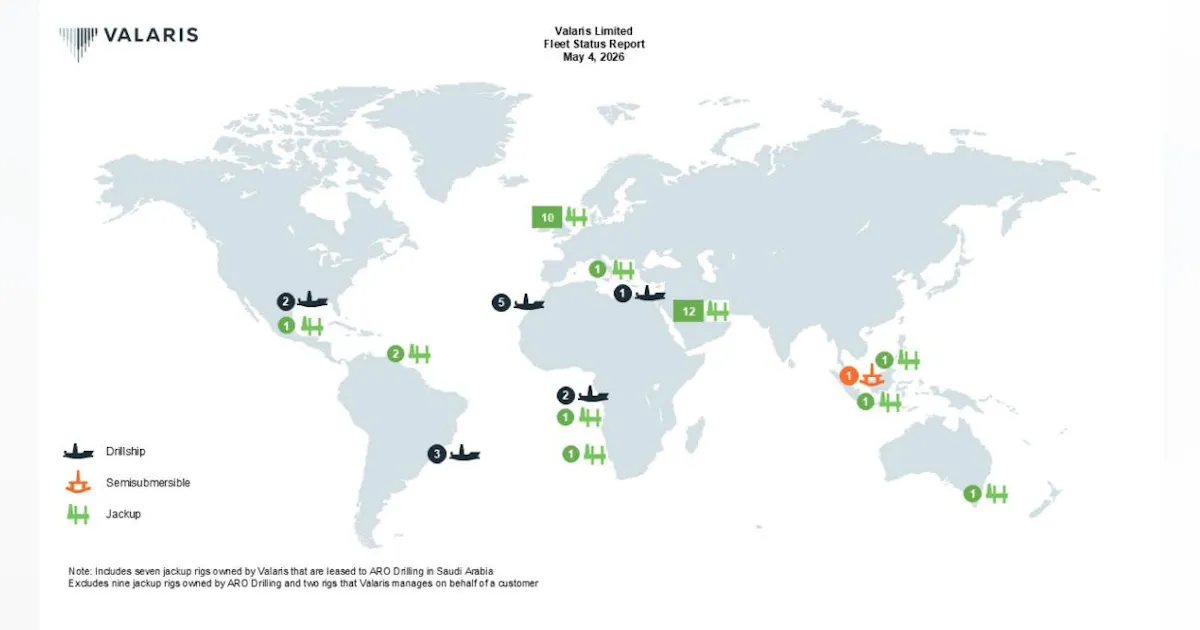
Valaris gains more work for drillship and multiple jackup rigs

In 60 seconds

Top move

Recent rig contract extensions and new rig awards are tying up drillship and jackup capacity that buyers typically use for plug-and-abandonment (P&A) and decommissioning mobilizations

Key takeaways

  • Recent rig contract extensions and new rig awards are tying up drillship and jackup capacity that buyers typically use for plug-and-abandonment (P&A) and decommissioning mobilizations.[1]
  • An extended FPSO operating contract has lengthened the window before that high-spec unit becomes available for redeployment or decommissioning tasks, reducing a potential resource for later P&A work.[3]
  • There are concrete, localized decommissioning moves (a removal vessel working on jacket removals), but they look project-specific rather than a broad market shift—useful for tactical planning, limited for strategic capacity estimates.[2]
  • Market strength in floater and rig segments is a commercial lever suppliers use to shorten quote windows, require deposits, or push conditional bookings—this increases the risk of pass-through mobilization premiums for P&A buyers.[3]
  • Procurement should prioritize documenting supplier availability and hardening mobilization language in contracts now, because visible asset allocations mean fewer realistic options later in supplier negotiations.[1]

What changed since last run

  • Added confirmed supplier capacity locks from Valaris rig extensions that increase near-term rig utilization risk versus last brief. (cite: 7)
  • Added confirmed FPSO ops extension at Catcher that lengthens redeployment lead time for a high-spec floater versus last brief. (cite: 10)

Key facts

  • Multiple contract extensions and new awards for drillship and jackup fleet
  • Work spans Brazil, the US Gulf and North Sea regions
  • Some planned shipyard projects delayed, affecting bareboat charters
  • Project-specific decommissioning vessel on location for jacket removals
  • and jackup contract movements reported across multiple regions
  • Mixed signals: both new awards and localized P&A activity visible

Why it matters

Recent rig contract extensions and new rig awards are tying up drillship and jackup capacity that buyers typically use for plug-and-abandonment (P&A) and decommissioning mobilizations. An extended FPSO operating contract has lengthened the window before that high-spec unit becomes available for redeployment or decommissioning tasks, reducing a potential resource for later P&A work. There are concrete, localized decommissioning moves (a removal vessel working on jacket removals), but they look project-specific rather than a broad market shift—useful for tactical planning, limited for strategic capacity estimates. Market strength in floater and rig segments is a commercial lever suppliers use to shorten quote windows, require deposits, or push conditional bookings—this increases the risk of pass-through mobilization premiums for P&A buyers

Cost / money

  • Higher supplier allocation to drilling and FPSO campaigns will increase the chance of mobilization premiums or higher dayrates for vessels and heavy marine services used in decommissioning, because suppliers can prioritize higher‑value work over short P&A jobs.[1]
  • Conditional bookings and longer backlog on operators mean buyers may face deposit requests or shorter quote validity for long‑lead items like heavy-lift charters and ROV support, which shifts cash and cancellation risk to buyers.[3]

Supplier / commercial

  • Suppliers with newly extended contracts gain scheduling priority and can demand tighter commercial terms (shorter validity, deposits, cancellation fees), reducing buyer leverage during RFQ windows.[1]
  • FPSO operators with defined end-of-term frameworks are positioning assets for planned redeployments and marketing value, which lowers the immediate pool of available floater units for decommissioning tasks.[3]

Safety / operations

  • Compressed mobilization windows caused by tight vessel fleets can force tighter crew rotations and reduced pre-mobilization slack, increasing operational risk if readiness checks or spare equipment are not pre-defined in scope.[1]
  • Project-specific removals (jacket work by dedicated vessels) demonstrate decommissioning crews and equipment are being deployed in pockets, so cross-project spare capacity is uneven and may not be transferable quickly between theaters.[2]

What to watch

  • Watch supplier communications for shortened quote-validity, deposit terms, or conditional-availability language that would transfer mobilization cost and schedule risk to buyers; these are often preceded by public backlog or extension announcements.[1]
  • Watch for formal yard bookings, charter announcements, or redeployment marketing that convert today’s signals into locked slots and materially reduce buyer flexibility for P&A scheduling.[3]

Top stories

Story 1Offshore-mag

Valaris gains more work for drillship and multiple jackup rigs

Signal strongSource-grounded

What happened

Valaris announced a set of new contracts and contract extensions across drillships and multiple jackups, increasing its near-term backlog. The awards and extensions are spread across regions and include multi‑period commitments that concretely tie up rig availability. For procurement, watch whether the pattern of extensions becomes a broader industry behavior that shortens supplier commercial windows

Buyer takeaway

Treat Valaris’ awards as a confirmed capacity allocation signal; rigs tied to multi-region campaigns reduce short-term sourcing options for decommissioning mobilizations

Cost / money

Directional increase in mobilization and vessel dayrate pressure is likely because suppliers can allocate scarce rigs to the highest-paying programs

Supplier / commercial

Expect shorter quote validity and increased conditional-booking language from rig suppliers as they manage backlog and commitments

Safety / operations

Higher asset utilization compresses spare capacity, which can cascade into tighter crew rotations and reduced windows for readiness verification

What to watch

Watch for supplier letters or market updates that formalize conditional availability, deposit requirements, or narrowed quote windows

Key facts

  • Multiple contract extensions and new awards for drillship and jackup fleet
  • Work spans Brazil, the US Gulf and North Sea regions
  • Some planned shipyard projects delayed, affecting bareboat charters

Source excerpts

The same rig will start a 162-day contract in September with INEOS in the UK North Sea, with options for up to 825 days for work in both the UK and Danish sectors
Valaris has secured new contracts and contract extensions with a combined value of about $560 million, lifting the company’s total backlog to $4
VALARIS 123: 123-day contract extension with TAQA in the Dutch North Sea, with accommodation support services underway. VALARIS 248: 74-day contract extension with GE Vernova in the UK North Sea to provide accommodation support services for an offshore wind project
Story 2Offshore-mag

RigsHow Gulf of Mexico drilling contractors extend rig life in a mature

Signal moderateDirectional

What happened

Offshore industry rig news pages show a mix of rig awards and project-specific decommissioning activity, including a vessel on location for jacket removals. The decommissioning instances are operationally real but appear localized, so they provide useful tactical signals rather than proof of broad capacity depletion. Watch whether these pockets of activity aggregate across regions or remain isolated projects

Buyer takeaway

Use site-specific decommissioning activity to validate regional supplier commitments, but do not extrapolate to full-market capacity limits without corroborating signals

Cost / money

Localized activity can drive spot-market premiums in the immediate area, especially for heavy-lift and removal vessels

Supplier / commercial

Suppliers working on committed removal projects may be less willing to accept short-notice redeployments; expect limited flexibility

Safety / operations

Project-level removals consume specialist crews and equipment that are not easily reallocated, creating uneven spare-capacity across theaters

What to watch

Watch whether isolated decommissioning jobs trigger a chain of conditional bookings in nearby yards or fleets

Key facts

  • Project-specific decommissioning vessel on location for jacket removals
  • and jackup contract movements reported across multiple regions
  • Mixed signals: both new awards and localized P&A activity visible

Source excerpts

RigsHow Gulf of Mexico drilling contractors extend rig life in a mature basinApril 30, 2026Courtesy PetrodecDecommissioning OBANA vessel on location at North Sea Pickerill field for jacket removalsApril 28, 2026Courtesy Beach Energy's "FY26 Third Quarter Activities Report"RigsTransocean rig on location at Thylacine West offshore AustraliaApril 28, 2026Courtesy ExproRigsCase study: Automated tubular running system demonstrates operational gains in the GoMApril 24, 2026Courtesy Seadrill LinkedInDrilling & Completi
May 12, 2026Courtesy Seadrill RigsSeadrill nets more work for rigs in US Gulf and offshore BrazilMay 12, 2026Courtesy Noble Corp. RigsNoble books further work for deepwater rig fleetMay 1, 2026Courtesy Noble Corp
Offshore energy industry news, trends, insights and outlooksGeosciencesDrilling & CompletionField DevelopmentSubseaProduction Sections GeosciencesDrilling & CompletionField DevelopmentSubseaProductionPipelinesVesselsRenewable EnergyRegional Reports Special Exclusive ContentVideosMagazineWebcastsMaps & PostersWhat Is...?
Story 3Offshore-mag

Catcher partners prolong FPSO's North Sea operations arrangement

Signal strongSource-grounded

What happened

Harbour Energy and partners extended the operating contract for the BW Catcher FPSO under a clarified end-of-term framework, which increases the operator’s backlog and supports future redeployment marketing. The extension reduces the immediate availability of that high-spec FPSO for redeployment or end-of-life uses, so buyers should assume floater availability timelines may lengthen

Buyer takeaway

Treat the Catcher FPSO extension as a reduction in immediate floater availability; do not assume high‑spec floaters will be free for P&A scheduling

Cost / money

Longer operator commitments on FPSOs can reduce redeployment supply and create bidding pressure for substitute vessels or heavier lifting solutions

Supplier / commercial

An FPSO operator with backlog has less reason to accept short-term redeployment offers, strengthening their negotiating position for redeployments or sale

Safety / operations

Extended FPSO availability delays potential reuse but also reduces the chance for emergency redeployment that could help in complex decommissioning sequences

What to watch

Watch announcements about marketing the FPSO for redeployment or formal sale processes that might affect long-term availability

Key facts

  • Operator extended FPSO operating contract with a defined end-of-term framework
  • Extension increases operating backlog for the FPSO operator
  • Company described improved clarity and marketing flexibility for redeployment

Source excerpts

The revised contract structure, the company added, would support its efforts to market the FPSO for future new redeployment projects. CEO Marco Beenen said, “The Catcher FPSO is a high-specification, harsh-environment asset, making it a highly valuable redeployment unit
In the current strong FPSO market, enhanced contractual clarity and flexibility are key drivers for unlocking additional value over time
CEO Marco Beenen said, “The Catcher FPSO is a high-specification, harsh-environment asset, making it a highly valuable redeployment unit. In the current strong FPSO market, enhanced contractual clarity and flexibility are key drivers for unlocking additional value over time

VP Snapshot

Executive Risk & Action View

Recent rig contract extensions and new rig awards are tying up drillship and jackup capacity that buyers typically use for plug-and-abandonment (P&A) and decommissioning mobilizations.

Overall
60
Cost
79
Supply
61
Schedule
20
Compliance
15

Top signals

30-180dcost

Signal 1: Cost / money

Higher supplier allocation to drilling and FPSO campaigns will increase the chance of mobilization premiums or higher dayrates for vessels and heavy marine services used in decommissioning, because suppliers can prioritize higher‑value work over short P&A jobs.

180d+cost

Signal 2: Cost / money

Conditional bookings and longer backlog on operators mean buyers may face deposit requests or shorter quote validity for long‑lead items like heavy-lift charters and ROV support, which shifts cash and cancellation risk to buyers.

30-180dcommercial

Signal 3: Supplier / commercial

Suppliers with newly extended contracts gain scheduling priority and can demand tighter commercial terms (shorter validity, deposits, cancellation fees), reducing buyer leverage during RFQ windows.

0-30dcommercial

Signal 4: Supplier / commercial

FPSO operators with defined end-of-term frameworks are positioning assets for planned redeployments and marketing value, which lowers the immediate pool of available floater units for decommissioning tasks.

30-180dsupply

Signal 5: Safety / operations

Compressed mobilization windows caused by tight vessel fleets can force tighter crew rotations and reduced pre-mobilization slack, increasing operational risk if readiness checks or spare equipment are not pre-defined in scope.

Signal 6: Safety / operations

Project-specific removals (jacket work by dedicated vessels) demonstrate decommissioning crews and equipment are being deployed in pockets, so cross-project spare capacity is uneven and may not be transferable quickly between theaters.

Recommended actions

CategoryDue 3d

Request written availability and conditional‑booking statements from prioritized rig, vessel, ROV and heavy-lift suppliers across your core regions.

Documented supplier availability matrix to inform RFQ timing and mobilization clause language.

OpsDue 3d

Cross-check imminent P&A mobilization windows against publicly announced rig and FPSO contract extensions to identify direct schedule conflicts.

Prioritized schedule map highlighting execution conflicts and candidates for sequencing or scope adjustment.

ContractsDue 21d

Update RFQ and MSA templates to require explicit mobilization windows, maximum quote‑validity periods, and defined deposit/cancellation mechanics for long‑lead suppliers.

Revised clauses that cap quote validity and define deposit and cancellation liabilities for long‑lead items.

CategoryDue 21d

Run targeted commercial probes with preferred yards, fabrication houses and vessel operators to surface realistic lead times, conditional-booking practices, and deposit mechanics.

Supplier intelligence brief with documented lead‑time ranges and commercial mechanics for upcoming P&A tenders.

CategoryDue 60d

Negotiate provisional slot holds, flexible-call windows, or MOUs with a short list of preferred installation vessels and fabrication yards for prioritized P&A campaigns.

List of provisional holds or MOUs that reduce supplier reallocation risk and protect prioritized mobilization windows.

Risk register

RiskTriggerMitigation
Watch supplier communications for shortened quote-validity, deposit terms, or conditional-availability language that would transfer mobilization cost and schedule risk to buyers; these are often preceded by public backlog or extension announcements.Watch supplier communications for shortened quote-validity, deposit terms, or conditional-availability language that would transfer mobilization cost and schedule risk to buyers; these are often preceded by public backlog or extension announcements.Confirm exposure with category, contracts, and operations before the next supplier commitment.
Watch for formal yard bookings, charter announcements, or redeployment marketing that convert today’s signals into locked slots and materially reduce buyer flexibility for P&A scheduling.Watch for formal yard bookings, charter announcements, or redeployment marketing that convert today’s signals into locked slots and materially reduce buyer flexibility for P&A scheduling.Confirm exposure with category, contracts, and operations before the next supplier commitment.

CM Snapshot

Category Manager Decision Detail

Today's priorities

Request written availability and conditional‑booking statements from prioritized rig, vessel, ROV and heavy-lift suppliers across your core regions.

because recent rig extensions and awards indicate suppliers may already be allocating capacity and can shorten quote windows or require deposits, and documented statements creat...

Due 3d

high

CM move

Use this as the immediate supplier or contract action to move before the next sourcing gate.

Cross-check imminent P&A mobilization windows against publicly announced rig and FPSO contract extensions to identify direct schedule conflicts.

because FPSO and rig commitments reduce available vessel and crew pools and direct conflicts are manageable only after mapping them explicitly.

Due 3d

high

CM move

Use this as the immediate supplier or contract action to move before the next sourcing gate.

Update RFQ and MSA templates to require explicit mobilization windows, maximum quote‑validity periods, and defined deposit/cancellation mechanics for long‑lead suppliers.

because supplier behavior shown in recent contract extensions and market repositioning increases the likelihood of shortened commercial windows and deposit requests; tighter cla...

Due 21d

high

CM move

Use this as the immediate supplier or contract action to move before the next sourcing gate.

Run targeted commercial probes with preferred yards, fabrication houses and vessel operators to surface realistic lead times, conditional-booking practices, and deposit mechanics.

because public extensions and backlog reports mean yards and vessel operators may be prioritizing higher‑value work; direct probes reveal where buyer leverage remains.

Due 21d

high

CM move

Use this as the immediate supplier or contract action to move before the next sourcing gate.

Supplier radar

Offshore-mag

high

Observed supplier signal

Suppliers with newly extended contracts gain scheduling priority and can demand tighter commercial terms (shorter validity, deposits, cancellation fees), reducing buyer leverage during RFQ windows.

Commercial implication

Suppliers with newly extended contracts gain scheduling priority and can demand tighter commercial terms (shorter validity, deposits, cancellation fees), reducing buyer leverage during RFQ windows.

Next step: Validate the source-backed signal with incumbents and alternates before the next award or pricing decision.

Offshore-mag

high

Observed supplier signal

FPSO operators with defined end-of-term frameworks are positioning assets for planned redeployments and marketing value, which lowers the immediate pool of available floater units for decommissioning tasks.

Commercial implication

FPSO operators with defined end-of-term frameworks are positioning assets for planned redeployments and marketing value, which lowers the immediate pool of available floater units for decommissioning tasks.

Next step: Validate the source-backed signal with incumbents and alternates before the next award or pricing decision.

Negotiation levers

Request written availability and conditional‑booking statements from prioritized rig, vessel, ROV and heavy-lift suppliers across your core regions.

When to use: because recent rig extensions and awards indicate suppliers may already be allocating capacity and can shorten quote windows or require deposits, and documented statements creat...

Expected outcome: Documented supplier availability matrix to inform RFQ timing and mobilization clause language.

Commercial mechanism to carry into the next supplier conversation

Cross-check imminent P&A mobilization windows against publicly announced rig and FPSO contract extensions to identify direct schedule conflicts.

When to use: because FPSO and rig commitments reduce available vessel and crew pools and direct conflicts are manageable only after mapping them explicitly.

Expected outcome: Prioritized schedule map highlighting execution conflicts and candidates for sequencing or scope adjustment.

Commercial mechanism to carry into the next supplier conversation

Update RFQ and MSA templates to require explicit mobilization windows, maximum quote‑validity periods, and defined deposit/cancellation mechanics for long‑lead suppliers.

When to use: because supplier behavior shown in recent contract extensions and market repositioning increases the likelihood of shortened commercial windows and deposit requests; tighter cla...

Expected outcome: Revised clauses that cap quote validity and define deposit and cancellation liabilities for long‑lead items.

Commercial mechanism to carry into the next supplier conversation

Run targeted commercial probes with preferred yards, fabrication houses and vessel operators to surface realistic lead times, conditional-booking practices, and deposit mechanics.

When to use: because public extensions and backlog reports mean yards and vessel operators may be prioritizing higher‑value work; direct probes reveal where buyer leverage remains.

Expected outcome: Supplier intelligence brief with documented lead‑time ranges and commercial mechanics for upcoming P&A tenders.

Commercial mechanism to carry into the next supplier conversation

Talking points

Recent rig contract extensions and new rig awards are tying up drillship and jackup capacity that buyers typically use for plug-and-abandonment (P&A) and decommissioning mobilizations.
An extended FPSO operating contract has lengthened the window before that high-spec unit becomes available for redeployment or decommissioning tasks, reducing a potential resource for later P&A work.
There are concrete, localized decommissioning moves (a removal vessel working on jacket removals), but they look project-specific rather than a broad market shift—useful for tactical planning, limited for strategic capacity estimates.
Market strength in floater and rig segments is a commercial lever suppliers use to shorten quote windows, require deposits, or push conditional bookings—this increases the risk of pass-through mobilization premiums for P&A buyers.

Supplier radar

SupplierSignalImplicationNext stepConfidence
Offshore-magSuppliers with newly extended contracts gain scheduling priority and can demand tighter commercial terms (shorter validity, deposits, cancellation fees), reducing buyer leverage during RFQ windows.Suppliers with newly extended contracts gain scheduling priority and can demand tighter commercial terms (shorter validity, deposits, cancellation fees), reducing buyer leverage during RFQ windows.Validate the source-backed signal with incumbents and alternates before the next award or pricing decision.high
Offshore-magFPSO operators with defined end-of-term frameworks are positioning assets for planned redeployments and marketing value, which lowers the immediate pool of available floater units for decommissioning tasks.FPSO operators with defined end-of-term frameworks are positioning assets for planned redeployments and marketing value, which lowers the immediate pool of available floater units for decommissioning tasks.Validate the source-backed signal with incumbents and alternates before the next award or pricing decision.high

Negotiation levers

  • Request written availability and conditional‑booking statements from prioritized rig, vessel, ROV and heavy-lift suppliers across your core regions.because recent rig extensions and awards indicate suppliers may already be allocating capacity and can shorten quote windows or require deposits, and documented statements creat...Documented supplier availability matrix to inform RFQ timing and mobilization clause language.

    high confidence

  • Cross-check imminent P&A mobilization windows against publicly announced rig and FPSO contract extensions to identify direct schedule conflicts.because FPSO and rig commitments reduce available vessel and crew pools and direct conflicts are manageable only after mapping them explicitly.Prioritized schedule map highlighting execution conflicts and candidates for sequencing or scope adjustment.

    high confidence

  • Update RFQ and MSA templates to require explicit mobilization windows, maximum quote‑validity periods, and defined deposit/cancellation mechanics for long‑lead suppliers.because supplier behavior shown in recent contract extensions and market repositioning increases the likelihood of shortened commercial windows and deposit requests; tighter cla...Revised clauses that cap quote validity and define deposit and cancellation liabilities for long‑lead items.

    high confidence

  • Run targeted commercial probes with preferred yards, fabrication houses and vessel operators to surface realistic lead times, conditional-booking practices, and deposit mechanics.because public extensions and backlog reports mean yards and vessel operators may be prioritizing higher‑value work; direct probes reveal where buyer leverage remains.Supplier intelligence brief with documented lead‑time ranges and commercial mechanics for upcoming P&A tenders.

    high confidence

What to do / What to watch

What to do now

  • Request written availability and conditional‑booking statements from prioritized rig, vessel, ROV and heavy-lift suppliers across your core regions.

    Why: because recent rig extensions and awards indicate suppliers may already be allocating capacity and can shorten quote windows or require deposits, and documented statements creat...

    Owner: Category

    Expected outcome: Documented supplier availability matrix to inform RFQ timing and mobilization clause language.

    [1]
  • Cross-check imminent P&A mobilization windows against publicly announced rig and FPSO contract extensions to identify direct schedule conflicts.

    Why: because FPSO and rig commitments reduce available vessel and crew pools and direct conflicts are manageable only after mapping them explicitly.

    Owner: Ops

    Expected outcome: Prioritized schedule map highlighting execution conflicts and candidates for sequencing or scope adjustment.

    [3]

Next few weeks

  • Update RFQ and MSA templates to require explicit mobilization windows, maximum quote‑validity periods, and defined deposit/cancellation mechanics for long‑lead suppliers.

    Why: because supplier behavior shown in recent contract extensions and market repositioning increases the likelihood of shortened commercial windows and deposit requests; tighter cla...

    Owner: Contracts

    Expected outcome: Revised clauses that cap quote validity and define deposit and cancellation liabilities for long‑lead items.

    [1]
  • Run targeted commercial probes with preferred yards, fabrication houses and vessel operators to surface realistic lead times, conditional-booking practices, and deposit mechanics.

    Why: because public extensions and backlog reports mean yards and vessel operators may be prioritizing higher‑value work; direct probes reveal where buyer leverage remains.

    Owner: Category

    Expected outcome: Supplier intelligence brief with documented lead‑time ranges and commercial mechanics for upcoming P&A tenders.

    [3]

Longer view

  • Negotiate provisional slot holds, flexible-call windows, or MOUs with a short list of preferred installation vessels and fabrication yards for prioritized P&A campaigns.

    Why: because confirmed rig and FPSO allocations are already reducing open capacity; provisional holds reduce the risk that suppliers reallocate scarce assets to other higher‑value pr...

    Owner: Category

    Expected outcome: List of provisional holds or MOUs that reduce supplier reallocation risk and protect prioritized mobilization windows.

    [1]

What to watch

  • Watch supplier communications for shortened quote-validity, deposit terms, or conditional-availability language that would transfer mobilization cost and schedule risk to buyers; these are often preceded by public backlog or extension announcements
  • Watch for formal yard bookings, charter announcements, or redeployment marketing that convert today’s signals into locked slots and materially reduce buyer flexibility for P&A scheduling
  • Watch supplier communications for shortened quote-validity, deposit terms, or conditional-availability language that would transfer mobilization cost and schedule risk to buyers; these are often preceded by public backlog or extension announcements.: Watch supplier communications for shortened quote-validity, deposit terms, or conditional-availability language that would transfer mobilization cost and schedule risk to buyers; these are often preceded by public backlog or extension announcements
  • Watch for formal yard bookings, charter announcements, or redeployment marketing that convert today’s signals into locked slots and materially reduce buyer flexibility for P&A scheduling.: Watch for formal yard bookings, charter announcements, or redeployment marketing that convert today’s signals into locked slots and materially reduce buyer flexibility for P&A scheduling
  • Recent rig contract extensions and new rig awards are tying up drillship and jackup capacity that buyers typically use for plug-and-abandonment (P&A) and decommissioning mobilizations
  • An extended FPSO operating contract has lengthened the window before that high-spec unit becomes available for redeployment or decommissioning tasks, reducing a potential resource for later P&A work
  • There are concrete, localized decommissioning moves (a removal vessel working on jacket removals), but they look project-specific rather than a broad market shift—useful for tactical planning, limited for strategic capacity estimates
  • Market strength in floater and rig segments is a commercial lever suppliers use to shorten quote windows, require deposits, or push conditional bookings—this increases the risk of pass-through mobilization premiums for P&A buyers

Market pulse

IndexLatestChangeAs of
WTI Crude (WTI)71.23 /bbl+0.00 (+0.00%)May 13, 2026, 10:11 AM
Brent Crude (BRENT)74.89 /bbl+0.00 (+0.00%)May 13, 2026, 10:11 AM
Natural Gas (NG)3.12 /MMBtu+0.00 (+0.00%)May 13, 2026, 10:11 AM
Baltic Dry (BDI)1,245 pts+0.00 (+0.00%)May 13, 2026, 10:11 AM
  • WTI Crude: Sustained crude price support can keep upstream activity and vessel demand elevated, tightening P&A supplier availability
  • Baltic Dry: Higher dry-bulk shipping activity suggests tighter heavy-lift and transport scheduling, which matters for yard logistics in decommissioning

Sources

Inline citations jump here. Expand a source to read the excerpt, the AI interpretation, and the original link.

[1] Valaris gains more work for drillship and multiple jackup rigs

offshore-mag.com · n.d.

Expand

AI reading

Valaris announced a set of new contracts and contract extensions across drillships and multiple jackups, increasing its near-term backlog. The awards and extensions are spread across regions and include multi‑period commitments that concretely tie up rig availability. For procurement, watch whether the pattern of extensions becomes a broader industry behavior that shortens supplier commercial windows

Buyer takeaway

Treat Valaris’ awards as a confirmed capacity allocation signal; rigs tied to multi-region campaigns reduce short-term sourcing options for decommissioning mobilizations

Cost / money

Directional increase in mobilization and vessel dayrate pressure is likely because suppliers can allocate scarce rigs to the highest-paying programs

Supplier / commercial

Expect shorter quote validity and increased conditional-booking language from rig suppliers as they manage backlog and commitments

Safety / operations

Higher asset utilization compresses spare capacity, which can cascade into tighter crew rotations and reduced windows for readiness verification

What to watch

Watch for supplier letters or market updates that formalize conditional availability, deposit requirements, or narrowed quote windows

Key facts

  • Multiple contract extensions and new awards for drillship and jackup fleet
  • Work spans Brazil, the US Gulf and North Sea regions
  • Some planned shipyard projects delayed, affecting bareboat charters

Source excerpts

The same rig will start a 162-day contract in September with INEOS in the UK North Sea, with options for up to 825 days for work in both the UK and Danish sectors
Valaris has secured new contracts and contract extensions with a combined value of about $560 million, lifting the company’s total backlog to $4
VALARIS 123: 123-day contract extension with TAQA in the Dutch North Sea, with accommodation support services underway. VALARIS 248: 74-day contract extension with GE Vernova in the UK North Sea to provide accommodation support services for an offshore wind project

Used in this brief

  • Next 72 hours — Request written availability and conditional‑booking statements from prioritized rig, vessel, ROV and heavy-lift suppliers across your core regions.. Rationale: because recent rig extensions and awards indicate suppliers may already be allocating capacity and can shorten quote windows or require deposits, and documented statements creat.... Owner: Category. KPI: Documented supplier availability matrix to inform RFQ timing and mobilization clause language
  • Next 2-4 weeks — Update RFQ and MSA templates to require explicit mobilization windows, maximum quote‑validity periods, and defined deposit/cancellation mechanics for long‑lead suppliers.. Rationale: because supplier behavior shown in recent contract extensions and market repositioning increases the likelihood of shortened commercial windows and deposit requests; tighter cla.... Owner: Contracts. KPI: Revised clauses that cap quote validity and define deposit and cancellation liabilities for long‑lead items
  • Next quarter — Negotiate provisional slot holds, flexible-call windows, or MOUs with a short list of preferred installation vessels and fabrication yards for prioritized P&A campaigns.. Rationale: because confirmed rig and FPSO allocations are already reducing open capacity; provisional holds reduce the risk that suppliers reallocate scarce assets to other higher‑value pr.... Owner: Category. KPI: List of provisional holds or MOUs that reduce supplier reallocation risk and protect prioritized mobilization windows
Open original source

[2] RigsHow Gulf of Mexico drilling contractors extend rig life in a mature

offshore-mag.com · n.d.

Expand

AI reading

Offshore industry rig news pages show a mix of rig awards and project-specific decommissioning activity, including a vessel on location for jacket removals. The decommissioning instances are operationally real but appear localized, so they provide useful tactical signals rather than proof of broad capacity depletion. Watch whether these pockets of activity aggregate across regions or remain isolated projects

Buyer takeaway

Use site-specific decommissioning activity to validate regional supplier commitments, but do not extrapolate to full-market capacity limits without corroborating signals

Cost / money

Localized activity can drive spot-market premiums in the immediate area, especially for heavy-lift and removal vessels

Supplier / commercial

Suppliers working on committed removal projects may be less willing to accept short-notice redeployments; expect limited flexibility

Safety / operations

Project-level removals consume specialist crews and equipment that are not easily reallocated, creating uneven spare-capacity across theaters

What to watch

Watch whether isolated decommissioning jobs trigger a chain of conditional bookings in nearby yards or fleets

Key facts

  • Project-specific decommissioning vessel on location for jacket removals
  • and jackup contract movements reported across multiple regions
  • Mixed signals: both new awards and localized P&A activity visible

Source excerpts

RigsHow Gulf of Mexico drilling contractors extend rig life in a mature basinApril 30, 2026Courtesy PetrodecDecommissioning OBANA vessel on location at North Sea Pickerill field for jacket removalsApril 28, 2026Courtesy Beach Energy's "FY26 Third Quarter Activities Report"RigsTransocean rig on location at Thylacine West offshore AustraliaApril 28, 2026Courtesy ExproRigsCase study: Automated tubular running system demonstrates operational gains in the GoMApril 24, 2026Courtesy Seadrill LinkedInDrilling & Completi
May 12, 2026Courtesy Seadrill RigsSeadrill nets more work for rigs in US Gulf and offshore BrazilMay 12, 2026Courtesy Noble Corp. RigsNoble books further work for deepwater rig fleetMay 1, 2026Courtesy Noble Corp
Offshore energy industry news, trends, insights and outlooksGeosciencesDrilling & CompletionField DevelopmentSubseaProduction Sections GeosciencesDrilling & CompletionField DevelopmentSubseaProductionPipelinesVesselsRenewable EnergyRegional Reports Special Exclusive ContentVideosMagazineWebcastsMaps & PostersWhat Is...?

Used in this brief

  • Offshore industry rig news pages show a mix of rig awards and project-specific decommissioning activity, including a vessel on location for jacket removals. The decommissioning instances are operationally real but appear localized, so they provide useful tactical signals rather than proof of broad capacity depletion. Watch whether these pockets of activity aggregate across regions or remain isolated projects
  • Buyer bottom line: localized decommissioning work confirms demand exists but does not yet prove a systemic shortage—treat as tactical evidence when assessing regional supplier availability
  • Use site-specific decommissioning activity to validate regional supplier commitments, but do not extrapolate to full-market capacity limits without corroborating signals
Open original source

[3] Catcher partners prolong FPSO's North Sea operations arrangement

offshore-mag.com · n.d.

Expand

AI reading

Harbour Energy and partners extended the operating contract for the BW Catcher FPSO under a clarified end-of-term framework, which increases the operator’s backlog and supports future redeployment marketing. The extension reduces the immediate availability of that high-spec FPSO for redeployment or end-of-life uses, so buyers should assume floater availability timelines may lengthen

Buyer takeaway

Treat the Catcher FPSO extension as a reduction in immediate floater availability; do not assume high‑spec floaters will be free for P&A scheduling

Cost / money

Longer operator commitments on FPSOs can reduce redeployment supply and create bidding pressure for substitute vessels or heavier lifting solutions

Supplier / commercial

An FPSO operator with backlog has less reason to accept short-term redeployment offers, strengthening their negotiating position for redeployments or sale

Safety / operations

Extended FPSO availability delays potential reuse but also reduces the chance for emergency redeployment that could help in complex decommissioning sequences

What to watch

Watch announcements about marketing the FPSO for redeployment or formal sale processes that might affect long-term availability

Key facts

  • Operator extended FPSO operating contract with a defined end-of-term framework
  • Extension increases operating backlog for the FPSO operator
  • Company described improved clarity and marketing flexibility for redeployment

Source excerpts

The revised contract structure, the company added, would support its efforts to market the FPSO for future new redeployment projects. CEO Marco Beenen said, “The Catcher FPSO is a high-specification, harsh-environment asset, making it a highly valuable redeployment unit
In the current strong FPSO market, enhanced contractual clarity and flexibility are key drivers for unlocking additional value over time
CEO Marco Beenen said, “The Catcher FPSO is a high-specification, harsh-environment asset, making it a highly valuable redeployment unit. In the current strong FPSO market, enhanced contractual clarity and flexibility are key drivers for unlocking additional value over time

Used in this brief

  • Next 72 hours — Cross-check imminent P&A mobilization windows against publicly announced rig and FPSO contract extensions to identify direct schedule conflicts.. Rationale: because FPSO and rig commitments reduce available vessel and crew pools and direct conflicts are manageable only after mapping them explicitly.. Owner: Ops. KPI: Prioritized schedule map highlighting execution conflicts and candidates for sequencing or scope adjustment
  • Next 2-4 weeks — Run targeted commercial probes with preferred yards, fabrication houses and vessel operators to surface realistic lead times, conditional-booking practices, and deposit mechanics.. Rationale: because public extensions and backlog reports mean yards and vessel operators may be prioritizing higher‑value work; direct probes reveal where buyer leverage remains.. Owner: Category. KPI: Supplier intelligence brief with documented lead‑time ranges and commercial mechanics for upcoming P&A tenders
  • Watch for formal yard bookings, charter announcements, or redeployment marketing that convert today’s signals into locked slots and materially reduce buyer flexibility for P&A scheduling
Open original source

[4] WTI Crude

finance.yahoo.com · n.d.

Expand

[5] Baltic Dry

finance.yahoo.com · n.d.

Expand