Operations & Maintenance Services · Australia (Perth)

Adjust O&M Contracts for Autonomy, Local Supply and CMMS Claims

Published May 11, 2026, 6:04 AM AWSTAPACFull category signal
Ask AI
ABS, HD Hyundai and Anduril partner on autonomous surface vessels

In 60 seconds

Top move

An MoU between ABS, HD Hyundai and Anduril is creating a procurement prompt to define autonomy acceptance, classification verification and cyber responsibilities in vessel O&M scopes before suppliers set commercial terms

Key takeaways

  • An MoU between ABS, HD Hyundai and Anduril is creating a procurement prompt to define autonomy acceptance, classification verification and cyber responsibilities in vessel O&M scopes before suppliers set commercial terms.[1]
  • Pollards' Pack Tuff bedding is visibly in use on major Australian pipeline projects and can ship packaged with pipe, which reduces freight pass-through risk but concentrates sourcing—buyers should verify reuse-life before standardising suppliers.[2]
  • Reliabilityweb content is amplifying CMMS and condition-monitoring maturity claims; APAC rollout evidence remains thin, so treat vendor maturity statements as unproven unless supported by pilot data.[3]
  • Cost direction: autonomy work will move spend toward software integration, classification testing and remote-support lines that suppliers may price separately from traditional crewing or routine maintenance.[1]
  • Operational context: reusable bedding lowers on-site handling and temporary storage needs but transfers risk if product integrity under heavy pipeline sections is not independently validated.[2]

What changed since last run

  • Added the ABS–HD Hyundai–Anduril MoU as a new maritime autonomy procurement topic that was not present in the prior brief.
  • Confirmed recent, specific Pack Tuff shipments to Alkimos and other Australian pipeline projects giving on-the-ground evidence of local bedding supply continuity.
  • Noted an uptick in CMMS and condition-monitoring messaging on Reliabilityweb, increasing vendor maturity claims compared with the prior brief's limited evidence note.

Key facts

  • Memorandum of Understanding to explore design, production, autonomy and classification for un
  • Partnership combines a major shipbuilder (HD Hyundai), a classification society (ABS) and an
  • Workstream aims to enable end‑to‑end solutions from design to classification
  • Pack Tuff used on major projects including Alkimos desalination and large interstate pipelines
  • Supplier can ship bedding packaged with manufactured pipe to remove separate freight legs
  • Claims of reuse and robustness under heavy pipeline sections reduce waste and handling needs

Why it matters

An MoU between ABS, HD Hyundai and Anduril is creating a procurement prompt to define autonomy acceptance, classification verification and cyber responsibilities in vessel O&M scopes before suppliers set commercial terms. Pollards' Pack Tuff bedding is visibly in use on major Australian pipeline projects and can ship packaged with pipe, which reduces freight pass-through risk but concentrates sourcing—buyers should verify reuse-life before standardising suppliers. Reliabilityweb content is amplifying CMMS and condition-monitoring maturity claims; APAC rollout evidence remains thin, so treat vendor maturity statements as unproven unless supported by pilot data. Cost direction: autonomy work will move spend toward software integration, classification testing and remote-support lines that suppliers may price separately from traditional crewing or routine maintenance

Cost / money

  • Autonomy and classification activity will shift O&M spend mix toward software integration, classification testing and ongoing remote-support services rather than only crew or routine maintenance labor.[1]
  • Using Pack Tuff packaged with manufactured pipe reduces separate freight pass-through and temporary storage costs, improving predictability of logistics unit costs on pipeline jobs.[2]
  • Mandating mature condition-monitoring platforms or secure-cloud CMMS increases vendor implementation and sustained support fees; expect differentiated pricing for authorised, validated platforms.[3]

Supplier / commercial

  • Suppliers driving autonomy and classification will try to shape certification pathways early and may propose staged payments or narrower RFx validity tied to test milestones.[1]
  • Local bedding suppliers that can ship packaged with pipe and demonstrate reuse become preferred vendors, improving delivery certainty but reducing spot-market options and buyer leverage.[2]
  • CMMS and condition-monitoring vendors will leverage maturity narratives to justify bundled services and higher fees; buyers should demand pilots and comparables before committing to wide contract obligations.[3]

Safety / operations

  • Autonomy introduces remote-operation failure modes and cyber risks that require classification-led verification steps, updated emergency procedures and training for remote supervision.[1][3]
  • Reusable bedding reduces manual handling and on-site waste, but degraded product integrity under heavy pipeline sections would create installation safety and schedule risks if not validated during supplier qualification.[2]

What to watch

  • Early-signal: the ABS–HD Hyundai–Anduril MoU is a framework, not a contract—watch for pilot vessel solicitations, classification trials or formal test programs that would convert the MoU into procurable work.[1]
  • Early-signal: Reliabilityweb amplifies CMMS maturity messaging but shows limited APAC deployment evidence; require implementation proof (pilot data, interoperability tests) before embedding strict CMMS clauses in contracts.[3]

Top stories

Story 1Offshore EnergyMay 8, 2026

ABS, HD Hyundai and Anduril partner on autonomous surface vessels

Signal moderateDirectional

What happened

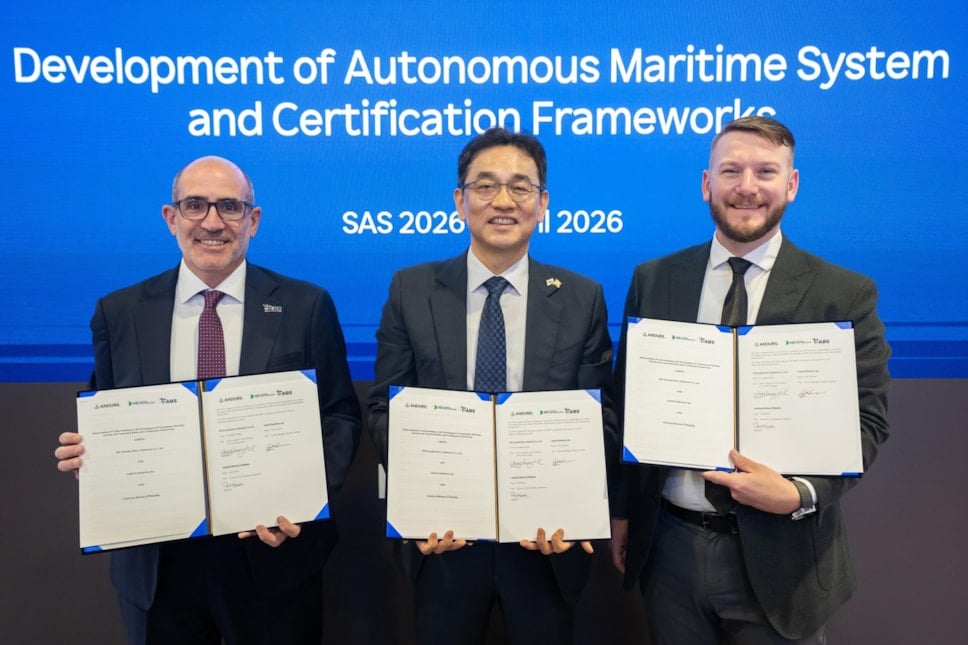
ABS, HD Hyundai and Anduril signed an MoU to build a framework for autonomous surface vessels covering design, production, autonomy and classification. The partnership combines shipbuilding, autonomy/AI and classification expertise, creating early procurement needs for certification, integration and ongoing software support. Watch for pilot vessel calls, classification trials or test programs that would convert the MoU framework into contract work

Buyer takeaway

Treat the MoU as a directional procurement signal to define autonomy acceptance tests, cyber responsibility and classification verification in upcoming O&M scopes

Cost / money

Cost exposure will include software integration, certification tests and remote‑support services that suppliers can price separately from crewing

Supplier / commercial

Suppliers tied to autonomy and classification will seek early technical engagement and may propose staged payments or narrow RFx validity tied to certification milestones

Safety / operations

Autonomy introduces remote‑operation failure modes and cyber risks that require classification‑led verification, new emergency procedures and remote‑supervision training

What to watch

Signal is an MoU, not a contract—watch for pilot vessel solicitations, classification trials or test programs that convert the framework into procurable work

Key facts

  • Memorandum of Understanding to explore design, production, autonomy and classification for un
  • Partnership combines a major shipbuilder (HD Hyundai), a classification society (ABS) and an
  • Workstream aims to enable end‑to‑end solutions from design to classification

Source excerpts

Home Green Marine ABS, HD Hyundai and Anduril partner on autonomous surface vessels May 8, 2026, by American Bureau of Shipping (ABS), HD Hyundai and Anduril Industries have signed a memorandum of understanding (MoU) for the development of a framework for autonomous maritime systems and related certification
Source: ABS The deal is said to establish a framework for the partners to enable end-to-end solutions covering vessel design, production, autonomy and classification for autonomous surface vessels. Cory Emmons, General Manager, Anduril Industries Surface Dominance Division, said: “We have high expectations for the certification process for the unmanned vessel to be developed by HD Hyundai and Anduril through our collaboration with ABS
Source: ABS The deal is said to establish a framework for the partners to enable end-to-end solutions covering vessel design, production, autonomy and classification for autonomous surface vessels
Story 2The Australian PipelinerApr 27, 2026

Build it right with Pack Tuff

Signal strongSource-grounded

What happened

Pollards Sawdust Supplies reports Pack Tuff bedding bags are being used across major Australian pipeline projects and in some cases are shipped packaged with manufactured pipe. The supplier highlights reuse, robust polywoven construction and lower transport cost when bundled, which materially reduces separate freight and temporary storage needs. Buyers should validate claimed reuse cycles and packaged‑delivery practices during supplier qualification before standardising in RFQs

Buyer takeaway

Validate reuse‑life and packaged‑shipment capability and consider contract language to capture bundled freight benefits and responsibilities

Cost / money

Bundling bedding with pipe deliveries reduces separate freight pass‑through and temporary storage costs, improving logistics predictability

Supplier / commercial

A small set of local suppliers with proven reuse and packaging capabilities can be preferred vendors, improving delivery reliability but reducing spot competition

Safety / operations

Reusable bedding reduces manual handling and waste, but product integrity under heavy loads must be tested to avoid installation safety incidents

What to watch

Confirm claimed reuse cycles and packaged‑delivery processes during supplier qualification to avoid late discovery of degraded performance on heavy installations

Key facts

  • Pack Tuff used on major projects including Alkimos desalination and large interstate pipelines
  • Supplier can ship bedding packaged with manufactured pipe to remove separate freight legs
  • Claims of reuse and robustness under heavy pipeline sections reduce waste and handling needs

Source excerpts

In some cases, Pollards can even freight its Pack Tuff bags packaged with manufactured pipe, eliminating transport costs altogether
In some cases, Pollards can even freight its Pack Tuff bags packaged with manufactured pipe, eliminating transport costs altogether. The company has such an arrangement with Steel Mains, where the pipe manufacturer will freight its product to site with Pack Tuff bags already on board
Pack Tuff’s polywoven bags are robust enough to withstand the rough conditions of pipeline construction sites, yet flexible enough under pressure to avoid dangerous ‘exploding’ under the weight of heavy steel pipeline sections – even those weighing up to 15 tonnes
Story 3Reliabilityweb

Es home featured on Reliabilityweb's site

Signal limitedDirectional

What happened

Reliabilityweb describes what a maturing condition‑monitoring program looks like and warns that programs can plateau if coverage and technician empowerment stall. The material stresses training, process design and real deployment evidence, which strengthens vendor messaging around CMMS and condition‑monitoring maturity claims. Watch for vendor pilot data and APAC deployment references before folding maturity expectations into contract deliverables

Buyer takeaway

Ask for deployment evidence, pilot results and interoperability demonstrations from CMMS vendors rather than accepting maturity claims at face value

Cost / money

Staging CMMS requirements or pilots helps avoid full implementation costs being pushed into initial contracts; mature platform requirements increase implementation and support fees

Supplier / commercial

Vendors will use maturity narratives to justify bundled services and higher fees; seek comparables and avoid one‑vendor lock‑in without pilot validation

Safety / operations

Mature programmes improve early failure detection and uptime but require trained technicians and adjusted maintenance execution processes

What to watch

Limited APAC rollout evidence means buyers should pilot and verify vendor interoperability and security claims before making them contract deliverables

Key facts

  • Content focuses on expanding coverage, sharpening insight and empowering technicians in condi
  • Guidance highlights risk of plateauing into route‑based routines without programme evolution
  • Emphasis on the operational gap between claiming maturity and delivering scalable deployments

Source excerpts

asset condition management What a Maturing Condition Monitoring Program Really Looks Like Not all condition monitoring programs are created equal
The difference comes down to one choice: do you allow your program to plateau, or do you build it to mature?
Some evolve by expanding coverage, sharpening insight, and empowering technicians to drive reliability

VP Snapshot

Executive Risk & Action View

An MoU between ABS, HD Hyundai and Anduril is creating a procurement prompt to define autonomy acceptance, classification verification and cyber responsibilities in vessel O&M scopes before suppliers set commercial terms.

Overall
62
Cost
79
Supply
25
Schedule
56
Compliance
15

Top signals

30-180dcost

Signal 1: Cost / money

Autonomy and classification activity will shift O&M spend mix toward software integration, classification testing and ongoing remote-support services rather than only crew or routine maintenance labor.

Signal 2: Cost / money

Using Pack Tuff packaged with manufactured pipe reduces separate freight pass-through and temporary storage costs, improving predictability of logistics unit costs on pipeline jobs.

Signal 3: Cost / money

Mandating mature condition-monitoring platforms or secure-cloud CMMS increases vendor implementation and sustained support fees; expect differentiated pricing for authorised, validated platforms.

30-180dcommercial

Signal 4: Supplier / commercial

Suppliers driving autonomy and classification will try to shape certification pathways early and may propose staged payments or narrower RFx validity tied to test milestones.

Signal 6: Supplier / commercial

CMMS and condition-monitoring vendors will leverage maturity narratives to justify bundled services and higher fees; buyers should demand pilots and comparables before committing to wide contract obligations.

30-180dschedule

Signal 5: Supplier / commercial

Local bedding suppliers that can ship packaged with pipe and demonstrate reuse become preferred vendors, improving delivery certainty but reducing spot-market options and buyer leverage.

Recommended actions

CategoryDue 3d

Flag autonomy, classification and cyber dependencies in the supplier register and add a certification acceptance checkpoint to maritime RFx templates.

Supplier register updated with autonomy/cyber flags and RFx templates include a certification acceptance checkpoint to reduce later scope disputes.

ContractsDue 3d

Confirm Pack Tuff delivery and packaged‑freight terms with incumbents and record reuse verification steps in procurement files.

Procurement files show confirmed packaged‑shipping terms and documented reuse verification steps to reduce later invoicing and performance disputes.

ContractsDue 21d

Issue targeted RFIs to shortlisted CMMS and condition‑monitoring vendors asking for interoperability evidence, security authorisations and APAC rollout references or pilot results.

Comparable vendor responses that allow staged CMMS requirements and objective pass/fail criteria for inclusion in RFx documents.

OpsDue 21d

Run a supplier capability check on Pack Tuff providers to verify claimed reuse cycles, packaged‑shipment capability and safe handling under heavy pipeline sections.

Supplier capability report appended to vendor qualification records and decision to prefer or tier suppliers based on verified performance.

ContractsDue 60d

Develop an O&M annex that defines autonomy acceptance tests, cyber responsibility allocations and classification verification steps for any future autonomous or remotely operate...

O&M annex template ready for RFx use that sets explicit autonomy acceptance tests, cyber responsibility allocations and classification verification points.

OpsDue 60d

Run a pilot integrating one condition‑monitoring vendor with the existing CMMS to validate data exchange, workflow changes and support burden before scaling contractual requirem...

Pilot report demonstrating workable data exchange patterns and operational impacts that informs contract scope and pricing decisions.

Risk register

RiskTriggerMitigation
Early-signal: the ABS–HD Hyundai–Anduril MoU is a framework, not a contract—watch for pilot vessel solicitations, classification trials or formal test programs that would convert the MoU into procurable work.Early-signal: the ABS–HD Hyundai–Anduril MoU is a framework, not a contract—watch for pilot vessel solicitations, classification trials or formal test programs that would convert the MoU into procurable work.Confirm exposure with category, contracts, and operations before the next supplier commitment.
Early-signal: Reliabilityweb amplifies CMMS maturity messaging but shows limited APAC deployment evidence; require implementation proof (pilot data, interoperability tests) before embedding strict CMMS clauses in contracts.Early-signal: Reliabilityweb amplifies CMMS maturity messaging but shows limited APAC deployment evidence; require implementation proof (pilot data, interoperability tests) before embedding strict CMMS clauses in contracts.Confirm exposure with category, contracts, and operations before the next supplier commitment.

CM Snapshot

Category Manager Decision Detail

Today's priorities

Flag autonomy, classification and cyber dependencies in the supplier register and add a certification acceptance checkpoint to maritime RFx templates.

Do this because the ABS–HD Hyundai–Anduril MoU signals autonomy will change vessel O&M acceptance criteria and create new classification and cyber handoffs that affect mobilisat...

Due 3d

high

CM move

Use this as the immediate supplier or contract action to move before the next sourcing gate.

Confirm Pack Tuff delivery and packaged‑freight terms with incumbents and record reuse verification steps in procurement files.

Do this because recent Pack Tuff shipments show packaged shipping and reuse claims that change freight pass‑through, on‑site handling and vendor selection criteria.

Due 3d

high

CM move

Use this as the immediate supplier or contract action to move before the next sourcing gate.

Issue targeted RFIs to shortlisted CMMS and condition‑monitoring vendors asking for interoperability evidence, security authorisations and APAC rollout references or pilot results.

Do this because Reliabilityweb highlights uneven maturity and talk of secure‑cloud adoption; procurement needs concrete evidence to avoid mandating unproven platform deliverables.

Due 21d

high

CM move

Use this as the immediate supplier or contract action to move before the next sourcing gate.

Run a supplier capability check on Pack Tuff providers to verify claimed reuse cycles, packaged‑shipment capability and safe handling under heavy pipeline sections.

Do this because reuse and packaged delivery reduce costs but transfer installation risk to the buyer if product performance under heavy loads is overstated.

Due 21d

high

CM move

Use this as the immediate supplier or contract action to move before the next sourcing gate.

Supplier radar

Offshore Energy

high

Observed supplier signal

Suppliers driving autonomy and classification will try to shape certification pathways early and may propose staged payments or narrower RFx validity tied to test milestones.

Commercial implication

Suppliers driving autonomy and classification will try to shape certification pathways early and may propose staged payments or narrower RFx validity tied to test milestones.

Next step: Validate the source-backed signal with incumbents and alternates before the next award or pricing decision.

The Australian Pipeliner

high

Observed supplier signal

Local bedding suppliers that can ship packaged with pipe and demonstrate reuse become preferred vendors, improving delivery certainty but reducing spot-market options and buyer leverage.

Commercial implication

Local bedding suppliers that can ship packaged with pipe and demonstrate reuse become preferred vendors, improving delivery certainty but reducing spot-market options and buyer leverage.

Next step: Validate the source-backed signal with incumbents and alternates before the next award or pricing decision.

Reliabilityweb

high

Observed supplier signal

CMMS and condition-monitoring vendors will leverage maturity narratives to justify bundled services and higher fees; buyers should demand pilots and comparables before committing to wide contract obligations.

Commercial implication

CMMS and condition-monitoring vendors will leverage maturity narratives to justify bundled services and higher fees; buyers should demand pilots and comparables before committing to wide contract obligations.

Next step: Validate the source-backed signal with incumbents and alternates before the next award or pricing decision.

Negotiation levers

Flag autonomy, classification and cyber dependencies in the supplier register and add a certification acceptance checkpoint to maritime RFx templates.

When to use: Do this because the ABS–HD Hyundai–Anduril MoU signals autonomy will change vessel O&M acceptance criteria and create new classification and cyber handoffs that affect mobilisat...

Expected outcome: Supplier register updated with autonomy/cyber flags and RFx templates include a certification acceptance checkpoint to reduce later scope disputes.

Commercial mechanism to carry into the next supplier conversation

Confirm Pack Tuff delivery and packaged‑freight terms with incumbents and record reuse verification steps in procurement files.

When to use: Do this because recent Pack Tuff shipments show packaged shipping and reuse claims that change freight pass‑through, on‑site handling and vendor selection criteria.

Expected outcome: Procurement files show confirmed packaged‑shipping terms and documented reuse verification steps to reduce later invoicing and performance disputes.

Commercial mechanism to carry into the next supplier conversation

Issue targeted RFIs to shortlisted CMMS and condition‑monitoring vendors asking for interoperability evidence, security authorisations and APAC rollout references or pilot results.

When to use: Do this because Reliabilityweb highlights uneven maturity and talk of secure‑cloud adoption; procurement needs concrete evidence to avoid mandating unproven platform deliverables.

Expected outcome: Comparable vendor responses that allow staged CMMS requirements and objective pass/fail criteria for inclusion in RFx documents.

Commercial mechanism to carry into the next supplier conversation

Run a supplier capability check on Pack Tuff providers to verify claimed reuse cycles, packaged‑shipment capability and safe handling under heavy pipeline sections.

When to use: Do this because reuse and packaged delivery reduce costs but transfer installation risk to the buyer if product performance under heavy loads is overstated.

Expected outcome: Supplier capability report appended to vendor qualification records and decision to prefer or tier suppliers based on verified performance.

Commercial mechanism to carry into the next supplier conversation

Talking points

An MoU between ABS, HD Hyundai and Anduril is creating a procurement prompt to define autonomy acceptance, classification verification and cyber responsibilities in vessel O&M scopes before suppliers set commercial terms.
Pollards' Pack Tuff bedding is visibly in use on major Australian pipeline projects and can ship packaged with pipe, which reduces freight pass-through risk but concentrates sourcing—buyers should verify reuse-life before standardising suppliers.
Reliabilityweb content is amplifying CMMS and condition-monitoring maturity claims; APAC rollout evidence remains thin, so treat vendor maturity statements as unproven unless supported by pilot data.
Cost direction: autonomy work will move spend toward software integration, classification testing and remote-support lines that suppliers may price separately from traditional crewing or routine maintenance.

Supplier radar

SupplierSignalImplicationNext stepConfidence
Offshore EnergySuppliers driving autonomy and classification will try to shape certification pathways early and may propose staged payments or narrower RFx validity tied to test milestones.Suppliers driving autonomy and classification will try to shape certification pathways early and may propose staged payments or narrower RFx validity tied to test milestones.Validate the source-backed signal with incumbents and alternates before the next award or pricing decision.high
The Australian PipelinerLocal bedding suppliers that can ship packaged with pipe and demonstrate reuse become preferred vendors, improving delivery certainty but reducing spot-market options and buyer leverage.Local bedding suppliers that can ship packaged with pipe and demonstrate reuse become preferred vendors, improving delivery certainty but reducing spot-market options and buyer leverage.Validate the source-backed signal with incumbents and alternates before the next award or pricing decision.high
ReliabilitywebCMMS and condition-monitoring vendors will leverage maturity narratives to justify bundled services and higher fees; buyers should demand pilots and comparables before committing to wide contract obligations.CMMS and condition-monitoring vendors will leverage maturity narratives to justify bundled services and higher fees; buyers should demand pilots and comparables before committing to wide contract obligations.Validate the source-backed signal with incumbents and alternates before the next award or pricing decision.high

Negotiation levers

  • Flag autonomy, classification and cyber dependencies in the supplier register and add a certification acceptance checkpoint to maritime RFx templates.Do this because the ABS–HD Hyundai–Anduril MoU signals autonomy will change vessel O&M acceptance criteria and create new classification and cyber handoffs that affect mobilisat...Supplier register updated with autonomy/cyber flags and RFx templates include a certification acceptance checkpoint to reduce later scope disputes.

    high confidence

  • Confirm Pack Tuff delivery and packaged‑freight terms with incumbents and record reuse verification steps in procurement files.Do this because recent Pack Tuff shipments show packaged shipping and reuse claims that change freight pass‑through, on‑site handling and vendor selection criteria.Procurement files show confirmed packaged‑shipping terms and documented reuse verification steps to reduce later invoicing and performance disputes.

    high confidence

  • Issue targeted RFIs to shortlisted CMMS and condition‑monitoring vendors asking for interoperability evidence, security authorisations and APAC rollout references or pilot results.Do this because Reliabilityweb highlights uneven maturity and talk of secure‑cloud adoption; procurement needs concrete evidence to avoid mandating unproven platform deliverables.Comparable vendor responses that allow staged CMMS requirements and objective pass/fail criteria for inclusion in RFx documents.

    high confidence

  • Run a supplier capability check on Pack Tuff providers to verify claimed reuse cycles, packaged‑shipment capability and safe handling under heavy pipeline sections.Do this because reuse and packaged delivery reduce costs but transfer installation risk to the buyer if product performance under heavy loads is overstated.Supplier capability report appended to vendor qualification records and decision to prefer or tier suppliers based on verified performance.

    high confidence

What to do / What to watch

What to do now

  • Flag autonomy, classification and cyber dependencies in the supplier register and add a certification acceptance checkpoint to maritime RFx templates.

    Why: Do this because the ABS–HD Hyundai–Anduril MoU signals autonomy will change vessel O&M acceptance criteria and create new classification and cyber handoffs that affect mobilisat...

    Owner: Category

    Expected outcome: Supplier register updated with autonomy/cyber flags and RFx templates include a certification acceptance checkpoint to reduce later scope disputes.

    [1]
  • Confirm Pack Tuff delivery and packaged‑freight terms with incumbents and record reuse verification steps in procurement files.

    Why: Do this because recent Pack Tuff shipments show packaged shipping and reuse claims that change freight pass‑through, on‑site handling and vendor selection criteria.

    Owner: Contracts

    Expected outcome: Procurement files show confirmed packaged‑shipping terms and documented reuse verification steps to reduce later invoicing and performance disputes.

    [2]

Next few weeks

  • Issue targeted RFIs to shortlisted CMMS and condition‑monitoring vendors asking for interoperability evidence, security authorisations and APAC rollout references or pilot results.

    Why: Do this because Reliabilityweb highlights uneven maturity and talk of secure‑cloud adoption; procurement needs concrete evidence to avoid mandating unproven platform deliverables.

    Owner: Contracts

    Expected outcome: Comparable vendor responses that allow staged CMMS requirements and objective pass/fail criteria for inclusion in RFx documents.

    [3]
  • Run a supplier capability check on Pack Tuff providers to verify claimed reuse cycles, packaged‑shipment capability and safe handling under heavy pipeline sections.

    Why: Do this because reuse and packaged delivery reduce costs but transfer installation risk to the buyer if product performance under heavy loads is overstated.

    Owner: Ops

    Expected outcome: Supplier capability report appended to vendor qualification records and decision to prefer or tier suppliers based on verified performance.

    [2]

Longer view

  • Develop an O&M annex that defines autonomy acceptance tests, cyber responsibility allocations and classification verification steps for any future autonomous or remotely operate...

    Why: Do this because the MoU points to upcoming autonomy workstreams that will require clear technical and commercial handoffs to prevent mobilisation delays and uptime disputes.

    Owner: Contracts

    Expected outcome: O&M annex template ready for RFx use that sets explicit autonomy acceptance tests, cyber responsibility allocations and classification verification points.

    [1]
  • Run a pilot integrating one condition‑monitoring vendor with the existing CMMS to validate data exchange, workflow changes and support burden before scaling contractual requirem...

    Why: Do this because Reliabilityweb warns condition‑monitoring maturity is uneven; a pilot prevents over‑specifying vendor obligations and exposes hidden operational costs.

    Owner: Ops

    Expected outcome: Pilot report demonstrating workable data exchange patterns and operational impacts that informs contract scope and pricing decisions.

    [3]

What to watch

  • Early-signal: the ABS–HD Hyundai–Anduril MoU is a framework, not a contract—watch for pilot vessel solicitations, classification trials or formal test programs that would convert the MoU into procurable work
  • Early-signal: Reliabilityweb amplifies CMMS maturity messaging but shows limited APAC deployment evidence; require implementation proof (pilot data, interoperability tests) before embedding strict CMMS clauses in contracts
  • Early-signal: the ABS–HD Hyundai–Anduril MoU is a framework, not a contract—watch for pilot vessel solicitations, classification trials or formal test programs that would convert the MoU into procurable work.: Early-signal: the ABS–HD Hyundai–Anduril MoU is a framework, not a contract—watch for pilot vessel solicitations, classification trials or formal test programs that would convert the MoU into procurable work
  • Early-signal: Reliabilityweb amplifies CMMS maturity messaging but shows limited APAC deployment evidence; require implementation proof (pilot data, interoperability tests) before embedding strict CMMS clauses in contracts.: Early-signal: Reliabilityweb amplifies CMMS maturity messaging but shows limited APAC deployment evidence; require implementation proof (pilot data, interoperability tests) before embedding strict CMMS clauses in contracts
  • An MoU between ABS, HD Hyundai and Anduril is creating a procurement prompt to define autonomy acceptance, classification verification and cyber responsibilities in vessel O&M scopes before suppliers set commercial terms
  • Pollards' Pack Tuff bedding is visibly in use on major Australian pipeline projects and can ship packaged with pipe, which reduces freight pass-through risk but concentrates sourcing—buyers should verify reuse-life before standardising suppliers
  • Reliabilityweb content is amplifying CMMS and condition-monitoring maturity claims; APAC rollout evidence remains thin, so treat vendor maturity statements as unproven unless supported by pilot data
  • Cost direction: autonomy work will move spend toward software integration, classification testing and remote-support lines that suppliers may price separately from traditional crewing or routine maintenance

Market pulse

IndexLatestChangeAs of
WTI Crude (WTI)71.23 /bbl+0.00 (+0.00%)May 10, 2026, 10:11 PM
Brent Crude (BRENT)74.89 /bbl+0.00 (+0.00%)May 10, 2026, 10:11 PM
Natural Gas (NG)3.12 /MMBtu+0.00 (+0.00%)May 10, 2026, 10:11 PM
Johnson Controls (JCI)65 +0.00 (+0.00%)May 10, 2026, 10:11 PM
  • Johnson Controls: Johnson Controls activity signals demand for integrated building and equipment servicing that overlaps with on‑site O&M provider work and aftermarket OEM pricing in APAC
  • WTI Crude: WTI crude trends influence vessel fuel choices and O&M fuel pass‑through assumptions that show up in marine services bids
  • Natural Gas: Natural gas price movements affect energy‑intensive site services and contractor fuel hedging behaviour that can appear in maintenance pricing for power‑dependent assets

Sources

Inline citations jump here. Expand a source to read the excerpt, the AI interpretation, and the original link.

[1] ABS, HD Hyundai and Anduril partner on autonomous surface vessels

offshore-energy.biz · May 8, 2026

Expand

AI reading

ABS, HD Hyundai and Anduril signed an MoU to build a framework for autonomous surface vessels covering design, production, autonomy and classification. The partnership combines shipbuilding, autonomy/AI and classification expertise, creating early procurement needs for certification, integration and ongoing software support. Watch for pilot vessel calls, classification trials or test programs that would convert the MoU framework into contract work

Buyer takeaway

Treat the MoU as a directional procurement signal to define autonomy acceptance tests, cyber responsibility and classification verification in upcoming O&M scopes

Cost / money

Cost exposure will include software integration, certification tests and remote‑support services that suppliers can price separately from crewing

Supplier / commercial

Suppliers tied to autonomy and classification will seek early technical engagement and may propose staged payments or narrow RFx validity tied to certification milestones

Safety / operations

Autonomy introduces remote‑operation failure modes and cyber risks that require classification‑led verification, new emergency procedures and remote‑supervision training

What to watch

Signal is an MoU, not a contract—watch for pilot vessel solicitations, classification trials or test programs that convert the framework into procurable work

Key facts

  • Memorandum of Understanding to explore design, production, autonomy and classification for un
  • Partnership combines a major shipbuilder (HD Hyundai), a classification society (ABS) and an
  • Workstream aims to enable end‑to‑end solutions from design to classification

Source excerpts

Home Green Marine ABS, HD Hyundai and Anduril partner on autonomous surface vessels May 8, 2026, by American Bureau of Shipping (ABS), HD Hyundai and Anduril Industries have signed a memorandum of understanding (MoU) for the development of a framework for autonomous maritime systems and related certification
Source: ABS The deal is said to establish a framework for the partners to enable end-to-end solutions covering vessel design, production, autonomy and classification for autonomous surface vessels. Cory Emmons, General Manager, Anduril Industries Surface Dominance Division, said: “We have high expectations for the certification process for the unmanned vessel to be developed by HD Hyundai and Anduril through our collaboration with ABS
Source: ABS The deal is said to establish a framework for the partners to enable end-to-end solutions covering vessel design, production, autonomy and classification for autonomous surface vessels

Used in this brief

  • What to watch: Early-signal: the ABS–HD Hyundai–Anduril MoU is a framework, not a contract—watch for pilot vessel solicitations, classification trials or formal test programs that would convert the MoU into procurable work
  • Next 72 hours — Flag autonomy, classification and cyber dependencies in the supplier register and add a certification acceptance checkpoint to maritime RFx templates.. Rationale: Do this because the ABS–HD Hyundai–Anduril MoU signals autonomy will change vessel O&M acceptance criteria and create new classification and cyber handoffs that affect mobilisat.... Owner: Category. KPI: Supplier register updated with autonomy/cyber flags and RFx templates include a certification acceptance checkpoint to reduce later scope disputes
  • Next quarter — Develop an O&M annex that defines autonomy acceptance tests, cyber responsibility allocations and classification verification steps for any future autonomous or remotely operate.... Rationale: Do this because the MoU points to upcoming autonomy workstreams that will require clear technical and commercial handoffs to prevent mobilisation delays and uptime disputes.. Owner: Contracts. KPI: O&M annex template ready for RFx use that sets explicit autonomy acceptance tests, cyber responsibility allocations and classification verification points
Open original source

[2] Build it right with Pack Tuff

pipeliner.com.au · Apr 27, 2026

Expand

AI reading

Pollards Sawdust Supplies reports Pack Tuff bedding bags are being used across major Australian pipeline projects and in some cases are shipped packaged with manufactured pipe. The supplier highlights reuse, robust polywoven construction and lower transport cost when bundled, which materially reduces separate freight and temporary storage needs. Buyers should validate claimed reuse cycles and packaged‑delivery practices during supplier qualification before standardising in RFQs

Buyer takeaway

Validate reuse‑life and packaged‑shipment capability and consider contract language to capture bundled freight benefits and responsibilities

Cost / money

Bundling bedding with pipe deliveries reduces separate freight pass‑through and temporary storage costs, improving logistics predictability

Supplier / commercial

A small set of local suppliers with proven reuse and packaging capabilities can be preferred vendors, improving delivery reliability but reducing spot competition

Safety / operations

Reusable bedding reduces manual handling and waste, but product integrity under heavy loads must be tested to avoid installation safety incidents

What to watch

Confirm claimed reuse cycles and packaged‑delivery processes during supplier qualification to avoid late discovery of degraded performance on heavy installations

Key facts

  • Pack Tuff used on major projects including Alkimos desalination and large interstate pipelines
  • Supplier can ship bedding packaged with manufactured pipe to remove separate freight legs
  • Claims of reuse and robustness under heavy pipeline sections reduce waste and handling needs

Source excerpts

In some cases, Pollards can even freight its Pack Tuff bags packaged with manufactured pipe, eliminating transport costs altogether
In some cases, Pollards can even freight its Pack Tuff bags packaged with manufactured pipe, eliminating transport costs altogether. The company has such an arrangement with Steel Mains, where the pipe manufacturer will freight its product to site with Pack Tuff bags already on board
Pack Tuff’s polywoven bags are robust enough to withstand the rough conditions of pipeline construction sites, yet flexible enough under pressure to avoid dangerous ‘exploding’ under the weight of heavy steel pipeline sections – even those weighing up to 15 tonnes

Used in this brief

  • Cost / money: Using Pack Tuff packaged with manufactured pipe reduces separate freight pass-through and temporary storage costs, improving predictability of logistics unit costs on pipeline jobs
  • Next 72 hours — Confirm Pack Tuff delivery and packaged‑freight terms with incumbents and record reuse verification steps in procurement files.. Rationale: Do this because recent Pack Tuff shipments show packaged shipping and reuse claims that change freight pass‑through, on‑site handling and vendor selection criteria.. Owner: Contracts. KPI: Procurement files show confirmed packaged‑shipping terms and documented reuse verification steps to reduce later invoicing and performance disputes
  • Next 2-4 weeks — Run a supplier capability check on Pack Tuff providers to verify claimed reuse cycles, packaged‑shipment capability and safe handling under heavy pipeline sections.. Rationale: Do this because reuse and packaged delivery reduce costs but transfer installation risk to the buyer if product performance under heavy loads is overstated.. Owner: Ops. KPI: Supplier capability report appended to vendor qualification records and decision to prefer or tier suppliers based on verified performance
Open original source

[3] Es home featured on Reliabilityweb's site

reliabilityweb.com · n.d.

Expand

AI reading

Reliabilityweb describes what a maturing condition‑monitoring program looks like and warns that programs can plateau if coverage and technician empowerment stall. The material stresses training, process design and real deployment evidence, which strengthens vendor messaging around CMMS and condition‑monitoring maturity claims. Watch for vendor pilot data and APAC deployment references before folding maturity expectations into contract deliverables

Buyer takeaway

Ask for deployment evidence, pilot results and interoperability demonstrations from CMMS vendors rather than accepting maturity claims at face value

Cost / money

Staging CMMS requirements or pilots helps avoid full implementation costs being pushed into initial contracts; mature platform requirements increase implementation and support fees

Supplier / commercial

Vendors will use maturity narratives to justify bundled services and higher fees; seek comparables and avoid one‑vendor lock‑in without pilot validation

Safety / operations

Mature programmes improve early failure detection and uptime but require trained technicians and adjusted maintenance execution processes

What to watch

Limited APAC rollout evidence means buyers should pilot and verify vendor interoperability and security claims before making them contract deliverables

Key facts

  • Content focuses on expanding coverage, sharpening insight and empowering technicians in condi
  • Guidance highlights risk of plateauing into route‑based routines without programme evolution
  • Emphasis on the operational gap between claiming maturity and delivering scalable deployments

Source excerpts

asset condition management What a Maturing Condition Monitoring Program Really Looks Like Not all condition monitoring programs are created equal
The difference comes down to one choice: do you allow your program to plateau, or do you build it to mature?
Some evolve by expanding coverage, sharpening insight, and empowering technicians to drive reliability

Used in this brief

  • Cost / money: Mandating mature condition-monitoring platforms or secure-cloud CMMS increases vendor implementation and sustained support fees; expect differentiated pricing for authorised, validated platforms
  • Supplier / commercial: CMMS and condition-monitoring vendors will leverage maturity narratives to justify bundled services and higher fees; buyers should demand pilots and comparables before committing to wide contract obligations
  • Next 2-4 weeks — Issue targeted RFIs to shortlisted CMMS and condition‑monitoring vendors asking for interoperability evidence, security authorisations and APAC rollout references or pilot results.. Rationale: Do this because Reliabilityweb highlights uneven maturity and talk of secure‑cloud adoption; procurement needs concrete evidence to avoid mandating unproven platform deliverables.. Owner: Contracts. KPI: Comparable vendor responses that allow staged CMMS requirements and objective pass/fail criteria for inclusion in RFx documents
Open original source

[4] Johnson Controls

finance.yahoo.com · n.d.

Expand

[5] WTI Crude

finance.yahoo.com · n.d.

Expand

[6] Natural Gas

finance.yahoo.com · n.d.

Expand