Operations & Maintenance Services · Australia (Perth)

Tighten O&M Contracts for Floating Assets and New Vessel Tech

Published May 10, 2026, 6:04 AM AWSTAPACFull category signal
Ask AI
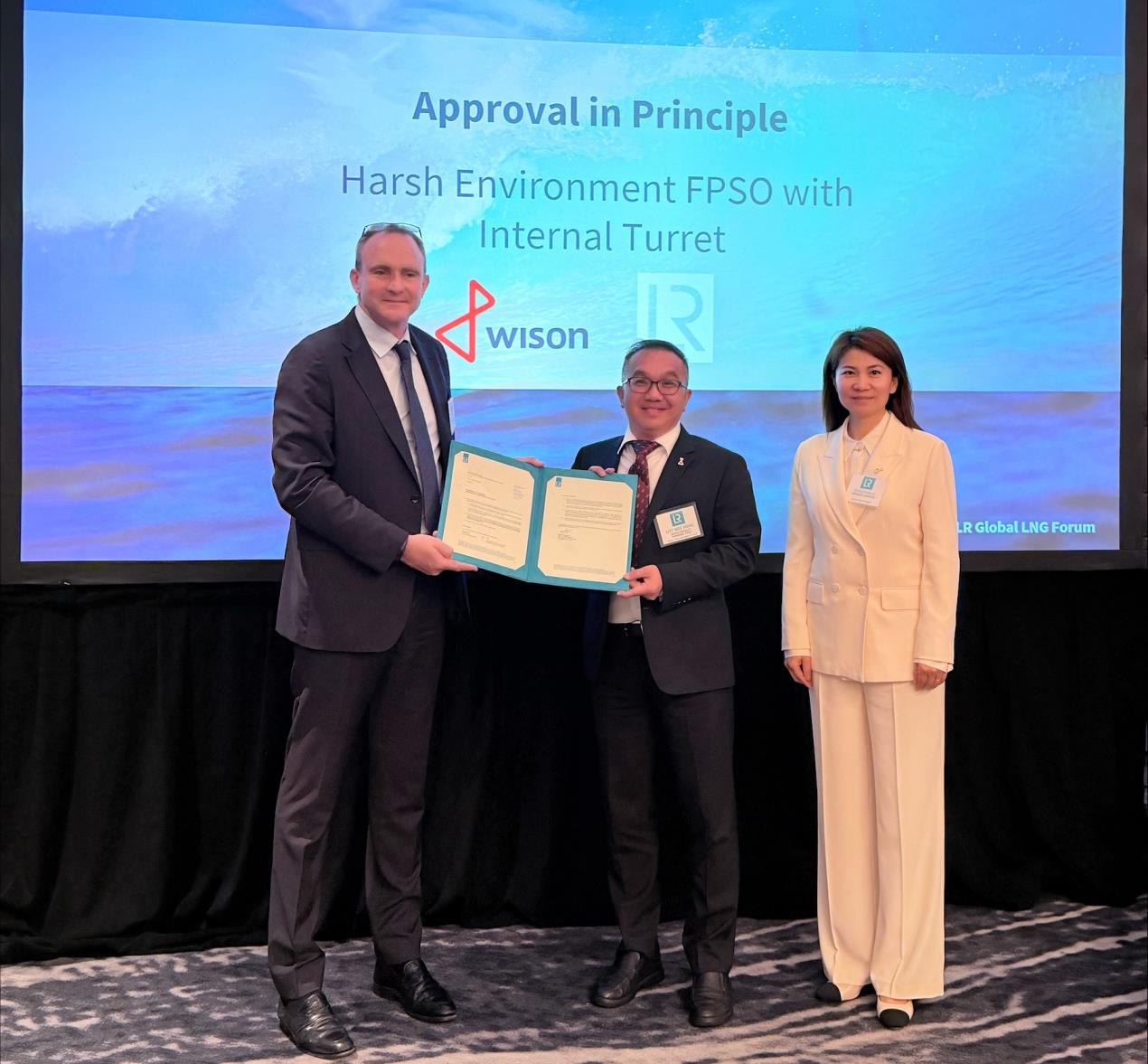
Wison New Energies’ internal turret FPSO design wins endorsment from Lloyd’s Register

In 60 seconds

Top move

Lloyd’s Register approval-in-principle (AiP) for an internal-turret FPSO reduces concept uncertainty and brings procurement choices into mobilisation and contract hold-point details

Key takeaways

  • Lloyd’s Register approval-in-principle (AiP) for an internal-turret FPSO reduces concept uncertainty and brings procurement choices into mobilisation and contract hold-point details.[1]
  • MISC’s two new LNG carriers plus an active FPU O&M scope increase steady vessel and floating‑asset maintenance demand and raise the importance of spare‑parts ownership and long‑form vessel managers.[2]
  • Construction start on methanol‑ready, battery‑hybrid subsea support vessels signals shifting lifecycle service needs: vendors will quote for new fuel, electrical and hybrid‑battery skillsets, not just hull and crane support.[3]
  • Vendor integrations between condition monitoring platforms and CMMS show a practical path to reduce reactive work orders — relevant for reliability programmes but limited regional evidence for immediate scaling.[4]
  • Procurement bottom line: combine the AiP clarity and rising vessel activity into tightened mobilisation, spare‑parts handover, and certification clauses to avoid last‑minute cost pass‑throughs.[1]

What changed since last run

  • Added independent concept‑stage approval (AiP) for an internal‑turret FPSO that shortens technical clarification windows before O&M procurement (article 3).
  • New fleet development: MISC added two LNG carriers and holds an FPU O&M scope, increasing predictable vessel maintenance exposure in the region (article 1).
  • Keel‑lay and steel‑cut events started for methanol‑ready subsea support vessels, indicating future demand for hybrid/battery‑capable service teams and spare inventories (article 2).

Key facts

  • Two new 174,000 cbm LNG carriers added to fleet
  • MISC now operates four LNG carriers under long‑term time charters
  • MISC holds O&M scope for a floating production unit (FPU)
  • Keel‑lay and first steel cutting completed at CMHI Shenzhen
  • Vessels designed to run on methanol with hybrid battery technology
  • Delivery on track for targeted later delivery (projected in source)

Why it matters

Lloyd’s Register approval-in-principle (AiP) for an internal-turret FPSO reduces concept uncertainty and brings procurement choices into mobilisation and contract hold-point details. MISC’s two new LNG carriers plus an active FPU O&M scope increase steady vessel and floating‑asset maintenance demand and raise the importance of spare‑parts ownership and long‑form vessel managers. Construction start on methanol‑ready, battery‑hybrid subsea support vessels signals shifting lifecycle service needs: vendors will quote for new fuel, electrical and hybrid‑battery skillsets, not just hull and crane support. Vendor integrations between condition monitoring platforms and CMMS show a practical path to reduce reactive work orders — relevant for reliability programmes but limited regional evidence for immediate scaling

Cost / money

  • AiP reduces design ambiguity and typically brings committed spend forward into mobilisation and contractor pricing, tightening short‑term budget windows.[1]
  • Expanded LNG fleet and an active FPU O&M scope shift recurring spend toward vessel managers and long‑form O&M contracts rather than one‑off yard CAPEX passthroughs.[2]
  • Methanol‑ready and battery‑hybrid vessel designs will likely change lifecycle cost components — expect vendor quotes to include hybrid system maintenance and specialized battery spares.[3]

Supplier / commercial

  • With clearer FPSO concept baselines, suppliers can press for lifecycle and maintenance pricing certainty; buyers should preserve unbundled options in contracts to retain leverage.[1]
  • Long‑term charters and O&M scopes (vessels/FPU) create concentrated volumes that suppliers can use to propose bundled offers, potentially reducing competitive spot options.[2]
  • Shipyard production starts for new‑tech vessels can shorten RFx validity and enable suppliers to require mobilisation deposits or staged payments tied to build milestones.[3]

Safety / operations

  • AiP highlights critical interfaces (hull, mooring, risers) where handover definitions are essential — unclear handoffs create direct commissioning and uptime risks.[1]
  • Hybrid batteries and methanol systems introduce new onboard safety and maintenance procedures that affect on‑board crew competencies, spares staging and emergency response plans.[3]

What to watch

  • Early‑signal: suppliers may tighten quote validity windows and ask for mobilisation deposits as vessel and floating‑asset activity firm up—confirm deposit exposure in upcoming RFx.[2]
  • Early‑signal: integration of condition monitoring and CMMS platforms is promising but limited evidence of scaled APAC rollouts; validate vendor claims before making it a contract requirement.[4]

Top stories

Story 1Offshore EnergyMay 8, 2026

LNG vessel pair enriches MISC’s fleet

Signal moderateSource-grounded

What happened

MISC named two new 174,000 cbm LNG carriers and now operates four LNG carriers under long‑term time charter; the group also holds an O&M scope for an FPU. The additions mean steadier, recurring vessel and floating‑asset maintenance demand in the region, not a one‑off spike. Watch whether the FPU O&M is delivered as a bundled package or split between specialist suppliers

Buyer takeaway

Treat these as recurring demand signals that require clarified spare‑parts ownership, mobilisation windows and longer‑term service manager commitments

Cost / money

Directional increase in recurring vessel and floating‑asset maintenance spend as charters and O&M scopes concentrate work with vessel managers

Supplier / commercial

Suppliers may push bundled long‑form maintenance deals and tighten quote validity or request deposits as schedules firm up

Safety / operations

More chartered vessels and an FPU O&M scope increase uptime dependency on specialist crews and ready access to spares

What to watch

Watch whether suppliers consolidate services into bundled offers or request mobilisation deposits as schedules firm up

Key facts

  • Two new 174,000 cbm LNG carriers added to fleet
  • MISC now operates four LNG carriers under long‑term time charters
  • MISC holds O&M scope for a floating production unit (FPU)

Source excerpts

The Asian firm’s LNG fleet stands at 32 vessels with the arrival of these two ships, solidifying its position among the world’s leading owner-operators of LNG carriers. MISC secured the lease, operate, and maintain (O&M) scope of work last year for a floating production unit (FPU) set to be used at a natural gas development project off the coast of Brunei
May 8, 2026, by Malaysia’s owner and operator of offshore floating and energy-related maritime solutions and services MISC Group, a member of the Petronas Group of Companies, has unveiled the naming of its two new-generation liquefied natural gas (LNG) carriers (LNGC), strengthening its partnership with SeaRiver Maritime (SRM), a wholly-owned subsidiary of U
” With the addition of the Seri Dian and Seri Dayang LNG carriers, MISC now operates four LNG carriers under long-term time charter with SeaRiver Maritime
Story 2Offshore EnergyMay 8, 2026

Olympic Subsea's methanol-ready vessel duo enters construction

Signal moderateDirectional

What happened

CMHI Shenzhen has started steel‑cut and keel‑lay for two methanol‑ready, battery‑hybrid subsea support vessels for Olympic Subsea. The vessels are explicitly designed to run on methanol and feature hybrid battery systems, which shifts maintenance scope to include fuel‑system and battery lifecycle work. Watch vendor timelines and whether suppliers price hybrid/battery spares and specialized technicians into service rates

Buyer takeaway

Expect supplier quotes to include hybrid battery servicing, fuel‑system specialist support and updated spares lists; validate during supplier selection

Cost / money

Lifecycle cost components will shift as battery and methanol system maintenance and spares enter O&M budgets

Supplier / commercial

Shipyards and integrators may bundle hybrid system warranty and maintenance into higher upfront or milestone‑based payments

Safety / operations

Battery and methanol systems introduce new safety procedures, PPE and emergency response planning for crews

What to watch

Monitor supplier claims on hybrid system expertise and insist on proof‑of‑support or training before award

Key facts

  • Keel‑lay and first steel cutting completed at CMHI Shenzhen
  • Vessels designed to run on methanol with hybrid battery technology
  • Delivery on track for targeted later delivery (projected in source)

Source excerpts

The vessels will be ready to run on methanol and will feature battery hybrid technology, with delivery on track for the summer of 2027
Source: Olympic Subsea via LinkedIn Olympic Subsea reported that earlier in April the keel laying for the first vessel and the first steel cutting for the second vessel took place at the CMHI Shenzhen shipyard. The vessels will be ready to run on methanol and will feature battery hybrid technology, with delivery on track for the summer of 2027
Described as the most energy-efficient in their category, the extensive package of integrated technology will encapsulate rim-drive electric azimuth propulsion, retractable azimuth bow thrusters, switchboards, and thruster drives, hybrid battery power, an integrated bridge system, automation and control systems, a dynamic positioning system, tank sounding, mooring winches, and an overhead ROV launch and recovery system (LARS)
Story 3Offshore EnergyMay 8, 2026

Wison New Energies’ internal turret FPSO design wins endorsment from Lloyd’s Register

Signal strongSource-grounded

What happened

Lloyd’s Register granted an approval‑in‑principle (AiP) to Wison New Energies for an internal‑turret FPSO concept, marking an early technical milestone that clarifies critical interfaces. The AiP reduces concept‑stage uncertainty and makes the technical baseline clearer for O&M and EPC procurement decisions. Watch how stakeholders convert AiP findings into contract hold points for handover, testing and uptime obligations

Buyer takeaway

Treat the AiP as a clearing event that shortens technical clarification windows and forces early allocation of mobilisation and certification responsibilities

Cost / money

Clearing concept risk tends to bring forward committed spend into mobilisation and contractor pricing rather than optional studies

Supplier / commercial

Suppliers will use the clearer technical baseline to push for lifecycle and maintenance pricing certainty; buyers should preserve flexibility on pass‑throughs

Safety / operations

Defined interfaces reduce execution surprises but require contract language on handover, testing and uptime obligations

What to watch

Watch for suppliers to narrow change‑order definitions tied to AiP citations; insist on explicit change‑control boundaries

Key facts

  • AiP completed for an internal‑turret FPSO concept
  • AiP focuses on critical interfaces: hull, mooring and risers
  • Concept‑stage assurance intended to reduce uncertainty ahead of procurement

Source excerpts

Home Fossil Energy Wison New Energies’ internal turret FPSO design wins endorsment from Lloyd’s Register May 8, 2026, by UK-based classification society Lloyd’s Register (LR) has given its blessing to China-based provider of clean energy services Wison New Energies (WNE) for a new harsh environment floating production, storage, and offloading (FPSO) design featuring an internal turret mooring system. Andrew McKeran, Chief Growth Officer at Lloyd’s Register; Loy Wee Meng, Senior Product Manager of Wison New Ener
By completing an independent concept-stage review, the AiP is said to help demonstrate that the FPSO concept can progress with a clearer view of key technical and safety considerations, supporting earlier, more confident decision-making by project stakeholders. Loy Wee Meng, Senior Product Manager of Wison New Energies’ FPSO Product Center, highlighted: “With design for harsh environment FPSO now completed, Wison has in addition to standard FPSO as well as gas type FPSO designs already developed, possessed the
” The UK-based classification society explains that the internal turret FPSOs are widely used in demanding metocean conditions, but remain among the most technically complex floating production systems, with critical interfaces between hull, mooring, risers, and topside layouts
Story 4Reliabilityweb

Home featured on Reliabilityweb's site

Signal limitedDirectional

What happened

ReliabilityWeb highlights integrations between condition monitoring vendors and CMMS/work‑order platforms, such as automatic generation and closure of work orders from condition data. The update shows a practical route to reduce reactive maintenance and close the loop between monitoring and execution, though direct APAC rollouts are limited in the source. Watch vendor references and request local proof‑points before making platform integration a procurement requirement

Buyer takeaway

Validate vendor integration claims with APAC proof‑points; use pilots to avoid locking into incompatible platforms

Cost / money

Successful integrations reduce reactive labour and could lower operating expense over time if implemented correctly

Supplier / commercial

Vendors may propose bundling monitoring software with managed services; compare to best‑of‑breed offers

Safety / operations

Better condition insight can reduce failure modes, but integration failures can create false confidence—require validation

What to watch

Limited: relevance is thematic unless vendors provide local trial data; don't make integration a mandatory award criterion without evidence

Key facts

  • Examples of condition monitoring integrations generating automated work orders
  • Supplier partnership cases presented as pathway to reduce reactive maintenance
  • Practical relevance dependent on local rollout and platform compatibility

Source excerpts

a leader in predictive maintenance and condition monitoring. The new integration connects VibeCloud’s condition monitoring insights directly with Limble, automatically generating and closing work orders based on asset condition data
Sign Up Please use your business email address if applicable Syensqo and Shell Chemicals Europe B
For those who want a more self-paced learning format and less time in the classroom, the new Accelerated Two-Day Certified Reliability Leader (CRL) Training shifts 16 hours of classroom time to self-paced learning using Reliabilityweb’s online learning platform Uptime Academy

VP Snapshot

Executive Risk & Action View

Lloyd’s Register approval-in-principle (AiP) for an internal-turret FPSO reduces concept uncertainty and brings procurement choices into mobilisation and contract hold-point details.

Overall
61
Cost
79
Supply
43
Schedule
38
Compliance
15

Top signals

30-180dcost

Signal 1: Cost / money

AiP reduces design ambiguity and typically brings committed spend forward into mobilisation and contractor pricing, tightening short‑term budget windows.

Signal 2: Cost / money

Expanded LNG fleet and an active FPU O&M scope shift recurring spend toward vessel managers and long‑form O&M contracts rather than one‑off yard CAPEX passthroughs.

Signal 3: Cost / money

Methanol‑ready and battery‑hybrid vessel designs will likely change lifecycle cost components — expect vendor quotes to include hybrid system maintenance and specialized battery spares.

30-180dcommercial

Signal 4: Supplier / commercial

With clearer FPSO concept baselines, suppliers can press for lifecycle and maintenance pricing certainty; buyers should preserve unbundled options in contracts to retain leverage.

Signal 5: Supplier / commercial

Long‑term charters and O&M scopes (vessels/FPU) create concentrated volumes that suppliers can use to propose bundled offers, potentially reducing competitive spot options.

Signal 6: Supplier / commercial

Shipyard production starts for new‑tech vessels can shorten RFx validity and enable suppliers to require mobilisation deposits or staged payments tied to build milestones.

Recommended actions

CategoryDue 3d

Update the mobilisation and certification register to add FPSO AiP status and new‑tech vessel build milestones.

Register includes classification hold points, mobilisation flags, and build‑milestone exposures for upcoming floating assets.

ContractsDue 3d

Pull active vessel and FPU O&M contracts and confirm spare‑parts ownership, acceptance points and warranty handoffs.

Clear inventory of spares ownership and handover points appended to live O&M contracts.

ContractsDue 21d

Issue targeted RFIs to yards and specialist marine integrators asking for certification timelines, mobilisation deposit policies and quote‑validity windows for hybrid/methanol v...

Comparable supplier responses on certification milestones, deposit terms and quote validity to shape RFx templates.

OpsDue 21d

Run an operations review to map training, PPE and spare‑parts needs for battery and methanol systems on service vessels.

Gap list for training, tooling and spares that informs scope and pricing for upcoming O&M contracts.

ContractsDue 60d

Negotiate an O&M annex that standardises mobilisation windows, classification hold‑point responsibilities, spare‑parts ownership and limits on supplier deposit requests for floa...

Annexed O&M template with explicit mobilisation, certification and spare‑parts handover clauses that reduce late cost pass‑through risk.

Risk register

RiskTriggerMitigation
Early‑signal: suppliers may tighten quote validity windows and ask for mobilisation deposits as vessel and floating‑asset activity firm up—confirm deposit exposure in upcoming RFx.Early‑signal: suppliers may tighten quote validity windows and ask for mobilisation deposits as vessel and floating‑asset activity firm up—confirm deposit exposure in upcoming RFx.Confirm exposure with category, contracts, and operations before the next supplier commitment.
Early‑signal: integration of condition monitoring and CMMS platforms is promising but limited evidence of scaled APAC rollouts; validate vendor claims before making it a contract requirement.Early‑signal: integration of condition monitoring and CMMS platforms is promising but limited evidence of scaled APAC rollouts; validate vendor claims before making it a contract requirement.Confirm exposure with category, contracts, and operations before the next supplier commitment.

CM Snapshot

Category Manager Decision Detail

Today's priorities

Update the mobilisation and certification register to add FPSO AiP status and new‑tech vessel build milestones.

Do this because the AiP shortens technical clarification windows and the new vessel builds create mobilisation and certification dependencies that affect scheduling.

Due 3d

high

CM move

Use this as the immediate supplier or contract action to move before the next sourcing gate.

Pull active vessel and FPU O&M contracts and confirm spare‑parts ownership, acceptance points and warranty handoffs.

Do this because MISC’s added carriers and FPU O&M scope increase exposure to supplier‑owned spares and lifecycle pass‑throughs that affect cashflow and availability.

Due 3d

high

CM move

Use this as the immediate supplier or contract action to move before the next sourcing gate.

Issue targeted RFIs to yards and specialist marine integrators asking for certification timelines, mobilisation deposit policies and quote‑validity windows for hybrid/methanol v...

Do this because new vessel builds and hybrid systems can shorten RFx windows and introduce deposit requests; comparable supplier data will inform negotiation posture.

Due 21d

high

CM move

Use this as the immediate supplier or contract action to move before the next sourcing gate.

Run an operations review to map training, PPE and spare‑parts needs for battery and methanol systems on service vessels.

Do this because methanol‑ready and battery‑hybrid designs introduce different safety and maintenance requirements that affect crew competency and spare inventories.

Due 21d

high

CM move

Use this as the immediate supplier or contract action to move before the next sourcing gate.

Supplier radar

Offshore Energy

high

Observed supplier signal

With clearer FPSO concept baselines, suppliers can press for lifecycle and maintenance pricing certainty; buyers should preserve unbundled options in contracts to retain leverage.

Commercial implication

With clearer FPSO concept baselines, suppliers can press for lifecycle and maintenance pricing certainty; buyers should preserve unbundled options in contracts to retain leverage.

Next step: Validate the source-backed signal with incumbents and alternates before the next award or pricing decision.

Offshore Energy

high

Observed supplier signal

Long‑term charters and O&M scopes (vessels/FPU) create concentrated volumes that suppliers can use to propose bundled offers, potentially reducing competitive spot options.

Commercial implication

Long‑term charters and O&M scopes (vessels/FPU) create concentrated volumes that suppliers can use to propose bundled offers, potentially reducing competitive spot options.

Next step: Validate the source-backed signal with incumbents and alternates before the next award or pricing decision.

Offshore Energy

high

Observed supplier signal

Shipyard production starts for new‑tech vessels can shorten RFx validity and enable suppliers to require mobilisation deposits or staged payments tied to build milestones.

Commercial implication

Shipyard production starts for new‑tech vessels can shorten RFx validity and enable suppliers to require mobilisation deposits or staged payments tied to build milestones.

Next step: Validate the source-backed signal with incumbents and alternates before the next award or pricing decision.

Negotiation levers

Update the mobilisation and certification register to add FPSO AiP status and new‑tech vessel build milestones.

When to use: Do this because the AiP shortens technical clarification windows and the new vessel builds create mobilisation and certification dependencies that affect scheduling.

Expected outcome: Register includes classification hold points, mobilisation flags, and build‑milestone exposures for upcoming floating assets.

Commercial mechanism to carry into the next supplier conversation

Pull active vessel and FPU O&M contracts and confirm spare‑parts ownership, acceptance points and warranty handoffs.

When to use: Do this because MISC’s added carriers and FPU O&M scope increase exposure to supplier‑owned spares and lifecycle pass‑throughs that affect cashflow and availability.

Expected outcome: Clear inventory of spares ownership and handover points appended to live O&M contracts.

Commercial mechanism to carry into the next supplier conversation

Issue targeted RFIs to yards and specialist marine integrators asking for certification timelines, mobilisation deposit policies and quote‑validity windows for hybrid/methanol v...

When to use: Do this because new vessel builds and hybrid systems can shorten RFx windows and introduce deposit requests; comparable supplier data will inform negotiation posture.

Expected outcome: Comparable supplier responses on certification milestones, deposit terms and quote validity to shape RFx templates.

Commercial mechanism to carry into the next supplier conversation

Run an operations review to map training, PPE and spare‑parts needs for battery and methanol systems on service vessels.

When to use: Do this because methanol‑ready and battery‑hybrid designs introduce different safety and maintenance requirements that affect crew competency and spare inventories.

Expected outcome: Gap list for training, tooling and spares that informs scope and pricing for upcoming O&M contracts.

Commercial mechanism to carry into the next supplier conversation

Talking points

Lloyd’s Register approval-in-principle (AiP) for an internal-turret FPSO reduces concept uncertainty and brings procurement choices into mobilisation and contract hold-point details.
MISC’s two new LNG carriers plus an active FPU O&M scope increase steady vessel and floating‑asset maintenance demand and raise the importance of spare‑parts ownership and long‑form vessel managers.
Construction start on methanol‑ready, battery‑hybrid subsea support vessels signals shifting lifecycle service needs: vendors will quote for new fuel, electrical and hybrid‑battery skillsets, not just hull and crane support.
Vendor integrations between condition monitoring platforms and CMMS show a practical path to reduce reactive work orders — relevant for reliability programmes but limited regional evidence for immediate scaling.

Supplier radar

SupplierSignalImplicationNext stepConfidence
Offshore EnergyWith clearer FPSO concept baselines, suppliers can press for lifecycle and maintenance pricing certainty; buyers should preserve unbundled options in contracts to retain leverage.With clearer FPSO concept baselines, suppliers can press for lifecycle and maintenance pricing certainty; buyers should preserve unbundled options in contracts to retain leverage.Validate the source-backed signal with incumbents and alternates before the next award or pricing decision.high
Offshore EnergyLong‑term charters and O&M scopes (vessels/FPU) create concentrated volumes that suppliers can use to propose bundled offers, potentially reducing competitive spot options.Long‑term charters and O&M scopes (vessels/FPU) create concentrated volumes that suppliers can use to propose bundled offers, potentially reducing competitive spot options.Validate the source-backed signal with incumbents and alternates before the next award or pricing decision.high
Offshore EnergyShipyard production starts for new‑tech vessels can shorten RFx validity and enable suppliers to require mobilisation deposits or staged payments tied to build milestones.Shipyard production starts for new‑tech vessels can shorten RFx validity and enable suppliers to require mobilisation deposits or staged payments tied to build milestones.Validate the source-backed signal with incumbents and alternates before the next award or pricing decision.high

Negotiation levers

  • Update the mobilisation and certification register to add FPSO AiP status and new‑tech vessel build milestones.Do this because the AiP shortens technical clarification windows and the new vessel builds create mobilisation and certification dependencies that affect scheduling.Register includes classification hold points, mobilisation flags, and build‑milestone exposures for upcoming floating assets.

    high confidence

  • Pull active vessel and FPU O&M contracts and confirm spare‑parts ownership, acceptance points and warranty handoffs.Do this because MISC’s added carriers and FPU O&M scope increase exposure to supplier‑owned spares and lifecycle pass‑throughs that affect cashflow and availability.Clear inventory of spares ownership and handover points appended to live O&M contracts.

    high confidence

  • Issue targeted RFIs to yards and specialist marine integrators asking for certification timelines, mobilisation deposit policies and quote‑validity windows for hybrid/methanol v...Do this because new vessel builds and hybrid systems can shorten RFx windows and introduce deposit requests; comparable supplier data will inform negotiation posture.Comparable supplier responses on certification milestones, deposit terms and quote validity to shape RFx templates.

    high confidence

  • Run an operations review to map training, PPE and spare‑parts needs for battery and methanol systems on service vessels.Do this because methanol‑ready and battery‑hybrid designs introduce different safety and maintenance requirements that affect crew competency and spare inventories.Gap list for training, tooling and spares that informs scope and pricing for upcoming O&M contracts.

    high confidence

What to do / What to watch

What to do now

  • Update the mobilisation and certification register to add FPSO AiP status and new‑tech vessel build milestones.

    Why: Do this because the AiP shortens technical clarification windows and the new vessel builds create mobilisation and certification dependencies that affect scheduling.

    Owner: Category

    Expected outcome: Register includes classification hold points, mobilisation flags, and build‑milestone exposures for upcoming floating assets.

    [1]
  • Pull active vessel and FPU O&M contracts and confirm spare‑parts ownership, acceptance points and warranty handoffs.

    Why: Do this because MISC’s added carriers and FPU O&M scope increase exposure to supplier‑owned spares and lifecycle pass‑throughs that affect cashflow and availability.

    Owner: Contracts

    Expected outcome: Clear inventory of spares ownership and handover points appended to live O&M contracts.

    [2]

Next few weeks

  • Issue targeted RFIs to yards and specialist marine integrators asking for certification timelines, mobilisation deposit policies and quote‑validity windows for hybrid/methanol v...

    Why: Do this because new vessel builds and hybrid systems can shorten RFx windows and introduce deposit requests; comparable supplier data will inform negotiation posture.

    Owner: Contracts

    Expected outcome: Comparable supplier responses on certification milestones, deposit terms and quote validity to shape RFx templates.

    [3]
  • Run an operations review to map training, PPE and spare‑parts needs for battery and methanol systems on service vessels.

    Why: Do this because methanol‑ready and battery‑hybrid designs introduce different safety and maintenance requirements that affect crew competency and spare inventories.

    Owner: Ops

    Expected outcome: Gap list for training, tooling and spares that informs scope and pricing for upcoming O&M contracts.

    [3]

Longer view

  • Negotiate an O&M annex that standardises mobilisation windows, classification hold‑point responsibilities, spare‑parts ownership and limits on supplier deposit requests for floa...

    Why: Do this because AiP clarity and rising vessel O&M exposure shift commercial leverage; locking these clauses protects buyer scheduling and cashflow from late pass‑throughs.

    Owner: Contracts

    Expected outcome: Annexed O&M template with explicit mobilisation, certification and spare‑parts handover clauses that reduce late cost pass‑through risk.

    [1]

What to watch

  • Early‑signal: suppliers may tighten quote validity windows and ask for mobilisation deposits as vessel and floating‑asset activity firm up—confirm deposit exposure in upcoming RFx
  • Early‑signal: integration of condition monitoring and CMMS platforms is promising but limited evidence of scaled APAC rollouts; validate vendor claims before making it a contract requirement
  • Early‑signal: suppliers may tighten quote validity windows and ask for mobilisation deposits as vessel and floating‑asset activity firm up—confirm deposit exposure in upcoming RFx.: Early‑signal: suppliers may tighten quote validity windows and ask for mobilisation deposits as vessel and floating‑asset activity firm up—confirm deposit exposure in upcoming RFx
  • Early‑signal: integration of condition monitoring and CMMS platforms is promising but limited evidence of scaled APAC rollouts; validate vendor claims before making it a contract requirement.: Early‑signal: integration of condition monitoring and CMMS platforms is promising but limited evidence of scaled APAC rollouts; validate vendor claims before making it a contract requirement
  • Lloyd’s Register approval-in-principle (AiP) for an internal-turret FPSO reduces concept uncertainty and brings procurement choices into mobilisation and contract hold-point details
  • MISC’s two new LNG carriers plus an active FPU O&M scope increase steady vessel and floating‑asset maintenance demand and raise the importance of spare‑parts ownership and long‑form vessel managers
  • Construction start on methanol‑ready, battery‑hybrid subsea support vessels signals shifting lifecycle service needs: vendors will quote for new fuel, electrical and hybrid‑battery skillsets, not just hull and crane support
  • Vendor integrations between condition monitoring platforms and CMMS show a practical path to reduce reactive work orders — relevant for reliability programmes but limited regional evidence for immediate scaling

Market pulse

IndexLatestChangeAs of
WTI Crude (WTI)71.23 /bbl+0.00 (+0.00%)May 9, 2026, 10:09 PM
Brent Crude (BRENT)74.89 /bbl+0.00 (+0.00%)May 9, 2026, 10:09 PM
Natural Gas (NG)3.12 /MMBtu+0.00 (+0.00%)May 9, 2026, 10:09 PM
Johnson Controls (JCI)65 +0.00 (+0.00%)May 9, 2026, 10:09 PM
  • Natural Gas: Natural gas market dynamics influence LNG shipping demand and vessel utilisation, affecting recurring O&M workload for chartered carriers
  • WTI Crude: Oil price trends affect FPSO project economics and the cadence of commissioning, which in turn affects O&M mobilisation timing
  • Johnson Controls: Controls and building/O&M tech trends signal where investment in asset management and remote operations may increase demand for services

Sources

Inline citations jump here. Expand a source to read the excerpt, the AI interpretation, and the original link.

[1] Wison New Energies’ internal turret FPSO design wins endorsment from Lloyd’s Register

offshore-energy.biz · May 8, 2026

Expand

AI reading

Lloyd’s Register granted an approval‑in‑principle (AiP) to Wison New Energies for an internal‑turret FPSO concept, marking an early technical milestone that clarifies critical interfaces. The AiP reduces concept‑stage uncertainty and makes the technical baseline clearer for O&M and EPC procurement decisions. Watch how stakeholders convert AiP findings into contract hold points for handover, testing and uptime obligations

Buyer takeaway

Treat the AiP as a clearing event that shortens technical clarification windows and forces early allocation of mobilisation and certification responsibilities

Cost / money

Clearing concept risk tends to bring forward committed spend into mobilisation and contractor pricing rather than optional studies

Supplier / commercial

Suppliers will use the clearer technical baseline to push for lifecycle and maintenance pricing certainty; buyers should preserve flexibility on pass‑throughs

Safety / operations

Defined interfaces reduce execution surprises but require contract language on handover, testing and uptime obligations

What to watch

Watch for suppliers to narrow change‑order definitions tied to AiP citations; insist on explicit change‑control boundaries

Key facts

  • AiP completed for an internal‑turret FPSO concept
  • AiP focuses on critical interfaces: hull, mooring and risers
  • Concept‑stage assurance intended to reduce uncertainty ahead of procurement

Source excerpts

Home Fossil Energy Wison New Energies’ internal turret FPSO design wins endorsment from Lloyd’s Register May 8, 2026, by UK-based classification society Lloyd’s Register (LR) has given its blessing to China-based provider of clean energy services Wison New Energies (WNE) for a new harsh environment floating production, storage, and offloading (FPSO) design featuring an internal turret mooring system. Andrew McKeran, Chief Growth Officer at Lloyd’s Register; Loy Wee Meng, Senior Product Manager of Wison New Ener
By completing an independent concept-stage review, the AiP is said to help demonstrate that the FPSO concept can progress with a clearer view of key technical and safety considerations, supporting earlier, more confident decision-making by project stakeholders. Loy Wee Meng, Senior Product Manager of Wison New Energies’ FPSO Product Center, highlighted: “With design for harsh environment FPSO now completed, Wison has in addition to standard FPSO as well as gas type FPSO designs already developed, possessed the
” The UK-based classification society explains that the internal turret FPSOs are widely used in demanding metocean conditions, but remain among the most technically complex floating production systems, with critical interfaces between hull, mooring, risers, and topside layouts

Used in this brief

  • Lloyd’s Register approval-in-principle (AiP) for an internal-turret FPSO reduces concept uncertainty and brings procurement choices into mobilisation and contract hold-point details. MISC’s two new LNG carriers plus an active FPU O&M scope increase steady vessel and floating‑asset maintenance demand and raise the importance of spare‑parts ownership and long‑form vessel managers. Construction start on methanol‑ready, battery‑hybrid subsea support vessels signals shifting lifecycle service needs: vendors will quote for new fuel, electrical and hybrid‑battery skillsets, not just hull and crane support. Vendor integrations between condition monitoring platforms and CMMS show a practical path to reduce reactive work orders — relevant for reliability programmes but limited regional evidence for immediate scaling
  • Supplier / commercial: With clearer FPSO concept baselines, suppliers can press for lifecycle and maintenance pricing certainty; buyers should preserve unbundled options in contracts to retain leverage
  • Safety / operations: AiP highlights critical interfaces (hull, mooring, risers) where handover definitions are essential — unclear handoffs create direct commissioning and uptime risks
Open original source

[2] LNG vessel pair enriches MISC’s fleet

offshore-energy.biz · May 8, 2026

Expand

AI reading

MISC named two new 174,000 cbm LNG carriers and now operates four LNG carriers under long‑term time charter; the group also holds an O&M scope for an FPU. The additions mean steadier, recurring vessel and floating‑asset maintenance demand in the region, not a one‑off spike. Watch whether the FPU O&M is delivered as a bundled package or split between specialist suppliers

Buyer takeaway

Treat these as recurring demand signals that require clarified spare‑parts ownership, mobilisation windows and longer‑term service manager commitments

Cost / money

Directional increase in recurring vessel and floating‑asset maintenance spend as charters and O&M scopes concentrate work with vessel managers

Supplier / commercial

Suppliers may push bundled long‑form maintenance deals and tighten quote validity or request deposits as schedules firm up

Safety / operations

More chartered vessels and an FPU O&M scope increase uptime dependency on specialist crews and ready access to spares

What to watch

Watch whether suppliers consolidate services into bundled offers or request mobilisation deposits as schedules firm up

Key facts

  • Two new 174,000 cbm LNG carriers added to fleet
  • MISC now operates four LNG carriers under long‑term time charters
  • MISC holds O&M scope for a floating production unit (FPU)

Source excerpts

The Asian firm’s LNG fleet stands at 32 vessels with the arrival of these two ships, solidifying its position among the world’s leading owner-operators of LNG carriers. MISC secured the lease, operate, and maintain (O&M) scope of work last year for a floating production unit (FPU) set to be used at a natural gas development project off the coast of Brunei
May 8, 2026, by Malaysia’s owner and operator of offshore floating and energy-related maritime solutions and services MISC Group, a member of the Petronas Group of Companies, has unveiled the naming of its two new-generation liquefied natural gas (LNG) carriers (LNGC), strengthening its partnership with SeaRiver Maritime (SRM), a wholly-owned subsidiary of U
” With the addition of the Seri Dian and Seri Dayang LNG carriers, MISC now operates four LNG carriers under long-term time charter with SeaRiver Maritime

Used in this brief

  • Next 72 hours — Pull active vessel and FPU O&M contracts and confirm spare‑parts ownership, acceptance points and warranty handoffs.. Rationale: Do this because MISC’s added carriers and FPU O&M scope increase exposure to supplier‑owned spares and lifecycle pass‑throughs that affect cashflow and availability.. Owner: Contracts. KPI: Clear inventory of spares ownership and handover points appended to live O&M contracts
  • Early‑signal: suppliers may tighten quote validity windows and ask for mobilisation deposits as vessel and floating‑asset activity firm up—confirm deposit exposure in upcoming RFx
  • New fleet development: MISC added two LNG carriers and holds an FPU O&M scope, increasing predictable vessel maintenance exposure in the region (article 1)
Open original source

[3] Olympic Subsea's methanol-ready vessel duo enters construction

offshore-energy.biz · May 8, 2026

Expand

AI reading

CMHI Shenzhen has started steel‑cut and keel‑lay for two methanol‑ready, battery‑hybrid subsea support vessels for Olympic Subsea. The vessels are explicitly designed to run on methanol and feature hybrid battery systems, which shifts maintenance scope to include fuel‑system and battery lifecycle work. Watch vendor timelines and whether suppliers price hybrid/battery spares and specialized technicians into service rates

Buyer takeaway

Expect supplier quotes to include hybrid battery servicing, fuel‑system specialist support and updated spares lists; validate during supplier selection

Cost / money

Lifecycle cost components will shift as battery and methanol system maintenance and spares enter O&M budgets

Supplier / commercial

Shipyards and integrators may bundle hybrid system warranty and maintenance into higher upfront or milestone‑based payments

Safety / operations

Battery and methanol systems introduce new safety procedures, PPE and emergency response planning for crews

What to watch

Monitor supplier claims on hybrid system expertise and insist on proof‑of‑support or training before award

Key facts

  • Keel‑lay and first steel cutting completed at CMHI Shenzhen
  • Vessels designed to run on methanol with hybrid battery technology
  • Delivery on track for targeted later delivery (projected in source)

Source excerpts

The vessels will be ready to run on methanol and will feature battery hybrid technology, with delivery on track for the summer of 2027
Source: Olympic Subsea via LinkedIn Olympic Subsea reported that earlier in April the keel laying for the first vessel and the first steel cutting for the second vessel took place at the CMHI Shenzhen shipyard. The vessels will be ready to run on methanol and will feature battery hybrid technology, with delivery on track for the summer of 2027
Described as the most energy-efficient in their category, the extensive package of integrated technology will encapsulate rim-drive electric azimuth propulsion, retractable azimuth bow thrusters, switchboards, and thruster drives, hybrid battery power, an integrated bridge system, automation and control systems, a dynamic positioning system, tank sounding, mooring winches, and an overhead ROV launch and recovery system (LARS)

Used in this brief

  • Cost / money: Methanol‑ready and battery‑hybrid vessel designs will likely change lifecycle cost components — expect vendor quotes to include hybrid system maintenance and specialized battery spares
  • Next 2-4 weeks — Issue targeted RFIs to yards and specialist marine integrators asking for certification timelines, mobilisation deposit policies and quote‑validity windows for hybrid/methanol v.... Rationale: Do this because new vessel builds and hybrid systems can shorten RFx windows and introduce deposit requests; comparable supplier data will inform negotiation posture.. Owner: Contracts. KPI: Comparable supplier responses on certification milestones, deposit terms and quote validity to shape RFx templates
  • Next 2-4 weeks — Run an operations review to map training, PPE and spare‑parts needs for battery and methanol systems on service vessels.. Rationale: Do this because methanol‑ready and battery‑hybrid designs introduce different safety and maintenance requirements that affect crew competency and spare inventories.. Owner: Ops. KPI: Gap list for training, tooling and spares that informs scope and pricing for upcoming O&M contracts
Open original source

[4] Home featured on Reliabilityweb's site

reliabilityweb.com · n.d.

Expand

AI reading

ReliabilityWeb highlights integrations between condition monitoring vendors and CMMS/work‑order platforms, such as automatic generation and closure of work orders from condition data. The update shows a practical route to reduce reactive maintenance and close the loop between monitoring and execution, though direct APAC rollouts are limited in the source. Watch vendor references and request local proof‑points before making platform integration a procurement requirement

Buyer takeaway

Validate vendor integration claims with APAC proof‑points; use pilots to avoid locking into incompatible platforms

Cost / money

Successful integrations reduce reactive labour and could lower operating expense over time if implemented correctly

Supplier / commercial

Vendors may propose bundling monitoring software with managed services; compare to best‑of‑breed offers

Safety / operations

Better condition insight can reduce failure modes, but integration failures can create false confidence—require validation

What to watch

Limited: relevance is thematic unless vendors provide local trial data; don't make integration a mandatory award criterion without evidence

Key facts

  • Examples of condition monitoring integrations generating automated work orders
  • Supplier partnership cases presented as pathway to reduce reactive maintenance
  • Practical relevance dependent on local rollout and platform compatibility

Source excerpts

a leader in predictive maintenance and condition monitoring. The new integration connects VibeCloud’s condition monitoring insights directly with Limble, automatically generating and closing work orders based on asset condition data
Sign Up Please use your business email address if applicable Syensqo and Shell Chemicals Europe B
For those who want a more self-paced learning format and less time in the classroom, the new Accelerated Two-Day Certified Reliability Leader (CRL) Training shifts 16 hours of classroom time to self-paced learning using Reliabilityweb’s online learning platform Uptime Academy

Used in this brief

  • What to watch: Early‑signal: integration of condition monitoring and CMMS platforms is promising but limited evidence of scaled APAC rollouts; validate vendor claims before making it a contract requirement
  • Early‑signal: integration of condition monitoring and CMMS platforms is promising but limited evidence of scaled APAC rollouts; validate vendor claims before making it a contract requirement
  • ReliabilityWeb highlights integrations between condition monitoring vendors and CMMS/work‑order platforms, such as automatic generation and closure of work orders from condition data. The update shows a practical route to reduce reactive maintenance and close the loop between monitoring and execution, though direct APAC rollouts are limited in the source. Watch vendor references and request local proof‑points before making platform integration a procurement requirement
Open original source

[5] Natural Gas

finance.yahoo.com · n.d.

Expand

[6] WTI Crude

finance.yahoo.com · n.d.

Expand

[7] Johnson Controls

finance.yahoo.com · n.d.

Expand