Oil & Gas / LNG Market Dashboard · International (Houston)

Reprioritize subsea sourcing as Norway redevelopment clears approval

Published May 9, 2026, 5:02 AM CSTINTERNATIONALFull category signal
Ask AI
Norway gives its blessing for $1.8 billion subsea redevelopment project

In 60 seconds

Top move

Norway’s PDO approval for the Previously Produced Fields (PPF) creates a firm subsea installation and tie‑in program that will absorb specialised vessels, ROVs and commissioning crews

Key takeaways

  • Norway’s PDO approval for the Previously Produced Fields (PPF) creates a firm subsea installation and tie‑in program that will absorb specialised vessels, ROVs and commissioning crews.[1]
  • A local private firm winning the Mako SURF EPCI shifts scope toward onshore fabrication oversight, load‑out logistics and domestic pipeline tie‑ins—buyers must treat fabrication yards as critical delivery nodes.[3]
  • Equinor’s confirmed June spud on the COSL Innovator reduces rig-slot flexibility regionally and increases the likelihood of mobilisation premiums or shortened quote windows for competing campaigns.[4]
  • Weatherford’s new managed pressure drilling (MPD) and aftermarket agreements expand vendor‑managed drilling tech exposure, moving uptime and spare‑parts risk toward single suppliers.[2]
  • Taken together these items harden short‑to‑midterm demand for pipelay, hook‑up and commissioning services; evidence is programmatic (PDO, SURF award, booked rigs) so buyers should verify supplier slots rather than assume plenty of capacity.[1]

What changed since last run

  • Added: Norway’s Ministry of Energy approved the PPF subsea redevelopment PDO, converting conceptual work into an executable subsea program (article 4).
  • Added: A local private firm was awarded SURF EPCI for the Mako gas project, confirming local fabrication and onshore-to-offshore load‑out obligations (article 3).
  • Added: Equinor has secured permits and a planned June spud on the COSL Innovator, locking a near‑term rig slot (article 1).

Key facts

  • Project uses 11 new wells from four subsea templates tied back via a shared pipeline
  • Approval follows an FID and positions the project to materially add recoverable gas and conde
  • Project comprises six development wells tied back to a leased MOPU
  • Sales gas carried by an ~59‑kilometer, 18‑inch export pipeline to a nearby platform
  • Drilling operations scheduled to begin in June
  • COSL Innovator is booked on a multi‑year contract with extension options

Why it matters

Norway’s PDO approval for the Previously Produced Fields (PPF) creates a firm subsea installation and tie‑in program that will absorb specialised vessels, ROVs and commissioning crews. A local private firm winning the Mako SURF EPCI shifts scope toward onshore fabrication oversight, load‑out logistics and domestic pipeline tie‑ins—buyers must treat fabrication yards as critical delivery nodes. Equinor’s confirmed June spud on the COSL Innovator reduces rig-slot flexibility regionally and increases the likelihood of mobilisation premiums or shortened quote windows for competing campaigns. Weatherford’s new managed pressure drilling (MPD) and aftermarket agreements expand vendor‑managed drilling tech exposure, moving uptime and spare‑parts risk toward single suppliers

Cost / money

  • Approved redevelopment will concentrate spend on specialised subsea installation and hook‑up services even where capex benefits come from reusing existing infrastructure.[1]
  • Local SURF execution shifts cost drivers toward onshore fabrication, coating and transport pass‑throughs and adds inspection and acceptance gate spend for buyers.[3]

Supplier / commercial

  • Redevelopment programs favour integrated EPCIC offers from primes, which can bundle tie‑ins and reduce opportunities for spot subcontracting of specialist scopes.[1]
  • Awarding SURF to a local firm signals stronger local content and inspection expectations; contracts need clear FAT (factory acceptance test) and handover gates to protect buyers.[3]
  • Weatherford’s MPD and aftermarket deals reduce available independent MPD suppliers and increase single‑vendor leverage on support terms and spare‑parts pricing.[2]

Safety / operations

  • Multiple tie‑ins and new wells tied back to shared infrastructure increase SIMOPS complexity and create tight windows where missing specialist crews or QA'd spares can cascade into schedule delays.[1][4]
  • Vendor‑managed drilling systems (MPD) can improve pressure control but raise on‑field dependency for troubleshooting and spare‑parts availability—plan escalation routes with suppliers.[2]

What to watch

  • Watch for suppliers shortening quote validity or asking for mobilisation deposits as schedules firm up and vessel/rig slots become scarce; this is an early signal of tightening capacity.[4]

Top stories

Story 1Offshore EnergyMay 8, 2026

Norway gives its blessing for $1.8 billion subsea redevelopment project

Signal strongSource-grounded

What happened

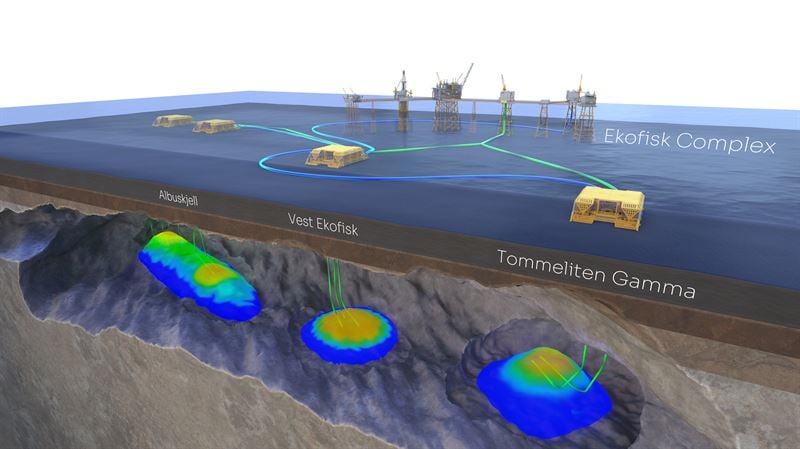
Norway’s Ministry of Energy approved the PDO for ConocoPhillips’ Previously Produced Fields (PPF) subsea redevelopment in the Greater Ekofisk Area. The project calls for multiple new wells tied back via shared pipelines and subsea templates, making the work executable rather than conceptual. Watch whether operators package tie‑ins under integrated EPCIC bids, which would concentrate supplier leverage and shorten subcontracting windows

Buyer takeaway

Treat the PDO as a real, scheduled program that will absorb specialist installation capacity; confirm supplier schedules now

Cost / money

Directionally higher specialised services and hook‑up spend even if reuse of infrastructure lowers gross capex

Supplier / commercial

Primes can bundle EPCIC bids, reducing spot subcontracting opportunities and shifting leverage to integrated contractors

Safety / operations

Multiple tie‑ins and new wells on shared infrastructure raise SIMOPS complexity and increase dependence on timely specialist crews and QA'd spares

What to watch

Watch whether primes demand mobilisation deposits or shorten quote validity as they secure vessel and crew slots

Key facts

  • Project uses 11 new wells from four subsea templates tied back via a shared pipeline
  • Approval follows an FID and positions the project to materially add recoverable gas and conde

Source excerpts

Home Fossil Energy Norway gives its blessing for $1. 8 billion subsea redevelopment project May 8, 2026, by ConocoPhillips Skandinavia, a subsidiary of the U
Related Article The project, which comprises 11 new wells from four subsea templates, tied back via a shared pipeline, is expected to deliver between 90 and 120 million barrels of oil equivalent in recoverable gas and condensate resources. Steinar Våge, ConocoPhillips’ President, Europe and North Africa, commented: “By utilizing existing infrastructure, we can produce substantial resources at low cost, and these approvals are important milestones for the PPF project and our long-term commitment in the Ekofisk
PPF; Source: ConocoPhillips Norway’s Ministry of Energy has approved the plans for development and operation (PDO) for the Previously Produced Fields (PPF) project in the Greater Ekofisk Area (GEA), following a final investment decision (FID) for the redevelopment, which was disclosed in December 2025
Story 2Offshore EnergyMay 8, 2026

Local private firm to deliver SURF EPCI for Indonesian gas project

Signal strongSource-grounded

What happened

A local private firm won the SURF EPCI for the Mako gas project, covering fabrication, coating, load‑out, transport and subsea installation to a leased MOPU. The scope includes flowlines, an export pipeline and umbilicals with gas delivered to a nearby platform and onward to the domestic network. Watch load‑out sequencing and yard capacity to avoid bottlenecks between fabrication completion and offshore install dates

Buyer takeaway

Expect local fabrication and assembly to be central; buyer teams must verify QC, coating standards, inspection and transport logistics earlier than usual

Cost / money

Local fabrication may reduce some transport costs but introduces capex pass‑throughs and added inspection and acceptance spend

Supplier / commercial

Contracts will need clear acceptance criteria, FAT planning and onshore‑to‑offshore handover gates to manage delivery risk

Safety / operations

Load‑out and install phases concentrate HSE and lifting risk; ensure local contractors meet buyer HSE and spare‑parts provenance standards

What to watch

Verify the fabricator’s load‑out capability and contingency vessel options for install windows

Key facts

  • Project comprises six development wells tied back to a leased MOPU
  • Sales gas carried by an ~59‑kilometer, 18‑inch export pipeline to a nearby platform

Source excerpts

Home Fossil Energy Local private firm to deliver SURF EPCI for Indonesian gas project May 8, 2026, by West Natuna Exploration Limited (WNEL), a majority-owned subsidiary of Singapore-headquartered natural gas exploration and development company Conrad Asia Energy, has awarded Indonesian Timas Suplindo with an engineering, procurement, construction, and installation (EPCI) contract for the subsea umbilical, flowline, and riser (SURF) scope at its natural gas field off the coast of Indonesia
Furthermore, the company shall fabricate, assemble, coat, inspect and test subsea structures and associated SURF components, load out, transport and install flowlines, export pipeline, subsea structures, risers, umbilical, and tie-ins offshore, and finally perform pre-commissioning activities, including cleaning, gauging, hydrotesting, dewatering, and leak testing, and provide support to WNEL during commissioning and start-up. Conrad’s Managing Director and Chief Executive Officer, Miltos Xynogalas, said: “Sec
The sales gas will be transported via an approximately 59-kilometer, 18-inch pipeline to the KF platform in the adjoining Kakap PSC, then through the WNTS pipeline for delivery to the Indonesian domestic market. Related Article Timas has been put in charge of the verification of front-end engineering and design (FEED) and execution of detailed engineering design for the SURF system, including flowlines, export pipeline, risers, subsea structures, umbilical, and installation engineering, as well as procurement
Story 3Offshore EnergyMay 8, 2026

North Sea wildcat on COSL rig’s drilling agenda for June

Signal strongSource-grounded

What happened

Equinor has secured the permit and plans to spud a North Sea wildcat using the COSL Innovator, with operations scheduled to begin in June. The rig’s multi‑year booking with extension options means its time is effectively committed, reducing available slots for other buyers. Watch for short‑notice mobilisation requests from rig owners and any supplier requests to shorten quote validity or require deposits

Buyer takeaway

Treat the confirmed spud date as a hard scheduling constraint when planning competing rig needs and confirm alternative options early

Cost / money

Mobilisation premiums and shortened scheduling windows are more likely where rigs are pre‑committed

Supplier / commercial

Rig owners with multi‑year deals can shorten quote validity and insist on mobilisation deposits when reallocating time

Safety / operations

Compressed mobilisation windows increase pressure on pre‑mobilisation checks and spare‑parts availability for drilling contractors

What to watch

Watch for tightened mobilisation windows and shortened vendor quote validity as rig schedules firm up

Key facts

  • Drilling operations scheduled to begin in June
  • COSL Innovator is booked on a multi‑year contract with extension options

Source excerpts

The rig deal entails extension options for three additional years. The 2012-built COSL Innovator semi-submersible rig is designed to operate in water depths of up to 750 meters
Home Fossil Energy North Sea wildcat on COSL rig’s drilling agenda for June May 8, 2026, by Norway’s state-owned energy giant Equinor has secured a drilling permit for operations in the North Sea on the Norwegian Continental Shelf (NCS), which will be conducted with a semi-submersible rig owned by COSL Drilling Europe, an offshore drilling contractor. COSL Innovator rig; Source: COSL The Norwegian Offshore Directorate has granted Equinor a drilling permit for the wellbore 34/10-56 S in production licence 050 HS
The well will be spud with COSL Drilling Europe’s COSL Innovator drilling rig, which Equinor booked in August 2023 for a two-year contract starting in the second quarter of 2025. The rig deal entails extension options for three additional years
Story 4Offshore EnergyMay 8, 2026

Weatherford picks up new jobs with Noble and Constellation Oil Services

Signal moderateDirectional

What happened

Weatherford secured multiple managed pressure drilling (MPD) contracts with Noble and Constellation and a global aftermarket agreement, expanding vendor‑managed drilling technology across deepwater rigs. Deliveries and multi‑year support terms shift pressure‑control execution and spare‑parts responsibility toward the vendor model. Watch vendor spare‑parts lead times and defined service limits in aftermarket contracts before relying on single‑source MPD support

Buyer takeaway

Expect more drilling tech to be supplied and managed by equipment vendors; secure explicit service levels, spare‑part commitments and escalation paths

Cost / money

Integrated equipment and aftermarket agreements can move cost into contracted O&M and service fees rather than immediate capex

Supplier / commercial

Longer vendor relationships reduce spot‑market options for MPD services and increase supplier bargaining power on support terms

Safety / operations

MPD improves pressure control and safety but raises reliance on vendor troubleshooting and parts availability during interventions

What to watch

Confirm vendor spare‑part inventories and field escalation routes before depending on managed systems

Key facts

  • MPD systems and a global aftermarket agreement covering Noble operations
  • Contracts with Constellation to support deepwater rigs and campaigns, including integrated eq

Source excerpts

Gold Star rig; Source Keppel Weatherford has been awarded multiple managed pressure drilling (MPD) contracts and a global aftermarket agreement with Noble, strengthening the duo’s long-standing relationship. These awards entail the delivery of two deepwater managed pressure drilling systems to support the rig owner’s Guyana operations, with delivery expected before year-end
The duo has also entered into a global aftermarket agreement covering MPD systems across Noble’s fleet, providing standardized life-cycle support, parts, and services to enhance operational reliability worldwide. This content is available after accepting the cookies
These awards entail the delivery of two deepwater managed pressure drilling systems to support the rig owner’s Guyana operations, with delivery expected before year-end. Girish Saligram, Weatherford’s President and Chief Executive Officer, commented: “Our MPD systems are designed to provide precise pressure control, enhance safety, and improve drilling efficiency, and our global manufacturing and aftermarket capabilities ensure consistent performance throughout the asset lifecycle

VP Snapshot

Executive Risk & Action View

Norway’s PDO approval for the Previously Produced Fields (PPF) creates a firm subsea installation and tie‑in program that will absorb specialised vessels, ROVs and commissioning crews.

Overall
60
Cost
61
Supply
61
Schedule
38
Compliance
15

Top signals

30-180dcost

Signal 1: Cost / money

Approved redevelopment will concentrate spend on specialised subsea installation and hook‑up services even where capex benefits come from reusing existing infrastructure.

Signal 2: Cost / money

Local SURF execution shifts cost drivers toward onshore fabrication, coating and transport pass‑throughs and adds inspection and acceptance gate spend for buyers.

30-180dcommercial

Signal 3: Supplier / commercial

Redevelopment programs favour integrated EPCIC offers from primes, which can bundle tie‑ins and reduce opportunities for spot subcontracting of specialist scopes.

Signal 4: Supplier / commercial

Awarding SURF to a local firm signals stronger local content and inspection expectations; contracts need clear FAT (factory acceptance test) and handover gates to protect buyers.

Signal 5: Supplier / commercial

Weatherford’s MPD and aftermarket deals reduce available independent MPD suppliers and increase single‑vendor leverage on support terms and spare‑parts pricing.

30-180dschedule

Signal 6: Safety / operations

Multiple tie‑ins and new wells tied back to shared infrastructure increase SIMOPS complexity and create tight windows where missing specialist crews or QA'd spares can cascade into schedule delays.

Recommended actions

CategoryDue 3d

Contact incumbent subsea, pipelay and MOPU suppliers to confirm firm schedules, mobilisation lead times and any booking constraints.

Updated supplier availability and mobilisation risk flags entered into planning

OpsDue 3d

Request recent maintenance records and spare‑parts provenance documentation from critical equipment and vendor‑managed system suppliers.

QA and spare‑parts provenance packets on file to inform mobilisation decisions

ContractsDue 21d

Ask Contracts to prepare mobilisation‑deposit, short‑quote‑validity and activation‑trigger clauses tailored to SURF, pipelay and MOPU awards.

Contract clause templates ready for insertion into upcoming awards

CategoryDue 21d

Run a focused capacity check on near‑facility fabricators, load‑out yards and local pipelay crews in Indonesia and Norway to map mobilisation readiness and import needs.

Shortlist of near‑facility contractors with mobilisation readiness and identified capability gaps

OpsDue 60d

Build a contingency roster of alternate pipelay, ROV and commissioning suppliers with provisional commercial terms and activation triggers tied to project milestones.

Contingency roster with activation criteria and provisional terms to shorten supplier replacement time

Risk register

RiskTriggerMitigation
Watch for suppliers shortening quote validity or asking for mobilisation deposits as schedules firm up and vessel/rig slots become scarce; this is an early signal of tightening capacity.Watch for suppliers shortening quote validity or asking for mobilisation deposits as schedules firm up and vessel/rig slots become scarce; this is an early signal of tightening capacity.Confirm exposure with category, contracts, and operations before the next supplier commitment.

CM Snapshot

Category Manager Decision Detail

Today's priorities

Contact incumbent subsea, pipelay and MOPU suppliers to confirm firm schedules, mobilisation lead times and any booking constraints.

Do this because Norway’s approved redevelopment and the Mako SURF award convert demand into hard schedule windows and early confirmation preserves supplier optionality.

Due 3d

high

CM move

Use this as the immediate supplier or contract action to move before the next sourcing gate.

Request recent maintenance records and spare‑parts provenance documentation from critical equipment and vendor‑managed system suppliers.

Do this because Weatherford’s expanded MPD and aftermarket footprint increases uptime dependency on vendor parts and service, and provenance gaps raise operational risk.

Due 3d

high

CM move

Use this as the immediate supplier or contract action to move before the next sourcing gate.

Ask Contracts to prepare mobilisation‑deposit, short‑quote‑validity and activation‑trigger clauses tailored to SURF, pipelay and MOPU awards.

Do this because local EPCI awards and firm redevelopment programs make suppliers more likely to request deposits or shorten quote validity as they allocate limited fabrication a...

Due 21d

high

CM move

Use this as the immediate supplier or contract action to move before the next sourcing gate.

Run a focused capacity check on near‑facility fabricators, load‑out yards and local pipelay crews in Indonesia and Norway to map mobilisation readiness and import needs.

Do this because the Mako SURF plan and the PPF redevelopment both favour near‑base fabrication and quick mobilisation, and early mapping reduces activation time and logistical s...

Due 21d

high

CM move

Use this as the immediate supplier or contract action to move before the next sourcing gate.

Supplier radar

Offshore Energy

high

Observed supplier signal

Redevelopment programs favour integrated EPCIC offers from primes, which can bundle tie‑ins and reduce opportunities for spot subcontracting of specialist scopes.

Commercial implication

Redevelopment programs favour integrated EPCIC offers from primes, which can bundle tie‑ins and reduce opportunities for spot subcontracting of specialist scopes.

Next step: Validate the source-backed signal with incumbents and alternates before the next award or pricing decision.

Offshore Energy

high

Observed supplier signal

Awarding SURF to a local firm signals stronger local content and inspection expectations; contracts need clear FAT (factory acceptance test) and handover gates to protect buyers.

Commercial implication

Awarding SURF to a local firm signals stronger local content and inspection expectations; contracts need clear FAT (factory acceptance test) and handover gates to protect buyers.

Next step: Validate the source-backed signal with incumbents and alternates before the next award or pricing decision.

Offshore Energy

high

Observed supplier signal

Weatherford’s MPD and aftermarket deals reduce available independent MPD suppliers and increase single‑vendor leverage on support terms and spare‑parts pricing.

Commercial implication

Weatherford’s MPD and aftermarket deals reduce available independent MPD suppliers and increase single‑vendor leverage on support terms and spare‑parts pricing.

Next step: Validate the source-backed signal with incumbents and alternates before the next award or pricing decision.

Negotiation levers

Contact incumbent subsea, pipelay and MOPU suppliers to confirm firm schedules, mobilisation lead times and any booking constraints.

When to use: Do this because Norway’s approved redevelopment and the Mako SURF award convert demand into hard schedule windows and early confirmation preserves supplier optionality.

Expected outcome: Updated supplier availability and mobilisation risk flags entered into planning

Commercial mechanism to carry into the next supplier conversation

Request recent maintenance records and spare‑parts provenance documentation from critical equipment and vendor‑managed system suppliers.

When to use: Do this because Weatherford’s expanded MPD and aftermarket footprint increases uptime dependency on vendor parts and service, and provenance gaps raise operational risk.

Expected outcome: QA and spare‑parts provenance packets on file to inform mobilisation decisions

Commercial mechanism to carry into the next supplier conversation

Ask Contracts to prepare mobilisation‑deposit, short‑quote‑validity and activation‑trigger clauses tailored to SURF, pipelay and MOPU awards.

When to use: Do this because local EPCI awards and firm redevelopment programs make suppliers more likely to request deposits or shorten quote validity as they allocate limited fabrication a...

Expected outcome: Contract clause templates ready for insertion into upcoming awards

Commercial mechanism to carry into the next supplier conversation

Run a focused capacity check on near‑facility fabricators, load‑out yards and local pipelay crews in Indonesia and Norway to map mobilisation readiness and import needs.

When to use: Do this because the Mako SURF plan and the PPF redevelopment both favour near‑base fabrication and quick mobilisation, and early mapping reduces activation time and logistical s...

Expected outcome: Shortlist of near‑facility contractors with mobilisation readiness and identified capability gaps

Commercial mechanism to carry into the next supplier conversation

Talking points

Norway’s PDO approval for the Previously Produced Fields (PPF) creates a firm subsea installation and tie‑in program that will absorb specialised vessels, ROVs and commissioning crews.
A local private firm winning the Mako SURF EPCI shifts scope toward onshore fabrication oversight, load‑out logistics and domestic pipeline tie‑ins—buyers must treat fabrication yards as critical delivery nodes.
Equinor’s confirmed June spud on the COSL Innovator reduces rig-slot flexibility regionally and increases the likelihood of mobilisation premiums or shortened quote windows for competing campaigns.
Weatherford’s new managed pressure drilling (MPD) and aftermarket agreements expand vendor‑managed drilling tech exposure, moving uptime and spare‑parts risk toward single suppliers.

Supplier radar

SupplierSignalImplicationNext stepConfidence
Offshore EnergyRedevelopment programs favour integrated EPCIC offers from primes, which can bundle tie‑ins and reduce opportunities for spot subcontracting of specialist scopes.Redevelopment programs favour integrated EPCIC offers from primes, which can bundle tie‑ins and reduce opportunities for spot subcontracting of specialist scopes.Validate the source-backed signal with incumbents and alternates before the next award or pricing decision.high
Offshore EnergyAwarding SURF to a local firm signals stronger local content and inspection expectations; contracts need clear FAT (factory acceptance test) and handover gates to protect buyers.Awarding SURF to a local firm signals stronger local content and inspection expectations; contracts need clear FAT (factory acceptance test) and handover gates to protect buyers.Validate the source-backed signal with incumbents and alternates before the next award or pricing decision.high
Offshore EnergyWeatherford’s MPD and aftermarket deals reduce available independent MPD suppliers and increase single‑vendor leverage on support terms and spare‑parts pricing.Weatherford’s MPD and aftermarket deals reduce available independent MPD suppliers and increase single‑vendor leverage on support terms and spare‑parts pricing.Validate the source-backed signal with incumbents and alternates before the next award or pricing decision.high

Negotiation levers

  • Contact incumbent subsea, pipelay and MOPU suppliers to confirm firm schedules, mobilisation lead times and any booking constraints.Do this because Norway’s approved redevelopment and the Mako SURF award convert demand into hard schedule windows and early confirmation preserves supplier optionality.Updated supplier availability and mobilisation risk flags entered into planning

    high confidence

  • Request recent maintenance records and spare‑parts provenance documentation from critical equipment and vendor‑managed system suppliers.Do this because Weatherford’s expanded MPD and aftermarket footprint increases uptime dependency on vendor parts and service, and provenance gaps raise operational risk.QA and spare‑parts provenance packets on file to inform mobilisation decisions

    high confidence

  • Ask Contracts to prepare mobilisation‑deposit, short‑quote‑validity and activation‑trigger clauses tailored to SURF, pipelay and MOPU awards.Do this because local EPCI awards and firm redevelopment programs make suppliers more likely to request deposits or shorten quote validity as they allocate limited fabrication a...Contract clause templates ready for insertion into upcoming awards

    high confidence

  • Run a focused capacity check on near‑facility fabricators, load‑out yards and local pipelay crews in Indonesia and Norway to map mobilisation readiness and import needs.Do this because the Mako SURF plan and the PPF redevelopment both favour near‑base fabrication and quick mobilisation, and early mapping reduces activation time and logistical s...Shortlist of near‑facility contractors with mobilisation readiness and identified capability gaps

    high confidence

What to do / What to watch

What to do now

  • Contact incumbent subsea, pipelay and MOPU suppliers to confirm firm schedules, mobilisation lead times and any booking constraints.

    Why: Do this because Norway’s approved redevelopment and the Mako SURF award convert demand into hard schedule windows and early confirmation preserves supplier optionality.

    Owner: Category

    Expected outcome: Updated supplier availability and mobilisation risk flags entered into planning

    [1]
  • Request recent maintenance records and spare‑parts provenance documentation from critical equipment and vendor‑managed system suppliers.

    Why: Do this because Weatherford’s expanded MPD and aftermarket footprint increases uptime dependency on vendor parts and service, and provenance gaps raise operational risk.

    Owner: Ops

    Expected outcome: QA and spare‑parts provenance packets on file to inform mobilisation decisions

    [2]

Next few weeks

  • Ask Contracts to prepare mobilisation‑deposit, short‑quote‑validity and activation‑trigger clauses tailored to SURF, pipelay and MOPU awards.

    Why: Do this because local EPCI awards and firm redevelopment programs make suppliers more likely to request deposits or shorten quote validity as they allocate limited fabrication a...

    Owner: Contracts

    Expected outcome: Contract clause templates ready for insertion into upcoming awards

    [3]
  • Run a focused capacity check on near‑facility fabricators, load‑out yards and local pipelay crews in Indonesia and Norway to map mobilisation readiness and import needs.

    Why: Do this because the Mako SURF plan and the PPF redevelopment both favour near‑base fabrication and quick mobilisation, and early mapping reduces activation time and logistical s...

    Owner: Category

    Expected outcome: Shortlist of near‑facility contractors with mobilisation readiness and identified capability gaps

    [3][1]

Longer view

  • Build a contingency roster of alternate pipelay, ROV and commissioning suppliers with provisional commercial terms and activation triggers tied to project milestones.

    Why: Do this because overlapping redevelopment and drilling campaigns increase slot conflict risk and pre‑negotiated alternates shorten time to replace or augment suppliers if primar...

    Owner: Ops

    Expected outcome: Contingency roster with activation criteria and provisional terms to shorten supplier replacement time

    [1]

What to watch

  • Watch for suppliers shortening quote validity or asking for mobilisation deposits as schedules firm up and vessel/rig slots become scarce; this is an early signal of tightening capacity
  • Watch for suppliers shortening quote validity or asking for mobilisation deposits as schedules firm up and vessel/rig slots become scarce; this is an early signal of tightening capacity.: Watch for suppliers shortening quote validity or asking for mobilisation deposits as schedules firm up and vessel/rig slots become scarce; this is an early signal of tightening capacity
  • Norway’s PDO approval for the Previously Produced Fields (PPF) creates a firm subsea installation and tie‑in program that will absorb specialised vessels, ROVs and commissioning crews
  • A local private firm winning the Mako SURF EPCI shifts scope toward onshore fabrication oversight, load‑out logistics and domestic pipeline tie‑ins—buyers must treat fabrication yards as critical delivery nodes
  • Equinor’s confirmed June spud on the COSL Innovator reduces rig-slot flexibility regionally and increases the likelihood of mobilisation premiums or shortened quote windows for competing campaigns
  • Weatherford’s new managed pressure drilling (MPD) and aftermarket agreements expand vendor‑managed drilling tech exposure, moving uptime and spare‑parts risk toward single suppliers

Market pulse

IndexLatestChangeAs of
WTI Crude (WTI)71.23 /bbl+0.00 (+0.00%)May 9, 2026, 10:06 AM
Brent Crude (BRENT)74.89 /bbl+0.00 (+0.00%)May 9, 2026, 10:06 AM
Natural Gas (NG)3.12 /MMBtu+0.00 (+0.00%)May 9, 2026, 10:06 AM
Henry Hub Gas (NG)3.12 /MMBtu+0.00 (+0.00%)May 9, 2026, 10:06 AM
Cheniere (LNG) (LNG)185 +0.00 (+0.00%)May 9, 2026, 10:06 AM
Brent Crude (BRENT)74.89 /bbl+0.00 (+0.00%)May 9, 2026, 10:06 AM
  • Brent Crude: Higher European gas delivery importance in the PPF project rationale increases priority on timely subsea delivery and commissioning (procurement implication: prioritise supplier schedule certainty)
  • Dry Bulk Shipping (BDRY): Strong demand for specialised pipelay and heavy‑lift support in redevelopments can tighten dry‑bulk and heavy‑lift vessel availability (procurement implication: verify heavy‑lift and transport slots early)

Sources

Inline citations jump here. Expand a source to read the excerpt, the AI interpretation, and the original link.

[1] Norway gives its blessing for $1.8 billion subsea redevelopment project

offshore-energy.biz · May 8, 2026

Expand

AI reading

Norway’s Ministry of Energy approved the PDO for ConocoPhillips’ Previously Produced Fields (PPF) subsea redevelopment in the Greater Ekofisk Area. The project calls for multiple new wells tied back via shared pipelines and subsea templates, making the work executable rather than conceptual. Watch whether operators package tie‑ins under integrated EPCIC bids, which would concentrate supplier leverage and shorten subcontracting windows

Buyer takeaway

Treat the PDO as a real, scheduled program that will absorb specialist installation capacity; confirm supplier schedules now

Cost / money

Directionally higher specialised services and hook‑up spend even if reuse of infrastructure lowers gross capex

Supplier / commercial

Primes can bundle EPCIC bids, reducing spot subcontracting opportunities and shifting leverage to integrated contractors

Safety / operations

Multiple tie‑ins and new wells on shared infrastructure raise SIMOPS complexity and increase dependence on timely specialist crews and QA'd spares

What to watch

Watch whether primes demand mobilisation deposits or shorten quote validity as they secure vessel and crew slots

Key facts

  • Project uses 11 new wells from four subsea templates tied back via a shared pipeline
  • Approval follows an FID and positions the project to materially add recoverable gas and conde

Source excerpts

Home Fossil Energy Norway gives its blessing for $1. 8 billion subsea redevelopment project May 8, 2026, by ConocoPhillips Skandinavia, a subsidiary of the U
Related Article The project, which comprises 11 new wells from four subsea templates, tied back via a shared pipeline, is expected to deliver between 90 and 120 million barrels of oil equivalent in recoverable gas and condensate resources. Steinar Våge, ConocoPhillips’ President, Europe and North Africa, commented: “By utilizing existing infrastructure, we can produce substantial resources at low cost, and these approvals are important milestones for the PPF project and our long-term commitment in the Ekofisk
PPF; Source: ConocoPhillips Norway’s Ministry of Energy has approved the plans for development and operation (PDO) for the Previously Produced Fields (PPF) project in the Greater Ekofisk Area (GEA), following a final investment decision (FID) for the redevelopment, which was disclosed in December 2025

Used in this brief

  • Next 72 hours — Contact incumbent subsea, pipelay and MOPU suppliers to confirm firm schedules, mobilisation lead times and any booking constraints.. Rationale: Do this because Norway’s approved redevelopment and the Mako SURF award convert demand into hard schedule windows and early confirmation preserves supplier optionality.. Owner: Category. KPI: Updated supplier availability and mobilisation risk flags entered into planning
  • Next quarter — Build a contingency roster of alternate pipelay, ROV and commissioning suppliers with provisional commercial terms and activation triggers tied to project milestones.. Rationale: Do this because overlapping redevelopment and drilling campaigns increase slot conflict risk and pre‑negotiated alternates shorten time to replace or augment suppliers if primar.... Owner: Ops. KPI: Contingency roster with activation criteria and provisional terms to shorten supplier replacement time
  • Added: Norway’s Ministry of Energy approved the PPF subsea redevelopment PDO, converting conceptual work into an executable subsea program (article 4)
Open original source

[2] Weatherford picks up new jobs with Noble and Constellation Oil Services

offshore-energy.biz · May 8, 2026

Expand

AI reading

Weatherford secured multiple managed pressure drilling (MPD) contracts with Noble and Constellation and a global aftermarket agreement, expanding vendor‑managed drilling technology across deepwater rigs. Deliveries and multi‑year support terms shift pressure‑control execution and spare‑parts responsibility toward the vendor model. Watch vendor spare‑parts lead times and defined service limits in aftermarket contracts before relying on single‑source MPD support

Buyer takeaway

Expect more drilling tech to be supplied and managed by equipment vendors; secure explicit service levels, spare‑part commitments and escalation paths

Cost / money

Integrated equipment and aftermarket agreements can move cost into contracted O&M and service fees rather than immediate capex

Supplier / commercial

Longer vendor relationships reduce spot‑market options for MPD services and increase supplier bargaining power on support terms

Safety / operations

MPD improves pressure control and safety but raises reliance on vendor troubleshooting and parts availability during interventions

What to watch

Confirm vendor spare‑part inventories and field escalation routes before depending on managed systems

Key facts

  • MPD systems and a global aftermarket agreement covering Noble operations
  • Contracts with Constellation to support deepwater rigs and campaigns, including integrated eq

Source excerpts

Gold Star rig; Source Keppel Weatherford has been awarded multiple managed pressure drilling (MPD) contracts and a global aftermarket agreement with Noble, strengthening the duo’s long-standing relationship. These awards entail the delivery of two deepwater managed pressure drilling systems to support the rig owner’s Guyana operations, with delivery expected before year-end
The duo has also entered into a global aftermarket agreement covering MPD systems across Noble’s fleet, providing standardized life-cycle support, parts, and services to enhance operational reliability worldwide. This content is available after accepting the cookies
These awards entail the delivery of two deepwater managed pressure drilling systems to support the rig owner’s Guyana operations, with delivery expected before year-end. Girish Saligram, Weatherford’s President and Chief Executive Officer, commented: “Our MPD systems are designed to provide precise pressure control, enhance safety, and improve drilling efficiency, and our global manufacturing and aftermarket capabilities ensure consistent performance throughout the asset lifecycle

Used in this brief

  • Norway’s PDO approval for the Previously Produced Fields (PPF) creates a firm subsea installation and tie‑in program that will absorb specialised vessels, ROVs and commissioning crews. A local private firm winning the Mako SURF EPCI shifts scope toward onshore fabrication oversight, load‑out logistics and domestic pipeline tie‑ins—buyers must treat fabrication yards as critical delivery nodes. Equinor’s confirmed June spud on the COSL Innovator reduces rig-slot flexibility regionally and increases the likelihood of mobilisation premiums or shortened quote windows for competing campaigns. Weatherford’s new managed pressure drilling (MPD) and aftermarket agreements expand vendor‑managed drilling tech exposure, moving uptime and spare‑parts risk toward single suppliers
  • Supplier / commercial: Weatherford’s MPD and aftermarket deals reduce available independent MPD suppliers and increase single‑vendor leverage on support terms and spare‑parts pricing
  • Safety / operations: Vendor‑managed drilling systems (MPD) can improve pressure control but raise on‑field dependency for troubleshooting and spare‑parts availability—plan escalation routes with suppliers
Open original source

[3] Local private firm to deliver SURF EPCI for Indonesian gas project

offshore-energy.biz · May 8, 2026

Expand

AI reading

A local private firm won the SURF EPCI for the Mako gas project, covering fabrication, coating, load‑out, transport and subsea installation to a leased MOPU. The scope includes flowlines, an export pipeline and umbilicals with gas delivered to a nearby platform and onward to the domestic network. Watch load‑out sequencing and yard capacity to avoid bottlenecks between fabrication completion and offshore install dates

Buyer takeaway

Expect local fabrication and assembly to be central; buyer teams must verify QC, coating standards, inspection and transport logistics earlier than usual

Cost / money

Local fabrication may reduce some transport costs but introduces capex pass‑throughs and added inspection and acceptance spend

Supplier / commercial

Contracts will need clear acceptance criteria, FAT planning and onshore‑to‑offshore handover gates to manage delivery risk

Safety / operations

Load‑out and install phases concentrate HSE and lifting risk; ensure local contractors meet buyer HSE and spare‑parts provenance standards

What to watch

Verify the fabricator’s load‑out capability and contingency vessel options for install windows

Key facts

  • Project comprises six development wells tied back to a leased MOPU
  • Sales gas carried by an ~59‑kilometer, 18‑inch export pipeline to a nearby platform

Source excerpts

Home Fossil Energy Local private firm to deliver SURF EPCI for Indonesian gas project May 8, 2026, by West Natuna Exploration Limited (WNEL), a majority-owned subsidiary of Singapore-headquartered natural gas exploration and development company Conrad Asia Energy, has awarded Indonesian Timas Suplindo with an engineering, procurement, construction, and installation (EPCI) contract for the subsea umbilical, flowline, and riser (SURF) scope at its natural gas field off the coast of Indonesia
Furthermore, the company shall fabricate, assemble, coat, inspect and test subsea structures and associated SURF components, load out, transport and install flowlines, export pipeline, subsea structures, risers, umbilical, and tie-ins offshore, and finally perform pre-commissioning activities, including cleaning, gauging, hydrotesting, dewatering, and leak testing, and provide support to WNEL during commissioning and start-up. Conrad’s Managing Director and Chief Executive Officer, Miltos Xynogalas, said: “Sec
The sales gas will be transported via an approximately 59-kilometer, 18-inch pipeline to the KF platform in the adjoining Kakap PSC, then through the WNTS pipeline for delivery to the Indonesian domestic market. Related Article Timas has been put in charge of the verification of front-end engineering and design (FEED) and execution of detailed engineering design for the SURF system, including flowlines, export pipeline, risers, subsea structures, umbilical, and installation engineering, as well as procurement

Used in this brief

  • Next 2-4 weeks — Ask Contracts to prepare mobilisation‑deposit, short‑quote‑validity and activation‑trigger clauses tailored to SURF, pipelay and MOPU awards.. Rationale: Do this because local EPCI awards and firm redevelopment programs make suppliers more likely to request deposits or shorten quote validity as they allocate limited fabrication a.... Owner: Contracts. KPI: Contract clause templates ready for insertion into upcoming awards
  • Next 2-4 weeks — Run a focused capacity check on near‑facility fabricators, load‑out yards and local pipelay crews in Indonesia and Norway to map mobilisation readiness and import needs.. Rationale: Do this because the Mako SURF plan and the PPF redevelopment both favour near‑base fabrication and quick mobilisation, and early mapping reduces activation time and logistical s.... Owner: Category. KPI: Shortlist of near‑facility contractors with mobilisation readiness and identified capability gaps
  • Added: A local private firm was awarded SURF EPCI for the Mako gas project, confirming local fabrication and onshore-to-offshore load‑out obligations (article 3)
Open original source

[4] North Sea wildcat on COSL rig’s drilling agenda for June

offshore-energy.biz · May 8, 2026

Expand

AI reading

Equinor has secured the permit and plans to spud a North Sea wildcat using the COSL Innovator, with operations scheduled to begin in June. The rig’s multi‑year booking with extension options means its time is effectively committed, reducing available slots for other buyers. Watch for short‑notice mobilisation requests from rig owners and any supplier requests to shorten quote validity or require deposits

Buyer takeaway

Treat the confirmed spud date as a hard scheduling constraint when planning competing rig needs and confirm alternative options early

Cost / money

Mobilisation premiums and shortened scheduling windows are more likely where rigs are pre‑committed

Supplier / commercial

Rig owners with multi‑year deals can shorten quote validity and insist on mobilisation deposits when reallocating time

Safety / operations

Compressed mobilisation windows increase pressure on pre‑mobilisation checks and spare‑parts availability for drilling contractors

What to watch

Watch for tightened mobilisation windows and shortened vendor quote validity as rig schedules firm up

Key facts

  • Drilling operations scheduled to begin in June
  • COSL Innovator is booked on a multi‑year contract with extension options

Source excerpts

The rig deal entails extension options for three additional years. The 2012-built COSL Innovator semi-submersible rig is designed to operate in water depths of up to 750 meters
Home Fossil Energy North Sea wildcat on COSL rig’s drilling agenda for June May 8, 2026, by Norway’s state-owned energy giant Equinor has secured a drilling permit for operations in the North Sea on the Norwegian Continental Shelf (NCS), which will be conducted with a semi-submersible rig owned by COSL Drilling Europe, an offshore drilling contractor. COSL Innovator rig; Source: COSL The Norwegian Offshore Directorate has granted Equinor a drilling permit for the wellbore 34/10-56 S in production licence 050 HS
The well will be spud with COSL Drilling Europe’s COSL Innovator drilling rig, which Equinor booked in August 2023 for a two-year contract starting in the second quarter of 2025. The rig deal entails extension options for three additional years

Used in this brief

  • Watch for suppliers shortening quote validity or asking for mobilisation deposits as schedules firm up and vessel/rig slots become scarce; this is an early signal of tightening capacity
  • Added: Equinor has secured permits and a planned June spud on the COSL Innovator, locking a near‑term rig slot (article 1)
  • Equinor has secured the permit and plans to spud a North Sea wildcat using the COSL Innovator, with operations scheduled to begin in June. The rig’s multi‑year booking with extension options means its time is effectively committed, reducing available slots for other buyers. Watch for short‑notice mobilisation requests from rig owners and any supplier requests to shorten quote validity or require deposits
Open original source

[5] Brent Crude

finance.yahoo.com · n.d.

Expand

[6] Dry Bulk Shipping (BDRY)

finance.yahoo.com · n.d.

Expand