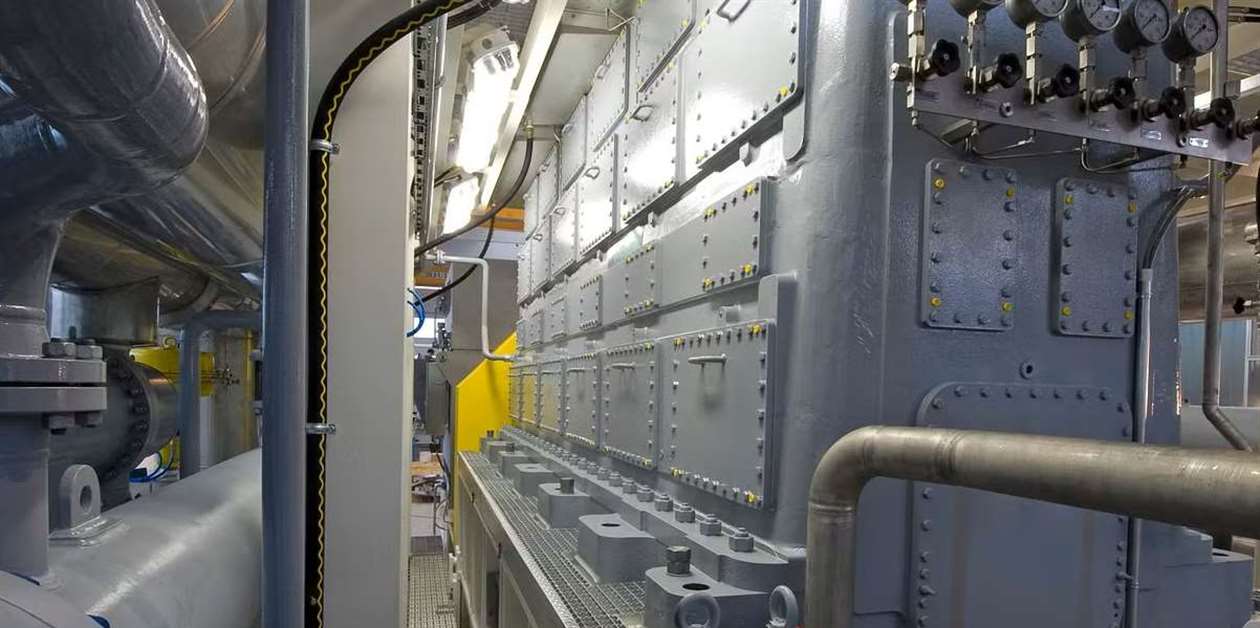
NEA’s 560hs compressor targets midstream efficiency gains
What happened
NEA’s 560hs high-speed reciprocating compressor platform is being applied to a U.S. gas storage project with a mixed-driver configuration and a focus on reducing cylinder count. The frame handles high discharge pressures and was chosen to eliminate a large number of cylinders from the maintenance cycle, which materially changes spare and maintenance profiles. Buyers should watch driver-interface and coupling choices when specifying RFQs to avoid later scope gaps
Buyer takeaway
Treat the 560hs as a parts-profile shift: less frequent cylinder work but higher-spec components and different coupling/driver interfaces that must be captured in LTSAs and spares lists
Cost / money
Directionally lowers long-run OPEX from fewer maintenance cycles while concentrating spend into higher-spec components and installation engineering
Supplier / commercial
Vendors will propose different scopes for driver interfaces and couplings; RFQs must specify interchangeability and acceptance tests to avoid change-orders
Safety / operations
Higher-rated pressures and mixed drivers increase complexity for commissioning and require disciplined testing and coupling damping (torsional) to protect operations
What to watch
Watch for insufficiently detailed RFQ specs around driver configurations and coupling choices, which would create late commercial or technical changes
Key facts
- Mixed-driver installation using electric and natural-gas-driven packages
- Frame rated for discharge pressures up to 10,000 psig
- Eliminated 12 compressor cylinders from the maintenance cycle versus competitors
Source excerpts
“The higher rod and gas load capacity of the 560hs frame produced meaningful CAPEX and long-term OPEX savings for the customer,” Heine said. “A key highlight was the elimination of 12 compressor cylinders from the maintenance cycle compared with the competition
Design approach: fewer throws, higher loads A central design philosophy behind the 560hs is reducing the number of throws and cylinders required to meet performance targets. “The higher rod and gas load capacity of the 560hs frame produced meaningful CAPEX and long-term OPEX savings for the customer,” Heine said
“The enhancements allow the frame to deliver more horsepower and capacity per throw, improving runtime and reducing spare parts consumption,” Lesak said