Wells Materials & OCTG · Australia (Perth)

Tighten OCTG Sourcing Around Traceability and Mobilisation Requirements

Published May 8, 2026, 6:08 AM AWSTAPACFull category signal
Ask AI
Bringing pipelines into the future

In 60 seconds

Top move

Regulatory integrity work (MAOP reassessment and hydrotesting) is already translating into procurement requirements: buyers should expect to demand documented material traceability and prior hydrotest experience from OCTG and large‑diameter spool suppliers

Key takeaways

  • Regulatory integrity work (MAOP reassessment and hydrotesting) is already translating into procurement requirements: buyers should expect to demand documented material traceability and prior hydrotest experience from OCTG and large‑diameter spool suppliers.[3]
  • Complex trenchless work (long HDDs with extreme elevation changes) makes custom rigs, engineered containment and written mobilisation commitments the primary delivery constraints — prequalifying rig specs reduces schedule and surcharge risk.[1]
  • Welded HDPE acceptance is shifting from unit price to fusion QA and traceability: expect fusion logs (DataLogger) and weld IDs to be required acceptance evidence to avoid hidden lifecycle and warranty costs.[2]
  • Regional stocked suppliers with multiple depots can materially reduce lead‑time and freight exposure for maintenance and spares; include depot footprint and turn‑times in commercial scoring to protect short windows.[4]
  • Normal signal day: reporting gives operational examples and clear procurement implications but shows no immediate supply shock — use this to tighten SOWs, prequalification and contract evidence rather than trigger emergency buys.[3]

What changed since last run

  • Added a concrete MAOP/hydrotest execution example that specifies 36‑inch BISEP isolation and 30‑inch temporary bypasses, clarifying the isolation tooling buyers should reference in SOWs (article 2).
  • Included Snowy 2.0 HDD operational detail showing custom high‑force rigs and engineered containment as a mobilisation constraint worth prequalifying (article 4).
  • Added HDPE quality‑assurance features (DataLogger vault tags and weld IDs) as explicit acceptance evidence procurement can require in tenders (article 5).

Key facts

  • Work involved parallel 36‑inch transmission lines
  • Used 36‑inch BISEP double block‑and‑bleed tools and 30‑inch temporary bypasses
  • Maintained customer supply continuity while remediating the asset
  • HDD runs reported at 2,248m with an elevation differential of 563m on one bore
  • Custom drill rigs with near‑unique push/pull force and on‑site fabrication
  • Engineered concrete pits used for drilling fluid containment

Why it matters

Regulatory integrity work (MAOP reassessment and hydrotesting) is already translating into procurement requirements: buyers should expect to demand documented material traceability and prior hydrotest experience from OCTG and large‑diameter spool suppliers. Complex trenchless work (long HDDs with extreme elevation changes) makes custom rigs, engineered containment and written mobilisation commitments the primary delivery constraints — prequalifying rig specs reduces schedule and surcharge risk. Welded HDPE acceptance is shifting from unit price to fusion QA and traceability: expect fusion logs (DataLogger) and weld IDs to be required acceptance evidence to avoid hidden lifecycle and warranty costs. Regional stocked suppliers with multiple depots can materially reduce lead‑time and freight exposure for maintenance and spares; include depot footprint and turn‑times in commercial scoring to protect short windows

Cost / money

  • MAOP reassessments and hydrotests move cost from material purchase to integrated execution budgets because compliance requires testing, certified tooling and documented traceability (plan for higher execution line items).[3]
  • Custom HDD rigs, engineered containment and on‑site fabrication increase mobilisation and logistics uplift, shifting negotiable value away from unit pipe price toward execution surcharges.[1]
  • Requiring HDPE fusion logs and operator QA can add procurement line items (logged QA, operator certification) but reduces downstream rework and warranty exposure.[2]

Supplier / commercial

  • Suppliers that own isolation tooling, bypass systems or heavy trenchless rigs will gain negotiating leverage and may insist on availability commitments or shorter quote validity to protect fleet schedules.[3]
  • Regional stocked suppliers may charge a premium per unit but offset total program risk by cutting freight pass‑throughs and shortening repair turnaround for maintenance‑critical work.[4]

Safety / operations

  • Field isolation, hot‑tap and bypass operations required by tighter integrity rules depend on certified tooling, disciplined engineering and validated bypass continuity plans to avoid public safety and supply‑loss incidents.[3]
  • Long, steep HDDs and fluid containment used at Snowy 2.0 require engineered pits and documented fluid‑management procedures; failure to verify these controls increases environmental and on‑site safety risk.[1]

What to watch

  • Suppliers may shorten quote validity or add mobilisation surcharges for specialised rigs and containment — this shifts cost into execution pass‑throughs that can erode expected savings.[1]
  • Do not accept claims of 'zero leakage' for HDPE without DataLogger fusion logs and weld‑ID traceability; lacking this evidence leaves buyers exposed to hidden remediation and warranty costs.[2]

Top stories

Story 1The Australian PipelinerApr 20, 2026

Bringing pipelines into the future

Signal strongSource-grounded

What happened

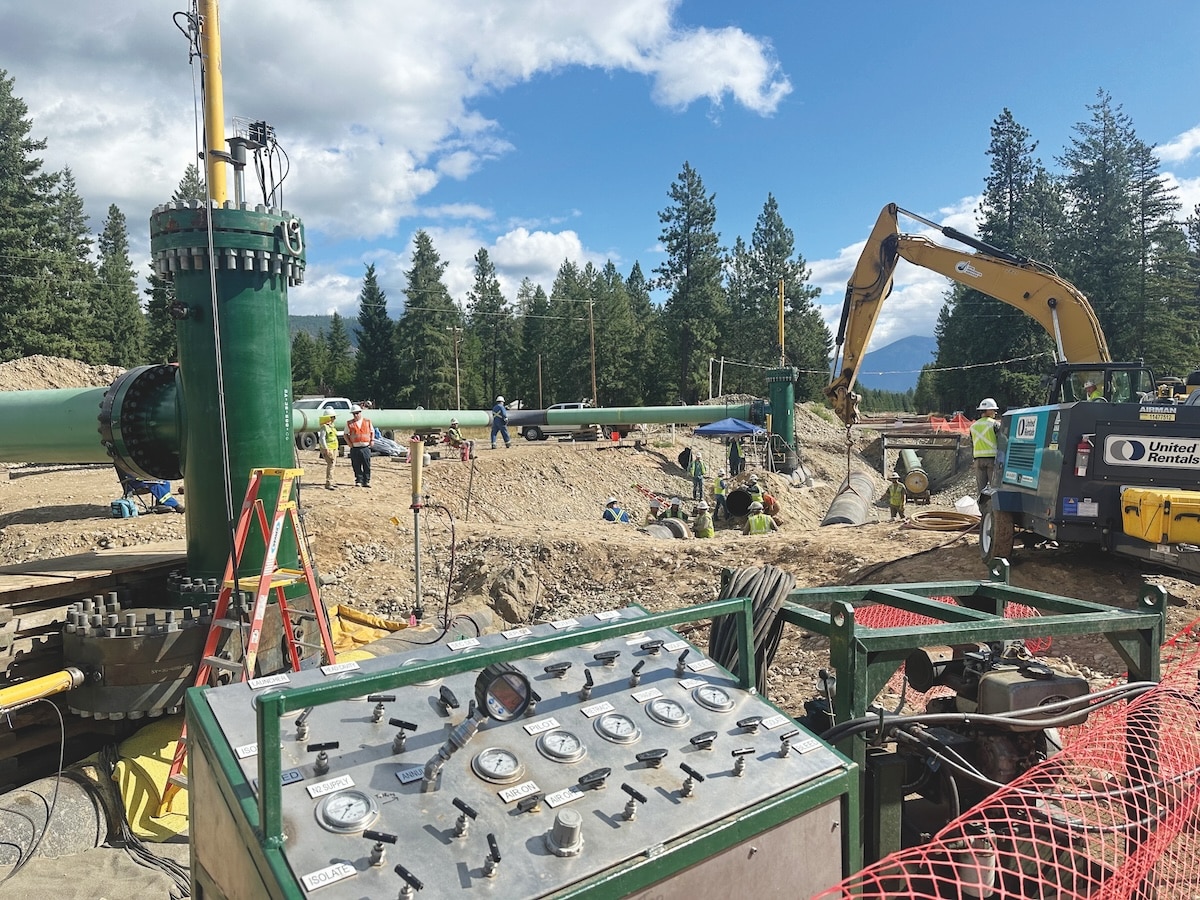
A North American operator replaced a section of a 36‑inch transmission line and performed a MAOP hydrotest on a parallel line to meet updated integrity rules. The job used 36‑inch BISEP double block‑and‑bleed line stops with 30‑inch temporary bypasses and hot taps to maintain supply while remediating the asset. Watch whether APAC buyers adopt the same isolation tooling and traceability expectations in tender SOWs

Buyer takeaway

Treat regulatory reassessment as an operational spec: require material traceability and documented isolation capability in supplier qualifications

Cost / money

Execution and compliance testing add program cost and narrow the supplier pool because fewer firms can provide both traceability and isolation tooling

Supplier / commercial

Providers of isolation tools, bypass systems and qualified welding crews will capture stronger commercial posture and availability leverage

Safety / operations

Certified tooling, disciplined engineering and validated bypass plans are necessary to avoid safety incidents near populated corridors

What to watch

Confirm suppliers' prior MAOP/hydrotest experience and request documentary proof rather than accepting generic capability claims

Key facts

  • Work involved parallel 36‑inch transmission lines
  • Used 36‑inch BISEP double block‑and‑bleed tools and 30‑inch temporary bypasses
  • Maintained customer supply continuity while remediating the asset

Source excerpts

In response, the operator committed to replacing a two-mile section of Line B and conducting a MAOP hydrotest on Line A
The second phase of the project was to isolate a large section of pipeline A to enable a MAOP hydrotest to be conducted
A recent example of this comes from the US, where updated federal regulation imposed tighter integrity management measures, including stricter requirements for material traceability, periodic reassessment and the reconfirmation of maximum allowable operating pressure (MAOP) on older, previously untested pipelines. For a major North American energy operator, these regulatory developments coincided with significant demographic change
Story 2The Australian PipelinerApr 27, 2026

Getting technical at Snowy 2.0

Signal strongSource-grounded

What happened

Michels Trenchless completed long, technically difficult horizontal directional drills for Snowy 2.0, including a bore with a very large elevation change that required custom rigs and engineered containment. The works used purpose‑built drill rigs with very high push/pull force and large concrete pits to keep drilling fluids separated from the ground, showing these are not off‑the‑shelf hire items. Watch for contractor requests for strict mobilisation terms and uplift charges on similar APAC scopes

Buyer takeaway

Pre‑qualify rigs, containment and mobilisation plans; these scopes require custom equipment and documented environmental controls

Cost / money

Custom rigs and containment increase mobilisation and logistics costs that will appear as uplift or short‑window premiums

Supplier / commercial

Contractors owning custom rigs will likely seek availability commitments and may limit quote validity to protect fleet schedules

Safety / operations

Large elevation drills and fluid management require engineered containment and documented procedures to control environmental and safety risk

What to watch

Verify claimed rig capacities and containment methods with site references and test evidence before awarding work

Key facts

  • HDD runs reported at 2,248m with an elevation differential of 563m on one bore
  • Custom drill rigs with near‑unique push/pull force and on‑site fabrication
  • Engineered concrete pits used for drilling fluid containment

Source excerpts

Michels designed and fabricated two drill rigs, each with nearly 400 tonnes of push/pull force. Using the pilot hole intersect method wherein one rig drills from the entry side and the other from the exit side, the drill rigs meet in the middle at a predetermined location along the alignment
The project team collaborated with the project owner Snowy Hydro Limited and Future Generation Joint Venture to develop a safe, technically solid and constructable solution. By developing executable plans to resolve extensive challenges without causing harm to individuals or the environment, the award-winning Marica Road West HDD project broadens the potential use of HDD to build and expand energy pipeline infrastructure in circumstances that may be considered undesirable
To address these concerns, the project team installed a valve-closed rotary diverter on the lower entry side to direct the return flow cuttings and drilling fluids to a concrete containment pit where they are directed to a fluid separation plant for treatment. Michels designed and fabricated two drill rigs, each with nearly 400 tonnes of push/pull force
Story 3The Australian PipelinerApr 27, 2026

The future of water

Signal moderateDirectional

What happened

Suppliers and industry groups are promoting welded HDPE for water pipelines and highlighting new DataLogger features and Vault ID tags that record and identify welds. The emphasis is on auditable fusion parameters and traceable weld IDs as acceptance evidence rather than raw unit price. Procurement should watch adoption of these QA tools as mandatory acceptance items in tenders for pipe and fusion services

Buyer takeaway

Don't treat HDPE as a commodity swap for steel—require fusion logs and operator qualification as part of acceptance

Cost / money

Lifecycle savings from reduced leakage shift evaluation toward QA and operator competence rather than lowest unit price

Supplier / commercial

Vendors bundling welding equipment, training and logged QA data can charge a premium but reduce warranty exposure

Safety / operations

Proper fusion records and operator competency reduce failure and rework risk; absent records, buyers face hidden remediation costs

What to watch

Require DataLogger or equivalent fusion records and weld IDs in proposals; otherwise claims of low leakage are unverified

Key facts

  • Welded HDPE noted for very low operational leakage when fused correctly
  • DataLogger records fusion parameters and Vault ID tags enable weld traceability
  • Project examples include large‑diameter HDPE pulls and documented fusion control

Source excerpts

The DataLogger 7 records all pertinent parameters during the fusion process, providing an added level of quality control and oversight to the project
Its proven record of reliability is clear in its allowable leakage rate of zero, compared to PVC and ductile iron allowable leakage rates of 10-20 per cent. HDPE’s corrosion resistance, immunity to biological growth, and strong chemical tolerance make it ideal for potable water, wastewater, and mining environments
Image: McElroy The latest innovations In February 2026, McElroy officially rolled out two new DataLogger features to assist in identifying related welds in an assembly: Vault ID Tags and Fabrication Workflow. Vault ID Tags are pre-coded, specially made labels containing QR codes that can be associated with a specific weld
Story 4The Australian PipelinerApr 20, 2026

Keeping Victoria’s water flowing

Signal moderateSource-grounded

What happened

Benton’s Plumbing Supplies is described as a regional supplier model supporting Victoria's water networks with stocked fittings, couplings and rapid service from multiple depots. Their depot network and local inventory reduce lead‑time and freight exposure for maintenance and repair scopes. Consider regional stocked vendors as tactical options where national fleets and specialist rigs create mobilisation bottlenecks

Buyer takeaway

Factor regional stock and service footprint into supplier scoring for scopes that penalise late mobilisation or require fast repairs

Cost / money

Higher unit prices may be offset by lower freight and faster repair turnaround, reducing schedule risk

Supplier / commercial

Local suppliers may accept smaller volumes at higher margins but provide stronger service terms that reduce program risk

Safety / operations

Rapid access to correct couplings and fittings supports safer, faster repairs and reduces reliance on temporary fixes

What to watch

Validate regional stock claims and delivery performance rather than assuming local presence equals immediate fulfilment

Key facts

  • Supplier network across 16 regional locations supporting Victorian water assets
  • Product range includes butt‑welding equipment and premium mechanical couplings
  • Positions itself for rapid turnaround to support utilities and contractors

Source excerpts

“If a burst happens, they can easily repair it on-site using our equipment. “This typically consists of a range of mechanical couplings and stainless-steel repair bands in 100–300mm diameter
Benton’s Plumbing Supplies provides water pipeline operators with everything from butt-welding equipment for installation to fittings and couplings for maintenance. Benton’s supports the majority of water utilities across Victoria, along with a wide client base of contractors who are authorised to construct, repair and maintain these assets
“If a burst happens, they can easily repair it on-site using our equipment

VP Snapshot

Executive Risk & Action View

Regulatory integrity work (MAOP reassessment and hydrotesting) is already translating into procurement requirements: buyers should expect to demand documented material traceability and prior hydrotest experience from OCTG and large‑diameter spool suppliers.

Overall
56
Cost
97
Supply
61
Schedule
20
Compliance
15

Top signals

30-180dcost

Signal 1: Cost / money

MAOP reassessments and hydrotests move cost from material purchase to integrated execution budgets because compliance requires testing, certified tooling and documented traceability (plan for higher execution line items).

Signal 2: Cost / money

Custom HDD rigs, engineered containment and on‑site fabrication increase mobilisation and logistics uplift, shifting negotiable value away from unit pipe price toward execution surcharges.

Signal 3: Cost / money

Requiring HDPE fusion logs and operator QA can add procurement line items (logged QA, operator certification) but reduces downstream rework and warranty exposure.

0-30dsupply

Signal 4: Supplier / commercial

Suppliers that own isolation tooling, bypass systems or heavy trenchless rigs will gain negotiating leverage and may insist on availability commitments or shorter quote validity to protect fleet schedules.

30-180dcommercial

Signal 5: Supplier / commercial

Regional stocked suppliers may charge a premium per unit but offset total program risk by cutting freight pass‑throughs and shortening repair turnaround for maintenance‑critical work.

30-180dsupply

Signal 6: Safety / operations

Field isolation, hot‑tap and bypass operations required by tighter integrity rules depend on certified tooling, disciplined engineering and validated bypass continuity plans to avoid public safety and supply‑loss incidents.

Recommended actions

CategoryDue 3d

Request written material traceability statements and prior MAOP/hydrotest project references from shortlisted OCTG and spool fabricators.

A shortlist of suppliers that can supply documented heat numbers, mill tests and hydrotest references to qualify for large‑diameter work.

ContractsDue 3d

Ask proposed HDD and trenchless contractors for written mobilisation commitments, detailed rig specifications (push/pull ratings) and engineered containment plans.

Supplier mobilisation statements and rig spec documents to reference in commercial evaluations and mobilisation surcharge language.

ContractsDue 21d

Mandate DataLogger fusion logs and Vault ID weld traceability as a pass/fail item in HDPE tender SOWs and supplier qualifications.

Tender responses that include verifiable fusion logs and weld IDs, reducing post‑award QA disputes and warranty exposure.

CategoryDue 21d

Update RFQ scoring to prioritise suppliers with regional stocked depots and documented rapid spares/repair turnaround for maintenance and emergency spares.

Shortlist that balances unit price with proven regional fulfilment to protect schedule and reduce ad‑hoc freight costs.

ContractsDue 60d

Negotiate framework contract clauses that define mobilisation surcharges, minimum quote validity windows and required acceptance evidence (material traceability, fusion logs, ce...

Framework terms that standardise mobilisation fees, evidence requirements and dispute mechanics to protect budgets and schedules.

OpsDue 60d

Develop a contractor qualification checklist for complex HDD and isolation works covering verified rig capacity, engineered containment, environmental controls and crew competen...

A vetted roster with documented capability that speeds mobilisation and reduces on‑project safety and compliance risk.

Risk register

RiskTriggerMitigation
Suppliers may shorten quote validity or add mobilisation surcharges for specialised rigs and containment — this shifts cost into execution pass‑throughs that can erode expected savings.Suppliers may shorten quote validity or add mobilisation surcharges for specialised rigs and containment — this shifts cost into execution pass‑throughs that can erode expected savings.Confirm exposure with category, contracts, and operations before the next supplier commitment.
Do not accept claims of 'zero leakage' for HDPE without DataLogger fusion logs and weld‑ID traceability; lacking this evidence leaves buyers exposed to hidden remediation and warranty costs.Do not accept claims of 'zero leakage' for HDPE without DataLogger fusion logs and weld‑ID traceability; lacking this evidence leaves buyers exposed to hidden remediation and warranty costs.Confirm exposure with category, contracts, and operations before the next supplier commitment.

CM Snapshot

Category Manager Decision Detail

Today's priorities

Request written material traceability statements and prior MAOP/hydrotest project references from shortlisted OCTG and spool fabricators.

because the North American MAOP/hydrotest example shows buyers will be asked to demonstrate material traceability and hydrotest experience to meet integrity rules.

Due 3d

high

CM move

Use this as the immediate supplier or contract action to move before the next sourcing gate.

Ask proposed HDD and trenchless contractors for written mobilisation commitments, detailed rig specifications (push/pull ratings) and engineered containment plans.

because Snowy 2.0 required custom rigs and containment that are execution constraints, and documented specs let procurement score true delivery readiness and surcharge exposure.

Due 3d

high

CM move

Use this as the immediate supplier or contract action to move before the next sourcing gate.

Mandate DataLogger fusion logs and Vault ID weld traceability as a pass/fail item in HDPE tender SOWs and supplier qualifications.

because HDPE lifecycle performance and leakage risk are tied to fusion QA and logged parameters, and requiring these records prevents acceptance of unverified welds that increas...

Due 21d

high

CM move

Use this as the immediate supplier or contract action to move before the next sourcing gate.

Update RFQ scoring to prioritise suppliers with regional stocked depots and documented rapid spares/repair turnaround for maintenance and emergency spares.

because the Benton’s regional model shows local inventory and depot footprint materially reduce lead‑time and freight exposure where specialist mobilisation or rapid repair is c...

Due 21d

high

CM move

Use this as the immediate supplier or contract action to move before the next sourcing gate.

Supplier radar

The Australian Pipeliner

high

Observed supplier signal

Suppliers that own isolation tooling, bypass systems or heavy trenchless rigs will gain negotiating leverage and may insist on availability commitments or shorter quote validity to protect fleet schedules.

Commercial implication

Suppliers that own isolation tooling, bypass systems or heavy trenchless rigs will gain negotiating leverage and may insist on availability commitments or shorter quote validity to protect fleet schedules.

Next step: Validate the source-backed signal with incumbents and alternates before the next award or pricing decision.

The Australian Pipeliner

high

Observed supplier signal

Regional stocked suppliers may charge a premium per unit but offset total program risk by cutting freight pass‑throughs and shortening repair turnaround for maintenance‑critical work.

Commercial implication

Regional stocked suppliers may charge a premium per unit but offset total program risk by cutting freight pass‑throughs and shortening repair turnaround for maintenance‑critical work.

Next step: Validate the source-backed signal with incumbents and alternates before the next award or pricing decision.

Negotiation levers

Request written material traceability statements and prior MAOP/hydrotest project references from shortlisted OCTG and spool fabricators.

When to use: because the North American MAOP/hydrotest example shows buyers will be asked to demonstrate material traceability and hydrotest experience to meet integrity rules.

Expected outcome: A shortlist of suppliers that can supply documented heat numbers, mill tests and hydrotest references to qualify for large‑diameter work.

Commercial mechanism to carry into the next supplier conversation

Ask proposed HDD and trenchless contractors for written mobilisation commitments, detailed rig specifications (push/pull ratings) and engineered containment plans.

When to use: because Snowy 2.0 required custom rigs and containment that are execution constraints, and documented specs let procurement score true delivery readiness and surcharge exposure.

Expected outcome: Supplier mobilisation statements and rig spec documents to reference in commercial evaluations and mobilisation surcharge language.

Commercial mechanism to carry into the next supplier conversation

Mandate DataLogger fusion logs and Vault ID weld traceability as a pass/fail item in HDPE tender SOWs and supplier qualifications.

When to use: because HDPE lifecycle performance and leakage risk are tied to fusion QA and logged parameters, and requiring these records prevents acceptance of unverified welds that increas...

Expected outcome: Tender responses that include verifiable fusion logs and weld IDs, reducing post‑award QA disputes and warranty exposure.

Commercial mechanism to carry into the next supplier conversation

Update RFQ scoring to prioritise suppliers with regional stocked depots and documented rapid spares/repair turnaround for maintenance and emergency spares.

When to use: because the Benton’s regional model shows local inventory and depot footprint materially reduce lead‑time and freight exposure where specialist mobilisation or rapid repair is c...

Expected outcome: Shortlist that balances unit price with proven regional fulfilment to protect schedule and reduce ad‑hoc freight costs.

Commercial mechanism to carry into the next supplier conversation

Talking points

Regulatory integrity work (MAOP reassessment and hydrotesting) is already translating into procurement requirements: buyers should expect to demand documented material traceability and prior hydrotest experience from OCTG and large‑diameter spool suppliers.
Complex trenchless work (long HDDs with extreme elevation changes) makes custom rigs, engineered containment and written mobilisation commitments the primary delivery constraints — prequalifying rig specs reduces schedule and surcharge risk.
Welded HDPE acceptance is shifting from unit price to fusion QA and traceability: expect fusion logs (DataLogger) and weld IDs to be required acceptance evidence to avoid hidden lifecycle and warranty costs.
Regional stocked suppliers with multiple depots can materially reduce lead‑time and freight exposure for maintenance and spares; include depot footprint and turn‑times in commercial scoring to protect short windows.

Supplier radar

SupplierSignalImplicationNext stepConfidence
The Australian PipelinerSuppliers that own isolation tooling, bypass systems or heavy trenchless rigs will gain negotiating leverage and may insist on availability commitments or shorter quote validity to protect fleet schedules.Suppliers that own isolation tooling, bypass systems or heavy trenchless rigs will gain negotiating leverage and may insist on availability commitments or shorter quote validity to protect fleet schedules.Validate the source-backed signal with incumbents and alternates before the next award or pricing decision.high
The Australian PipelinerRegional stocked suppliers may charge a premium per unit but offset total program risk by cutting freight pass‑throughs and shortening repair turnaround for maintenance‑critical work.Regional stocked suppliers may charge a premium per unit but offset total program risk by cutting freight pass‑throughs and shortening repair turnaround for maintenance‑critical work.Validate the source-backed signal with incumbents and alternates before the next award or pricing decision.high

Negotiation levers

  • Request written material traceability statements and prior MAOP/hydrotest project references from shortlisted OCTG and spool fabricators.because the North American MAOP/hydrotest example shows buyers will be asked to demonstrate material traceability and hydrotest experience to meet integrity rules.A shortlist of suppliers that can supply documented heat numbers, mill tests and hydrotest references to qualify for large‑diameter work.

    high confidence

  • Ask proposed HDD and trenchless contractors for written mobilisation commitments, detailed rig specifications (push/pull ratings) and engineered containment plans.because Snowy 2.0 required custom rigs and containment that are execution constraints, and documented specs let procurement score true delivery readiness and surcharge exposure.Supplier mobilisation statements and rig spec documents to reference in commercial evaluations and mobilisation surcharge language.

    high confidence

  • Mandate DataLogger fusion logs and Vault ID weld traceability as a pass/fail item in HDPE tender SOWs and supplier qualifications.because HDPE lifecycle performance and leakage risk are tied to fusion QA and logged parameters, and requiring these records prevents acceptance of unverified welds that increas...Tender responses that include verifiable fusion logs and weld IDs, reducing post‑award QA disputes and warranty exposure.

    high confidence

  • Update RFQ scoring to prioritise suppliers with regional stocked depots and documented rapid spares/repair turnaround for maintenance and emergency spares.because the Benton’s regional model shows local inventory and depot footprint materially reduce lead‑time and freight exposure where specialist mobilisation or rapid repair is c...Shortlist that balances unit price with proven regional fulfilment to protect schedule and reduce ad‑hoc freight costs.

    high confidence

What to do / What to watch

What to do now

  • Request written material traceability statements and prior MAOP/hydrotest project references from shortlisted OCTG and spool fabricators.

    Why: because the North American MAOP/hydrotest example shows buyers will be asked to demonstrate material traceability and hydrotest experience to meet integrity rules.

    Owner: Category

    Expected outcome: A shortlist of suppliers that can supply documented heat numbers, mill tests and hydrotest references to qualify for large‑diameter work.

    [3]
  • Ask proposed HDD and trenchless contractors for written mobilisation commitments, detailed rig specifications (push/pull ratings) and engineered containment plans.

    Why: because Snowy 2.0 required custom rigs and containment that are execution constraints, and documented specs let procurement score true delivery readiness and surcharge exposure.

    Owner: Contracts

    Expected outcome: Supplier mobilisation statements and rig spec documents to reference in commercial evaluations and mobilisation surcharge language.

    [1]

Next few weeks

  • Mandate DataLogger fusion logs and Vault ID weld traceability as a pass/fail item in HDPE tender SOWs and supplier qualifications.

    Why: because HDPE lifecycle performance and leakage risk are tied to fusion QA and logged parameters, and requiring these records prevents acceptance of unverified welds that increas...

    Owner: Contracts

    Expected outcome: Tender responses that include verifiable fusion logs and weld IDs, reducing post‑award QA disputes and warranty exposure.

    [2]
  • Update RFQ scoring to prioritise suppliers with regional stocked depots and documented rapid spares/repair turnaround for maintenance and emergency spares.

    Why: because the Benton’s regional model shows local inventory and depot footprint materially reduce lead‑time and freight exposure where specialist mobilisation or rapid repair is c...

    Owner: Category

    Expected outcome: Shortlist that balances unit price with proven regional fulfilment to protect schedule and reduce ad‑hoc freight costs.

    [4]

Longer view

  • Negotiate framework contract clauses that define mobilisation surcharges, minimum quote validity windows and required acceptance evidence (material traceability, fusion logs, ce...

    Why: because recurring regulatory and mobilisation requirements shift commercial leverage and pre‑agreed mechanics limit ad‑hoc pass‑throughs and scope disputes.

    Owner: Contracts

    Expected outcome: Framework terms that standardise mobilisation fees, evidence requirements and dispute mechanics to protect budgets and schedules.

    [3]
  • Develop a contractor qualification checklist for complex HDD and isolation works covering verified rig capacity, engineered containment, environmental controls and crew competen...

    Why: because the Snowy 2.0 HDD work required near‑unique rig force and containment controls, and pre‑qualifying reduces execution and safety surprises.

    Owner: Ops

    Expected outcome: A vetted roster with documented capability that speeds mobilisation and reduces on‑project safety and compliance risk.

    [1]

What to watch

  • Suppliers may shorten quote validity or add mobilisation surcharges for specialised rigs and containment — this shifts cost into execution pass‑throughs that can erode expected savings
  • Do not accept claims of 'zero leakage' for HDPE without DataLogger fusion logs and weld‑ID traceability; lacking this evidence leaves buyers exposed to hidden remediation and warranty costs
  • Suppliers may shorten quote validity or add mobilisation surcharges for specialised rigs and containment — this shifts cost into execution pass‑throughs that can erode expected savings.: Suppliers may shorten quote validity or add mobilisation surcharges for specialised rigs and containment — this shifts cost into execution pass‑throughs that can erode expected savings
  • Do not accept claims of 'zero leakage' for HDPE without DataLogger fusion logs and weld‑ID traceability; lacking this evidence leaves buyers exposed to hidden remediation and warranty costs.: Do not accept claims of 'zero leakage' for HDPE without DataLogger fusion logs and weld‑ID traceability; lacking this evidence leaves buyers exposed to hidden remediation and warranty costs
  • Regulatory integrity work (MAOP reassessment and hydrotesting) is already translating into procurement requirements: buyers should expect to demand documented material traceability and prior hydrotest experience from OCTG and large‑diameter spool suppliers
  • Complex trenchless work (long HDDs with extreme elevation changes) makes custom rigs, engineered containment and written mobilisation commitments the primary delivery constraints — prequalifying rig specs reduces schedule and surcharge risk
  • Welded HDPE acceptance is shifting from unit price to fusion QA and traceability: expect fusion logs (DataLogger) and weld IDs to be required acceptance evidence to avoid hidden lifecycle and warranty costs
  • Regional stocked suppliers with multiple depots can materially reduce lead‑time and freight exposure for maintenance and spares; include depot footprint and turn‑times in commercial scoring to protect short windows

Market pulse

IndexLatestChangeAs of
HRC Steel (HRC)740 /ton+0.00 (+0.00%)May 7, 2026, 10:13 PM
Copper (COPPER)3.85 /lb+0.00 (+0.00%)May 7, 2026, 10:13 PM
Iron Ore (IRON)108.5 /t+0.00 (+0.00%)May 7, 2026, 10:13 PM
Tenaris (TS)32 +0.00 (+0.00%)May 7, 2026, 10:13 PM
  • HRC Steel: Hot‑rolled coil (HRC) direction affects metal OCTG landed cost and makes execution surcharges for hydrotests and traceability more visible in total landed cost
  • Tenaris: Tenaris movements are a leading indicator of OCTG manufacturer pricing posture that can affect quote validity and availability in regional tenders
  • Iron Ore: Iron ore/fabrication input moves influence domestic fabrication input costs and therefore landed price and lead‑times for fabricated spools and OCTG

Sources

Inline citations jump here. Expand a source to read the excerpt, the AI interpretation, and the original link.

[1] Getting technical at Snowy 2.0

pipeliner.com.au · Apr 27, 2026

Expand

AI reading

Michels Trenchless completed long, technically difficult horizontal directional drills for Snowy 2.0, including a bore with a very large elevation change that required custom rigs and engineered containment. The works used purpose‑built drill rigs with very high push/pull force and large concrete pits to keep drilling fluids separated from the ground, showing these are not off‑the‑shelf hire items. Watch for contractor requests for strict mobilisation terms and uplift charges on similar APAC scopes

Buyer takeaway

Pre‑qualify rigs, containment and mobilisation plans; these scopes require custom equipment and documented environmental controls

Cost / money

Custom rigs and containment increase mobilisation and logistics costs that will appear as uplift or short‑window premiums

Supplier / commercial

Contractors owning custom rigs will likely seek availability commitments and may limit quote validity to protect fleet schedules

Safety / operations

Large elevation drills and fluid management require engineered containment and documented procedures to control environmental and safety risk

What to watch

Verify claimed rig capacities and containment methods with site references and test evidence before awarding work

Key facts

  • HDD runs reported at 2,248m with an elevation differential of 563m on one bore
  • Custom drill rigs with near‑unique push/pull force and on‑site fabrication
  • Engineered concrete pits used for drilling fluid containment

Source excerpts

Michels designed and fabricated two drill rigs, each with nearly 400 tonnes of push/pull force. Using the pilot hole intersect method wherein one rig drills from the entry side and the other from the exit side, the drill rigs meet in the middle at a predetermined location along the alignment
The project team collaborated with the project owner Snowy Hydro Limited and Future Generation Joint Venture to develop a safe, technically solid and constructable solution. By developing executable plans to resolve extensive challenges without causing harm to individuals or the environment, the award-winning Marica Road West HDD project broadens the potential use of HDD to build and expand energy pipeline infrastructure in circumstances that may be considered undesirable
To address these concerns, the project team installed a valve-closed rotary diverter on the lower entry side to direct the return flow cuttings and drilling fluids to a concrete containment pit where they are directed to a fluid separation plant for treatment. Michels designed and fabricated two drill rigs, each with nearly 400 tonnes of push/pull force

Used in this brief

  • Next 72 hours — Ask proposed HDD and trenchless contractors for written mobilisation commitments, detailed rig specifications (push/pull ratings) and engineered containment plans.. Rationale: because Snowy 2.0 required custom rigs and containment that are execution constraints, and documented specs let procurement score true delivery readiness and surcharge exposure.. Owner: Contracts. KPI: Supplier mobilisation statements and rig spec documents to reference in commercial evaluations and mobilisation surcharge language
  • Next quarter — Develop a contractor qualification checklist for complex HDD and isolation works covering verified rig capacity, engineered containment, environmental controls and crew competen.... Rationale: because the Snowy 2.0 HDD work required near‑unique rig force and containment controls, and pre‑qualifying reduces execution and safety surprises.. Owner: Ops. KPI: A vetted roster with documented capability that speeds mobilisation and reduces on‑project safety and compliance risk
  • Suppliers may shorten quote validity or add mobilisation surcharges for specialised rigs and containment — this shifts cost into execution pass‑throughs that can erode expected savings
Open original source

[2] The future of water

pipeliner.com.au · Apr 27, 2026

Expand

AI reading

Suppliers and industry groups are promoting welded HDPE for water pipelines and highlighting new DataLogger features and Vault ID tags that record and identify welds. The emphasis is on auditable fusion parameters and traceable weld IDs as acceptance evidence rather than raw unit price. Procurement should watch adoption of these QA tools as mandatory acceptance items in tenders for pipe and fusion services

Buyer takeaway

Don't treat HDPE as a commodity swap for steel—require fusion logs and operator qualification as part of acceptance

Cost / money

Lifecycle savings from reduced leakage shift evaluation toward QA and operator competence rather than lowest unit price

Supplier / commercial

Vendors bundling welding equipment, training and logged QA data can charge a premium but reduce warranty exposure

Safety / operations

Proper fusion records and operator competency reduce failure and rework risk; absent records, buyers face hidden remediation costs

What to watch

Require DataLogger or equivalent fusion records and weld IDs in proposals; otherwise claims of low leakage are unverified

Key facts

  • Welded HDPE noted for very low operational leakage when fused correctly
  • DataLogger records fusion parameters and Vault ID tags enable weld traceability
  • Project examples include large‑diameter HDPE pulls and documented fusion control

Source excerpts

The DataLogger 7 records all pertinent parameters during the fusion process, providing an added level of quality control and oversight to the project
Its proven record of reliability is clear in its allowable leakage rate of zero, compared to PVC and ductile iron allowable leakage rates of 10-20 per cent. HDPE’s corrosion resistance, immunity to biological growth, and strong chemical tolerance make it ideal for potable water, wastewater, and mining environments
Image: McElroy The latest innovations In February 2026, McElroy officially rolled out two new DataLogger features to assist in identifying related welds in an assembly: Vault ID Tags and Fabrication Workflow. Vault ID Tags are pre-coded, specially made labels containing QR codes that can be associated with a specific weld

Used in this brief

  • Next 2-4 weeks — Mandate DataLogger fusion logs and Vault ID weld traceability as a pass/fail item in HDPE tender SOWs and supplier qualifications.. Rationale: because HDPE lifecycle performance and leakage risk are tied to fusion QA and logged parameters, and requiring these records prevents acceptance of unverified welds that increas.... Owner: Contracts. KPI: Tender responses that include verifiable fusion logs and weld IDs, reducing post‑award QA disputes and warranty exposure
  • Do not accept claims of 'zero leakage' for HDPE without DataLogger fusion logs and weld‑ID traceability; lacking this evidence leaves buyers exposed to hidden remediation and warranty costs
  • Added HDPE quality‑assurance features (DataLogger vault tags and weld IDs) as explicit acceptance evidence procurement can require in tenders (article 5)
Open original source

[3] Bringing pipelines into the future

pipeliner.com.au · Apr 20, 2026

Expand

AI reading

A North American operator replaced a section of a 36‑inch transmission line and performed a MAOP hydrotest on a parallel line to meet updated integrity rules. The job used 36‑inch BISEP double block‑and‑bleed line stops with 30‑inch temporary bypasses and hot taps to maintain supply while remediating the asset. Watch whether APAC buyers adopt the same isolation tooling and traceability expectations in tender SOWs

Buyer takeaway

Treat regulatory reassessment as an operational spec: require material traceability and documented isolation capability in supplier qualifications

Cost / money

Execution and compliance testing add program cost and narrow the supplier pool because fewer firms can provide both traceability and isolation tooling

Supplier / commercial

Providers of isolation tools, bypass systems and qualified welding crews will capture stronger commercial posture and availability leverage

Safety / operations

Certified tooling, disciplined engineering and validated bypass plans are necessary to avoid safety incidents near populated corridors

What to watch

Confirm suppliers' prior MAOP/hydrotest experience and request documentary proof rather than accepting generic capability claims

Key facts

  • Work involved parallel 36‑inch transmission lines
  • Used 36‑inch BISEP double block‑and‑bleed tools and 30‑inch temporary bypasses
  • Maintained customer supply continuity while remediating the asset

Source excerpts

In response, the operator committed to replacing a two-mile section of Line B and conducting a MAOP hydrotest on Line A
The second phase of the project was to isolate a large section of pipeline A to enable a MAOP hydrotest to be conducted
A recent example of this comes from the US, where updated federal regulation imposed tighter integrity management measures, including stricter requirements for material traceability, periodic reassessment and the reconfirmation of maximum allowable operating pressure (MAOP) on older, previously untested pipelines. For a major North American energy operator, these regulatory developments coincided with significant demographic change

Used in this brief

  • Cost / money: Requiring HDPE fusion logs and operator QA can add procurement line items (logged QA, operator certification) but reduces downstream rework and warranty exposure
  • Next 72 hours — Request written material traceability statements and prior MAOP/hydrotest project references from shortlisted OCTG and spool fabricators.. Rationale: because the North American MAOP/hydrotest example shows buyers will be asked to demonstrate material traceability and hydrotest experience to meet integrity rules.. Owner: Category. KPI: A shortlist of suppliers that can supply documented heat numbers, mill tests and hydrotest references to qualify for large‑diameter work
  • Next quarter — Negotiate framework contract clauses that define mobilisation surcharges, minimum quote validity windows and required acceptance evidence (material traceability, fusion logs, ce.... Rationale: because recurring regulatory and mobilisation requirements shift commercial leverage and pre‑agreed mechanics limit ad‑hoc pass‑throughs and scope disputes.. Owner: Contracts. KPI: Framework terms that standardise mobilisation fees, evidence requirements and dispute mechanics to protect budgets and schedules
Open original source

[4] Keeping Victoria’s water flowing

pipeliner.com.au · Apr 20, 2026

Expand

AI reading

Benton’s Plumbing Supplies is described as a regional supplier model supporting Victoria's water networks with stocked fittings, couplings and rapid service from multiple depots. Their depot network and local inventory reduce lead‑time and freight exposure for maintenance and repair scopes. Consider regional stocked vendors as tactical options where national fleets and specialist rigs create mobilisation bottlenecks

Buyer takeaway

Factor regional stock and service footprint into supplier scoring for scopes that penalise late mobilisation or require fast repairs

Cost / money

Higher unit prices may be offset by lower freight and faster repair turnaround, reducing schedule risk

Supplier / commercial

Local suppliers may accept smaller volumes at higher margins but provide stronger service terms that reduce program risk

Safety / operations

Rapid access to correct couplings and fittings supports safer, faster repairs and reduces reliance on temporary fixes

What to watch

Validate regional stock claims and delivery performance rather than assuming local presence equals immediate fulfilment

Key facts

  • Supplier network across 16 regional locations supporting Victorian water assets
  • Product range includes butt‑welding equipment and premium mechanical couplings
  • Positions itself for rapid turnaround to support utilities and contractors

Source excerpts

“If a burst happens, they can easily repair it on-site using our equipment. “This typically consists of a range of mechanical couplings and stainless-steel repair bands in 100–300mm diameter
Benton’s Plumbing Supplies provides water pipeline operators with everything from butt-welding equipment for installation to fittings and couplings for maintenance. Benton’s supports the majority of water utilities across Victoria, along with a wide client base of contractors who are authorised to construct, repair and maintain these assets
“If a burst happens, they can easily repair it on-site using our equipment

Used in this brief

  • Next 2-4 weeks — Update RFQ scoring to prioritise suppliers with regional stocked depots and documented rapid spares/repair turnaround for maintenance and emergency spares.. Rationale: because the Benton’s regional model shows local inventory and depot footprint materially reduce lead‑time and freight exposure where specialist mobilisation or rapid repair is c.... Owner: Category. KPI: Shortlist that balances unit price with proven regional fulfilment to protect schedule and reduce ad‑hoc freight costs
  • Benton’s Plumbing Supplies is described as a regional supplier model supporting Victoria's water networks with stocked fittings, couplings and rapid service from multiple depots. Their depot network and local inventory reduce lead‑time and freight exposure for maintenance and repair scopes. Consider regional stocked vendors as tactical options where national fleets and specialist rigs create mobilisation bottlenecks
  • Buyer bottom line: For maintenance and spares, regional stocked suppliers can beat lower‑cost imports by protecting schedule and reducing freight pass‑throughs
Open original source

[5] HRC Steel

cmegroup.com · n.d.

Expand

[6] Tenaris

finance.yahoo.com · n.d.

Expand

[7] Iron Ore

finance.yahoo.com · n.d.

Expand