Rigs & Integrated Drilling · Australia (Perth)

Reassess APAC Rig Sourcing After New Australian Production License

Published May 8, 2026, 6:02 AM AWSTAPACFull category signal
Ask AI
Australian offshore production license paving the way for first gas in 2028

In 60 seconds

Top move

Amplitude Energy’s production licence for the Annie field moves the project from permitting into development planning, creating a concrete future demand signal for APAC rig and subsea scopes

Key takeaways

  • Amplitude Energy’s production licence for the Annie field moves the project from permitting into development planning, creating a concrete future demand signal for APAC rig and subsea scopes.[4]
  • Eni’s Geliga drill‑stem test showed high deliverability, making fast‑track development options operationally realistic and likely to tighten demand for deepwater rigs, FPSO capacity and long‑lead subsea equipment in Indonesia.[1]
  • Murphy Oil’s continued activity in Vietnam and use of regional contractors (PTSC Asia Pacific) indicates more follow‑on work in the Cuu Long and nearby basins, increasing local yard and service demand.[3]
  • Seatrium’s memorandum with classification society ABS signals a push on regulatory readiness and new technology pathways that could affect supplier pre‑qualification and certification timelines in APAC.[2]
  • Overall, today’s signals expand mid‑term project pipelines more than they create immediate mobilisation pressure; buyers should treat these as planning triggers rather than emergency procurement events.[4]

What changed since last run

  • Added an Australian production licence (Annie) that moves a local project into development planning, increasing visible near‑to‑midterm demand in Australian waters (Article 3).
  • New evidence of a high‑deliverability Indonesian gas well test (Geliga) elevates the probability of accelerated deepwater development in Southeast Asia versus the prior brief’s focus on subsea commissioning windows (A...
  • Recorded regional contractor engagement (PTSC Asia Pacific on Murphy work) that raises local yard and O&M workload expectations compared with prior brief assumptions (Article 4).

Key facts

  • Production licence granted for VIC/L37 covering the Annie field
  • Project now cleared to progress field development activity
  • Annie production intended for the east coast domestic market
  • DST demonstrated high deliverability, constrained by rig facilities
  • Well drilled in ~2,000m water and reached ~5,100m total depth
  • Discovery supports preliminary in‑place resource estimates that underpin fast‑track options

Why it matters

Amplitude Energy’s production licence for the Annie field moves the project from permitting into development planning, creating a concrete future demand signal for APAC rig and subsea scopes. Eni’s Geliga drill‑stem test showed high deliverability, making fast‑track development options operationally realistic and likely to tighten demand for deepwater rigs, FPSO capacity and long‑lead subsea equipment in Indonesia. Murphy Oil’s continued activity in Vietnam and use of regional contractors (PTSC Asia Pacific) indicates more follow‑on work in the Cuu Long and nearby basins, increasing local yard and service demand. Seatrium’s memorandum with classification society ABS signals a push on regulatory readiness and new technology pathways that could affect supplier pre‑qualification and certification timelines in APAC

Cost / money

  • Development planning for Annie moves budget appetite toward long‑lead procurement (rig charters, subsea trees, pipeline tie‑ins), reducing flexibility to delay purchases without risking schedule slippage.[4]
  • A high‑deliverability DST at Geliga makes developers more likely to prioritise fast‑track spend (rig time, FPSO options, export infrastructure), which can firm up dayrate and charter pricing in tenders.[1]

Supplier / commercial

  • Local contractors and yards (evidenced by PTSC involvement) gain commercial leverage for fabrication and hook‑up work, which can shorten bid windows and increase conditional pricing for schedule certainty.[3]
  • The Seatrium–ABS MOU could change acceptance pathways for new designs or equipment, forcing suppliers to seek additional classification steps that shift cost and timeline risk onto bidders.[2]

Safety / operations

  • Moving an Australian license into development compresses readiness tasks (spares staging, qualified crews, permit alignment) and increases execution dependency on timely mobilisation.[4]
  • High test flowrates from Geliga mean tie‑in and flow assurance plans must be validated against rated equipment and HSE procedures to avoid operational surprise at first production.[1]

What to watch

  • Watch for suppliers to shorten quote validity or introduce reservation/cancellation fees on rigs, FPSO options and specialist vessels as development plans firm in Australia and Indonesia.[1]
  • Watch whether classification or verification requests tied to the Seatrium–ABS collaboration start appearing in tender pre‑quals, which could change bidders’ lead times and certification costs.[2]

Top stories

Story 1Offshore EnergyMay 7, 2026

Australian offshore production license paving the way for first gas in 2028

Signal strongSource-grounded

What happened

Amplitude Energy received a production licence for the Annie field off Australia, enabling the company to move from planning into field development activities. The licence clears the project to progress toward first gas timing and formal development workstreams, creating realistic sourcing needs for rigs, subsea scopes and local integration. Watch whether permitting and timing hold as the firm aligns detailed EPC and procurement steps

Buyer takeaway

Treat this as a real development timeline: planners should convert tentative requirements into procurement windows and shortlist suppliers now rather than later

Cost / money

Expect shifting spend toward long‑lead items (rig time, subsea equipment, pipeline tie‑ins) which reduces buyer flexibility to delay purchases without schedule risk

Supplier / commercial

Local yards and service suppliers can claim closer commitment and may narrow quote windows or request reservation fees as contracts move from permit to award

Safety / operations

Development pushes readiness tasks (spares, certified crews, permits); failure to align these increases standby and execution risk during commissioning

What to watch

Watch for suppliers to add reservation fees and shorten quote validity once development milestones are published

Key facts

  • Production licence granted for VIC/L37 covering the Annie field
  • Project now cleared to progress field development activity
  • Annie production intended for the east coast domestic market

Source excerpts

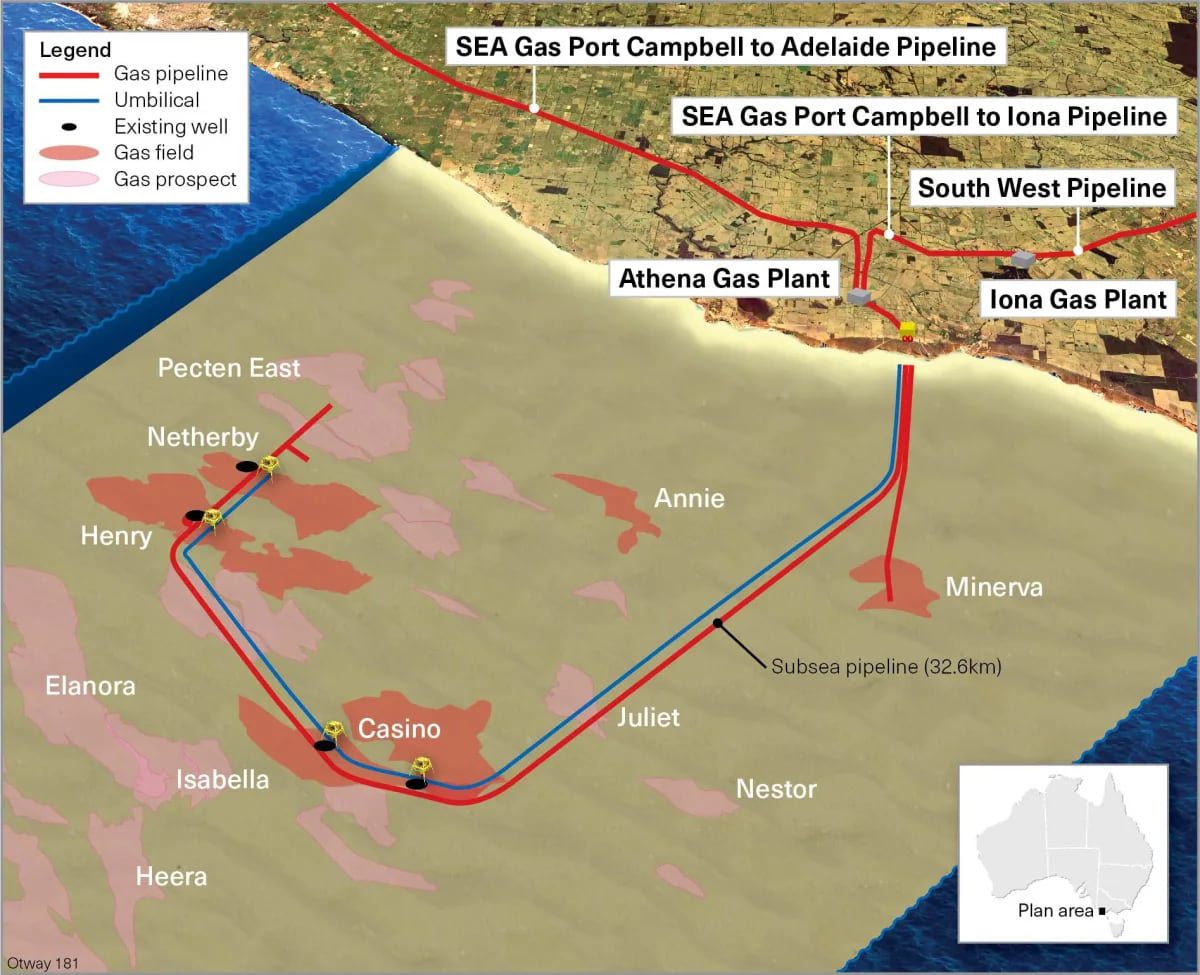
The Australian player holds an extensive portfolio of exploration and development prospects in the Otway and Gippsland basins, including undeveloped discovered resources such as the Annie and Manta gas fields, in proximity to its existing infrastructure
Thanks to this, the firm can move forward with field development activities, with the first gas planned for 2028. “Timely approvals and regulatory certainty for oil & gas projects remain critical given the length of investment cycle required
Otway Basin assets; Source: Amplitude Energy Amplitude Energy has received a production licence, VIC/L37, which covers the Annie field that was first discovered in 2019. Thanks to this, the firm can move forward with field development activities, with the first gas planned for 2028
Story 2Offshore EnergyMay 7, 2026

Giant Southeast Asian gas discovery passes test with flying colors

Signal strongSource-grounded

What happened

Eni disclosed that a DST at the Geliga‑1 discovery flowed at high rates and showed limited pressure drawdown, supporting estimates of very large in‑place gas and condensate volumes. The test results make fast‑track development options operationally credible and create a stronger commercial case for deepwater rigs, FPSO solutions and export works in the Kutei Basin. Watch whether developers publish accelerated FEED or option exercises for vessel and FPSO capacity

Buyer takeaway

High deliverability tests make developers more likely to accelerate procurement; buyers should assume increased competition for deepwater rigs and FPSO inventory

Cost / money

Directional upward pressure on dayrates and charter options is likely as developers prioritise schedule certainty over price

Supplier / commercial

Vessel and FPSO owners can tighten commitment terms, shorten quote validity and ask for reservation fees to block capacity

Safety / operations

Higher anticipated flowrates require reviewing flow assurance hardware, tie‑in ratings and HSE procedures to avoid last‑minute equipment mismatches

What to watch

Watch for shortened bid windows and reservation‑style commercial terms as developers move to secure vessels and long‑lead equipment

Key facts

  • DST demonstrated high deliverability, constrained by rig facilities
  • Well drilled in ~2,000m water and reached ~5,100m total depth
  • Discovery supports preliminary in‑place resource estimates that underpin fast‑track options

Source excerpts

This discovery is situated next to the undeveloped Gula gas discovery, estimated at approximately 2 tcf of gas in place and 75 million barrels of condensate
The Geliga discovery is interpreted to add to the value of this sale
A plan of development (POD) is currently being prepared and is expected to be submitted to the government of Indonesia in the coming weeks
Story 3Offshore EnergyMay 7, 2026

Murphy Oil edging closer to bringing online projects in US Gulf and Vietnam

Signal moderateSource-grounded

What happened

Murphy Oil has progressed multiple wells and appraisal work in Vietnam and hired PTSC Asia Pacific for certain project scope delivery, indicating sustained regional activity and contractor engagement. The use of local JV contractors for load‑out and charters makes yard and local service capacity a practical constraint for upcoming campaigns. Watch whether further contractor awards concentrate work on the same regional yards and create schedule bottlenecks

Buyer takeaway

Regional contractor engagement is operationally real—buyers must map yard capacity and vendor backlogs before finalising scopes

Cost / money

Local yard demand can push premium pricing for integration and load‑out windows; lack of alternate yards reduces negotiation leverage

Supplier / commercial

Regional contractors may seek longer‑term ties or scope bundling; expect conditional offers tied to schedule guarantees

Safety / operations

Concentrated local activity increases dependency on single‑yard HSE practices and certified crew availability—validate vendor HSE records and surge capacity

What to watch

Watch for single‑yard congestion and potential knock‑on delays if load‑out or FSO deliveries slip

Key facts

  • Progress on Hai Su Vang appraisal and Lac Da Vang platform work
  • PTSC Asia Pacific contracted for provision, charter, operation and maintenance on key assets
  • FSO load‑out and delivery milestones noted for third quarter delivery

Source excerpts

Following its decision to proceed with the project in 3Q 2023, the firm hired PTSC Asia Pacific, a joint venture between Yinson Production and PetroVietnam Technical Services Corporation (PTSC), for the provision, charter, operation, and maintenance of the FSO unit in December 2024. PTSC Mechanical & Construction completed the load-out of the Lac Da Vang – A (LDV-A) platform jacket and piles in September 2025
Home Fossil Energy Murphy Oil edging closer to bringing online projects in US Gulf and Vietnam May 7, 2026, by Houston-headquartered oil and gas company Murphy Oil has made progress across multiple onshore and offshore exploration and production projects, with two on track to achieve first oil this year in the Americas and Asia. Illustration; Source: Murphy Oil Murphy Oil has been busy with multiple activities across continents
The FSO is now ready to launch and is set to be delivered to the location in the third quarter of 2026 in line with the schedule. The project is on track for first oil in the fourth quarter of this year
Story 4Offshore EnergyMay 7, 2026

Seatrium and ABS join forces to advance maritime and offshore energy spheres

Signal limitedDirectional

What happened

Seatrium signed a memorandum of understanding with the classification society ABS to collaborate on technology, regulatory readiness and verification pathways. The MOU creates a structured channel for knowledge exchange that could affect how new designs and autonomous or decarbonisation technologies are certified in the region. This is an early signal—buyers should monitor whether the collaboration yields new classification requests that change pre‑qualification requirements

Buyer takeaway

This is a watch item: classification pathways can alter supplier readiness and add requalification cost or time to vendor offers

Cost / money

Additional classification or verification steps may increase supplier costs that could be passed through in bids

Supplier / commercial

Suppliers may need to invest in new testing or third‑party validation before being eligible, changing bid timelines and pricing posture

Safety / operations

Updated verification pathways are likely to improve long‑term safety but could create short‑term schedule risk if new certification is requested during procurement

What to watch

Limited signal: monitor tender pre‑quals for new ABS‑backed acceptance criteria or verification requests tied to the MOU

Key facts

  • Formal MOU to support technology assessment, regulatory readiness and verification pathways
  • Targets innovation areas including autonomous tech, decarbonisation, and harsh‑environment ap

Source excerpts

Aziz Merchant, Executive Vice President of Technology and New Product Development at Seatrium, highlighted: “Seatrium is committed to advancing future-ready offshore, marine, and energy solutions through technology leadership, new product development, and practical innovation. “Our collaboration with ABS under this MOU supports technology assessment, regulatory readiness, classification, and verification pathways of emerging solutions across new energies, maritime decarbonization, autonomous technologies, hars
“Our collaboration with ABS under this MOU supports technology assessment, regulatory readiness, classification, and verification pathways of emerging solutions across new energies, maritime decarbonization, autonomous technologies, harsh-environment applications, and advanced offshore infrastructure. ” The collaboration with Seatrium comes months after ABS granted an approval in principle (AiP) to Finland’s Deltamarin and China Merchants Heavy Industry (CMHI) for a versatile floating production, storage, and o
“Our collaboration with ABS under this MOU supports technology assessment, regulatory readiness, classification, and verification pathways of emerging solutions across new energies, maritime decarbonization, autonomous technologies, harsh-environment applications, and advanced offshore infrastructure

VP Snapshot

Executive Risk & Action View

Amplitude Energy’s production licence for the Annie field moves the project from permitting into development planning, creating a concrete future demand signal for APAC rig and subsea scopes.

Overall
61
Cost
79
Supply
25
Schedule
38
Compliance
35

Top signals

0-30dcost

Signal 1: Cost / money

Development planning for Annie moves budget appetite toward long‑lead procurement (rig charters, subsea trees, pipeline tie‑ins), reducing flexibility to delay purchases without risking schedule slippage.

30-180dcost

Signal 2: Cost / money

A high‑deliverability DST at Geliga makes developers more likely to prioritise fast‑track spend (rig time, FPSO options, export infrastructure), which can firm up dayrate and charter pricing in tenders.

Signal 4: Supplier / commercial

The Seatrium–ABS MOU could change acceptance pathways for new designs or equipment, forcing suppliers to seek additional classification steps that shift cost and timeline risk onto bidders.

30-180dschedule

Signal 3: Supplier / commercial

Local contractors and yards (evidenced by PTSC involvement) gain commercial leverage for fabrication and hook‑up work, which can shorten bid windows and increase conditional pricing for schedule certainty.

0-30dregulatory

Signal 5: Safety / operations

Moving an Australian license into development compresses readiness tasks (spares staging, qualified crews, permit alignment) and increases execution dependency on timely mobilisation.

30-180dsupplier

Signal 6: Safety / operations

High test flowrates from Geliga mean tie‑in and flow assurance plans must be validated against rated equipment and HSE procedures to avoid operational surprise at first production.

Recommended actions

ContractsDue 3d

Reconfirm availability windows and quote validity from preferred deepwater rig and FPSO suppliers.

Standardised supplier responses that record availability windows and reservation terms for comparison at award.

CategoryDue 3d

Request capacity and schedule statements from regional fabrication yards and PTSC (or equivalents) for hull, jacket and integration slots.

Verified yard capacity statements that inform whether scopes must be moved offshore or outsourced regionally.

ContractsDue 21d

Include mobilisation/reservation fee caps and explicit quote‑validity mechanics in open RFQs for long‑lead vessels and subsea procurement.

Draft RFQs that force suppliers to disclose mobilisation exposure and standardise fee mechanics for apples‑to‑apples comparison.

OpsDue 21d

Identify alternate suppliers for critical subsea spares (jumpers, BOP consumables) and document rapid re‑sourcing paths.

A validated secondary supplier list and re‑sourcing playbook to reduce potential standby risk during tie‑ins.

CategoryDue 60d

Develop a regional sourcing strategy for deepwater rig and FPSO availability that includes staged award options and supplier option lines.

A sourcing strategy that balances cost exposure with flexibility via staged awards and negotiated option mechanics.

LegalDue 60d

Work with Legal to add reservation fee caps and cancellation mechanics to master vessel and charter agreements.

Amended master agreements with defined reservation fee rules and cancellation mechanics to reduce ad‑hoc mobilisation premiums.

Risk register

RiskTriggerMitigation
Watch for suppliers to shorten quote validity or introduce reservation/cancellation fees on rigs, FPSO options and specialist vessels as development plans firm in Australia and Indonesia.Watch for suppliers to shorten quote validity or introduce reservation/cancellation fees on rigs, FPSO options and specialist vessels as development plans firm in Australia and Indonesia.Confirm exposure with category, contracts, and operations before the next supplier commitment.
Watch whether classification or verification requests tied to the Seatrium–ABS collaboration start appearing in tender pre‑quals, which could change bidders’ lead times and certification costs.Watch whether classification or verification requests tied to the Seatrium–ABS collaboration start appearing in tender pre‑quals, which could change bidders’ lead times and certification costs.Confirm exposure with category, contracts, and operations before the next supplier commitment.

CM Snapshot

Category Manager Decision Detail

Today's priorities

Reconfirm availability windows and quote validity from preferred deepwater rig and FPSO suppliers.

Act because the cited source changes the timing, capacity, or commercial assumptions behind the next sourcing decision.

Due 3d

high

CM move

Use this as the immediate supplier or contract action to move before the next sourcing gate.

Request capacity and schedule statements from regional fabrication yards and PTSC (or equivalents) for hull, jacket and integration slots.

Act because the cited source changes the timing, capacity, or commercial assumptions behind the next sourcing decision.

Due 3d

high

CM move

Use this as the immediate supplier or contract action to move before the next sourcing gate.

Include mobilisation/reservation fee caps and explicit quote‑validity mechanics in open RFQs for long‑lead vessels and subsea procurement.

because development interest in the Annie and Geliga areas increases supplier leverage and buyers need contract levers to limit ad‑hoc mobilisation premiums (Article 3).

Due 21d

high

CM move

Use this as the immediate supplier or contract action to move before the next sourcing gate.

Identify alternate suppliers for critical subsea spares (jumpers, BOP consumables) and document rapid re‑sourcing paths.

because compressed commissioning and first‑gas planning raise execution dependency on spares where a missing item can force costly standby or delay (Article 3).

Due 21d

high

CM move

Use this as the immediate supplier or contract action to move before the next sourcing gate.

Supplier radar

Offshore Energy

high

Observed supplier signal

Local contractors and yards (evidenced by PTSC involvement) gain commercial leverage for fabrication and hook‑up work, which can shorten bid windows and increase conditional pricing for schedule certainty.

Commercial implication

Local contractors and yards (evidenced by PTSC involvement) gain commercial leverage for fabrication and hook‑up work, which can shorten bid windows and increase conditional pricing for schedule certainty.

Next step: Validate the source-backed signal with incumbents and alternates before the next award or pricing decision.

Offshore Energy

high

Observed supplier signal

The Seatrium–ABS MOU could change acceptance pathways for new designs or equipment, forcing suppliers to seek additional classification steps that shift cost and timeline risk onto bidders.

Commercial implication

The Seatrium–ABS MOU could change acceptance pathways for new designs or equipment, forcing suppliers to seek additional classification steps that shift cost and timeline risk onto bidders.

Next step: Validate the source-backed signal with incumbents and alternates before the next award or pricing decision.

Negotiation levers

Reconfirm availability windows and quote validity from preferred deepwater rig and FPSO suppliers.

When to use: Act because the cited source changes the timing, capacity, or commercial assumptions behind the next sourcing decision.

Expected outcome: Standardised supplier responses that record availability windows and reservation terms for comparison at award.

Commercial mechanism to carry into the next supplier conversation

Request capacity and schedule statements from regional fabrication yards and PTSC (or equivalents) for hull, jacket and integration slots.

When to use: Act because the cited source changes the timing, capacity, or commercial assumptions behind the next sourcing decision.

Expected outcome: Verified yard capacity statements that inform whether scopes must be moved offshore or outsourced regionally.

Commercial mechanism to carry into the next supplier conversation

Include mobilisation/reservation fee caps and explicit quote‑validity mechanics in open RFQs for long‑lead vessels and subsea procurement.

When to use: because development interest in the Annie and Geliga areas increases supplier leverage and buyers need contract levers to limit ad‑hoc mobilisation premiums (Article 3).

Expected outcome: Draft RFQs that force suppliers to disclose mobilisation exposure and standardise fee mechanics for apples‑to‑apples comparison.

Commercial mechanism to carry into the next supplier conversation

Identify alternate suppliers for critical subsea spares (jumpers, BOP consumables) and document rapid re‑sourcing paths.

When to use: because compressed commissioning and first‑gas planning raise execution dependency on spares where a missing item can force costly standby or delay (Article 3).

Expected outcome: A validated secondary supplier list and re‑sourcing playbook to reduce potential standby risk during tie‑ins.

Commercial mechanism to carry into the next supplier conversation

Talking points

Amplitude Energy’s production licence for the Annie field moves the project from permitting into development planning, creating a concrete future demand signal for APAC rig and subsea scopes.
Eni’s Geliga drill‑stem test showed high deliverability, making fast‑track development options operationally realistic and likely to tighten demand for deepwater rigs, FPSO capacity and long‑lead subsea equipment in Indonesia.
Murphy Oil’s continued activity in Vietnam and use of regional contractors (PTSC Asia Pacific) indicates more follow‑on work in the Cuu Long and nearby basins, increasing local yard and service demand.
Seatrium’s memorandum with classification society ABS signals a push on regulatory readiness and new technology pathways that could affect supplier pre‑qualification and certification timelines in APAC.

Supplier radar

SupplierSignalImplicationNext stepConfidence
Offshore EnergyLocal contractors and yards (evidenced by PTSC involvement) gain commercial leverage for fabrication and hook‑up work, which can shorten bid windows and increase conditional pricing for schedule certainty.Local contractors and yards (evidenced by PTSC involvement) gain commercial leverage for fabrication and hook‑up work, which can shorten bid windows and increase conditional pricing for schedule certainty.Validate the source-backed signal with incumbents and alternates before the next award or pricing decision.high
Offshore EnergyThe Seatrium–ABS MOU could change acceptance pathways for new designs or equipment, forcing suppliers to seek additional classification steps that shift cost and timeline risk onto bidders.The Seatrium–ABS MOU could change acceptance pathways for new designs or equipment, forcing suppliers to seek additional classification steps that shift cost and timeline risk onto bidders.Validate the source-backed signal with incumbents and alternates before the next award or pricing decision.high

Negotiation levers

  • Reconfirm availability windows and quote validity from preferred deepwater rig and FPSO suppliers.Act because the cited source changes the timing, capacity, or commercial assumptions behind the next sourcing decision.Standardised supplier responses that record availability windows and reservation terms for comparison at award.

    high confidence

  • Request capacity and schedule statements from regional fabrication yards and PTSC (or equivalents) for hull, jacket and integration slots.Act because the cited source changes the timing, capacity, or commercial assumptions behind the next sourcing decision.Verified yard capacity statements that inform whether scopes must be moved offshore or outsourced regionally.

    high confidence

  • Include mobilisation/reservation fee caps and explicit quote‑validity mechanics in open RFQs for long‑lead vessels and subsea procurement.because development interest in the Annie and Geliga areas increases supplier leverage and buyers need contract levers to limit ad‑hoc mobilisation premiums (Article 3).Draft RFQs that force suppliers to disclose mobilisation exposure and standardise fee mechanics for apples‑to‑apples comparison.

    high confidence

  • Identify alternate suppliers for critical subsea spares (jumpers, BOP consumables) and document rapid re‑sourcing paths.because compressed commissioning and first‑gas planning raise execution dependency on spares where a missing item can force costly standby or delay (Article 3).A validated secondary supplier list and re‑sourcing playbook to reduce potential standby risk during tie‑ins.

    high confidence

What to do / What to watch

What to do now

  • Reconfirm availability windows and quote validity from preferred deepwater rig and FPSO suppliers.

    Why: Act because the cited source changes the timing, capacity, or commercial assumptions behind the next sourcing decision.

    Owner: Contracts

    Expected outcome: Standardised supplier responses that record availability windows and reservation terms for comparison at award.

    [1]
  • Request capacity and schedule statements from regional fabrication yards and PTSC (or equivalents) for hull, jacket and integration slots.

    Why: Act because the cited source changes the timing, capacity, or commercial assumptions behind the next sourcing decision.

    Owner: Category

    Expected outcome: Verified yard capacity statements that inform whether scopes must be moved offshore or outsourced regionally.

    [3]

Next few weeks

  • Include mobilisation/reservation fee caps and explicit quote‑validity mechanics in open RFQs for long‑lead vessels and subsea procurement.

    Why: because development interest in the Annie and Geliga areas increases supplier leverage and buyers need contract levers to limit ad‑hoc mobilisation premiums (Article 3).

    Owner: Contracts

    Expected outcome: Draft RFQs that force suppliers to disclose mobilisation exposure and standardise fee mechanics for apples‑to‑apples comparison.

    [4]
  • Identify alternate suppliers for critical subsea spares (jumpers, BOP consumables) and document rapid re‑sourcing paths.

    Why: because compressed commissioning and first‑gas planning raise execution dependency on spares where a missing item can force costly standby or delay (Article 3).

    Owner: Ops

    Expected outcome: A validated secondary supplier list and re‑sourcing playbook to reduce potential standby risk during tie‑ins.

    [4]

Longer view

  • Develop a regional sourcing strategy for deepwater rig and FPSO availability that includes staged award options and supplier option lines.

    Why: because the Geliga discovery and Australia development plans increase the likelihood of clustered demand for deepwater assets and staged commercial mechanisms preserve buyer fle...

    Owner: Category

    Expected outcome: A sourcing strategy that balances cost exposure with flexibility via staged awards and negotiated option mechanics.

    [1]
  • Work with Legal to add reservation fee caps and cancellation mechanics to master vessel and charter agreements.

    Why: because suppliers may increasingly add reservation or cancellation fees as projects firm, and pre‑negotiated caps protect project economics and limit pass‑through risk (Article 2).

    Owner: Legal

    Expected outcome: Amended master agreements with defined reservation fee rules and cancellation mechanics to reduce ad‑hoc mobilisation premiums.

    [1]

What to watch

  • Watch for suppliers to shorten quote validity or introduce reservation/cancellation fees on rigs, FPSO options and specialist vessels as development plans firm in Australia and Indonesia
  • Watch whether classification or verification requests tied to the Seatrium–ABS collaboration start appearing in tender pre‑quals, which could change bidders’ lead times and certification costs
  • Watch for suppliers to shorten quote validity or introduce reservation/cancellation fees on rigs, FPSO options and specialist vessels as development plans firm in Australia and Indonesia.: Watch for suppliers to shorten quote validity or introduce reservation/cancellation fees on rigs, FPSO options and specialist vessels as development plans firm in Australia and Indonesia
  • Watch whether classification or verification requests tied to the Seatrium–ABS collaboration start appearing in tender pre‑quals, which could change bidders’ lead times and certification costs.: Watch whether classification or verification requests tied to the Seatrium–ABS collaboration start appearing in tender pre‑quals, which could change bidders’ lead times and certification costs
  • Amplitude Energy’s production licence for the Annie field moves the project from permitting into development planning, creating a concrete future demand signal for APAC rig and subsea scopes
  • Eni’s Geliga drill‑stem test showed high deliverability, making fast‑track development options operationally realistic and likely to tighten demand for deepwater rigs, FPSO capacity and long‑lead subsea equipment in Indonesia
  • Murphy Oil’s continued activity in Vietnam and use of regional contractors (PTSC Asia Pacific) indicates more follow‑on work in the Cuu Long and nearby basins, increasing local yard and service demand
  • Seatrium’s memorandum with classification society ABS signals a push on regulatory readiness and new technology pathways that could affect supplier pre‑qualification and certification timelines in APAC

Market pulse

IndexLatestChangeAs of
WTI Crude (WTI)71.23 /bbl+0.00 (+0.00%)May 7, 2026, 10:04 PM
Brent Crude (BRENT)74.89 /bbl+0.00 (+0.00%)May 7, 2026, 10:04 PM
Natural Gas (NG)3.12 /MMBtu+0.00 (+0.00%)May 7, 2026, 10:04 PM
Transocean (RIG)4.5 +0.00 (+0.00%)May 7, 2026, 10:04 PM
Valaris (VAL)52 +0.00 (+0.00%)May 7, 2026, 10:04 PM
  • Natural Gas: Rising Southeast Asian gas developments increase the procurement importance of gas‑linked infrastructure and deepwater drilling availability
  • Valaris: Rig availability and dayrate posture will directly affect project execution costs as regional projects move from planning to contracting

Sources

Inline citations jump here. Expand a source to read the excerpt, the AI interpretation, and the original link.

[1] Giant Southeast Asian gas discovery passes test with flying colors

offshore-energy.biz · May 7, 2026

Expand

AI reading

Eni disclosed that a DST at the Geliga‑1 discovery flowed at high rates and showed limited pressure drawdown, supporting estimates of very large in‑place gas and condensate volumes. The test results make fast‑track development options operationally credible and create a stronger commercial case for deepwater rigs, FPSO solutions and export works in the Kutei Basin. Watch whether developers publish accelerated FEED or option exercises for vessel and FPSO capacity

Buyer takeaway

High deliverability tests make developers more likely to accelerate procurement; buyers should assume increased competition for deepwater rigs and FPSO inventory

Cost / money

Directional upward pressure on dayrates and charter options is likely as developers prioritise schedule certainty over price

Supplier / commercial

Vessel and FPSO owners can tighten commitment terms, shorten quote validity and ask for reservation fees to block capacity

Safety / operations

Higher anticipated flowrates require reviewing flow assurance hardware, tie‑in ratings and HSE procedures to avoid last‑minute equipment mismatches

What to watch

Watch for shortened bid windows and reservation‑style commercial terms as developers move to secure vessels and long‑lead equipment

Key facts

  • DST demonstrated high deliverability, constrained by rig facilities
  • Well drilled in ~2,000m water and reached ~5,100m total depth
  • Discovery supports preliminary in‑place resource estimates that underpin fast‑track options

Source excerpts

This discovery is situated next to the undeveloped Gula gas discovery, estimated at approximately 2 tcf of gas in place and 75 million barrels of condensate
The Geliga discovery is interpreted to add to the value of this sale
A plan of development (POD) is currently being prepared and is expected to be submitted to the government of Indonesia in the coming weeks

Used in this brief

  • Next 72 hours — Reconfirm availability windows and quote validity from preferred deepwater rig and FPSO suppliers.. Rationale: Act because the cited source changes the timing, capacity, or commercial assumptions behind the next sourcing decision.. Owner: Contracts. KPI: Standardised supplier responses that record availability windows and reservation terms for comparison at award
  • Next quarter — Develop a regional sourcing strategy for deepwater rig and FPSO availability that includes staged award options and supplier option lines.. Rationale: because the Geliga discovery and Australia development plans increase the likelihood of clustered demand for deepwater assets and staged commercial mechanisms preserve buyer fle.... Owner: Category. KPI: A sourcing strategy that balances cost exposure with flexibility via staged awards and negotiated option mechanics
  • Next quarter — Work with Legal to add reservation fee caps and cancellation mechanics to master vessel and charter agreements.. Rationale: because suppliers may increasingly add reservation or cancellation fees as projects firm, and pre‑negotiated caps protect project economics and limit pass‑through risk (Article 2).. Owner: Legal. KPI: Amended master agreements with defined reservation fee rules and cancellation mechanics to reduce ad‑hoc mobilisation premiums
Open original source

[2] Seatrium and ABS join forces to advance maritime and offshore energy spheres

offshore-energy.biz · May 7, 2026

Expand

AI reading

Seatrium signed a memorandum of understanding with the classification society ABS to collaborate on technology, regulatory readiness and verification pathways. The MOU creates a structured channel for knowledge exchange that could affect how new designs and autonomous or decarbonisation technologies are certified in the region. This is an early signal—buyers should monitor whether the collaboration yields new classification requests that change pre‑qualification requirements

Buyer takeaway

This is a watch item: classification pathways can alter supplier readiness and add requalification cost or time to vendor offers

Cost / money

Additional classification or verification steps may increase supplier costs that could be passed through in bids

Supplier / commercial

Suppliers may need to invest in new testing or third‑party validation before being eligible, changing bid timelines and pricing posture

Safety / operations

Updated verification pathways are likely to improve long‑term safety but could create short‑term schedule risk if new certification is requested during procurement

What to watch

Limited signal: monitor tender pre‑quals for new ABS‑backed acceptance criteria or verification requests tied to the MOU

Key facts

  • Formal MOU to support technology assessment, regulatory readiness and verification pathways
  • Targets innovation areas including autonomous tech, decarbonisation, and harsh‑environment ap

Source excerpts

Aziz Merchant, Executive Vice President of Technology and New Product Development at Seatrium, highlighted: “Seatrium is committed to advancing future-ready offshore, marine, and energy solutions through technology leadership, new product development, and practical innovation. “Our collaboration with ABS under this MOU supports technology assessment, regulatory readiness, classification, and verification pathways of emerging solutions across new energies, maritime decarbonization, autonomous technologies, hars
“Our collaboration with ABS under this MOU supports technology assessment, regulatory readiness, classification, and verification pathways of emerging solutions across new energies, maritime decarbonization, autonomous technologies, harsh-environment applications, and advanced offshore infrastructure. ” The collaboration with Seatrium comes months after ABS granted an approval in principle (AiP) to Finland’s Deltamarin and China Merchants Heavy Industry (CMHI) for a versatile floating production, storage, and o
“Our collaboration with ABS under this MOU supports technology assessment, regulatory readiness, classification, and verification pathways of emerging solutions across new energies, maritime decarbonization, autonomous technologies, harsh-environment applications, and advanced offshore infrastructure

Used in this brief

  • Amplitude Energy’s production licence for the Annie field moves the project from permitting into development planning, creating a concrete future demand signal for APAC rig and subsea scopes. Eni’s Geliga drill‑stem test showed high deliverability, making fast‑track development options operationally realistic and likely to tighten demand for deepwater rigs, FPSO capacity and long‑lead subsea equipment in Indonesia. Murphy Oil’s continued activity in Vietnam and use of regional contractors (PTSC Asia Pacific) indicates more follow‑on work in the Cuu Long and nearby basins, increasing local yard and service demand. Seatrium’s memorandum with classification society ABS signals a push on regulatory readiness and new technology pathways that could affect supplier pre‑qualification and certification timelines in APAC
  • Supplier / commercial: The Seatrium–ABS MOU could change acceptance pathways for new designs or equipment, forcing suppliers to seek additional classification steps that shift cost and timeline risk onto bidders
  • Watch whether classification or verification requests tied to the Seatrium–ABS collaboration start appearing in tender pre‑quals, which could change bidders’ lead times and certification costs
Open original source

[3] Murphy Oil edging closer to bringing online projects in US Gulf and Vietnam

offshore-energy.biz · May 7, 2026

Expand

AI reading

Murphy Oil has progressed multiple wells and appraisal work in Vietnam and hired PTSC Asia Pacific for certain project scope delivery, indicating sustained regional activity and contractor engagement. The use of local JV contractors for load‑out and charters makes yard and local service capacity a practical constraint for upcoming campaigns. Watch whether further contractor awards concentrate work on the same regional yards and create schedule bottlenecks

Buyer takeaway

Regional contractor engagement is operationally real—buyers must map yard capacity and vendor backlogs before finalising scopes

Cost / money

Local yard demand can push premium pricing for integration and load‑out windows; lack of alternate yards reduces negotiation leverage

Supplier / commercial

Regional contractors may seek longer‑term ties or scope bundling; expect conditional offers tied to schedule guarantees

Safety / operations

Concentrated local activity increases dependency on single‑yard HSE practices and certified crew availability—validate vendor HSE records and surge capacity

What to watch

Watch for single‑yard congestion and potential knock‑on delays if load‑out or FSO deliveries slip

Key facts

  • Progress on Hai Su Vang appraisal and Lac Da Vang platform work
  • PTSC Asia Pacific contracted for provision, charter, operation and maintenance on key assets
  • FSO load‑out and delivery milestones noted for third quarter delivery

Source excerpts

Following its decision to proceed with the project in 3Q 2023, the firm hired PTSC Asia Pacific, a joint venture between Yinson Production and PetroVietnam Technical Services Corporation (PTSC), for the provision, charter, operation, and maintenance of the FSO unit in December 2024. PTSC Mechanical & Construction completed the load-out of the Lac Da Vang – A (LDV-A) platform jacket and piles in September 2025
Home Fossil Energy Murphy Oil edging closer to bringing online projects in US Gulf and Vietnam May 7, 2026, by Houston-headquartered oil and gas company Murphy Oil has made progress across multiple onshore and offshore exploration and production projects, with two on track to achieve first oil this year in the Americas and Asia. Illustration; Source: Murphy Oil Murphy Oil has been busy with multiple activities across continents
The FSO is now ready to launch and is set to be delivered to the location in the third quarter of 2026 in line with the schedule. The project is on track for first oil in the fourth quarter of this year

Used in this brief

  • Next 72 hours — Request capacity and schedule statements from regional fabrication yards and PTSC (or equivalents) for hull, jacket and integration slots.. Rationale: Act because the cited source changes the timing, capacity, or commercial assumptions behind the next sourcing decision.. Owner: Category. KPI: Verified yard capacity statements that inform whether scopes must be moved offshore or outsourced regionally
  • Murphy Oil has progressed multiple wells and appraisal work in Vietnam and hired PTSC Asia Pacific for certain project scope delivery, indicating sustained regional activity and contractor engagement. The use of local JV contractors for load‑out and charters makes yard and local service capacity a practical constraint for upcoming campaigns. Watch whether further contractor awards concentrate work on the same regional yards and create schedule bottlenecks
  • Buyer bottom line: active project progression in Vietnam raises demand on local yards and regional service suppliers—buyers should validate yard schedules and local contractor capacity early
Open original source

[4] Australian offshore production license paving the way for first gas in 2028

offshore-energy.biz · May 7, 2026

Expand

AI reading

Amplitude Energy received a production licence for the Annie field off Australia, enabling the company to move from planning into field development activities. The licence clears the project to progress toward first gas timing and formal development workstreams, creating realistic sourcing needs for rigs, subsea scopes and local integration. Watch whether permitting and timing hold as the firm aligns detailed EPC and procurement steps

Buyer takeaway

Treat this as a real development timeline: planners should convert tentative requirements into procurement windows and shortlist suppliers now rather than later

Cost / money

Expect shifting spend toward long‑lead items (rig time, subsea equipment, pipeline tie‑ins) which reduces buyer flexibility to delay purchases without schedule risk

Supplier / commercial

Local yards and service suppliers can claim closer commitment and may narrow quote windows or request reservation fees as contracts move from permit to award

Safety / operations

Development pushes readiness tasks (spares, certified crews, permits); failure to align these increases standby and execution risk during commissioning

What to watch

Watch for suppliers to add reservation fees and shorten quote validity once development milestones are published

Key facts

  • Production licence granted for VIC/L37 covering the Annie field
  • Project now cleared to progress field development activity
  • Annie production intended for the east coast domestic market

Source excerpts

The Australian player holds an extensive portfolio of exploration and development prospects in the Otway and Gippsland basins, including undeveloped discovered resources such as the Annie and Manta gas fields, in proximity to its existing infrastructure
Thanks to this, the firm can move forward with field development activities, with the first gas planned for 2028. “Timely approvals and regulatory certainty for oil & gas projects remain critical given the length of investment cycle required
Otway Basin assets; Source: Amplitude Energy Amplitude Energy has received a production licence, VIC/L37, which covers the Annie field that was first discovered in 2019. Thanks to this, the firm can move forward with field development activities, with the first gas planned for 2028

Used in this brief

  • Next 2-4 weeks — Include mobilisation/reservation fee caps and explicit quote‑validity mechanics in open RFQs for long‑lead vessels and subsea procurement.. Rationale: because development interest in the Annie and Geliga areas increases supplier leverage and buyers need contract levers to limit ad‑hoc mobilisation premiums (Article 3).. Owner: Contracts. KPI: Draft RFQs that force suppliers to disclose mobilisation exposure and standardise fee mechanics for apples‑to‑apples comparison
  • Next 2-4 weeks — Identify alternate suppliers for critical subsea spares (jumpers, BOP consumables) and document rapid re‑sourcing paths.. Rationale: because compressed commissioning and first‑gas planning raise execution dependency on spares where a missing item can force costly standby or delay (Article 3).. Owner: Ops. KPI: A validated secondary supplier list and re‑sourcing playbook to reduce potential standby risk during tie‑ins
  • Amplitude Energy received a production licence for the Annie field off Australia, enabling the company to move from planning into field development activities. The licence clears the project to progress toward first gas timing and formal development workstreams, creating realistic sourcing needs for rigs, subsea scopes and local integration. Watch whether permitting and timing hold as the firm aligns detailed EPC and procurement steps
Open original source

[5] Natural Gas

finance.yahoo.com · n.d.

Expand

[6] Valaris

finance.yahoo.com · n.d.

Expand