Projects (EPC/EPCM & Construction) · Australia (Perth)

Secure Long-lead Procurement for Australian Annie Licence and APAC Gas

Published May 8, 2026, 6:00 AM AWSTAPACFull category signal
Ask AI
Australian offshore production license paving the way for first gas in 2028

In 60 seconds

Top move

Amplitude Energy’s Annie production licence moves the project from planning to execution planning, making long‑lead items and mobilisation windows procurement priorities for APAC EPC schedules

Key takeaways

  • Amplitude Energy’s Annie production licence moves the project from planning to execution planning, making long‑lead items and mobilisation windows procurement priorities for APAC EPC schedules.[4]
  • ENI’s drill‑stem test showing strong deliverability makes subsea and gas‑processing kit credible future demand drivers; procurement should flag long‑lead qualification and campaign options while timing remains operator‑dependent.[1]
  • Murphy’s advancing Vietnam works and contracted FSO services tighten regional demand for fabrication yards, charters and installation slots — buyers must validate slot availability rather than assume capacity.[3]
  • Zeeco’s announced acquisition of a local vapour‑control specialist reduces vendor choice in Australia during integration; this raises the importance of locking spare‑parts access and service levels in contracts.[2]
  • A survey vessel engine‑room fire traced to substitute bearings underlines a concrete procurement control: enforce OEM traceability and formal overhaul acceptance for critical rotating equipment.[5]

What changed since last run

  • Added coverage: Amplitude Energy’s Annie production licence (article 5) — converts a local asset into development planning that creates concrete long‑lead procurement exposure.
  • Added coverage: ENI drill‑stem test results (article 6) — strengthens the forward demand signal for long‑lead subsea and gas‑processing kit in APAC.
  • Added coverage: Zeeco’s acquisition of Oil & Gas Technologies (article 9) — changes specialist supplier structure for terminal vapour‑control kit in Australia.

Key facts

  • Production licence awarded for Annie (VIC/L37)
  • First gas planned for 2028 under current operator planning
  • Field located roughly 30 km offshore in 60–70 m water depth
  • Drill‑stem test demonstrated high deliverability despite rig constraints
  • Discovery located in the Kutei Basin, near existing Indonesian gas hubs
  • Results support multi‑hub development concepts and processing options

Why it matters

Amplitude Energy’s Annie production licence moves the project from planning to execution planning, making long‑lead items and mobilisation windows procurement priorities for APAC EPC schedules. ENI’s drill‑stem test showing strong deliverability makes subsea and gas‑processing kit credible future demand drivers; procurement should flag long‑lead qualification and campaign options while timing remains operator‑dependent. Murphy’s advancing Vietnam works and contracted FSO services tighten regional demand for fabrication yards, charters and installation slots — buyers must validate slot availability rather than assume capacity. Zeeco’s announced acquisition of a local vapour‑control specialist reduces vendor choice in Australia during integration; this raises the importance of locking spare‑parts access and service levels in contracts

Cost / money

  • Annie’s licence moves spend from contingent exploration budgets into committed EPC long‑lead and mobilisation lines that procurement must quantify and fund‑plan for.[4]
  • High‑deliverability DST results make large subsea and processing module orders more plausible, which can push mobilisation premiums and extend lead times for specialised equipment.[1]
  • Local consolidation via Zeeco’s acquisition risks firmer pricing and spare‑parts pass‑throughs for terminal equipment unless buyers lock access and pricing through contracts.[2]

Supplier / commercial

  • Murphy’s use of regional JV contractors for FSO and platform works signals suppliers will pursue bundled scopes and priority scheduling; buyers should confirm substitution and hold‑terms up front.[3]
  • Suppliers responding to credible multi‑hub developments may shorten quote validity or seek mobilisation deposits for long‑lead items — factor these behaviours into bid evaluation and budgeting.[1]
  • During the Zeeco–OGT integration, vendors can reprice service and spare‑parts policies; insist on SLAs, lead‑time guarantees and transition commitments in award documents.[2]

Safety / operations

  • The Kommandor Susan incident shows that unverified substitute parts can cause total power loss and HSE incidents; require OEM traceability, overhaul records and acceptance testing for critical gensets and bearings.[5]
  • Deepwater, high‑deliverability wells increase commissioning complexity for subsea and processing scopes; include independent third‑party verification and clear SIMOPS handover milestones in contracts.[1]

What to watch

  • Watch for specialist suppliers to shorten quote holds or require mobilisation deposits as they integrate acquisitions or prioritise local campaigns — this reduces buyer flexibility and may change tender timing.[2]

Top stories

Story 1Offshore EnergyMay 7, 2026

Australian offshore production license paving the way for first gas in 2028

Signal strongSource-grounded

What happened

Amplitude Energy received a production licence for the Annie offshore gas field, allowing the company to move into field development planning. The licence makes long‑lead procurement and mobilisation windows operationally relevant as the project transitions from exploration to execution planning; watch for operator procurement schedules and vendor commitments to appear in project notices

Buyer takeaway

Treat the licence as a procurement trigger: expect long‑lead orders and mobilisation planning to enter tender cycles

Cost / money

Cost exposure shifts from exploration contingency into EPC and mobilisation budgets as development planning proceeds

Supplier / commercial

Buyers will need to lock long‑lead vendors and define mobilisation/substitution rules to avoid schedule and cost slippage

Safety / operations

Mobilisation and offshore work require explicit SIMOPS planning and verified HSE readiness in supplier contracts

What to watch

Watch for early vendor hold requests, deposit demands or minimum campaign clauses as suppliers prioritise local work

Key facts

  • Production licence awarded for Annie (VIC/L37)
  • First gas planned for 2028 under current operator planning
  • Field located roughly 30 km offshore in 60–70 m water depth

Source excerpts

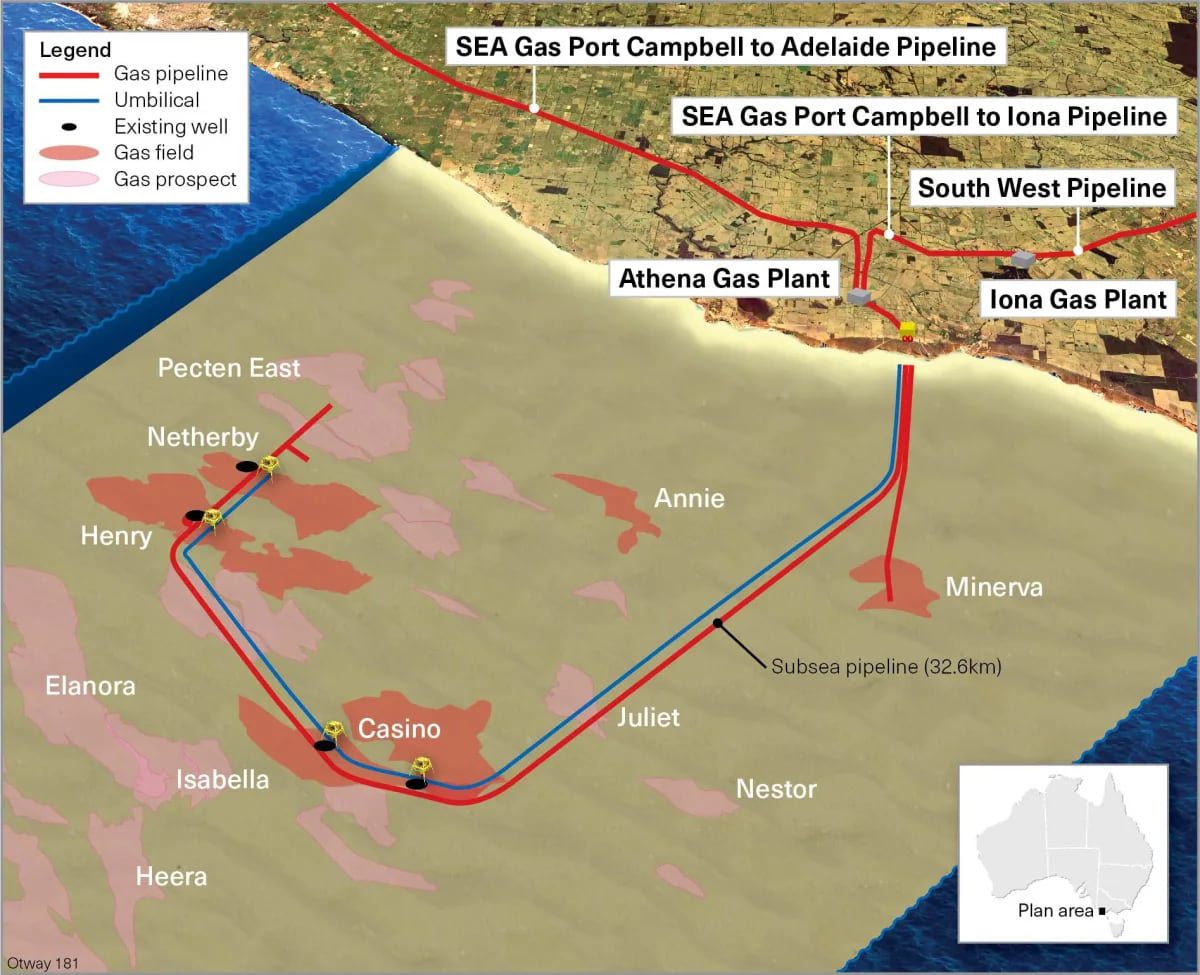
Otway Basin assets; Source: Amplitude Energy Amplitude Energy has received a production licence, VIC/L37, which covers the Annie field that was first discovered in 2019
Otway Basin assets; Source: Amplitude Energy Amplitude Energy has received a production licence, VIC/L37, which covers the Annie field that was first discovered in 2019. Thanks to this, the firm can move forward with field development activities, with the first gas planned for 2028
Home Fossil Energy Australian offshore production license paving the way for first gas in 2028 May 7, 2026, by Amplitude Energy (formerly Cooper Energy), an Australian gas production company focused on supplying the Southeast domestic gas market, has obtained a production license, which encompasses an undeveloped gas discovery in the Otway Basin off the coast of Victoria, Australia. Otway Basin assets; Source: Amplitude Energy Amplitude Energy has received a production licence, VIC/L37, which covers the Annie f
Story 2Offshore EnergyMay 7, 2026

Giant Southeast Asian gas discovery passes test with flying colors

Signal strongSource-grounded

What happened

ENI released drill‑stem test results for a major gas discovery offshore Indonesia that showed high deliverability with limited pressure drawdown. The DST flowed at rates constrained by rig facilities, supporting credible development options that could drive sizable subsea and processing tenders; watch operator plan of development (POD) filings and farm‑down activity to gauge procurement timing

Buyer takeaway

Treat this as a material future demand indicator for subsea and gas‑processing equipment, but base procurement moves on operator planning signals

Cost / money

Large discoveries can pull forward demand for long‑lead subsea kit and processing modules, increasing competition and mobilisation premiums

Supplier / commercial

Use early supplier engagement to pre‑qualify vendors for long‑lead items and to explore framework or campaign agreements

Safety / operations

Deepwater operations and high‑deliverability wells increase technical and HSE complexity; include third‑party verification in scope

What to watch

Watch operator PODs and farm‑down announcements to determine actual procurement windows and local content needs

Key facts

  • Drill‑stem test demonstrated high deliverability despite rig constraints
  • Discovery located in the Kutei Basin, near existing Indonesian gas hubs
  • Results support multi‑hub development concepts and processing options

Source excerpts

This discovery is situated next to the undeveloped Gula gas discovery, estimated at approximately 2 tcf of gas in place and 75 million barrels of condensate
Home Fossil Energy Giant Southeast Asian gas discovery passes test with flying colors May 7, 2026, by Italy’s energy giant Eni has revealed the results of a drill stem test (DST) that was carried out for its recent natural gas discovery off the coast of Indonesia, which confirmed reservoir productivity, strengthening the case for a third Kutei Basin hub in the Southeast Asian country. Jangkrik-01; Source: Eni Eni unveiled its gas discovery at the Geliga‑1 exploration well in April 2026
The Italian energy giant has now disclosed that the discovery was tested, with DST results demonstrating high deliverability, further fortifying the strategic potential of Indonesia’s Kutei Basin and supporting accelerated development options leveraging existing and planned infrastructure. Related Article The reservoir flowed at rates of up to 60 million standard cubic feet per day (scfd) during the test, constrained by the rig facilities, and with very limited pressure drawdown, said to confirm excellent deli
Story 3Offshore EnergyMay 7, 2026

Murphy Oil edging closer to bringing online projects in US Gulf and Vietnam

Signal strongSource-grounded

What happened

Murphy Oil reported progress on US Gulf and Vietnam projects and has engaged PTSC Asia Pacific for FSO charter, operation and maintenance services. The contracting and scheduled delivery activity creates firm demand for regional fabrication yards, charter vessels and installation services; watch yard bookings and vessel slot announcements that could affect APAC project timing

Buyer takeaway

Treat Murphy’s schedule as a concrete demand signal for marine and fabrication capacity in APAC; confirm slot and charter availability now

Cost / money

Competing regional projects increase likelihood of mobilisation premiums, higher dayrates or longer lead times for marine assets

Supplier / commercial

Regional JV contractors may take prime scope; buyers should verify yard capacity, scope and substitution rights up front

Safety / operations

Tight delivery windows increase SIMOPS risk; require documented HSE and commissioning milestones in supplier contracts

What to watch

Watch vessel and yard owners for shortened quote validity or prioritisation of larger campaigns over single mobilisations

Key facts

  • Murphy progressing multiple wells and field development approvals in Vietnam
  • FSO hardware and platform works advancing with PTSC Asia Pacific contracted
  • Regional fabrication and marine assets will be competitively demanded

Source excerpts

The firm made inroads in the construction of a floating storage and offloading (FSO) vessel in the Southeast Asian country. The FSO is now ready to launch and is set to be delivered to the location in the third quarter of 2026 in line with the schedule
The project is on track for first oil in the fourth quarter of this year. Following its decision to proceed with the project in 3Q 2023, the firm hired PTSC Asia Pacific, a joint venture between Yinson Production and PetroVietnam Technical Services Corporation (PTSC), for the provision, charter, operation, and maintenance of the FSO unit in December 2024
The FSO is now ready to launch and is set to be delivered to the location in the third quarter of 2026 in line with the schedule
Story 4Hydrocarbon EngineeringMay 7, 2026

Zeeco to acquire Oil & Gas Technologies

Signal moderateSource-grounded

What happened

Zeeco announced a definitive agreement to acquire Australian vapour‑control specialist Oil & Gas Technologies, signalling consolidation in a specialist terminal equipment niche. The deal matters operationally because it can change spare‑parts policies, warranty handling and lead‑time commitments for Australian terminal work; watch how the combined business publishes integration and service plans

Buyer takeaway

Expect stronger single‑vendor capability but also reduced competitive pressure in tenders for terminal equipment; plan to lock spares and service terms

Cost / money

Consolidation can lead to firmer pricing for specialist kit and spare‑parts unless managed via framework agreements

Supplier / commercial

Negotiate clear SLAs, lead‑time guarantees and spare‑parts access during the vendor integration period

Safety / operations

Ensure continuity of service and approved spare‑parts stocks during ownership transition to avoid operational gaps

What to watch

Watch for changes in warranty, spare‑parts pricing, or lead‑time policies as the businesses integrate

Key facts

  • an Australian vapour‑control and terminal systems provider
  • OGT has an established local reputation for vapour recovery and terminal loading systems
  • Further transaction details and next steps to be announced by Zeeco

Source excerpts

More information about the acquisition and next steps will be shared at a later date
Published by, Editorial Assistant Hydrocarbon Engineering, Thursday, 07 May 2026 09:00 Zeeco has entered into a definitive agreement to acquire Oil & Gas Technologies, an Australia-based provider of vapour control and related equipment for the downstream liquid fuels storage and energy sector. Oil and Gas Technologies has built a strong reputation in the Australian market for vapour recovery systems, terminal loading systems, and supporting solutions and services
Published by, Editorial Assistant Hydrocarbon Engineering, Thursday, 07 May 2026 09:00 Zeeco has entered into a definitive agreement to acquire Oil & Gas Technologies, an Australia-based provider of vapour control and related equipment for the downstream liquid fuels storage and energy sector
Story 5Offshore EnergyMay 7, 2026

Substitute engine parts cause of fire on board UK survey vessel, report says

Signal strongSource-grounded

What happened

An investigation found a UK survey vessel engine failure and subsequent fire were caused by premature wear of substitute bearings fitted during a prior overhaul. The failure caused a total power blackout and loss of propulsion, demonstrating how a single unverified part can create major operational disruption; watch supplier proposals that rely on non‑OEM or undocumented components and enforce traceability for critical spares

Buyer takeaway

Treat rotating equipment spares and overhaul work as high‑risk procurement items requiring OEM traceability and documented acceptance

Cost / money

Failure of a critical component can create outsized mobilisation and remediation costs compared with the savings from substitute parts

Supplier / commercial

Include acceptance tests, traceability requirements and replacement obligations in maintenance and overhaul contracts

Safety / operations

Unverified parts can lead to total power loss and HSE incidents; set mandatory acceptance testing for engine‑room systems

What to watch

Watch supplier‑proposed alternatives to OEM parts and insist on documented approvals for any deviations

Key facts

  • Incident: engine‑room fire and total power blackout on survey vessel Kommandor Susan
  • Root cause: premature wear of bearings fitted during a 2019 major overhaul
  • Operational impact: vessel lost propulsion and experienced drifting before limited propulsion

Source excerpts

Kommandor Susan
Home Subsea Substitute engine parts cause of fire on board UK survey vessel, report says May 7, 2026, by The diesel generator engine failure that sparked an engine room fire and total power blackout on board the UK-flagged site investigation vessel Kommandor Susan in January 2025 was caused by substitute engine components installed during a 2019 overhaul, the investigation report issued by the UK government organization Marine Accident Investigation Branch (MAIB) states
The investigation found that the engine failure was caused by premature wear of bearings fitted during a major overhaul in 2019

VP Snapshot

Executive Risk & Action View

Amplitude Energy’s Annie production licence moves the project from planning to execution planning, making long‑lead items and mobilisation windows procurement priorities for APAC EPC schedules.

Overall
66
Cost
79
Supply
25
Schedule
38
Compliance
15

Top signals

30-180dcost

Signal 1: Cost / money

Annie’s licence moves spend from contingent exploration budgets into committed EPC long‑lead and mobilisation lines that procurement must quantify and fund‑plan for.

Signal 2: Cost / money

High‑deliverability DST results make large subsea and processing module orders more plausible, which can push mobilisation premiums and extend lead times for specialised equipment.

Signal 3: Cost / money

Local consolidation via Zeeco’s acquisition risks firmer pricing and spare‑parts pass‑throughs for terminal equipment unless buyers lock access and pricing through contracts.

30-180dcommercial

Signal 4: Supplier / commercial

Murphy’s use of regional JV contractors for FSO and platform works signals suppliers will pursue bundled scopes and priority scheduling; buyers should confirm substitution and hold‑terms up front.

Signal 5: Supplier / commercial

Suppliers responding to credible multi‑hub developments may shorten quote validity or seek mobilisation deposits for long‑lead items — factor these behaviours into bid evaluation and budgeting.

Signal 6: Supplier / commercial

During the Zeeco–OGT integration, vendors can reprice service and spare‑parts policies; insist on SLAs, lead‑time guarantees and transition commitments in award documents.

Recommended actions

CategoryDue 3d

Request a validated long‑lead and mobilisation register from project teams for any scopes tied to the Annie licence.

Validated register of long‑lead items, mobilisation dependencies and priority procurement sequencing.

OpsDue 3d

Direct Operations to produce OEM traceability and overhaul records for critical rotating equipment and generators across active projects and chartered vessels.

Documented traceability for critical spares and a shortlist of parts requiring OEM replacement or formal acceptance.

ContractsDue 21d

Have Contracts update RFQ/SOW templates to require explicit quote‑validity windows, mobilisation substitution clauses, spare‑parts access and SLA transition commitments during v...

Revised tender templates that lock in mobilisation terms, spare‑parts access and vendor transition obligations.

CategoryDue 21d

Run a market check with regional fabrication yards, vessel owners and FSO providers to capture current availability, likely delivery windows and any deposit/hold practices.

Market snapshot of asset availability and a short list of suppliers willing to hold slot terms under acceptable commercial conditions.

ContractsDue 60d

Prepare alternate‑supplier shortlists and pre‑negotiated framework agreements for terminal vapour‑control equipment and long‑lead subsea items, including firm spare‑parts commit...

Operational alternate supplier list and framework clauses ready for inclusion in upcoming EPC and O&M tenders.

OpsDue 60d

Update Ops acceptance and commissioning procedures to mandate third‑party verification for deepwater subsea tie‑ins and gas‑processing module commissioning.

Commissioning templates that include independent verification steps and reduced rework at handover.

Risk register

RiskTriggerMitigation
Watch for specialist suppliers to shorten quote holds or require mobilisation deposits as they integrate acquisitions or prioritise local campaigns — this reduces buyer flexibility and may change tender timing.Watch for specialist suppliers to shorten quote holds or require mobilisation deposits as they integrate acquisitions or prioritise local campaigns — this reduces buyer flexibility and may change tender timing.Confirm exposure with category, contracts, and operations before the next supplier commitment.

CM Snapshot

Category Manager Decision Detail

Today's priorities

Request a validated long‑lead and mobilisation register from project teams for any scopes tied to the Annie licence.

Do this because the production licence converts planning into committed procurement and you need to identify which long‑lead items and mobilisation dependencies must be prioriti...

Due 3d

high

CM move

Use this as the immediate supplier or contract action to move before the next sourcing gate.

Direct Operations to produce OEM traceability and overhaul records for critical rotating equipment and generators across active projects and chartered vessels.

Do this because the vessel engine‑room fire investigation showed substitute bearings can cause total power loss, and immediate verification reduces mobilisation and HSE risk.

Due 3d

high

CM move

Use this as the immediate supplier or contract action to move before the next sourcing gate.

Have Contracts update RFQ/SOW templates to require explicit quote‑validity windows, mobilisation substitution clauses, spare‑parts access and SLA transition commitments during v...

Do this because consolidation and rising regional demand can shorten hold periods and shift costs into mobilisation premiums, and contractual clarity preserves buyer leverage du...

Due 21d

high

CM move

Use this as the immediate supplier or contract action to move before the next sourcing gate.

Run a market check with regional fabrication yards, vessel owners and FSO providers to capture current availability, likely delivery windows and any deposit/hold practices.

Do this because Murphy’s FSO schedule and nearby developments will compete for the same fabrication and marine assets and buyers need up‑to‑date slot information before tendering.

Due 21d

high

CM move

Use this as the immediate supplier or contract action to move before the next sourcing gate.

Supplier radar

Offshore Energy

high

Observed supplier signal

Murphy’s use of regional JV contractors for FSO and platform works signals suppliers will pursue bundled scopes and priority scheduling; buyers should confirm substitution and hold‑terms up front.

Commercial implication

Murphy’s use of regional JV contractors for FSO and platform works signals suppliers will pursue bundled scopes and priority scheduling; buyers should confirm substitution and hold‑terms up front.

Next step: Validate the source-backed signal with incumbents and alternates before the next award or pricing decision.

Offshore Energy

high

Observed supplier signal

Suppliers responding to credible multi‑hub developments may shorten quote validity or seek mobilisation deposits for long‑lead items — factor these behaviours into bid evaluation and budgeting.

Commercial implication

Suppliers responding to credible multi‑hub developments may shorten quote validity or seek mobilisation deposits for long‑lead items — factor these behaviours into bid evaluation and budgeting.

Next step: Validate the source-backed signal with incumbents and alternates before the next award or pricing decision.

Hydrocarbon Engineering

high

Observed supplier signal

During the Zeeco–OGT integration, vendors can reprice service and spare‑parts policies; insist on SLAs, lead‑time guarantees and transition commitments in award documents.

Commercial implication

During the Zeeco–OGT integration, vendors can reprice service and spare‑parts policies; insist on SLAs, lead‑time guarantees and transition commitments in award documents.

Next step: Validate the source-backed signal with incumbents and alternates before the next award or pricing decision.

Negotiation levers

Request a validated long‑lead and mobilisation register from project teams for any scopes tied to the Annie licence.

When to use: Do this because the production licence converts planning into committed procurement and you need to identify which long‑lead items and mobilisation dependencies must be prioriti...

Expected outcome: Validated register of long‑lead items, mobilisation dependencies and priority procurement sequencing.

Commercial mechanism to carry into the next supplier conversation

Direct Operations to produce OEM traceability and overhaul records for critical rotating equipment and generators across active projects and chartered vessels.

When to use: Do this because the vessel engine‑room fire investigation showed substitute bearings can cause total power loss, and immediate verification reduces mobilisation and HSE risk.

Expected outcome: Documented traceability for critical spares and a shortlist of parts requiring OEM replacement or formal acceptance.

Commercial mechanism to carry into the next supplier conversation

Have Contracts update RFQ/SOW templates to require explicit quote‑validity windows, mobilisation substitution clauses, spare‑parts access and SLA transition commitments during v...

When to use: Do this because consolidation and rising regional demand can shorten hold periods and shift costs into mobilisation premiums, and contractual clarity preserves buyer leverage du...

Expected outcome: Revised tender templates that lock in mobilisation terms, spare‑parts access and vendor transition obligations.

Commercial mechanism to carry into the next supplier conversation

Run a market check with regional fabrication yards, vessel owners and FSO providers to capture current availability, likely delivery windows and any deposit/hold practices.

When to use: Do this because Murphy’s FSO schedule and nearby developments will compete for the same fabrication and marine assets and buyers need up‑to‑date slot information before tendering.

Expected outcome: Market snapshot of asset availability and a short list of suppliers willing to hold slot terms under acceptable commercial conditions.

Commercial mechanism to carry into the next supplier conversation

Talking points

Amplitude Energy’s Annie production licence moves the project from planning to execution planning, making long‑lead items and mobilisation windows procurement priorities for APAC EPC schedules.
ENI’s drill‑stem test showing strong deliverability makes subsea and gas‑processing kit credible future demand drivers; procurement should flag long‑lead qualification and campaign options while timing remains operator‑dependent.
Murphy’s advancing Vietnam works and contracted FSO services tighten regional demand for fabrication yards, charters and installation slots — buyers must validate slot availability rather than assume capacity.
Zeeco’s announced acquisition of a local vapour‑control specialist reduces vendor choice in Australia during integration; this raises the importance of locking spare‑parts access and service levels in contracts.

Supplier radar

SupplierSignalImplicationNext stepConfidence
Offshore EnergyMurphy’s use of regional JV contractors for FSO and platform works signals suppliers will pursue bundled scopes and priority scheduling; buyers should confirm substitution and hold‑terms up front.Murphy’s use of regional JV contractors for FSO and platform works signals suppliers will pursue bundled scopes and priority scheduling; buyers should confirm substitution and hold‑terms up front.Validate the source-backed signal with incumbents and alternates before the next award or pricing decision.high
Offshore EnergySuppliers responding to credible multi‑hub developments may shorten quote validity or seek mobilisation deposits for long‑lead items — factor these behaviours into bid evaluation and budgeting.Suppliers responding to credible multi‑hub developments may shorten quote validity or seek mobilisation deposits for long‑lead items — factor these behaviours into bid evaluation and budgeting.Validate the source-backed signal with incumbents and alternates before the next award or pricing decision.high
Hydrocarbon EngineeringDuring the Zeeco–OGT integration, vendors can reprice service and spare‑parts policies; insist on SLAs, lead‑time guarantees and transition commitments in award documents.During the Zeeco–OGT integration, vendors can reprice service and spare‑parts policies; insist on SLAs, lead‑time guarantees and transition commitments in award documents.Validate the source-backed signal with incumbents and alternates before the next award or pricing decision.high

Negotiation levers

  • Request a validated long‑lead and mobilisation register from project teams for any scopes tied to the Annie licence.Do this because the production licence converts planning into committed procurement and you need to identify which long‑lead items and mobilisation dependencies must be prioriti...Validated register of long‑lead items, mobilisation dependencies and priority procurement sequencing.

    high confidence

  • Direct Operations to produce OEM traceability and overhaul records for critical rotating equipment and generators across active projects and chartered vessels.Do this because the vessel engine‑room fire investigation showed substitute bearings can cause total power loss, and immediate verification reduces mobilisation and HSE risk.Documented traceability for critical spares and a shortlist of parts requiring OEM replacement or formal acceptance.

    high confidence

  • Have Contracts update RFQ/SOW templates to require explicit quote‑validity windows, mobilisation substitution clauses, spare‑parts access and SLA transition commitments during v...Do this because consolidation and rising regional demand can shorten hold periods and shift costs into mobilisation premiums, and contractual clarity preserves buyer leverage du...Revised tender templates that lock in mobilisation terms, spare‑parts access and vendor transition obligations.

    high confidence

  • Run a market check with regional fabrication yards, vessel owners and FSO providers to capture current availability, likely delivery windows and any deposit/hold practices.Do this because Murphy’s FSO schedule and nearby developments will compete for the same fabrication and marine assets and buyers need up‑to‑date slot information before tendering.Market snapshot of asset availability and a short list of suppliers willing to hold slot terms under acceptable commercial conditions.

    high confidence

What to do / What to watch

What to do now

  • Request a validated long‑lead and mobilisation register from project teams for any scopes tied to the Annie licence.

    Why: Do this because the production licence converts planning into committed procurement and you need to identify which long‑lead items and mobilisation dependencies must be prioriti...

    Owner: Category

    Expected outcome: Validated register of long‑lead items, mobilisation dependencies and priority procurement sequencing.

    [4]
  • Direct Operations to produce OEM traceability and overhaul records for critical rotating equipment and generators across active projects and chartered vessels.

    Why: Do this because the vessel engine‑room fire investigation showed substitute bearings can cause total power loss, and immediate verification reduces mobilisation and HSE risk.

    Owner: Ops

    Expected outcome: Documented traceability for critical spares and a shortlist of parts requiring OEM replacement or formal acceptance.

    [5]

Next few weeks

  • Have Contracts update RFQ/SOW templates to require explicit quote‑validity windows, mobilisation substitution clauses, spare‑parts access and SLA transition commitments during v...

    Why: Do this because consolidation and rising regional demand can shorten hold periods and shift costs into mobilisation premiums, and contractual clarity preserves buyer leverage du...

    Owner: Contracts

    Expected outcome: Revised tender templates that lock in mobilisation terms, spare‑parts access and vendor transition obligations.

    [2]
  • Run a market check with regional fabrication yards, vessel owners and FSO providers to capture current availability, likely delivery windows and any deposit/hold practices.

    Why: Do this because Murphy’s FSO schedule and nearby developments will compete for the same fabrication and marine assets and buyers need up‑to‑date slot information before tendering.

    Owner: Category

    Expected outcome: Market snapshot of asset availability and a short list of suppliers willing to hold slot terms under acceptable commercial conditions.

    [3]

Longer view

  • Prepare alternate‑supplier shortlists and pre‑negotiated framework agreements for terminal vapour‑control equipment and long‑lead subsea items, including firm spare‑parts commit...

    Why: Do this because the Zeeco acquisition reduces specialist supplier choice and tested discoveries increase the risk of demand spikes; pre‑negotiated frameworks reduce single‑point...

    Owner: Contracts

    Expected outcome: Operational alternate supplier list and framework clauses ready for inclusion in upcoming EPC and O&M tenders.

    [2]
  • Update Ops acceptance and commissioning procedures to mandate third‑party verification for deepwater subsea tie‑ins and gas‑processing module commissioning.

    Why: Do this because high‑deliverability deepwater wells increase technical and HSE complexity and independent verification reduces commissioning and handover risk.

    Owner: Ops

    Expected outcome: Commissioning templates that include independent verification steps and reduced rework at handover.

    [1]

What to watch

  • Watch for specialist suppliers to shorten quote holds or require mobilisation deposits as they integrate acquisitions or prioritise local campaigns — this reduces buyer flexibility and may change tender timing
  • Watch for specialist suppliers to shorten quote holds or require mobilisation deposits as they integrate acquisitions or prioritise local campaigns — this reduces buyer flexibility and may change tender timing.: Watch for specialist suppliers to shorten quote holds or require mobilisation deposits as they integrate acquisitions or prioritise local campaigns — this reduces buyer flexibility and may change tender timing
  • Amplitude Energy’s Annie production licence moves the project from planning to execution planning, making long‑lead items and mobilisation windows procurement priorities for APAC EPC schedules
  • ENI’s drill‑stem test showing strong deliverability makes subsea and gas‑processing kit credible future demand drivers; procurement should flag long‑lead qualification and campaign options while timing remains operator‑dependent
  • Murphy’s advancing Vietnam works and contracted FSO services tighten regional demand for fabrication yards, charters and installation slots — buyers must validate slot availability rather than assume capacity
  • Zeeco’s announced acquisition of a local vapour‑control specialist reduces vendor choice in Australia during integration; this raises the importance of locking spare‑parts access and service levels in contracts

Market pulse

IndexLatestChangeAs of
Henry Hub Gas (NG)3.12 /MMBtu+0.00 (+0.00%)May 7, 2026, 10:07 PM
Cheniere (LNG) (LNG)185 +0.00 (+0.00%)May 7, 2026, 10:07 PM
Brent Crude (BRENT)74.89 /bbl+0.00 (+0.00%)May 7, 2026, 10:07 PM
Fluor Corp (FLR)42 +0.00 (+0.00%)May 7, 2026, 10:07 PM
KBR Inc (KBR)58 +0.00 (+0.00%)May 7, 2026, 10:07 PM
  • Henry Hub Gas: Gas feedstock economics influence timing and prioritisation of gas‑fired processing and downstream EPC works in APAC
  • Fluor Corp: EPC contractor market signals affect capacity for large module builds and availability of engineering and construction resources

Sources

Inline citations jump here. Expand a source to read the excerpt, the AI interpretation, and the original link.

[1] Giant Southeast Asian gas discovery passes test with flying colors

offshore-energy.biz · May 7, 2026

Expand

AI reading

ENI released drill‑stem test results for a major gas discovery offshore Indonesia that showed high deliverability with limited pressure drawdown. The DST flowed at rates constrained by rig facilities, supporting credible development options that could drive sizable subsea and processing tenders; watch operator plan of development (POD) filings and farm‑down activity to gauge procurement timing

Buyer takeaway

Treat this as a material future demand indicator for subsea and gas‑processing equipment, but base procurement moves on operator planning signals

Cost / money

Large discoveries can pull forward demand for long‑lead subsea kit and processing modules, increasing competition and mobilisation premiums

Supplier / commercial

Use early supplier engagement to pre‑qualify vendors for long‑lead items and to explore framework or campaign agreements

Safety / operations

Deepwater operations and high‑deliverability wells increase technical and HSE complexity; include third‑party verification in scope

What to watch

Watch operator PODs and farm‑down announcements to determine actual procurement windows and local content needs

Key facts

  • Drill‑stem test demonstrated high deliverability despite rig constraints
  • Discovery located in the Kutei Basin, near existing Indonesian gas hubs
  • Results support multi‑hub development concepts and processing options

Source excerpts

This discovery is situated next to the undeveloped Gula gas discovery, estimated at approximately 2 tcf of gas in place and 75 million barrels of condensate
Home Fossil Energy Giant Southeast Asian gas discovery passes test with flying colors May 7, 2026, by Italy’s energy giant Eni has revealed the results of a drill stem test (DST) that was carried out for its recent natural gas discovery off the coast of Indonesia, which confirmed reservoir productivity, strengthening the case for a third Kutei Basin hub in the Southeast Asian country. Jangkrik-01; Source: Eni Eni unveiled its gas discovery at the Geliga‑1 exploration well in April 2026
The Italian energy giant has now disclosed that the discovery was tested, with DST results demonstrating high deliverability, further fortifying the strategic potential of Indonesia’s Kutei Basin and supporting accelerated development options leveraging existing and planned infrastructure. Related Article The reservoir flowed at rates of up to 60 million standard cubic feet per day (scfd) during the test, constrained by the rig facilities, and with very limited pressure drawdown, said to confirm excellent deli

Used in this brief

  • Next quarter — Update Ops acceptance and commissioning procedures to mandate third‑party verification for deepwater subsea tie‑ins and gas‑processing module commissioning.. Rationale: Do this because high‑deliverability deepwater wells increase technical and HSE complexity and independent verification reduces commissioning and handover risk.. Owner: Ops. KPI: Commissioning templates that include independent verification steps and reduced rework at handover
  • Added coverage: ENI drill‑stem test results (article 6) — strengthens the forward demand signal for long‑lead subsea and gas‑processing kit in APAC
  • ENI released drill‑stem test results for a major gas discovery offshore Indonesia that showed high deliverability with limited pressure drawdown. The DST flowed at rates constrained by rig facilities, supporting credible development options that could drive sizable subsea and processing tenders; watch operator plan of development (POD) filings and farm‑down activity to gauge procurement timing
Open original source

[2] Zeeco to acquire Oil & Gas Technologies

hydrocarbonengineering.com · May 7, 2026

Expand

AI reading

Zeeco announced a definitive agreement to acquire Australian vapour‑control specialist Oil & Gas Technologies, signalling consolidation in a specialist terminal equipment niche. The deal matters operationally because it can change spare‑parts policies, warranty handling and lead‑time commitments for Australian terminal work; watch how the combined business publishes integration and service plans

Buyer takeaway

Expect stronger single‑vendor capability but also reduced competitive pressure in tenders for terminal equipment; plan to lock spares and service terms

Cost / money

Consolidation can lead to firmer pricing for specialist kit and spare‑parts unless managed via framework agreements

Supplier / commercial

Negotiate clear SLAs, lead‑time guarantees and spare‑parts access during the vendor integration period

Safety / operations

Ensure continuity of service and approved spare‑parts stocks during ownership transition to avoid operational gaps

What to watch

Watch for changes in warranty, spare‑parts pricing, or lead‑time policies as the businesses integrate

Key facts

  • an Australian vapour‑control and terminal systems provider
  • OGT has an established local reputation for vapour recovery and terminal loading systems
  • Further transaction details and next steps to be announced by Zeeco

Source excerpts

More information about the acquisition and next steps will be shared at a later date
Published by, Editorial Assistant Hydrocarbon Engineering, Thursday, 07 May 2026 09:00 Zeeco has entered into a definitive agreement to acquire Oil & Gas Technologies, an Australia-based provider of vapour control and related equipment for the downstream liquid fuels storage and energy sector. Oil and Gas Technologies has built a strong reputation in the Australian market for vapour recovery systems, terminal loading systems, and supporting solutions and services
Published by, Editorial Assistant Hydrocarbon Engineering, Thursday, 07 May 2026 09:00 Zeeco has entered into a definitive agreement to acquire Oil & Gas Technologies, an Australia-based provider of vapour control and related equipment for the downstream liquid fuels storage and energy sector

Used in this brief

  • Next 2-4 weeks — Have Contracts update RFQ/SOW templates to require explicit quote‑validity windows, mobilisation substitution clauses, spare‑parts access and SLA transition commitments during v.... Rationale: Do this because consolidation and rising regional demand can shorten hold periods and shift costs into mobilisation premiums, and contractual clarity preserves buyer leverage du.... Owner: Contracts. KPI: Revised tender templates that lock in mobilisation terms, spare‑parts access and vendor transition obligations
  • Next quarter — Prepare alternate‑supplier shortlists and pre‑negotiated framework agreements for terminal vapour‑control equipment and long‑lead subsea items, including firm spare‑parts commit.... Rationale: Do this because the Zeeco acquisition reduces specialist supplier choice and tested discoveries increase the risk of demand spikes; pre‑negotiated frameworks reduce single‑point.... Owner: Contracts. KPI: Operational alternate supplier list and framework clauses ready for inclusion in upcoming EPC and O&M tenders
  • Watch for specialist suppliers to shorten quote holds or require mobilisation deposits as they integrate acquisitions or prioritise local campaigns — this reduces buyer flexibility and may change tender timing
Open original source

[3] Murphy Oil edging closer to bringing online projects in US Gulf and Vietnam

offshore-energy.biz · May 7, 2026

Expand

AI reading

Murphy Oil reported progress on US Gulf and Vietnam projects and has engaged PTSC Asia Pacific for FSO charter, operation and maintenance services. The contracting and scheduled delivery activity creates firm demand for regional fabrication yards, charter vessels and installation services; watch yard bookings and vessel slot announcements that could affect APAC project timing

Buyer takeaway

Treat Murphy’s schedule as a concrete demand signal for marine and fabrication capacity in APAC; confirm slot and charter availability now

Cost / money

Competing regional projects increase likelihood of mobilisation premiums, higher dayrates or longer lead times for marine assets

Supplier / commercial

Regional JV contractors may take prime scope; buyers should verify yard capacity, scope and substitution rights up front

Safety / operations

Tight delivery windows increase SIMOPS risk; require documented HSE and commissioning milestones in supplier contracts

What to watch

Watch vessel and yard owners for shortened quote validity or prioritisation of larger campaigns over single mobilisations

Key facts

  • Murphy progressing multiple wells and field development approvals in Vietnam
  • FSO hardware and platform works advancing with PTSC Asia Pacific contracted
  • Regional fabrication and marine assets will be competitively demanded

Source excerpts

The firm made inroads in the construction of a floating storage and offloading (FSO) vessel in the Southeast Asian country. The FSO is now ready to launch and is set to be delivered to the location in the third quarter of 2026 in line with the schedule
The project is on track for first oil in the fourth quarter of this year. Following its decision to proceed with the project in 3Q 2023, the firm hired PTSC Asia Pacific, a joint venture between Yinson Production and PetroVietnam Technical Services Corporation (PTSC), for the provision, charter, operation, and maintenance of the FSO unit in December 2024
The FSO is now ready to launch and is set to be delivered to the location in the third quarter of 2026 in line with the schedule

Used in this brief

  • Next 2-4 weeks — Run a market check with regional fabrication yards, vessel owners and FSO providers to capture current availability, likely delivery windows and any deposit/hold practices.. Rationale: Do this because Murphy’s FSO schedule and nearby developments will compete for the same fabrication and marine assets and buyers need up‑to‑date slot information before tendering.. Owner: Category. KPI: Market snapshot of asset availability and a short list of suppliers willing to hold slot terms under acceptable commercial conditions
  • Murphy Oil reported progress on US Gulf and Vietnam projects and has engaged PTSC Asia Pacific for FSO charter, operation and maintenance services. The contracting and scheduled delivery activity creates firm demand for regional fabrication yards, charter vessels and installation services; watch yard bookings and vessel slot announcements that could affect APAC project timing
  • Buyer bottom line: regional operator activity that relies on local JV contractors tightens demand for yards, FSOs and installation vessels — procurement must confirm slot availability early
Open original source

[4] Australian offshore production license paving the way for first gas in 2028

offshore-energy.biz · May 7, 2026

Expand

AI reading

Amplitude Energy received a production licence for the Annie offshore gas field, allowing the company to move into field development planning. The licence makes long‑lead procurement and mobilisation windows operationally relevant as the project transitions from exploration to execution planning; watch for operator procurement schedules and vendor commitments to appear in project notices

Buyer takeaway

Treat the licence as a procurement trigger: expect long‑lead orders and mobilisation planning to enter tender cycles

Cost / money

Cost exposure shifts from exploration contingency into EPC and mobilisation budgets as development planning proceeds

Supplier / commercial

Buyers will need to lock long‑lead vendors and define mobilisation/substitution rules to avoid schedule and cost slippage

Safety / operations

Mobilisation and offshore work require explicit SIMOPS planning and verified HSE readiness in supplier contracts

What to watch

Watch for early vendor hold requests, deposit demands or minimum campaign clauses as suppliers prioritise local work

Key facts

  • Production licence awarded for Annie (VIC/L37)
  • First gas planned for 2028 under current operator planning
  • Field located roughly 30 km offshore in 60–70 m water depth

Source excerpts

Otway Basin assets; Source: Amplitude Energy Amplitude Energy has received a production licence, VIC/L37, which covers the Annie field that was first discovered in 2019
Otway Basin assets; Source: Amplitude Energy Amplitude Energy has received a production licence, VIC/L37, which covers the Annie field that was first discovered in 2019. Thanks to this, the firm can move forward with field development activities, with the first gas planned for 2028
Home Fossil Energy Australian offshore production license paving the way for first gas in 2028 May 7, 2026, by Amplitude Energy (formerly Cooper Energy), an Australian gas production company focused on supplying the Southeast domestic gas market, has obtained a production license, which encompasses an undeveloped gas discovery in the Otway Basin off the coast of Victoria, Australia. Otway Basin assets; Source: Amplitude Energy Amplitude Energy has received a production licence, VIC/L37, which covers the Annie f

Used in this brief

  • Next 72 hours — Request a validated long‑lead and mobilisation register from project teams for any scopes tied to the Annie licence.. Rationale: Do this because the production licence converts planning into committed procurement and you need to identify which long‑lead items and mobilisation dependencies must be prioriti.... Owner: Category. KPI: Validated register of long‑lead items, mobilisation dependencies and priority procurement sequencing
  • Added coverage: Amplitude Energy’s Annie production licence (article 5) — converts a local asset into development planning that creates concrete long‑lead procurement exposure
  • Amplitude Energy received a production licence for the Annie offshore gas field, allowing the company to move into field development planning. The licence makes long‑lead procurement and mobilisation windows operationally relevant as the project transitions from exploration to execution planning; watch for operator procurement schedules and vendor commitments to appear in project notices
Open original source

[5] Substitute engine parts cause of fire on board UK survey vessel, report says

offshore-energy.biz · May 7, 2026

Expand

AI reading

An investigation found a UK survey vessel engine failure and subsequent fire were caused by premature wear of substitute bearings fitted during a prior overhaul. The failure caused a total power blackout and loss of propulsion, demonstrating how a single unverified part can create major operational disruption; watch supplier proposals that rely on non‑OEM or undocumented components and enforce traceability for critical spares

Buyer takeaway

Treat rotating equipment spares and overhaul work as high‑risk procurement items requiring OEM traceability and documented acceptance

Cost / money

Failure of a critical component can create outsized mobilisation and remediation costs compared with the savings from substitute parts

Supplier / commercial

Include acceptance tests, traceability requirements and replacement obligations in maintenance and overhaul contracts

Safety / operations

Unverified parts can lead to total power loss and HSE incidents; set mandatory acceptance testing for engine‑room systems

What to watch

Watch supplier‑proposed alternatives to OEM parts and insist on documented approvals for any deviations

Key facts

  • Incident: engine‑room fire and total power blackout on survey vessel Kommandor Susan
  • Root cause: premature wear of bearings fitted during a 2019 major overhaul
  • Operational impact: vessel lost propulsion and experienced drifting before limited propulsion

Source excerpts

Kommandor Susan
Home Subsea Substitute engine parts cause of fire on board UK survey vessel, report says May 7, 2026, by The diesel generator engine failure that sparked an engine room fire and total power blackout on board the UK-flagged site investigation vessel Kommandor Susan in January 2025 was caused by substitute engine components installed during a 2019 overhaul, the investigation report issued by the UK government organization Marine Accident Investigation Branch (MAIB) states
The investigation found that the engine failure was caused by premature wear of bearings fitted during a major overhaul in 2019

Used in this brief

  • Safety / operations: The Kommandor Susan incident shows that unverified substitute parts can cause total power loss and HSE incidents; require OEM traceability, overhaul records and acceptance testing for critical gensets and bearings
  • Next 72 hours — Direct Operations to produce OEM traceability and overhaul records for critical rotating equipment and generators across active projects and chartered vessels.. Rationale: Do this because the vessel engine‑room fire investigation showed substitute bearings can cause total power loss, and immediate verification reduces mobilisation and HSE risk.. Owner: Ops. KPI: Documented traceability for critical spares and a shortlist of parts requiring OEM replacement or formal acceptance
  • An investigation found a UK survey vessel engine failure and subsequent fire were caused by premature wear of substitute bearings fitted during a prior overhaul. The failure caused a total power blackout and loss of propulsion, demonstrating how a single unverified part can create major operational disruption; watch supplier proposals that rely on non‑OEM or undocumented components and enforce traceability for critical spares
Open original source

[6] Henry Hub Gas

finance.yahoo.com · n.d.

Expand

[7] Fluor Corp

finance.yahoo.com · n.d.

Expand