Completions & Intervention · Australia (Perth)

Protect Mobilisation Windows for APAC Completions and Intervention

Published May 8, 2026, 6:00 AM AWSTAPACFull category signal
Ask AI
Australian offshore production license paving the way for first gas in 2028

In 60 seconds

Top move

Amplitude Energy’s new production licence for the Annie field converts an exploration asset into a permitted development, creating a concrete procurement need for subsea completions, tie‑ins and mobilisation planning in Australia

Key takeaways

  • Amplitude Energy’s new production licence for the Annie field converts an exploration asset into a permitted development, creating a concrete procurement need for subsea completions, tie‑ins and mobilisation planning in Australia.[4]
  • Eni’s drill‑stem test at Geliga‑1 showed high deliverability, strengthening the case for a fast‑track development that will tighten timelines for subsea completions, flowlines and intervention scheduling in the Kutei Basin.[1]
  • Murphy Oil’s appraisal progress and upcoming FSO arrival in Vietnam create localised competition for intervention crews, commissioning support and vessel days that can overlap APAC mobilisation windows.[3]
  • Seatrium’s MOU with classification society ABS opens clearer approval routes for novel equipment in Singapore, which reduces some technical friction but raises a need for documented class‑approval evidence from suppliers.[2]
  • Procurement priority: start sizing supplier availability and standardising mobilisation / uptime clauses now so awards don’t get re‑priced or delayed when multiple APAC gas and FSO programmes mobilise.[4]

What changed since last run

  • New: Amplitude Energy received a production licence for the Annie field in the Otway Basin (moves project from exploratory planning to permitted development) .
  • New: Eni published DST results at Geliga‑1 showing high deliverability, creating a clearer case for accelerated development and nearer‑term completions demand .
  • New: Seatrium signed an MOU with ABS that gives more defined verification pathways for novel equipment and fabrication in Singapore‑based supply chains .

Key facts

  • Licence covers the Annie field in the Otway Basin with proximity to existing infrastructure
  • Operator is positioned to move to field development planning toward first gas in its stated t
  • DST flowed at rates constrained by rig facilities and showed limited pressure drawdown
  • Operator signals the find underpins larger hub development options in the basin
  • Appraisal work continues at Hai Su Vang with further results expected from the programme
  • FSO fabrication and load‑out progress ties mobilisation planning to the vessel delivery schedule

Why it matters

Amplitude Energy’s new production licence for the Annie field converts an exploration asset into a permitted development, creating a concrete procurement need for subsea completions, tie‑ins and mobilisation planning in Australia. Eni’s drill‑stem test at Geliga‑1 showed high deliverability, strengthening the case for a fast‑track development that will tighten timelines for subsea completions, flowlines and intervention scheduling in the Kutei Basin. Murphy Oil’s appraisal progress and upcoming FSO arrival in Vietnam create localised competition for intervention crews, commissioning support and vessel days that can overlap APAC mobilisation windows. Seatrium’s MOU with classification society ABS opens clearer approval routes for novel equipment in Singapore, which reduces some technical friction but raises a need for documented class‑approval evidence from suppliers

Cost / money

  • Licence and DST signals push cost exposure toward mobilisation and short‑campaign specialist spend (rigs, vessels, subsea tooling) rather than only long‑lead fabrications.[4]
  • Fast‑track development plausibility in Indonesia increases the chance that suppliers shorten bid validity and price mobilisation premiums into offers.[1]
  • FSO delivery and platform integration activity in Vietnam concentrates spend into tight windows, raising day‑rate pressure for vessels and specialist crews if schedules overlap.[3]

Supplier / commercial

  • Suppliers with clear class engagement or Singapore fabrication links gain leverage to demand firmer mobilisation dates and tighter commercial terms.[2]
  • Contractors are likely to propose conditional offers (short validity, mobilisation deposits, cancellation fees) as operators signal faster start options from DSTs.[1]
  • Australian permitted development lets operators push earlier into contracting completion bundles, increasing value for suppliers who can mobilise quickly in local waters.[4]

Safety / operations

  • Higher tempo from test to development raises the need to verify vendor HSE procedures for subsea tie‑ins, pressure testing and close‑proximity work before mobilisation.[1]
  • FSO arrival and platform jacket load‑outs increase offshore integration risk; require confirmed commissioning plans and emergency escalation paths during hook‑up.[3]
  • New class‑verification pathways mean procurement must still allow time for approval milestones; failure to align approvals with mobilisation risks late rework offshore.[2]

What to watch

  • Watch for clustering of vessel and specialist availability between Northeast Australia and Indonesian campaigns — overlapping windows would tighten mobilisation slots (early indicator, prepare contingencies).[4]
  • Watch supplier proposals that shift personnel or oversight onshore without concrete uptime/connectivity SLAs — this transfers response risk to buyers during commissioning or intervention.[2]

Top stories

Story 1Offshore EnergyMay 7, 2026

Australian offshore production license paving the way for first gas in 2028

Signal strongSource-grounded

What happened

Amplitude Energy obtained a production licence for the Annie field and can now move into formal field development planning. The permit makes supplier mobilisation and completions planning operationally real in the Otway Basin because the project ties into nearby existing infrastructure; watch contracting windows and early vendor selections

Buyer takeaway

Treat this as a permitted project requiring firm mobilisation planning and shortlisted suppliers who can commit to Australian waters

Cost / money

Shifts cost exposure toward mobilisation, regional specialist crews and short‑campaign scheduling rather than only long‑lead fabrication spend

Supplier / commercial

Suppliers able to promise quick mobilisation in local waters will command premium terms and shorter bid‑validity conditions

Safety / operations

Permitted development raises the need to verify vendor HSE and commissioning procedures for subsea tie‑ins and pressure testing before mobilisation

What to watch

Verify local vessel and crew availability early; overlapping schedules in Otway can quickly create mobilisation premium risk

Key facts

  • Licence covers the Annie field in the Otway Basin with proximity to existing infrastructure
  • Operator is positioned to move to field development planning toward first gas in its stated t

Source excerpts

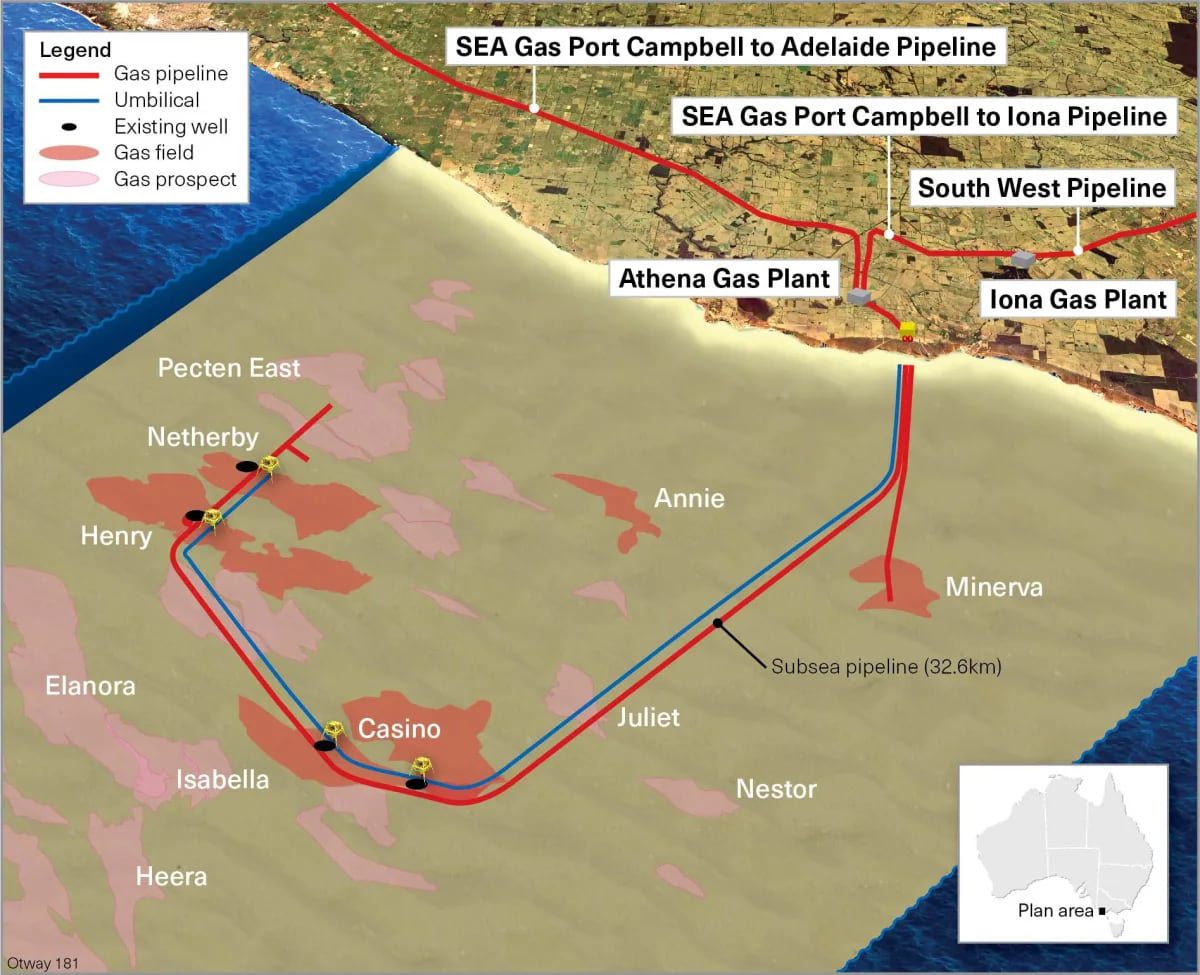
Otway Basin assets; Source: Amplitude Energy Amplitude Energy has received a production licence, VIC/L37, which covers the Annie field that was first discovered in 2019. Thanks to this, the firm can move forward with field development activities, with the first gas planned for 2028
The Annie production license comes months after Amplitude reported preliminary drilling and logging data from the Elanora-1 exploration well, with no elevated gas readings in the primary target Waarre A reservoir
View post tag: Amplitude Energy View post tag: Annie View post tag: Australia View post tag: Otway View post tag: Otway Basin
Story 2Offshore EnergyMay 7, 2026

Giant Southeast Asian gas discovery passes test with flying colors

Signal strongSource-grounded

What happened

Eni published drill‑stem test results at Geliga‑1 that demonstrated strong deliverability and limited pressure drawdown during the test. That performance makes fast‑track development options commercially plausible and operationally meaningful for subsea completions and flowline campaigns because high deliverability shortens the path from discovery to development contracting

Buyer takeaway

Consider this a demand accelerator that can shorten tender lead times for subsea completions and intervention work

Cost / money

Favours near‑term mobilisation and specialised subsea scope spend; expect suppliers to seek conditional pricing tied to rapid start dates

Supplier / commercial

Contractors may shorten bid validity and require mobilisation deposits or cancellation fees as operators look to fast‑track development

Safety / operations

High flow rates and faster sequencing raise the need for robust well control, pressure testing plans and contingency intervention capability

What to watch

Watch for suppliers tightening availability and issuing conditional offers tied to tight mobilisation slots

Key facts

  • DST flowed at rates constrained by rig facilities and showed limited pressure drawdown
  • Operator signals the find underpins larger hub development options in the basin

Source excerpts

The transaction closing remains confirmed for Q2 2026
The Italian energy giant has now disclosed that the discovery was tested, with DST results demonstrating high deliverability, further fortifying the strategic potential of Indonesia’s Kutei Basin and supporting accelerated development options leveraging existing and planned infrastructure
The Italian energy giant has now disclosed that the discovery was tested, with DST results demonstrating high deliverability, further fortifying the strategic potential of Indonesia’s Kutei Basin and supporting accelerated development options leveraging existing and planned infrastructure. Related Article The reservoir flowed at rates of up to 60 million standard cubic feet per day (scfd) during the test, constrained by the rig facilities, and with very limited pressure drawdown, said to confirm excellent deli
Story 3Offshore EnergyMay 7, 2026

Murphy Oil edging closer to bringing online projects in US Gulf and Vietnam

Signal moderateDirectional

What happened

Murphy Oil reported appraisal progress in Vietnam and movement on FSO delivery and platform fabrication for local developments. The activities increase regional mobilisation and commissioning work because FSO arrival and hook‑up timelines create concentrated windows for intervention and integration support

Buyer takeaway

Factor in additional mobilisations and potential overlap with nearby APAC programmes when awarding intervention scopes

Cost / money

FSO and hook‑up schedules can concentrate spend into short windows, risking higher day‑rates for vessels and crews

Supplier / commercial

Local contractors with yard or fabrication capacity in the region may demand premium scheduling commitments

Safety / operations

Hook‑up and commissioning require confirmed vendor procedures and emergency escalation for integrated FPSO/FSO work

What to watch

Track FSO delivery and final appraisal results to avoid award timing that clashes with other regional campaigns

Key facts

  • Appraisal work continues at Hai Su Vang with further results expected from the programme
  • FSO fabrication and load‑out progress ties mobilisation planning to the vessel delivery schedule

Source excerpts

Home Fossil Energy Murphy Oil edging closer to bringing online projects in US Gulf and Vietnam May 7, 2026, by Houston-headquartered oil and gas company Murphy Oil has made progress across multiple onshore and offshore exploration and production projects, with two on track to achieve first oil this year in the Americas and Asia. Illustration; Source: Murphy Oil Murphy Oil has been busy with multiple activities across continents
The firm made inroads in the construction of a floating storage and offloading (FSO) vessel in the Southeast Asian country. The FSO is now ready to launch and is set to be delivered to the location in the third quarter of 2026 in line with the schedule
Home Fossil Energy Murphy Oil edging closer to bringing online projects in US Gulf and Vietnam May 7, 2026, by Houston-headquartered oil and gas company Murphy Oil has made progress across multiple onshore and offshore exploration and production projects, with two on track to achieve first oil this year in the Americas and Asia
Story 4Offshore EnergyMay 7, 2026

Seatrium and ABS join forces to advance maritime and offshore energy spheres

Signal moderateDirectional

What happened

Seatrium signed an MOU with ABS to cooperate on technology assessment, classification and verification pathways for maritime and offshore solutions in Singapore. This creates clearer approval routes for novel equipment but means procurement must require documented class‑approval milestones because buyers cannot assume faster clearance without supplier evidence

Buyer takeaway

Use the MOU to require defined class approval pathways and earlier verification milestones from suppliers bidding on new equipment

Cost / money

May reduce rework costs by clarifying approval routes, but buyers must budget for class approval activities within mobilisation plans

Supplier / commercial

Suppliers with established ABS engagement can win faster technical clearance and therefore better mobilisation positions

Safety / operations

Structured classification checks should reduce late technical surprises but require documented test evidence up front

What to watch

Do not assume reduced timeline automatically; buyers still need to align approval steps with mobilisation dates to avoid delays

Key facts

  • MOU establishes knowledge exchange and technical collaboration on classification and verifica
  • Focus includes readiness for emerging solutions and regulatory pathways in Singapore

Source excerpts

“Our collaboration with ABS under this MOU supports technology assessment, regulatory readiness, classification, and verification pathways of emerging solutions across new energies, maritime decarbonization, autonomous technologies, harsh-environment applications, and advanced offshore infrastructure. ” The collaboration with Seatrium comes months after ABS granted an approval in principle (AiP) to Finland’s Deltamarin and China Merchants Heavy Industry (CMHI) for a versatile floating production, storage, and o
Home Fossil Energy Seatrium and ABS join forces to advance maritime and offshore energy spheres May 7, 2026, by Intending to drive maritime and offshore energy innovation, the American Bureau of Shipping (ABS), a classification society, has forged a partnership with Seatrium Technology and Innovation, a technology subsidiary of Singapore’s offshore, marine, and energy engineering solutions specialist Seatrium
Aziz Merchant, Executive Vice President of Technology and New Product Development at Seatrium, highlighted: “Seatrium is committed to advancing future-ready offshore, marine, and energy solutions through technology leadership, new product development, and practical innovation. “Our collaboration with ABS under this MOU supports technology assessment, regulatory readiness, classification, and verification pathways of emerging solutions across new energies, maritime decarbonization, autonomous technologies, hars

VP Snapshot

Executive Risk & Action View

Amplitude Energy’s new production licence for the Annie field converts an exploration asset into a permitted development, creating a concrete procurement need for subsea completions, tie‑ins and mobilisation planning in Australia.

Overall
57
Cost
79
Supply
43
Schedule
56
Compliance
15

Top signals

30-180dcost

Signal 1: Cost / money

Licence and DST signals push cost exposure toward mobilisation and short‑campaign specialist spend (rigs, vessels, subsea tooling) rather than only long‑lead fabrications.

Signal 2: Cost / money

Fast‑track development plausibility in Indonesia increases the chance that suppliers shorten bid validity and price mobilisation premiums into offers.

Signal 3: Cost / money

FSO delivery and platform integration activity in Vietnam concentrates spend into tight windows, raising day‑rate pressure for vessels and specialist crews if schedules overlap.

30-180dcommercial

Signal 4: Supplier / commercial

Suppliers with clear class engagement or Singapore fabrication links gain leverage to demand firmer mobilisation dates and tighter commercial terms.

Signal 5: Supplier / commercial

Contractors are likely to propose conditional offers (short validity, mobilisation deposits, cancellation fees) as operators signal faster start options from DSTs.

Signal 6: Supplier / commercial

Australian permitted development lets operators push earlier into contracting completion bundles, increasing value for suppliers who can mobilise quickly in local waters.

Recommended actions

CategoryDue 3d

Run a focused supplier availability sweep for subsea completion vessels, well‑intervention rigs and specialist crews across Australia and Indonesia.

Updated supplier availability log showing confirmed mobilisation windows and blackout dates to inform shortlists and budget assumptions

ContractsDue 21d

Amend tender templates and pre‑qualification to require explicit mobilisation SLAs, stated bid‑validity and re‑mobilisation cost mechanics for completions/intervention awards.

Tender templates and PQQs force bidders to declare mobilisation dates, bid‑validity and re‑mobilisation pass‑throughs to reduce post‑award disputes

OpsDue 21d

Issue a capability questionnaire for any supplier proposing class‑dependent equipment or shore‑managed services, requiring class‑approval paths, ROC architecture and connectivit...

Pre‑award supplier evidence packages that capture class approval plans and ROC/connectivity SLAs are added to procurement dossiers

ContractsDue 60d

Draft a reusable contract addendum standardising mobilisation fees, minimum bid‑validity, re‑mobilisation pass‑throughs and uptime/connectivity obligations for APAC completions...

Contract addendum ready to reduce negotiation cycles and limit supplier‑driven mobilisation cost surprises at award

CategoryDue 60d

Engage class societies and regional yards to map approval timelines for new subsea tooling and installation methods used in planned APAC programmes.

Approval timeline matrix for shortlisted suppliers and equipment to feed mobilisation schedules

Risk register

RiskTriggerMitigation
Watch for clustering of vessel and specialist availability between Northeast Australia and Indonesian campaigns — overlapping windows would tighten mobilisation slots (early indicator, prepare contingencies).Watch for clustering of vessel and specialist availability between Northeast Australia and Indonesian campaigns — overlapping windows would tighten mobilisation slots (early indicator, prepare contingencies).Confirm exposure with category, contracts, and operations before the next supplier commitment.
Watch supplier proposals that shift personnel or oversight onshore without concrete uptime/connectivity SLAs — this transfers response risk to buyers during commissioning or intervention.Watch supplier proposals that shift personnel or oversight onshore without concrete uptime/connectivity SLAs — this transfers response risk to buyers during commissioning or intervention.Confirm exposure with category, contracts, and operations before the next supplier commitment.

CM Snapshot

Category Manager Decision Detail

Today's priorities

Run a focused supplier availability sweep for subsea completion vessels, well‑intervention rigs and specialist crews across Australia and Indonesia.

because the Annie licence and Geliga DST convert planning signals into near‑term mobilisation risk and overlapping windows will change shortlist sizing and commercial posture.

Due 3d

high

CM move

Use this as the immediate supplier or contract action to move before the next sourcing gate.

Amend tender templates and pre‑qualification to require explicit mobilisation SLAs, stated bid‑validity and re‑mobilisation cost mechanics for completions/intervention awards.

because confirmed project signals increase supplier leverage and missing clauses will expose the buyer to mobilisation premiums and schedule slip claims.

Due 21d

high

CM move

Use this as the immediate supplier or contract action to move before the next sourcing gate.

Issue a capability questionnaire for any supplier proposing class‑dependent equipment or shore‑managed services, requiring class‑approval paths, ROC architecture and connectivit...

because the Seatrium–ABS collaboration and rising shore‑managed options raise verification and connectivity dependencies that must be evidenced before accepting shifted offshore...

Due 21d

high

CM move

Use this as the immediate supplier or contract action to move before the next sourcing gate.

Draft a reusable contract addendum standardising mobilisation fees, minimum bid‑validity, re‑mobilisation pass‑throughs and uptime/connectivity obligations for APAC completions...

because multiple confirmed development signals across APAC increase the probability of constrained specialist capacity and inconsistent commercial terms; a standard addendum spe...

Due 60d

high

CM move

Use this as the immediate supplier or contract action to move before the next sourcing gate.

Supplier radar

Offshore Energy

high

Observed supplier signal

Suppliers with clear class engagement or Singapore fabrication links gain leverage to demand firmer mobilisation dates and tighter commercial terms.

Commercial implication

Suppliers with clear class engagement or Singapore fabrication links gain leverage to demand firmer mobilisation dates and tighter commercial terms.

Next step: Validate the source-backed signal with incumbents and alternates before the next award or pricing decision.

Offshore Energy

high

Observed supplier signal

Contractors are likely to propose conditional offers (short validity, mobilisation deposits, cancellation fees) as operators signal faster start options from DSTs.

Commercial implication

Contractors are likely to propose conditional offers (short validity, mobilisation deposits, cancellation fees) as operators signal faster start options from DSTs.

Next step: Validate the source-backed signal with incumbents and alternates before the next award or pricing decision.

Offshore Energy

high

Observed supplier signal

Australian permitted development lets operators push earlier into contracting completion bundles, increasing value for suppliers who can mobilise quickly in local waters.

Commercial implication

Australian permitted development lets operators push earlier into contracting completion bundles, increasing value for suppliers who can mobilise quickly in local waters.

Next step: Validate the source-backed signal with incumbents and alternates before the next award or pricing decision.

Negotiation levers

Run a focused supplier availability sweep for subsea completion vessels, well‑intervention rigs and specialist crews across Australia and Indonesia.

When to use: because the Annie licence and Geliga DST convert planning signals into near‑term mobilisation risk and overlapping windows will change shortlist sizing and commercial posture.

Expected outcome: Updated supplier availability log showing confirmed mobilisation windows and blackout dates to inform shortlists and budget assumptions

Commercial mechanism to carry into the next supplier conversation

Amend tender templates and pre‑qualification to require explicit mobilisation SLAs, stated bid‑validity and re‑mobilisation cost mechanics for completions/intervention awards.

When to use: because confirmed project signals increase supplier leverage and missing clauses will expose the buyer to mobilisation premiums and schedule slip claims.

Expected outcome: Tender templates and PQQs force bidders to declare mobilisation dates, bid‑validity and re‑mobilisation pass‑throughs to reduce post‑award disputes

Commercial mechanism to carry into the next supplier conversation

Issue a capability questionnaire for any supplier proposing class‑dependent equipment or shore‑managed services, requiring class‑approval paths, ROC architecture and connectivit...

When to use: because the Seatrium–ABS collaboration and rising shore‑managed options raise verification and connectivity dependencies that must be evidenced before accepting shifted offshore...

Expected outcome: Pre‑award supplier evidence packages that capture class approval plans and ROC/connectivity SLAs are added to procurement dossiers

Commercial mechanism to carry into the next supplier conversation

Draft a reusable contract addendum standardising mobilisation fees, minimum bid‑validity, re‑mobilisation pass‑throughs and uptime/connectivity obligations for APAC completions...

When to use: because multiple confirmed development signals across APAC increase the probability of constrained specialist capacity and inconsistent commercial terms; a standard addendum spe...

Expected outcome: Contract addendum ready to reduce negotiation cycles and limit supplier‑driven mobilisation cost surprises at award

Commercial mechanism to carry into the next supplier conversation

Talking points

Amplitude Energy’s new production licence for the Annie field converts an exploration asset into a permitted development, creating a concrete procurement need for subsea completions, tie‑ins and mobilisation planning in Australia.
Eni’s drill‑stem test at Geliga‑1 showed high deliverability, strengthening the case for a fast‑track development that will tighten timelines for subsea completions, flowlines and intervention scheduling in the Kutei Basin.
Murphy Oil’s appraisal progress and upcoming FSO arrival in Vietnam create localised competition for intervention crews, commissioning support and vessel days that can overlap APAC mobilisation windows.
Seatrium’s MOU with classification society ABS opens clearer approval routes for novel equipment in Singapore, which reduces some technical friction but raises a need for documented class‑approval evidence from suppliers.

Supplier radar

SupplierSignalImplicationNext stepConfidence
Offshore EnergySuppliers with clear class engagement or Singapore fabrication links gain leverage to demand firmer mobilisation dates and tighter commercial terms.Suppliers with clear class engagement or Singapore fabrication links gain leverage to demand firmer mobilisation dates and tighter commercial terms.Validate the source-backed signal with incumbents and alternates before the next award or pricing decision.high
Offshore EnergyContractors are likely to propose conditional offers (short validity, mobilisation deposits, cancellation fees) as operators signal faster start options from DSTs.Contractors are likely to propose conditional offers (short validity, mobilisation deposits, cancellation fees) as operators signal faster start options from DSTs.Validate the source-backed signal with incumbents and alternates before the next award or pricing decision.high
Offshore EnergyAustralian permitted development lets operators push earlier into contracting completion bundles, increasing value for suppliers who can mobilise quickly in local waters.Australian permitted development lets operators push earlier into contracting completion bundles, increasing value for suppliers who can mobilise quickly in local waters.Validate the source-backed signal with incumbents and alternates before the next award or pricing decision.high

Negotiation levers

  • Run a focused supplier availability sweep for subsea completion vessels, well‑intervention rigs and specialist crews across Australia and Indonesia.because the Annie licence and Geliga DST convert planning signals into near‑term mobilisation risk and overlapping windows will change shortlist sizing and commercial posture.Updated supplier availability log showing confirmed mobilisation windows and blackout dates to inform shortlists and budget assumptions

    high confidence

  • Amend tender templates and pre‑qualification to require explicit mobilisation SLAs, stated bid‑validity and re‑mobilisation cost mechanics for completions/intervention awards.because confirmed project signals increase supplier leverage and missing clauses will expose the buyer to mobilisation premiums and schedule slip claims.Tender templates and PQQs force bidders to declare mobilisation dates, bid‑validity and re‑mobilisation pass‑throughs to reduce post‑award disputes

    high confidence

  • Issue a capability questionnaire for any supplier proposing class‑dependent equipment or shore‑managed services, requiring class‑approval paths, ROC architecture and connectivit...because the Seatrium–ABS collaboration and rising shore‑managed options raise verification and connectivity dependencies that must be evidenced before accepting shifted offshore...Pre‑award supplier evidence packages that capture class approval plans and ROC/connectivity SLAs are added to procurement dossiers

    high confidence

  • Draft a reusable contract addendum standardising mobilisation fees, minimum bid‑validity, re‑mobilisation pass‑throughs and uptime/connectivity obligations for APAC completions...because multiple confirmed development signals across APAC increase the probability of constrained specialist capacity and inconsistent commercial terms; a standard addendum spe...Contract addendum ready to reduce negotiation cycles and limit supplier‑driven mobilisation cost surprises at award

    high confidence

What to do / What to watch

What to do now

  • Run a focused supplier availability sweep for subsea completion vessels, well‑intervention rigs and specialist crews across Australia and Indonesia.

    Why: because the Annie licence and Geliga DST convert planning signals into near‑term mobilisation risk and overlapping windows will change shortlist sizing and commercial posture.

    Owner: Category

    Expected outcome: Updated supplier availability log showing confirmed mobilisation windows and blackout dates to inform shortlists and budget assumptions

    [4]

Next few weeks

  • Amend tender templates and pre‑qualification to require explicit mobilisation SLAs, stated bid‑validity and re‑mobilisation cost mechanics for completions/intervention awards.

    Why: because confirmed project signals increase supplier leverage and missing clauses will expose the buyer to mobilisation premiums and schedule slip claims.

    Owner: Contracts

    Expected outcome: Tender templates and PQQs force bidders to declare mobilisation dates, bid‑validity and re‑mobilisation pass‑throughs to reduce post‑award disputes

    [4]
  • Issue a capability questionnaire for any supplier proposing class‑dependent equipment or shore‑managed services, requiring class‑approval paths, ROC architecture and connectivit...

    Why: because the Seatrium–ABS collaboration and rising shore‑managed options raise verification and connectivity dependencies that must be evidenced before accepting shifted offshore...

    Owner: Ops

    Expected outcome: Pre‑award supplier evidence packages that capture class approval plans and ROC/connectivity SLAs are added to procurement dossiers

    [2]

Longer view

  • Draft a reusable contract addendum standardising mobilisation fees, minimum bid‑validity, re‑mobilisation pass‑throughs and uptime/connectivity obligations for APAC completions...

    Why: because multiple confirmed development signals across APAC increase the probability of constrained specialist capacity and inconsistent commercial terms; a standard addendum spe...

    Owner: Contracts

    Expected outcome: Contract addendum ready to reduce negotiation cycles and limit supplier‑driven mobilisation cost surprises at award

    [1]
  • Engage class societies and regional yards to map approval timelines for new subsea tooling and installation methods used in planned APAC programmes.

    Why: because the Seatrium–ABS MOU indicates technical pathways exist but buyers must align supplier approval steps with project mobilisation to avoid late hold‑ups.

    Owner: Category

    Expected outcome: Approval timeline matrix for shortlisted suppliers and equipment to feed mobilisation schedules

    [2]

What to watch

  • Watch for clustering of vessel and specialist availability between Northeast Australia and Indonesian campaigns — overlapping windows would tighten mobilisation slots (early indicator, prepare contingencies)
  • Watch supplier proposals that shift personnel or oversight onshore without concrete uptime/connectivity SLAs — this transfers response risk to buyers during commissioning or intervention
  • Watch for clustering of vessel and specialist availability between Northeast Australia and Indonesian campaigns — overlapping windows would tighten mobilisation slots (early indicator, prepare contingencies).: Watch for clustering of vessel and specialist availability between Northeast Australia and Indonesian campaigns — overlapping windows would tighten mobilisation slots (early indicator, prepare contingencies)
  • Watch supplier proposals that shift personnel or oversight onshore without concrete uptime/connectivity SLAs — this transfers response risk to buyers during commissioning or intervention.: Watch supplier proposals that shift personnel or oversight onshore without concrete uptime/connectivity SLAs — this transfers response risk to buyers during commissioning or intervention
  • Amplitude Energy’s new production licence for the Annie field converts an exploration asset into a permitted development, creating a concrete procurement need for subsea completions, tie‑ins and mobilisation planning in Australia
  • Eni’s drill‑stem test at Geliga‑1 showed high deliverability, strengthening the case for a fast‑track development that will tighten timelines for subsea completions, flowlines and intervention scheduling in the Kutei Basin
  • Murphy Oil’s appraisal progress and upcoming FSO arrival in Vietnam create localised competition for intervention crews, commissioning support and vessel days that can overlap APAC mobilisation windows
  • Seatrium’s MOU with classification society ABS opens clearer approval routes for novel equipment in Singapore, which reduces some technical friction but raises a need for documented class‑approval evidence from suppliers

Market pulse

IndexLatestChangeAs of
WTI Crude (WTI)71.23 /bbl+0.00 (+0.00%)May 7, 2026, 10:04 PM
Brent Crude (BRENT)74.89 /bbl+0.00 (+0.00%)May 7, 2026, 10:04 PM
Natural Gas (NG)3.12 /MMBtu+0.00 (+0.00%)May 7, 2026, 10:04 PM
Schlumberger (SLB)48 +0.00 (+0.00%)May 7, 2026, 10:04 PM
Halliburton (HAL)35 +0.00 (+0.00%)May 7, 2026, 10:04 PM
  • Natural Gas: Regional gas development signals increase the relevance of gas price direction for development pace and tie‑in economics; monitor for changes that affect operator scheduling
  • Schlumberger: Service‑provider sector indicators can flag capacity and pricing posture among major completions vendors; useful as a benchmark when evaluating supplier offers

Sources

Inline citations jump here. Expand a source to read the excerpt, the AI interpretation, and the original link.

[1] Giant Southeast Asian gas discovery passes test with flying colors

offshore-energy.biz · May 7, 2026

Expand

AI reading

Eni published drill‑stem test results at Geliga‑1 that demonstrated strong deliverability and limited pressure drawdown during the test. That performance makes fast‑track development options commercially plausible and operationally meaningful for subsea completions and flowline campaigns because high deliverability shortens the path from discovery to development contracting

Buyer takeaway

Consider this a demand accelerator that can shorten tender lead times for subsea completions and intervention work

Cost / money

Favours near‑term mobilisation and specialised subsea scope spend; expect suppliers to seek conditional pricing tied to rapid start dates

Supplier / commercial

Contractors may shorten bid validity and require mobilisation deposits or cancellation fees as operators look to fast‑track development

Safety / operations

High flow rates and faster sequencing raise the need for robust well control, pressure testing plans and contingency intervention capability

What to watch

Watch for suppliers tightening availability and issuing conditional offers tied to tight mobilisation slots

Key facts

  • DST flowed at rates constrained by rig facilities and showed limited pressure drawdown
  • Operator signals the find underpins larger hub development options in the basin

Source excerpts

The transaction closing remains confirmed for Q2 2026
The Italian energy giant has now disclosed that the discovery was tested, with DST results demonstrating high deliverability, further fortifying the strategic potential of Indonesia’s Kutei Basin and supporting accelerated development options leveraging existing and planned infrastructure
The Italian energy giant has now disclosed that the discovery was tested, with DST results demonstrating high deliverability, further fortifying the strategic potential of Indonesia’s Kutei Basin and supporting accelerated development options leveraging existing and planned infrastructure. Related Article The reservoir flowed at rates of up to 60 million standard cubic feet per day (scfd) during the test, constrained by the rig facilities, and with very limited pressure drawdown, said to confirm excellent deli

Used in this brief

  • Next quarter — Draft a reusable contract addendum standardising mobilisation fees, minimum bid‑validity, re‑mobilisation pass‑throughs and uptime/connectivity obligations for APAC completions.... Rationale: because multiple confirmed development signals across APAC increase the probability of constrained specialist capacity and inconsistent commercial terms; a standard addendum spe.... Owner: Contracts. KPI: Contract addendum ready to reduce negotiation cycles and limit supplier‑driven mobilisation cost surprises at award
  • New: Eni published DST results at Geliga‑1 showing high deliverability, creating a clearer case for accelerated development and nearer‑term completions demand
  • Eni published drill‑stem test results at Geliga‑1 that demonstrated strong deliverability and limited pressure drawdown during the test. That performance makes fast‑track development options commercially plausible and operationally meaningful for subsea completions and flowline campaigns because high deliverability shortens the path from discovery to development contracting
Open original source

[2] Seatrium and ABS join forces to advance maritime and offshore energy spheres

offshore-energy.biz · May 7, 2026

Expand

AI reading

Seatrium signed an MOU with ABS to cooperate on technology assessment, classification and verification pathways for maritime and offshore solutions in Singapore. This creates clearer approval routes for novel equipment but means procurement must require documented class‑approval milestones because buyers cannot assume faster clearance without supplier evidence

Buyer takeaway

Use the MOU to require defined class approval pathways and earlier verification milestones from suppliers bidding on new equipment

Cost / money

May reduce rework costs by clarifying approval routes, but buyers must budget for class approval activities within mobilisation plans

Supplier / commercial

Suppliers with established ABS engagement can win faster technical clearance and therefore better mobilisation positions

Safety / operations

Structured classification checks should reduce late technical surprises but require documented test evidence up front

What to watch

Do not assume reduced timeline automatically; buyers still need to align approval steps with mobilisation dates to avoid delays

Key facts

  • MOU establishes knowledge exchange and technical collaboration on classification and verifica
  • Focus includes readiness for emerging solutions and regulatory pathways in Singapore

Source excerpts

“Our collaboration with ABS under this MOU supports technology assessment, regulatory readiness, classification, and verification pathways of emerging solutions across new energies, maritime decarbonization, autonomous technologies, harsh-environment applications, and advanced offshore infrastructure. ” The collaboration with Seatrium comes months after ABS granted an approval in principle (AiP) to Finland’s Deltamarin and China Merchants Heavy Industry (CMHI) for a versatile floating production, storage, and o
Home Fossil Energy Seatrium and ABS join forces to advance maritime and offshore energy spheres May 7, 2026, by Intending to drive maritime and offshore energy innovation, the American Bureau of Shipping (ABS), a classification society, has forged a partnership with Seatrium Technology and Innovation, a technology subsidiary of Singapore’s offshore, marine, and energy engineering solutions specialist Seatrium
Aziz Merchant, Executive Vice President of Technology and New Product Development at Seatrium, highlighted: “Seatrium is committed to advancing future-ready offshore, marine, and energy solutions through technology leadership, new product development, and practical innovation. “Our collaboration with ABS under this MOU supports technology assessment, regulatory readiness, classification, and verification pathways of emerging solutions across new energies, maritime decarbonization, autonomous technologies, hars

Used in this brief

  • Next 2-4 weeks — Issue a capability questionnaire for any supplier proposing class‑dependent equipment or shore‑managed services, requiring class‑approval paths, ROC architecture and connectivit.... Rationale: because the Seatrium–ABS collaboration and rising shore‑managed options raise verification and connectivity dependencies that must be evidenced before accepting shifted offshore.... Owner: Ops. KPI: Pre‑award supplier evidence packages that capture class approval plans and ROC/connectivity SLAs are added to procurement dossiers
  • Next quarter — Engage class societies and regional yards to map approval timelines for new subsea tooling and installation methods used in planned APAC programmes.. Rationale: because the Seatrium–ABS MOU indicates technical pathways exist but buyers must align supplier approval steps with project mobilisation to avoid late hold‑ups.. Owner: Category. KPI: Approval timeline matrix for shortlisted suppliers and equipment to feed mobilisation schedules
  • Watch supplier proposals that shift personnel or oversight onshore without concrete uptime/connectivity SLAs — this transfers response risk to buyers during commissioning or intervention
Open original source

[3] Murphy Oil edging closer to bringing online projects in US Gulf and Vietnam

offshore-energy.biz · May 7, 2026

Expand

AI reading

Murphy Oil reported appraisal progress in Vietnam and movement on FSO delivery and platform fabrication for local developments. The activities increase regional mobilisation and commissioning work because FSO arrival and hook‑up timelines create concentrated windows for intervention and integration support

Buyer takeaway

Factor in additional mobilisations and potential overlap with nearby APAC programmes when awarding intervention scopes

Cost / money

FSO and hook‑up schedules can concentrate spend into short windows, risking higher day‑rates for vessels and crews

Supplier / commercial

Local contractors with yard or fabrication capacity in the region may demand premium scheduling commitments

Safety / operations

Hook‑up and commissioning require confirmed vendor procedures and emergency escalation for integrated FPSO/FSO work

What to watch

Track FSO delivery and final appraisal results to avoid award timing that clashes with other regional campaigns

Key facts

  • Appraisal work continues at Hai Su Vang with further results expected from the programme
  • FSO fabrication and load‑out progress ties mobilisation planning to the vessel delivery schedule

Source excerpts

Home Fossil Energy Murphy Oil edging closer to bringing online projects in US Gulf and Vietnam May 7, 2026, by Houston-headquartered oil and gas company Murphy Oil has made progress across multiple onshore and offshore exploration and production projects, with two on track to achieve first oil this year in the Americas and Asia. Illustration; Source: Murphy Oil Murphy Oil has been busy with multiple activities across continents
The firm made inroads in the construction of a floating storage and offloading (FSO) vessel in the Southeast Asian country. The FSO is now ready to launch and is set to be delivered to the location in the third quarter of 2026 in line with the schedule
Home Fossil Energy Murphy Oil edging closer to bringing online projects in US Gulf and Vietnam May 7, 2026, by Houston-headquartered oil and gas company Murphy Oil has made progress across multiple onshore and offshore exploration and production projects, with two on track to achieve first oil this year in the Americas and Asia

Used in this brief

  • Murphy Oil reported appraisal progress in Vietnam and movement on FSO delivery and platform fabrication for local developments. The activities increase regional mobilisation and commissioning work because FSO arrival and hook‑up timelines create concentrated windows for intervention and integration support
  • Buyer bottom line: Vietnam appraisal and FSO activity add localized demand for intervention, commissioning and FPSO/FSO integration services that will compete for regional crews
  • Factor in additional mobilisations and potential overlap with nearby APAC programmes when awarding intervention scopes
Open original source

[4] Australian offshore production license paving the way for first gas in 2028

offshore-energy.biz · May 7, 2026

Expand

AI reading

Amplitude Energy obtained a production licence for the Annie field and can now move into formal field development planning. The permit makes supplier mobilisation and completions planning operationally real in the Otway Basin because the project ties into nearby existing infrastructure; watch contracting windows and early vendor selections

Buyer takeaway

Treat this as a permitted project requiring firm mobilisation planning and shortlisted suppliers who can commit to Australian waters

Cost / money

Shifts cost exposure toward mobilisation, regional specialist crews and short‑campaign scheduling rather than only long‑lead fabrication spend

Supplier / commercial

Suppliers able to promise quick mobilisation in local waters will command premium terms and shorter bid‑validity conditions

Safety / operations

Permitted development raises the need to verify vendor HSE and commissioning procedures for subsea tie‑ins and pressure testing before mobilisation

What to watch

Verify local vessel and crew availability early; overlapping schedules in Otway can quickly create mobilisation premium risk

Key facts

  • Licence covers the Annie field in the Otway Basin with proximity to existing infrastructure
  • Operator is positioned to move to field development planning toward first gas in its stated t

Source excerpts

Otway Basin assets; Source: Amplitude Energy Amplitude Energy has received a production licence, VIC/L37, which covers the Annie field that was first discovered in 2019. Thanks to this, the firm can move forward with field development activities, with the first gas planned for 2028
The Annie production license comes months after Amplitude reported preliminary drilling and logging data from the Elanora-1 exploration well, with no elevated gas readings in the primary target Waarre A reservoir
View post tag: Amplitude Energy View post tag: Annie View post tag: Australia View post tag: Otway View post tag: Otway Basin

Used in this brief

  • Amplitude Energy’s new production licence for the Annie field converts an exploration asset into a permitted development, creating a concrete procurement need for subsea completions, tie‑ins and mobilisation planning in Australia. Eni’s drill‑stem test at Geliga‑1 showed high deliverability, strengthening the case for a fast‑track development that will tighten timelines for subsea completions, flowlines and intervention scheduling in the Kutei Basin. Murphy Oil’s appraisal progress and upcoming FSO arrival in Vietnam create localised competition for intervention crews, commissioning support and vessel days that can overlap APAC mobilisation windows. Seatrium’s MOU with classification society ABS opens clearer approval routes for novel equipment in Singapore, which reduces some technical friction but raises a need for documented class‑approval evidence from suppliers
  • Next 72 hours — Run a focused supplier availability sweep for subsea completion vessels, well‑intervention rigs and specialist crews across Australia and Indonesia.. Rationale: because the Annie licence and Geliga DST convert planning signals into near‑term mobilisation risk and overlapping windows will change shortlist sizing and commercial posture.. Owner: Category. KPI: Updated supplier availability log showing confirmed mobilisation windows and blackout dates to inform shortlists and budget assumptions
  • Next 2-4 weeks — Amend tender templates and pre‑qualification to require explicit mobilisation SLAs, stated bid‑validity and re‑mobilisation cost mechanics for completions/intervention awards.. Rationale: because confirmed project signals increase supplier leverage and missing clauses will expose the buyer to mobilisation premiums and schedule slip claims.. Owner: Contracts. KPI: Tender templates and PQQs force bidders to declare mobilisation dates, bid‑validity and re‑mobilisation pass‑throughs to reduce post‑award disputes
Open original source

[5] Natural Gas

finance.yahoo.com · n.d.

Expand

[6] Schlumberger

finance.yahoo.com · n.d.

Expand