Subsea, SURF & Offshore · Australia (Perth)

Protect APAC subsea schedules as Malampaya pipelay advances

Published May 7, 2026, 6:13 AM AWSTAPACFull category signal
Ask AI
First gas on track before 2026 ends with Southeast Asian project’s subsea ops in full swing

In 60 seconds

Top move

Malampaya Phase 4 is actively installing deepwater flowlines and will need pipelay vessels, umbilicals and hook-up teams — this is a near-term, concrete demand on specialized SURF capacity in the Philippines

Key takeaways

  • Malampaya Phase 4 is actively installing deepwater flowlines and will need pipelay vessels, umbilicals and hook-up teams — this is a near-term, concrete demand on specialized SURF capacity in the Philippines.[1]
  • Remote-managed subsea intervention has been proven in the field, which can materially reduce offshore headcount, lower travel costs and shift competency needs to shore-based control rooms.[4]
  • Rig-market consolidation (Transocean/Valaris) remains legally uncertain after a DOJ second request, so expect continued short-term ambiguity in contractor pricing and mobilisation posture for APAC drilling tenders.[3]
  • New niche vessel deliveries (a 100m cable-lay/light construction vessel) increase global capacity for cable and light construction work, but geographic positioning limits immediate APAC relief.[2]
  • Signal level is normal: we have direct regional SURF work plus an operational tech shift; other items (merger timing, vessel re-positioning) are directional and should be monitored before changing award strategies.[1]

What changed since last run

  • Confirmed active deepwater pipelay and umbilical installation at Malampaya Phase 4 in the Philippines, creating a tangible APAC SURF demand that was not in the prior brief's supplier-availability snapshot (see article...
  • A validated remote subsea intervention managed from shore (DeepOcean) introduces a practical option to reduce offshore headcount and travel exposure; this operational proof point is new versus the previous run (see ar...
  • The Transocean-Valaris merger review advanced to a second DOJ information request, extending clearance uncertainty and leaving rig consolidation outcomes unresolved compared with the prior brief (see article 8).

Key facts

  • Active subsea pipelay and offshore construction work
  • Pile driving at approximately 1,100m water depth
  • Umbilical installation scheduled ahead of commissioning and hook-up
  • First shore-managed subsea intervention performed by DeepOcean
  • Operation completed within a reduced offshore shift compared with typical offshore rotations
  • Included subsea crane operations and close-proximity vessel positioning

Why it matters

Malampaya Phase 4 is actively installing deepwater flowlines and will need pipelay vessels, umbilicals and hook-up teams — this is a near-term, concrete demand on specialized SURF capacity in the Philippines. Remote-managed subsea intervention has been proven in the field, which can materially reduce offshore headcount, lower travel costs and shift competency needs to shore-based control rooms. Rig-market consolidation (Transocean/Valaris) remains legally uncertain after a DOJ second request, so expect continued short-term ambiguity in contractor pricing and mobilisation posture for APAC drilling tenders. New niche vessel deliveries (a 100m cable-lay/light construction vessel) increase global capacity for cable and light construction work, but geographic positioning limits immediate APAC relief

Cost / money

  • Specialized deepwater pipelay work increases mobilisation and vessel-time exposure for buyers; expect suppliers to defend premium day-rates on scarce assets used for longreach deepwater installs.[1]
  • Shifting work onshore (remote ROV/ROC operations) reduces accommodation and travel spend but creates new capital and OPEX needs for secure connectivity and onshore control-room staffing.[4]
  • Merger review uncertainty keeps day-rate forecasting noisy for drilling packages; buyers should not assume immediate downward pressure from consolidation while regulatory hurdles remain unresolved.[3]

Supplier / commercial

  • Pipelaying and umbilical installation suppliers gain short-term leverage for quote validity, mobilisation pass-throughs and sequencing concessions, given limited local deepwater pipelay capacity.[1]
  • New vessel deliveries add niche capacity for cable and light construction, but ownership and flagging location mean APAC redeployment will need commercial negotiation and repositioning costs.[2]
  • Drilling contractor posture remains conservative while the Transocean-Valaris deal is reviewed; expect suppliers to protect current contract terms rather than offer aggressive commercial concessions now.[3]

Safety / operations

  • Malampaya's move into commissioning and hook-up increases uptime dependency on intact flowlines and jumpers; procurement must verify maintenance, spare parts and commissioning resource plans before award.[1]
  • Shore-managed interventions lower offshore personnel exposure and fatigue risk, but require validated procedures, reliable comms and regulator acceptance — verify readiness before substituting offshore shifts with ROC control.[4]

What to watch

  • Suppliers may shorten quote validity and push mobilisation/demobilisation pass-throughs for SURF and pipelay scopes as specialised assets tighten — watch for shortened commercial windows in RFQs and LoIs.[1]
  • Remote operations are proven in Europe/Norway but APAC regulatory and connectivity acceptance is uneven; don't assume a plug-and-play substitution of shore-managed models across APAC projects.[4]

Top stories

Story 1Offshore EnergyMay 6, 2026

First gas on track before 2026 ends with Southeast Asian project’s subsea ops in full swing

Signal strongSource-grounded

What happened

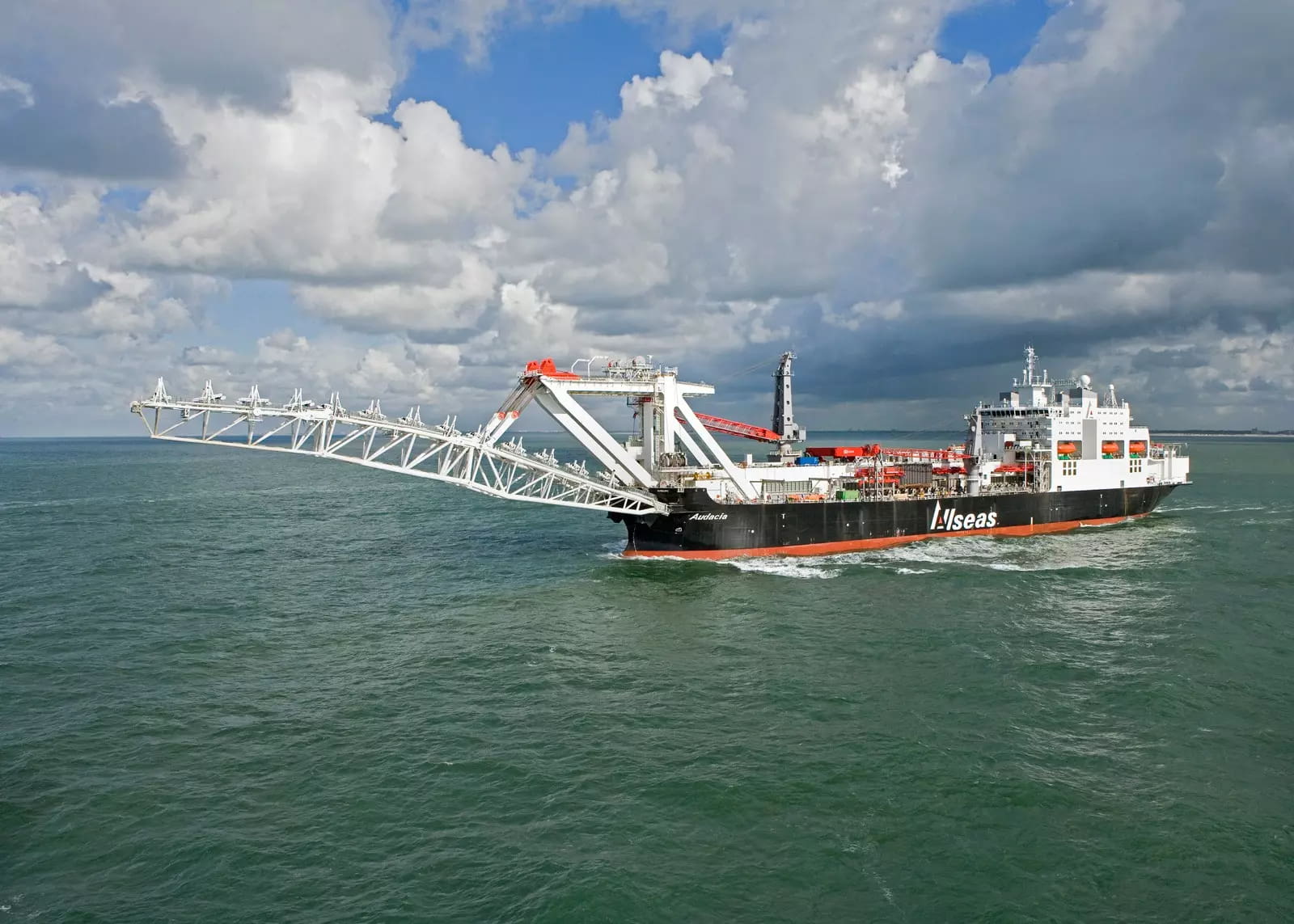
Prime Energy’s Malampaya Phase 4 has moved into subsea pipelay and offshore construction, including deepwater flowline installation and pile driving at roughly 1,100m water depth. The Audacia pipelay vessel completed key flowline runs and umbilical installation is planned ahead of commissioning and hook-up, making this a near-term supplier demand signal. Watch whether the next commissioning milestones require additional CSV or umbilical-handling specialist teams that could create regional mobilisation conflicts

Buyer takeaway

Treat this as a real, scheduled SURF demand that can consume scarce pipelay and umbilical resources in APAC; factor mobilisation and commissioning dependencies into award timing

Cost / money

Directional upward pressure on specialised vessel mobilisation and installation pricing due to deepwater scope and limited local alternatives

Supplier / commercial

Suppliers executing deepwater pipelay can shorten quote validity and seek mobilisation pass-throughs; expect negotiation friction on sequencing and hold terms

Safety / operations

Hook-up and commissioning phases raise uptime dependency; validate contractor maintenance and spare-part plans before final acceptance

What to watch

Watch for suppliers to narrow commitment windows and to require higher mobilisation deposits as the project moves into commissioning

Key facts

  • Active subsea pipelay and offshore construction work
  • Pile driving at approximately 1,100m water depth
  • Umbilical installation scheduled ahead of commissioning and hook-up

Source excerpts

The next major stage under MP4 is commissioning and hook-up, which will involve flowline pressure testing, nitrogen drying, and the installation of subsea jumpers to connect the Christmas trees on each well to the flowlines and these to the Malampaya main manifold
Audacia pipelay vessel; Source: Allseas President Ferdinand R
The next major stage under MP4 is commissioning and hook-up, which will involve flowline pressure testing, nitrogen drying, and the installation of subsea jumpers to connect the Christmas trees on each well to the flowlines and these to the Malampaya main manifold. “MP4 remains on track and on schedule to deliver first gas by the fourth quarter of the year
Story 2Offshore EnergyMay 6, 2026

DeepOcean performs first subsea intervention managed from shore

Signal moderateSource-grounded

What happened

DeepOcean completed a subsea intervention managed from an onshore remote operating centre, using an ROV and shore-based supervision to deliver tasks normally requiring offshore shifts. The work reduced offshore personnel time and showed shorter offshore mobilisations are operationally feasible, but relied on close-proximity vessel support and reliable communications. Watch for APAC pilots or regulator discussions that will determine whether similar shore-managed scopes can replace offshore roles locally

Buyer takeaway

Consider ROC-capable suppliers for relevant scopes to lower offshore headcount and travel costs, but only after validating connectivity and regulatory acceptance

Cost / money

Net savings on offshore travel/accommodation likely offset by ROC enablement costs and potential cybersecurity investments

Supplier / commercial

Suppliers with ROC capability can offer competitive delivery models; expect new commercial models that price shore staffing and secure communications differently

Safety / operations

Properly executed shore-managed operations reduce offshore exposure but introduce new procedural and comms failure modes that must be contractually covered

What to watch

Verify local regulator acceptance and test secure connectivity before relying on shore-managed delivery in APAC

Key facts

  • First shore-managed subsea intervention performed by DeepOcean
  • Operation completed within a reduced offshore shift compared with typical offshore rotations
  • Included subsea crane operations and close-proximity vessel positioning

Source excerpts

Source: DeepOcean The operation was performed at Aker BP’s Idun Nord field in the Norwegian Sea and included a work-class remotely operated vehicle (ROV) managed by offshore leadership from an onshore remote operating centre (ROC) in Haugesund, with a second ROV operated from a vessel in the field
Home Subsea DeepOcean performs first subsea intervention managed from shore May 6, 2026, by As part of its development of remote subsea capabilities, ocean services provider DeepOcean has performed its first subsea intervention project with offshore management based onshore
It also allows us to utilise specialist competence more flexibly across campaigns. ” As for other related news from DeepOcean, the company in 2024 completed subsea dredging operations remotely from shore for the first time ever
Story 3Offshore EnergyMay 6, 2026

Transocean’s $5.8 billion merger with Valaris pending US antitrust clearance

Signal moderateDirectional

What happened

Transocean’s planned acquisition of Valaris has hit a second formal information request from the US DOJ, extending the regulatory review timeline for the rig-market consolidation. The request keeps merger timing and outcome uncertain, which maintains current supplier bargaining positions in the short term. Watch for further submissions or voluntary extensions that will indicate how long fleet consolidation remains an open variable for APAC tenders

Buyer takeaway

Keep procurement plans based on today's contractor posture; don't bank on fleet consolidation to reduce day-rates or increase spare capacity until clearance is confirmed

Cost / money

Short-term day-rate forecasting remains uncertain; buyers should maintain contingency pricing allowances in tenders

Supplier / commercial

Contractors are unlikely to change mobilisation and pass-through stance until regulatory clarity arrives

Safety / operations

No immediate operational change, but a future combined fleet could alter scheduling and rotation options if approved

What to watch

Monitor regulator filings for timing signals; any voluntary extension would lengthen uncertainty for APAC scheduling

Key facts

  • Merger under regulatory review with a second DOJ information request
  • Deal aims to combine extensive deepwater and jack-up fleets but approval timing is uncertain
  • Waiting period extended until substantial compliance with the second request

Source excerpts

8 billion merger with Valaris pending US antitrust clearance May 6, 2026, by Switzerland-based offshore drilling contractor Transocean’s business combination with the Bermuda-incorporated Valaris is facing extended antitrust scrutiny, as the offshore drilling giants’ merger request is under review with the Federal Trade Commission and the Antitrust Division of the United States Department of Justice (DOJ). Deepwater Atlas drillship (for illustration purposes); Source: Transocean The two rig owners signed a defi
Both companies received a request for additional information and documentary materials on May 4, 2026, which is the second request from the DOJ in connection with the review of the transactions contemplated by the agreement
“The parties continue working cooperatively with the DOJ as it reviews the proposed transaction,” emphasized the Swiss offshore drilling player. Upon completion, the Swiss player will hold 53% of the shareholding on a fully diluted basis, and the Bermuda-based rig owner the remaining 47%
Story 4Offshore EnergyMay 6, 2026

Turkish shipyard delivers 100-meter cable lay vessel to Norway

Signal limitedDirectional

What happened

A Turkish shipyard delivered a 100m cable-lay and light construction vessel to a Norwegian owner, expanding niche cable-laying and light-construction capacity in Europe. The vessel adds a dual-fuel, battery-optimised platform for cable and light construction tasks, but its delivery in Europe means APAC redeployment would require commercial repositioning. Watch whether owners offer regional repositioning or charter options that could be leased into APAC windows

Buyer takeaway

Treat new deliveries as potential supply options only after assessing repositioning cost and delivery timing for APAC work

Cost / money

Repositioning or long reposition voyages will create additional commercial costs that offset the benefit of added capacity

Supplier / commercial

Owners of newly delivered niche vessels can command preferred charters or relocation fees before committing to long regional stints

Safety / operations

New-builds typically meet modern safety and emissions standards, reducing retrofit risk for projects with stricter environmental requirements

What to watch

Check ownership, flagging and current employment plans before assuming the vessel can be chartered into APAC windows

Key facts

  • 100m cable-lay/light construction vessel delivered to Norway
  • Dual-fuel diesel/methanol electric-driven with optimized battery package
  • Designed for cable operations and light construction; has significant deck and cable cargo ca

Source excerpts

Home Subsea Turkish shipyard delivers 100-meter cable lay vessel to Norway May 6, 2026, by Norwegian Agalas has taken delivery of a cable laying support (CLSV) and light construction vessel built in Türkiye that will operate with compatriot offshore contractor Cecon Contracting
Source: Agalas Cecon Vigor was launched at the Sefine Shipyard in April 2025 and, following delivery to Agalas yesterday, May 5, is now sailing under the Norwegian flag. The vessel is a versatile work platform, capable of operating in other segments of the offshore industry when not installing cable, prepared for typical offshore wind services as well as light construction work and cable repair
The 100-meter-long vessel has a cable cargo hold capacity of 2,800 tons, an open deck of 1,020 m2, a 70-ton 3D AHC crane, and SPS accommodation for 100 persons

VP Snapshot

Executive Risk & Action View

Malampaya Phase 4 is actively installing deepwater flowlines and will need pipelay vessels, umbilicals and hook-up teams — this is a near-term, concrete demand on specialized SURF capacity in the Philippines.

Overall
56
Cost
79
Supply
61
Schedule
38
Compliance
15

Top signals

30-180dcost

Signal 1: Cost / money

Specialized deepwater pipelay work increases mobilisation and vessel-time exposure for buyers; expect suppliers to defend premium day-rates on scarce assets used for longreach deepwater installs.

Signal 2: Cost / money

Shifting work onshore (remote ROV/ROC operations) reduces accommodation and travel spend but creates new capital and OPEX needs for secure connectivity and onshore control-room staffing.

0-30dcost

Signal 3: Cost / money

Merger review uncertainty keeps day-rate forecasting noisy for drilling packages; buyers should not assume immediate downward pressure from consolidation while regulatory hurdles remain unresolved.

30-180dsupply

Signal 4: Supplier / commercial

Pipelaying and umbilical installation suppliers gain short-term leverage for quote validity, mobilisation pass-throughs and sequencing concessions, given limited local deepwater pipelay capacity.

Signal 5: Supplier / commercial

New vessel deliveries add niche capacity for cable and light construction, but ownership and flagging location mean APAC redeployment will need commercial negotiation and repositioning costs.

30-180dcommercial

Signal 6: Supplier / commercial

Drilling contractor posture remains conservative while the Transocean-Valaris deal is reviewed; expect suppliers to protect current contract terms rather than offer aggressive commercial concessions now.

Recommended actions

CategoryDue 3d

Map upcoming APAC SURF and pipelay windows against known bookings for specialized deepwater pipelay and CSV assets.

Shortlist of overlapping projects and at-risk vessel/crew conflicts to inform provisional holds and sequencing.

OpsDue 3d

Ask Ops to confirm current spare-part, test equipment and commissioning resource plans for any awarded or shortlisted SURF scopes.

Updated capability checklist highlighting any immediate gaps to be included in award conditions.

ContractsDue 21d

Direct Contracts to prepare mobilisation/demobilisation pass-through and shortened quote-validity clause templates tailored for pipelay, umbilicals and hook-up contracts.

Clause package ready to include in upcoming RFQs and LoIs to avoid last-minute commercial surprises.

CategoryDue 21d

Engage preferred pipelay and CSV suppliers to capture provisional capacity notes or soft-holds without full award commitments.

Documented provisional holds or capacity notes to de-risk award sequencing and inform commercial decisions.

OpsDue 21d

Run a technical review with IT/Ops to assess shore-control (ROC) integration requirements, including secure connectivity and shore staffing models for future subsea work.

Gap list for ROC connectivity, cybersecurity and shore staffing to feed into procurement and contract scopes.

OpsDue 60d

Initiate a supplier qualification for SURF contractors focused on long-duration deepwater campaign readiness: maintenance plans, spare parts, crew rotation and uptime KPIs.

Preferred-supplier shortlist with verified uptime metrics and mitigation plans for prolonged deployments.

Risk register

RiskTriggerMitigation
Suppliers may shorten quote validity and push mobilisation/demobilisation pass-throughs for SURF and pipelay scopes as specialised assets tighten — watch for shortened commercial windows in RFQs and LoIs.Suppliers may shorten quote validity and push mobilisation/demobilisation pass-throughs for SURF and pipelay scopes as specialised assets tighten — watch for shortened commercial windows in RFQs and LoIs.Confirm exposure with category, contracts, and operations before the next supplier commitment.
Remote operations are proven in Europe/Norway but APAC regulatory and connectivity acceptance is uneven; don't assume a plug-and-play substitution of shore-managed models across APAC projects.Remote operations are proven in Europe/Norway but APAC regulatory and connectivity acceptance is uneven; don't assume a plug-and-play substitution of shore-managed models across APAC projects.Confirm exposure with category, contracts, and operations before the next supplier commitment.

CM Snapshot

Category Manager Decision Detail

Today's priorities

Map upcoming APAC SURF and pipelay windows against known bookings for specialized deepwater pipelay and CSV assets.

Do this because Malampaya is actively installing deepwater flowlines and umbilicals, creating immediate schedule pressure that can clash with other regional work.

Due 3d

high

CM move

Use this as the immediate supplier or contract action to move before the next sourcing gate.

Ask Ops to confirm current spare-part, test equipment and commissioning resource plans for any awarded or shortlisted SURF scopes.

Do this because commissioning and hook-up phases increase uptime dependency and can create costly delays if parts or test capabilities are not confirmed.

Due 3d

high

CM move

Use this as the immediate supplier or contract action to move before the next sourcing gate.

Direct Contracts to prepare mobilisation/demobilisation pass-through and shortened quote-validity clause templates tailored for pipelay, umbilicals and hook-up contracts.

Do this because suppliers on specialized deepwater installs are likely to push shorter holds and pass-throughs as they balance scarce vessel time and high mobilisation costs.

Due 21d

high

CM move

Use this as the immediate supplier or contract action to move before the next sourcing gate.

Engage preferred pipelay and CSV suppliers to capture provisional capacity notes or soft-holds without full award commitments.

Do this because early provisional confirmations preserve options and help sequence projects when specialized assets are in demand.

Due 21d

high

CM move

Use this as the immediate supplier or contract action to move before the next sourcing gate.

Supplier radar

Offshore Energy

high

Observed supplier signal

Pipelaying and umbilical installation suppliers gain short-term leverage for quote validity, mobilisation pass-throughs and sequencing concessions, given limited local deepwater pipelay capacity.

Commercial implication

Pipelaying and umbilical installation suppliers gain short-term leverage for quote validity, mobilisation pass-throughs and sequencing concessions, given limited local deepwater pipelay capacity.

Next step: Validate the source-backed signal with incumbents and alternates before the next award or pricing decision.

Offshore Energy

high

Observed supplier signal

New vessel deliveries add niche capacity for cable and light construction, but ownership and flagging location mean APAC redeployment will need commercial negotiation and repositioning costs.

Commercial implication

New vessel deliveries add niche capacity for cable and light construction, but ownership and flagging location mean APAC redeployment will need commercial negotiation and repositioning costs.

Next step: Validate the source-backed signal with incumbents and alternates before the next award or pricing decision.

Offshore Energy

high

Observed supplier signal

Drilling contractor posture remains conservative while the Transocean-Valaris deal is reviewed; expect suppliers to protect current contract terms rather than offer aggressive commercial concessions now.

Commercial implication

Drilling contractor posture remains conservative while the Transocean-Valaris deal is reviewed; expect suppliers to protect current contract terms rather than offer aggressive commercial concessions now.

Next step: Validate the source-backed signal with incumbents and alternates before the next award or pricing decision.

Negotiation levers

Map upcoming APAC SURF and pipelay windows against known bookings for specialized deepwater pipelay and CSV assets.

When to use: Do this because Malampaya is actively installing deepwater flowlines and umbilicals, creating immediate schedule pressure that can clash with other regional work.

Expected outcome: Shortlist of overlapping projects and at-risk vessel/crew conflicts to inform provisional holds and sequencing.

Commercial mechanism to carry into the next supplier conversation

Ask Ops to confirm current spare-part, test equipment and commissioning resource plans for any awarded or shortlisted SURF scopes.

When to use: Do this because commissioning and hook-up phases increase uptime dependency and can create costly delays if parts or test capabilities are not confirmed.

Expected outcome: Updated capability checklist highlighting any immediate gaps to be included in award conditions.

Commercial mechanism to carry into the next supplier conversation

Direct Contracts to prepare mobilisation/demobilisation pass-through and shortened quote-validity clause templates tailored for pipelay, umbilicals and hook-up contracts.

When to use: Do this because suppliers on specialized deepwater installs are likely to push shorter holds and pass-throughs as they balance scarce vessel time and high mobilisation costs.

Expected outcome: Clause package ready to include in upcoming RFQs and LoIs to avoid last-minute commercial surprises.

Commercial mechanism to carry into the next supplier conversation

Engage preferred pipelay and CSV suppliers to capture provisional capacity notes or soft-holds without full award commitments.

When to use: Do this because early provisional confirmations preserve options and help sequence projects when specialized assets are in demand.

Expected outcome: Documented provisional holds or capacity notes to de-risk award sequencing and inform commercial decisions.

Commercial mechanism to carry into the next supplier conversation

Talking points

Malampaya Phase 4 is actively installing deepwater flowlines and will need pipelay vessels, umbilicals and hook-up teams — this is a near-term, concrete demand on specialized SURF capacity in the Philippines.
Remote-managed subsea intervention has been proven in the field, which can materially reduce offshore headcount, lower travel costs and shift competency needs to shore-based control rooms.
Rig-market consolidation (Transocean/Valaris) remains legally uncertain after a DOJ second request, so expect continued short-term ambiguity in contractor pricing and mobilisation posture for APAC drilling tenders.
New niche vessel deliveries (a 100m cable-lay/light construction vessel) increase global capacity for cable and light construction work, but geographic positioning limits immediate APAC relief.

Supplier radar

SupplierSignalImplicationNext stepConfidence
Offshore EnergyPipelaying and umbilical installation suppliers gain short-term leverage for quote validity, mobilisation pass-throughs and sequencing concessions, given limited local deepwater pipelay capacity.Pipelaying and umbilical installation suppliers gain short-term leverage for quote validity, mobilisation pass-throughs and sequencing concessions, given limited local deepwater pipelay capacity.Validate the source-backed signal with incumbents and alternates before the next award or pricing decision.high
Offshore EnergyNew vessel deliveries add niche capacity for cable and light construction, but ownership and flagging location mean APAC redeployment will need commercial negotiation and repositioning costs.New vessel deliveries add niche capacity for cable and light construction, but ownership and flagging location mean APAC redeployment will need commercial negotiation and repositioning costs.Validate the source-backed signal with incumbents and alternates before the next award or pricing decision.high
Offshore EnergyDrilling contractor posture remains conservative while the Transocean-Valaris deal is reviewed; expect suppliers to protect current contract terms rather than offer aggressive commercial concessions now.Drilling contractor posture remains conservative while the Transocean-Valaris deal is reviewed; expect suppliers to protect current contract terms rather than offer aggressive commercial concessions now.Validate the source-backed signal with incumbents and alternates before the next award or pricing decision.high

Negotiation levers

  • Map upcoming APAC SURF and pipelay windows against known bookings for specialized deepwater pipelay and CSV assets.Do this because Malampaya is actively installing deepwater flowlines and umbilicals, creating immediate schedule pressure that can clash with other regional work.Shortlist of overlapping projects and at-risk vessel/crew conflicts to inform provisional holds and sequencing.

    high confidence

  • Ask Ops to confirm current spare-part, test equipment and commissioning resource plans for any awarded or shortlisted SURF scopes.Do this because commissioning and hook-up phases increase uptime dependency and can create costly delays if parts or test capabilities are not confirmed.Updated capability checklist highlighting any immediate gaps to be included in award conditions.

    high confidence

  • Direct Contracts to prepare mobilisation/demobilisation pass-through and shortened quote-validity clause templates tailored for pipelay, umbilicals and hook-up contracts.Do this because suppliers on specialized deepwater installs are likely to push shorter holds and pass-throughs as they balance scarce vessel time and high mobilisation costs.Clause package ready to include in upcoming RFQs and LoIs to avoid last-minute commercial surprises.

    high confidence

  • Engage preferred pipelay and CSV suppliers to capture provisional capacity notes or soft-holds without full award commitments.Do this because early provisional confirmations preserve options and help sequence projects when specialized assets are in demand.Documented provisional holds or capacity notes to de-risk award sequencing and inform commercial decisions.

    high confidence

What to do / What to watch

What to do now

  • Map upcoming APAC SURF and pipelay windows against known bookings for specialized deepwater pipelay and CSV assets.

    Why: Do this because Malampaya is actively installing deepwater flowlines and umbilicals, creating immediate schedule pressure that can clash with other regional work.

    Owner: Category

    Expected outcome: Shortlist of overlapping projects and at-risk vessel/crew conflicts to inform provisional holds and sequencing.

    [1]
  • Ask Ops to confirm current spare-part, test equipment and commissioning resource plans for any awarded or shortlisted SURF scopes.

    Why: Do this because commissioning and hook-up phases increase uptime dependency and can create costly delays if parts or test capabilities are not confirmed.

    Owner: Ops

    Expected outcome: Updated capability checklist highlighting any immediate gaps to be included in award conditions.

    [1]

Next few weeks

  • Direct Contracts to prepare mobilisation/demobilisation pass-through and shortened quote-validity clause templates tailored for pipelay, umbilicals and hook-up contracts.

    Why: Do this because suppliers on specialized deepwater installs are likely to push shorter holds and pass-throughs as they balance scarce vessel time and high mobilisation costs.

    Owner: Contracts

    Expected outcome: Clause package ready to include in upcoming RFQs and LoIs to avoid last-minute commercial surprises.

    [1]
  • Engage preferred pipelay and CSV suppliers to capture provisional capacity notes or soft-holds without full award commitments.

    Why: Do this because early provisional confirmations preserve options and help sequence projects when specialized assets are in demand.

    Owner: Category

    Expected outcome: Documented provisional holds or capacity notes to de-risk award sequencing and inform commercial decisions.

    [1]
  • Run a technical review with IT/Ops to assess shore-control (ROC) integration requirements, including secure connectivity and shore staffing models for future subsea work.

    Why: Do this because DeepOcean’s shore-managed intervention changes staffing and connectivity dependencies and requires confirming technical and regulatory fit for APAC projects.

    Owner: Ops

    Expected outcome: Gap list for ROC connectivity, cybersecurity and shore staffing to feed into procurement and contract scopes.

    [4]

Longer view

  • Initiate a supplier qualification for SURF contractors focused on long-duration deepwater campaign readiness: maintenance plans, spare parts, crew rotation and uptime KPIs.

    Why: Do this because sustained deepwater pipelay and commissioning campaigns increase uptime dependency and favour suppliers with proven long-duration readiness.

    Owner: Ops

    Expected outcome: Preferred-supplier shortlist with verified uptime metrics and mitigation plans for prolonged deployments.

    [1]
  • Ask Legal to update contract templates to allocate risks around remote-operation responsibilities, connectivity failures, and mobilisation pass-through recovery.

    Why: Do this because the rise of shore-managed operations and tightening specialist-asset markets shifts risk between buyer and supplier and needs explicit contractual treatment.

    Owner: Legal

    Expected outcome: Contract amendments and guidance ready to apply to APAC RFQs and awards that involve ROC work or scarce asset mobilisation.

    [4]

What to watch

  • Suppliers may shorten quote validity and push mobilisation/demobilisation pass-throughs for SURF and pipelay scopes as specialised assets tighten — watch for shortened commercial windows in RFQs and LoIs
  • Remote operations are proven in Europe/Norway but APAC regulatory and connectivity acceptance is uneven; don't assume a plug-and-play substitution of shore-managed models across APAC projects
  • Suppliers may shorten quote validity and push mobilisation/demobilisation pass-throughs for SURF and pipelay scopes as specialised assets tighten — watch for shortened commercial windows in RFQs and LoIs.: Suppliers may shorten quote validity and push mobilisation/demobilisation pass-throughs for SURF and pipelay scopes as specialised assets tighten — watch for shortened commercial windows in RFQs and LoIs
  • Remote operations are proven in Europe/Norway but APAC regulatory and connectivity acceptance is uneven; don't assume a plug-and-play substitution of shore-managed models across APAC projects.: Remote operations are proven in Europe/Norway but APAC regulatory and connectivity acceptance is uneven; don't assume a plug-and-play substitution of shore-managed models across APAC projects
  • Malampaya Phase 4 is actively installing deepwater flowlines and will need pipelay vessels, umbilicals and hook-up teams — this is a near-term, concrete demand on specialized SURF capacity in the Philippines
  • Remote-managed subsea intervention has been proven in the field, which can materially reduce offshore headcount, lower travel costs and shift competency needs to shore-based control rooms
  • Rig-market consolidation (Transocean/Valaris) remains legally uncertain after a DOJ second request, so expect continued short-term ambiguity in contractor pricing and mobilisation posture for APAC drilling tenders
  • New niche vessel deliveries (a 100m cable-lay/light construction vessel) increase global capacity for cable and light construction work, but geographic positioning limits immediate APAC relief

Market pulse

IndexLatestChangeAs of
WTI Crude (WTI)71.23 /bbl+0.00 (+0.00%)May 6, 2026, 10:16 PM
Brent Crude (BRENT)74.89 /bbl+0.00 (+0.00%)May 6, 2026, 10:16 PM
Natural Gas (NG)3.12 /MMBtu+0.00 (+0.00%)May 6, 2026, 10:16 PM
Dry Bulk Shipping (BDRY) (BDRY)0 +0.00 (+0.00%)May 6, 2026, 10:16 PM
WTI (Fuel) (WTI)71.23 /bbl+0.00 (+0.00%)May 6, 2026, 10:16 PM
TechnipFMC (FTI)22 +0.00 (+0.00%)May 6, 2026, 10:16 PM
  • Dry Bulk Shipping (BDRY): Dry-bulk shipping conditions affect repositioning costs for heavy pipelay and cable cargoes into APAC
  • TechnipFMC: TechnipFMC share moves can signal contractor appetite for SURF investments and capacity deployment decisions

Sources

Inline citations jump here. Expand a source to read the excerpt, the AI interpretation, and the original link.

[1] First gas on track before 2026 ends with Southeast Asian project’s subsea ops in full swing

offshore-energy.biz · May 6, 2026

Expand

AI reading

Prime Energy’s Malampaya Phase 4 has moved into subsea pipelay and offshore construction, including deepwater flowline installation and pile driving at roughly 1,100m water depth. The Audacia pipelay vessel completed key flowline runs and umbilical installation is planned ahead of commissioning and hook-up, making this a near-term supplier demand signal. Watch whether the next commissioning milestones require additional CSV or umbilical-handling specialist teams that could create regional mobilisation conflicts

Buyer takeaway

Treat this as a real, scheduled SURF demand that can consume scarce pipelay and umbilical resources in APAC; factor mobilisation and commissioning dependencies into award timing

Cost / money

Directional upward pressure on specialised vessel mobilisation and installation pricing due to deepwater scope and limited local alternatives

Supplier / commercial

Suppliers executing deepwater pipelay can shorten quote validity and seek mobilisation pass-throughs; expect negotiation friction on sequencing and hold terms

Safety / operations

Hook-up and commissioning phases raise uptime dependency; validate contractor maintenance and spare-part plans before final acceptance

What to watch

Watch for suppliers to narrow commitment windows and to require higher mobilisation deposits as the project moves into commissioning

Key facts

  • Active subsea pipelay and offshore construction work
  • Pile driving at approximately 1,100m water depth
  • Umbilical installation scheduled ahead of commissioning and hook-up

Source excerpts

The next major stage under MP4 is commissioning and hook-up, which will involve flowline pressure testing, nitrogen drying, and the installation of subsea jumpers to connect the Christmas trees on each well to the flowlines and these to the Malampaya main manifold
Audacia pipelay vessel; Source: Allseas President Ferdinand R
The next major stage under MP4 is commissioning and hook-up, which will involve flowline pressure testing, nitrogen drying, and the installation of subsea jumpers to connect the Christmas trees on each well to the flowlines and these to the Malampaya main manifold. “MP4 remains on track and on schedule to deliver first gas by the fourth quarter of the year

Used in this brief

  • Safety / operations: Malampaya's move into commissioning and hook-up increases uptime dependency on intact flowlines and jumpers; procurement must verify maintenance, spare parts and commissioning resource plans before award
  • Next 72 hours — Map upcoming APAC SURF and pipelay windows against known bookings for specialized deepwater pipelay and CSV assets.. Rationale: Do this because Malampaya is actively installing deepwater flowlines and umbilicals, creating immediate schedule pressure that can clash with other regional work.. Owner: Category. KPI: Shortlist of overlapping projects and at-risk vessel/crew conflicts to inform provisional holds and sequencing
  • Next 72 hours — Ask Ops to confirm current spare-part, test equipment and commissioning resource plans for any awarded or shortlisted SURF scopes.. Rationale: Do this because commissioning and hook-up phases increase uptime dependency and can create costly delays if parts or test capabilities are not confirmed.. Owner: Ops. KPI: Updated capability checklist highlighting any immediate gaps to be included in award conditions
Open original source

[2] Turkish shipyard delivers 100-meter cable lay vessel to Norway

offshore-energy.biz · May 6, 2026

Expand

AI reading

A Turkish shipyard delivered a 100m cable-lay and light construction vessel to a Norwegian owner, expanding niche cable-laying and light-construction capacity in Europe. The vessel adds a dual-fuel, battery-optimised platform for cable and light construction tasks, but its delivery in Europe means APAC redeployment would require commercial repositioning. Watch whether owners offer regional repositioning or charter options that could be leased into APAC windows

Buyer takeaway

Treat new deliveries as potential supply options only after assessing repositioning cost and delivery timing for APAC work

Cost / money

Repositioning or long reposition voyages will create additional commercial costs that offset the benefit of added capacity

Supplier / commercial

Owners of newly delivered niche vessels can command preferred charters or relocation fees before committing to long regional stints

Safety / operations

New-builds typically meet modern safety and emissions standards, reducing retrofit risk for projects with stricter environmental requirements

What to watch

Check ownership, flagging and current employment plans before assuming the vessel can be chartered into APAC windows

Key facts

  • 100m cable-lay/light construction vessel delivered to Norway
  • Dual-fuel diesel/methanol electric-driven with optimized battery package
  • Designed for cable operations and light construction; has significant deck and cable cargo ca

Source excerpts

Home Subsea Turkish shipyard delivers 100-meter cable lay vessel to Norway May 6, 2026, by Norwegian Agalas has taken delivery of a cable laying support (CLSV) and light construction vessel built in Türkiye that will operate with compatriot offshore contractor Cecon Contracting
Source: Agalas Cecon Vigor was launched at the Sefine Shipyard in April 2025 and, following delivery to Agalas yesterday, May 5, is now sailing under the Norwegian flag. The vessel is a versatile work platform, capable of operating in other segments of the offshore industry when not installing cable, prepared for typical offshore wind services as well as light construction work and cable repair
The 100-meter-long vessel has a cable cargo hold capacity of 2,800 tons, an open deck of 1,020 m2, a 70-ton 3D AHC crane, and SPS accommodation for 100 persons

Used in this brief

  • Malampaya Phase 4 is actively installing deepwater flowlines and will need pipelay vessels, umbilicals and hook-up teams — this is a near-term, concrete demand on specialized SURF capacity in the Philippines. Remote-managed subsea intervention has been proven in the field, which can materially reduce offshore headcount, lower travel costs and shift competency needs to shore-based control rooms. Rig-market consolidation (Transocean/Valaris) remains legally uncertain after a DOJ second request, so expect continued short-term ambiguity in contractor pricing and mobilisation posture for APAC drilling tenders. New niche vessel deliveries (a 100m cable-lay/light construction vessel) increase global capacity for cable and light construction work, but geographic positioning limits immediate APAC relief
  • Supplier / commercial: New vessel deliveries add niche capacity for cable and light construction, but ownership and flagging location mean APAC redeployment will need commercial negotiation and repositioning costs
  • A Turkish shipyard delivered a 100m cable-lay and light construction vessel to a Norwegian owner, expanding niche cable-laying and light-construction capacity in Europe. The vessel adds a dual-fuel, battery-optimised platform for cable and light construction tasks, but its delivery in Europe means APAC redeployment would require commercial repositioning. Watch whether owners offer regional repositioning or charter options that could be leased into APAC windows
Open original source

[3] Transocean’s $5.8 billion merger with Valaris pending US antitrust clearance

offshore-energy.biz · May 6, 2026

Expand

AI reading

Transocean’s planned acquisition of Valaris has hit a second formal information request from the US DOJ, extending the regulatory review timeline for the rig-market consolidation. The request keeps merger timing and outcome uncertain, which maintains current supplier bargaining positions in the short term. Watch for further submissions or voluntary extensions that will indicate how long fleet consolidation remains an open variable for APAC tenders

Buyer takeaway

Keep procurement plans based on today's contractor posture; don't bank on fleet consolidation to reduce day-rates or increase spare capacity until clearance is confirmed

Cost / money

Short-term day-rate forecasting remains uncertain; buyers should maintain contingency pricing allowances in tenders

Supplier / commercial

Contractors are unlikely to change mobilisation and pass-through stance until regulatory clarity arrives

Safety / operations

No immediate operational change, but a future combined fleet could alter scheduling and rotation options if approved

What to watch

Monitor regulator filings for timing signals; any voluntary extension would lengthen uncertainty for APAC scheduling

Key facts

  • Merger under regulatory review with a second DOJ information request
  • Deal aims to combine extensive deepwater and jack-up fleets but approval timing is uncertain
  • Waiting period extended until substantial compliance with the second request

Source excerpts

8 billion merger with Valaris pending US antitrust clearance May 6, 2026, by Switzerland-based offshore drilling contractor Transocean’s business combination with the Bermuda-incorporated Valaris is facing extended antitrust scrutiny, as the offshore drilling giants’ merger request is under review with the Federal Trade Commission and the Antitrust Division of the United States Department of Justice (DOJ). Deepwater Atlas drillship (for illustration purposes); Source: Transocean The two rig owners signed a defi
Both companies received a request for additional information and documentary materials on May 4, 2026, which is the second request from the DOJ in connection with the review of the transactions contemplated by the agreement
“The parties continue working cooperatively with the DOJ as it reviews the proposed transaction,” emphasized the Swiss offshore drilling player. Upon completion, the Swiss player will hold 53% of the shareholding on a fully diluted basis, and the Bermuda-based rig owner the remaining 47%

Used in this brief

  • The Transocean-Valaris merger review advanced to a second DOJ information request, extending clearance uncertainty and leaving rig consolidation outcomes unresolved compared with the prior brief (see article 8)
  • Transocean’s planned acquisition of Valaris has hit a second formal information request from the US DOJ, extending the regulatory review timeline for the rig-market consolidation. The request keeps merger timing and outcome uncertain, which maintains current supplier bargaining positions in the short term. Watch for further submissions or voluntary extensions that will indicate how long fleet consolidation remains an open variable for APAC tenders
  • Buyer bottom line: regulatory delay preserves the current dispersed rig supply posture — don't assume consolidation will relieve mobilisation constraints for APAC drilling packages any time soon
Open original source

[4] DeepOcean performs first subsea intervention managed from shore

offshore-energy.biz · May 6, 2026

Expand

AI reading

DeepOcean completed a subsea intervention managed from an onshore remote operating centre, using an ROV and shore-based supervision to deliver tasks normally requiring offshore shifts. The work reduced offshore personnel time and showed shorter offshore mobilisations are operationally feasible, but relied on close-proximity vessel support and reliable communications. Watch for APAC pilots or regulator discussions that will determine whether similar shore-managed scopes can replace offshore roles locally

Buyer takeaway

Consider ROC-capable suppliers for relevant scopes to lower offshore headcount and travel costs, but only after validating connectivity and regulatory acceptance

Cost / money

Net savings on offshore travel/accommodation likely offset by ROC enablement costs and potential cybersecurity investments

Supplier / commercial

Suppliers with ROC capability can offer competitive delivery models; expect new commercial models that price shore staffing and secure communications differently

Safety / operations

Properly executed shore-managed operations reduce offshore exposure but introduce new procedural and comms failure modes that must be contractually covered

What to watch

Verify local regulator acceptance and test secure connectivity before relying on shore-managed delivery in APAC

Key facts

  • First shore-managed subsea intervention performed by DeepOcean
  • Operation completed within a reduced offshore shift compared with typical offshore rotations
  • Included subsea crane operations and close-proximity vessel positioning

Source excerpts

Source: DeepOcean The operation was performed at Aker BP’s Idun Nord field in the Norwegian Sea and included a work-class remotely operated vehicle (ROV) managed by offshore leadership from an onshore remote operating centre (ROC) in Haugesund, with a second ROV operated from a vessel in the field
Home Subsea DeepOcean performs first subsea intervention managed from shore May 6, 2026, by As part of its development of remote subsea capabilities, ocean services provider DeepOcean has performed its first subsea intervention project with offshore management based onshore
It also allows us to utilise specialist competence more flexibly across campaigns. ” As for other related news from DeepOcean, the company in 2024 completed subsea dredging operations remotely from shore for the first time ever

Used in this brief

  • Cost / money: Shifting work onshore (remote ROV/ROC operations) reduces accommodation and travel spend but creates new capital and OPEX needs for secure connectivity and onshore control-room staffing
  • Next 2-4 weeks — Run a technical review with IT/Ops to assess shore-control (ROC) integration requirements, including secure connectivity and shore staffing models for future subsea work.. Rationale: Do this because DeepOcean’s shore-managed intervention changes staffing and connectivity dependencies and requires confirming technical and regulatory fit for APAC projects.. Owner: Ops. KPI: Gap list for ROC connectivity, cybersecurity and shore staffing to feed into procurement and contract scopes
  • Next quarter — Ask Legal to update contract templates to allocate risks around remote-operation responsibilities, connectivity failures, and mobilisation pass-through recovery.. Rationale: Do this because the rise of shore-managed operations and tightening specialist-asset markets shifts risk between buyer and supplier and needs explicit contractual treatment.. Owner: Legal. KPI: Contract amendments and guidance ready to apply to APAC RFQs and awards that involve ROC work or scarce asset mobilisation
Open original source

[5] Dry Bulk Shipping (BDRY)

finance.yahoo.com · n.d.

Expand

[6] TechnipFMC

finance.yahoo.com · n.d.

Expand