Plug & Abandonment / Decommissioning · Australia (Perth)

Tighten Mobilisation Terms and Track APAC Subsea Capacity

Published May 7, 2026, 6:06 AM AWSTAPACFull category signal
Ask AI
First gas on track before 2026 ends with Southeast Asian project’s subsea ops in full swing

In 60 seconds

Top move

Ongoing deepwater subsea pipelay and flowline work in the Philippines is consuming pipelay and construction vessel time that P&A campaigns rely on, reducing late-booking optionality for APAC plug-and-abandonment mobilisation

Key takeaways

  • Ongoing deepwater subsea pipelay and flowline work in the Philippines is consuming pipelay and construction vessel time that P&A campaigns rely on, reducing late-booking optionality for APAC plug-and-abandonment mobilisation.[1]
  • A proposed Transocean–Valaris combination is under extended US antitrust review, keeping rig‑owner consolidation on the table and increasing the likelihood suppliers shorten quote validity or push mobilisation deposit mechanics.[2]
  • DeepOcean’s shore‑managed subsea intervention proves remote operating centres can cut offshore headcount and change how buyers should price labour, travel, and supervision in P&A scopes — but regulatory and ROC maturity checks remain necessary.[3]
  • A local contract for subsea umbilicals tied to an Australian gas project signals direct competition for umbilical fabrication and delivery slots that P&A procurement should query during planning.[4]
  • Taken together, these developments strengthen the case for contract clauses that force mobilisation cost disclosure, slot confirmation mechanics, capped quote-validity windows, and ROC capability evidence in APAC P&A tenders.[2]

What changed since last run

  • Transocean–Valaris merger progressed to a second information request from US antitrust authorities, updating consolidation risk versus the prior run (new regulator action).
  • DeepOcean completed a subsea intervention managed from shore, introducing a verified remote‑ops execution model since the last brief.
  • Malampaya Phase 4 subsea pipelay and flowline installs reported further progress, adding near‑region vessel demand not present in the prior run.

Key facts

  • Subsea pipelay and flowline installations underway offshore Palawan
  • Piles driven into seabed at approximately 1,100m water depth
  • Next stages include commissioning, pressure testing and umbilical installation
  • Second request for information issued by US antitrust authorities
  • Definitive agreement filed for a business combination of two major rig owners
  • Combined fleet scale would materially shift rig‑owner market positioning

Why it matters

Ongoing deepwater subsea pipelay and flowline work in the Philippines is consuming pipelay and construction vessel time that P&A campaigns rely on, reducing late-booking optionality for APAC plug-and-abandonment mobilisation. A proposed Transocean–Valaris combination is under extended US antitrust review, keeping rig‑owner consolidation on the table and increasing the likelihood suppliers shorten quote validity or push mobilisation deposit mechanics. DeepOcean’s shore‑managed subsea intervention proves remote operating centres can cut offshore headcount and change how buyers should price labour, travel, and supervision in P&A scopes — but regulatory and ROC maturity checks remain necessary. A local contract for subsea umbilicals tied to an Australian gas project signals direct competition for umbilical fabrication and delivery slots that P&A procurement should query during planning

Cost / money

  • Mobilisation premiums and separate non‑day‑rate mobilisation line items are more likely as rig and vessel owners protect booked windows; buyers should expect these to appear as pass‑through charges.[2]
  • Active pipelay and umbilical fabrication programmes in APAC raise the chance of longer lead times and spot premiums for critical subsea items that sit on P&A critical paths.[1]

Supplier / commercial

  • Rig‑owner consolidation increases supplier leverage on slot allocation, quote‑validity windows, and deposit mechanics; contract language will be the primary lever buyers retain.[2]
  • Suppliers offering validated remote operating centre (ROC) delivery can reprice scopes: lower offshore manning may reduce travel/day‑rate exposure but introduce onshore supervision, connectivity, and audit fees.[3]

Safety / operations

  • Shore‑managed subsea work reduces offshore exposure but shifts safety interfaces onshore; effective ROC procedures, clear escalation paths, and verified emergency response roles are required before reducing offshore crews.[3]
  • Compressed subsea installation windows increase the risk that statutory surveys, certificates, or surveys collide with mobilisation gates and force on‑site remediation that delays P&A handovers.[1]

What to watch

  • Antitrust review timelines and any DOJ/FTC remedies are uncertain; outcomes could materially change fleet availability and negotiating leverage for rig slots.[2]
  • Remote subsea interventions are proven in Europe but not yet standard in APAC; verify regulator acceptance and local ROC readiness before assuming reduced offshore manning in contracts.[3]

Top stories

Story 1Offshore EnergyMay 6, 2026

First gas on track before 2026 ends with Southeast Asian project’s subsea ops in full swing

Signal strongSource-grounded

What happened

Subsea installation and pipelay work for the Malampaya Phase 4 project is progressing with flowlines and umbilicals being installed and piles driven at deepwater locations offshore the Philippines. The campaign is moving toward commissioning and hook‑up activities that will keep pipelay and construction vessels occupied through the next integration stages. Buyers should watch actual pipelay vessel release dates and umbilical installation timing for potential overlap with nearby P&A campaigns

Buyer takeaway

Treat the Malampaya campaign as a confirmed near‑term demand on pipelay and construction assets that can reduce optionality for APAC P&A vessel bookings

Cost / money

Tighter vessel schedules increase the chance of mobilisation premiums or premium rebooking costs if buyers need date changes

Supplier / commercial

Pipelay and subsea contractors may shorten quote validity and prioritise longer, higher‑value campaigns over spot P&A work

Safety / operations

Compressed installation windows can force certificates and surveys into constrained slots, increasing risk of remediation that affects P&A handover

What to watch

Watch umbilical installation timing and pipelay vessel release dates; overlap is the earliest sign P&A slots will tighten

Key facts

  • Subsea pipelay and flowline installations underway offshore Palawan
  • Piles driven into seabed at approximately 1,100m water depth
  • Next stages include commissioning, pressure testing and umbilical installation

Source excerpts

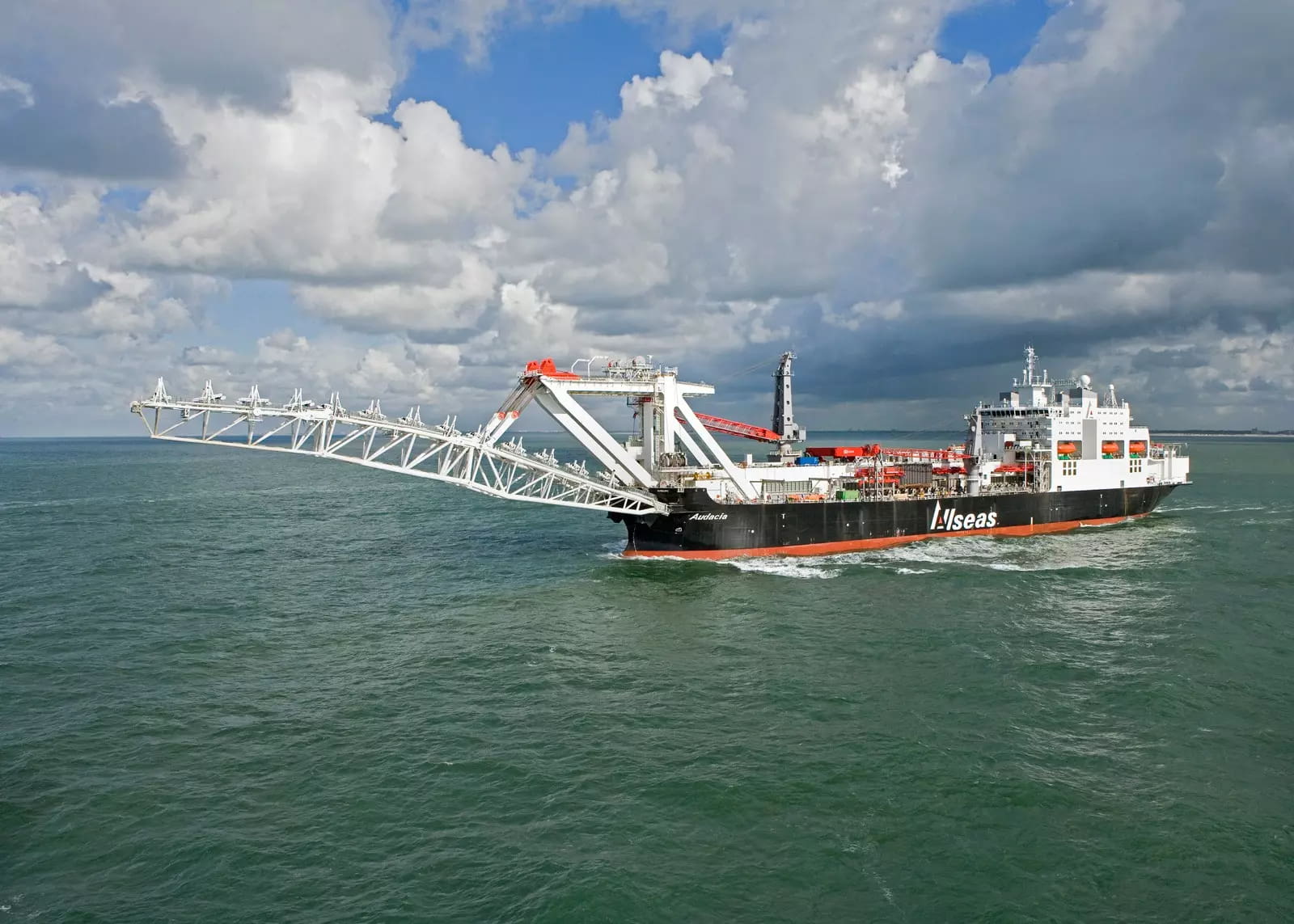
Audacia pipelay vessel; Source: Allseas President Ferdinand R
The next major stage under MP4 is commissioning and hook-up, which will involve flowline pressure testing, nitrogen drying, and the installation of subsea jumpers to connect the Christmas trees on each well to the flowlines and these to the Malampaya main manifold. “MP4 remains on track and on schedule to deliver first gas by the fourth quarter of the year
From installation to seabed placement: A J-lay flowline end terminal (FLET) is carefully lowered from the Audacia pipelay vessel and precisely installed on the seabed at a depth of 690 meters. The FLET serves as a critical connection point between subsea flowlines and production infrastructure, marking a key milestone in the integration of the Malampaya Phase 4 subsea system and enabling the safe and efficient transport of natural gas
Story 2Offshore EnergyMay 6, 2026

Transocean’s $5.8 billion merger with Valaris pending US antitrust clearance

Signal strongSource-grounded

What happened

Transocean’s proposed acquisition of Valaris has progressed to a second information request from US antitrust authorities, extending review timelines and keeping large‑scale fleet consolidation possible. Operationally this would change rig‑owner market positioning and can manifest as shorter quote‑validity windows and more insistence on mobilisation deposits during tight markets. Buyers should track regulatory milestones because any remedies or conditions will affect future rig slot availability and commercial leverage

Buyer takeaway

Assume reduced spot leverage with large rig owners and plan contract language to limit mobilisation surprises

Cost / money

Consolidation makes mobilisation premiums and preserved lump‑sum mobilisation line items more likely as suppliers protect booked revenue

Supplier / commercial

Rig owners may shorten quote validity and require non‑refundable deposits to hold slots during high demand

Safety / operations

Longer vendor commitments and tighter booking calendars can compress maintenance, survey, and crew rotation windows if schedules shift

What to watch

Track antitrust review milestones and any announced remedies; these will materially affect future availability and negotiating leverage

Key facts

  • Second request for information issued by US antitrust authorities
  • Definitive agreement filed for a business combination of two major rig owners
  • Combined fleet scale would materially shift rig‑owner market positioning

Source excerpts

As explained by Transocean, the requests extend the HSR Act waiting period until 30 days after each rig owner substantially complied with the second request, unless the waiting period is extended voluntarily by the parties or terminated earlier by the DOJ
8 billion merger with Valaris pending US antitrust clearance May 6, 2026, by Switzerland-based offshore drilling contractor Transocean’s business combination with the Bermuda-incorporated Valaris is facing extended antitrust scrutiny, as the offshore drilling giants’ merger request is under review with the Federal Trade Commission and the Antitrust Division of the United States Department of Justice (DOJ)
Home Fossil Energy Transocean’s $5. 8 billion merger with Valaris pending US antitrust clearance May 6, 2026, by Switzerland-based offshore drilling contractor Transocean’s business combination with the Bermuda-incorporated Valaris is facing extended antitrust scrutiny, as the offshore drilling giants’ merger request is under review with the Federal Trade Commission and the Antitrust Division of the United States Department of Justice (DOJ)
Story 3Offshore EnergyMay 6, 2026

DeepOcean performs first subsea intervention managed from shore

Signal strongSource-grounded

What happened

DeepOcean completed a subsea intervention managed from shore using a remote operating centre to run ROV and close‑proximity tasks normally needing extended offshore supervision. The job reduced offshore manning for that scope and demonstrates an operational model buyers can leverage to lower offshore travel, accommodation and some day‑rate exposure if ROC capabilities are contractually proven. Watch for local regulator acceptance and supplier ROC maturity before modifying manning or audit requirements for APAC P&A work

Buyer takeaway

Validate supplier ROC maturity and document which tasks can be delivered remotely before assuming manning reductions in contracts

Cost / money

Remote delivery can reduce offshore labour and travel costs, but may introduce new onshore supervision fees and connectivity dependencies

Supplier / commercial

Suppliers with proven ROC capability can offer differentiated pricing; include audit rights to confirm remote delivery claims

Safety / operations

Remote operations shift some safety responsibilities and require clear escalation and emergency response clauses between onshore and offshore teams

What to watch

Confirm regulator and client acceptance of shore‑managed interventions in APAC jurisdictions before changing manning profiles

Key facts

  • First shore‑managed subsea intervention completed at Idun Nord
  • Operation included ROV and close‑proximity crane tasks normally requiring offshore supervisors
  • Scope completed under onshore management with reduced offshore personnel time

Source excerpts

Home Subsea DeepOcean performs first subsea intervention managed from shore May 6, 2026, by As part of its development of remote subsea capabilities, ocean services provider DeepOcean has performed its first subsea intervention project with offshore management based onshore
Home Subsea DeepOcean performs first subsea intervention managed from shore May 6, 2026, by As part of its development of remote subsea capabilities, ocean services provider DeepOcean has performed its first subsea intervention project with offshore management based onshore. Source: DeepOcean The operation was performed at Aker BP’s Idun Nord field in the Norwegian Sea and included a work-class remotely operated vehicle (ROV) managed by offshore leadership from an onshore remote operating centre (ROC) in Haugesu
Source: DeepOcean The operation was performed at Aker BP’s Idun Nord field in the Norwegian Sea and included a work-class remotely operated vehicle (ROV) managed by offshore leadership from an onshore remote operating centre (ROC) in Haugesund, with a second ROV operated from a vessel in the field. DeepOcean reported that the scope saw subsea crane operations and close-proximity vessel positioning, which normally would require a shift supervisor and an engineer on board, potentially for a full 14-day offshore t
Story 4Offshore Engineer

Offshore Natural Gas News

Signal moderateDirectional

What happened

JDR won a contract to supply subsea control umbilicals for an Australian gas project, signalling demand on local umbilical fabrication and delivery capacity. Fabrication and delivery queues for umbilicals can create timing conflicts with P&A scopes that need similar supply‑chain resources. Buyers should query supplier queue positions and delivery slot guarantees when planning P&A schedules in the region

Buyer takeaway

Query supplier queues and lead times for umbilicals and cables when planning P&A schedules to avoid fabrication bottlenecks

Cost / money

High local demand for umbilicals can extend lead times and increase spot premiums on urgent delivery needs

Supplier / commercial

Fabricators may prioritise larger development projects over shorter P&A runs unless buyers secure reserved capacity or framework terms

Safety / operations

Late deliveries of subsea control lines can delay commissioning and handover activities that affect safe P&A execution sequencing

What to watch

Request queue positions and delivery slot guarantees from umbilical suppliers; watch for fabrication bottlenecks in supplier responses

Key facts

  • Contract awarded to supply subsea control umbilicals for an Australian gas development
  • Supplier will fabricate and deliver subsea hydraulic control umbilicals
  • Project tied to Australian east‑coast supply infrastructure

Source excerpts

The models suggest these projects have fragile economics… JDR Nets Subsea Umbilicals Deal for Australian Gas Project Apr 30, 2026 Amplitude Energy has awarded a contract to JDR Cable Systems to supply subsea control umbilicals for its East Coast Supply Project offshore Victoria, aimed at supporting gas delivery to southeastern Australia
However, delivering these projects won’t be easy, says Wood Mackenzie. The models suggest these projects have fragile economics… JDR Nets Subsea Umbilicals Deal for Australian Gas Project Apr 30, 2026 Amplitude Energy has awarded a contract to JDR Cable Systems to supply subsea control umbilicals for its East Coast Supply Project offshore Victoria, aimed at supporting gas delivery to southeastern Australia
As an island nation with more than 11,000 miles of coastline… UAE’s ADNOC Plans Multi-Billion Dollar US Gas Push Apr 28, 2026 Abu Dhabi National Oil Company is planning to invest tens of billions of dollars to build a natural gas business in the United States, the Financial Times reported on Tuesday

VP Snapshot

Executive Risk & Action View

Ongoing deepwater subsea pipelay and flowline work in the Philippines is consuming pipelay and construction vessel time that P&A campaigns rely on, reducing late-booking optionality for APAC plug-and-abandonment mobilisation.

Overall
60
Cost
79
Supply
61
Schedule
20
Compliance
15

Top signals

30-180dcost

Signal 1: Cost / money

Mobilisation premiums and separate non‑day‑rate mobilisation line items are more likely as rig and vessel owners protect booked windows; buyers should expect these to appear as pass‑through charges.

Signal 4: Supplier / commercial

Suppliers offering validated remote operating centre (ROC) delivery can reprice scopes: lower offshore manning may reduce travel/day‑rate exposure but introduce onshore supervision, connectivity, and audit fees.

180d+cost

Signal 2: Cost / money

Active pipelay and umbilical fabrication programmes in APAC raise the chance of longer lead times and spot premiums for critical subsea items that sit on P&A critical paths.

30-180dsupply

Signal 3: Supplier / commercial

Rig‑owner consolidation increases supplier leverage on slot allocation, quote‑validity windows, and deposit mechanics; contract language will be the primary lever buyers retain.

30-180dsupplier

Signal 5: Safety / operations

Shore‑managed subsea work reduces offshore exposure but shifts safety interfaces onshore; effective ROC procedures, clear escalation paths, and verified emergency response roles are required before reducing offshore crews.

Signal 6: Safety / operations

Compressed subsea installation windows increase the risk that statutory surveys, certificates, or surveys collide with mobilisation gates and force on‑site remediation that delays P&A handovers.

Recommended actions

CategoryDue 3d

Log nearby subsea construction and pipelay campaigns into the APAC vessel/MODU availability register and flag potential overlaps with upcoming P&A windows.

Updated availability register showing conflicts, named at‑risk mobilisation windows, and candidate fallback vessels.

ContractsDue 3d

Ask Contracts to require explicit mobilisation cost disclosure and slot‑confirmation mechanics in all new P&A tender documents.

Tender template updated to require mobilisation line items, deposit terms disclosure, and slot confirmation clauses.

ContractsDue 21d

Run a targeted supplier qualification for ROC‑enabled subsea vendors and request ROC maturity evidence (procedures, connectivity, onshore escalation) during requalification.

Shortlist of suppliers with documented ROC procedures, limitations, cybersecurity posture, and audit rights.

CategoryDue 21d

Engage umbilical and subsea cable fabricators to confirm current queue status, lead times, and priority rules that would affect P&A supply timing.

Validated lead‑time register for umbilicals/cables with supplier queue positions and escalation contacts.

CategoryDue 60d

Scope a framework agreement for vessels/MODUs and subsea contractors that embeds slot confirmation, capped quote‑validity windows, and conditional fallback obligations.

Draft framework RFP that includes priority booking mechanics, capped quote validity, and defined fallback mobilisation responsibilities.

Risk register

RiskTriggerMitigation
Antitrust review timelines and any DOJ/FTC remedies are uncertain; outcomes could materially change fleet availability and negotiating leverage for rig slots.Antitrust review timelines and any DOJ/FTC remedies are uncertain; outcomes could materially change fleet availability and negotiating leverage for rig slots.Confirm exposure with category, contracts, and operations before the next supplier commitment.
Remote subsea interventions are proven in Europe but not yet standard in APAC; verify regulator acceptance and local ROC readiness before assuming reduced offshore manning in contracts.Remote subsea interventions are proven in Europe but not yet standard in APAC; verify regulator acceptance and local ROC readiness before assuming reduced offshore manning in contracts.Confirm exposure with category, contracts, and operations before the next supplier commitment.

CM Snapshot

Category Manager Decision Detail

Today's priorities

Log nearby subsea construction and pipelay campaigns into the APAC vessel/MODU availability register and flag potential overlaps with upcoming P&A windows.

Act because the cited source changes the timing, capacity, or commercial assumptions behind the next sourcing decision.

Due 3d

high

CM move

Use this as the immediate supplier or contract action to move before the next sourcing gate.

Ask Contracts to require explicit mobilisation cost disclosure and slot‑confirmation mechanics in all new P&A tender documents.

Do this because consolidation and supplier behaviour are increasing the use of separate mobilisation lumps and deposit mechanics unless buyers force transparency (Article 8).

Due 3d

high

CM move

Use this as the immediate supplier or contract action to move before the next sourcing gate.

Run a targeted supplier qualification for ROC‑enabled subsea vendors and request ROC maturity evidence (procedures, connectivity, onshore escalation) during requalification.

Act because the cited source changes the timing, capacity, or commercial assumptions behind the next sourcing decision.

Due 21d

high

CM move

Use this as the immediate supplier or contract action to move before the next sourcing gate.

Engage umbilical and subsea cable fabricators to confirm current queue status, lead times, and priority rules that would affect P&A supply timing.

Act because the cited source changes the timing, capacity, or commercial assumptions behind the next sourcing decision.

Due 21d

high

CM move

Use this as the immediate supplier or contract action to move before the next sourcing gate.

Supplier radar

Offshore Energy

high

Observed supplier signal

Rig‑owner consolidation increases supplier leverage on slot allocation, quote‑validity windows, and deposit mechanics; contract language will be the primary lever buyers retain.

Commercial implication

Rig‑owner consolidation increases supplier leverage on slot allocation, quote‑validity windows, and deposit mechanics; contract language will be the primary lever buyers retain.

Next step: Validate the source-backed signal with incumbents and alternates before the next award or pricing decision.

Offshore Energy

high

Observed supplier signal

Suppliers offering validated remote operating centre (ROC) delivery can reprice scopes: lower offshore manning may reduce travel/day‑rate exposure but introduce onshore supervision, connectivity, and audit fees.

Commercial implication

Suppliers offering validated remote operating centre (ROC) delivery can reprice scopes: lower offshore manning may reduce travel/day‑rate exposure but introduce onshore supervision, connectivity, and audit fees.

Next step: Validate the source-backed signal with incumbents and alternates before the next award or pricing decision.

Negotiation levers

Log nearby subsea construction and pipelay campaigns into the APAC vessel/MODU availability register and flag potential overlaps with upcoming P&A windows.

When to use: Act because the cited source changes the timing, capacity, or commercial assumptions behind the next sourcing decision.

Expected outcome: Updated availability register showing conflicts, named at‑risk mobilisation windows, and candidate fallback vessels.

Commercial mechanism to carry into the next supplier conversation

Ask Contracts to require explicit mobilisation cost disclosure and slot‑confirmation mechanics in all new P&A tender documents.

When to use: Do this because consolidation and supplier behaviour are increasing the use of separate mobilisation lumps and deposit mechanics unless buyers force transparency (Article 8).

Expected outcome: Tender template updated to require mobilisation line items, deposit terms disclosure, and slot confirmation clauses.

Commercial mechanism to carry into the next supplier conversation

Run a targeted supplier qualification for ROC‑enabled subsea vendors and request ROC maturity evidence (procedures, connectivity, onshore escalation) during requalification.

When to use: Act because the cited source changes the timing, capacity, or commercial assumptions behind the next sourcing decision.

Expected outcome: Shortlist of suppliers with documented ROC procedures, limitations, cybersecurity posture, and audit rights.

Commercial mechanism to carry into the next supplier conversation

Engage umbilical and subsea cable fabricators to confirm current queue status, lead times, and priority rules that would affect P&A supply timing.

When to use: Act because the cited source changes the timing, capacity, or commercial assumptions behind the next sourcing decision.

Expected outcome: Validated lead‑time register for umbilicals/cables with supplier queue positions and escalation contacts.

Commercial mechanism to carry into the next supplier conversation

Talking points

Ongoing deepwater subsea pipelay and flowline work in the Philippines is consuming pipelay and construction vessel time that P&A campaigns rely on, reducing late-booking optionality for APAC plug-and-abandonment mobilisation.
A proposed Transocean–Valaris combination is under extended US antitrust review, keeping rig‑owner consolidation on the table and increasing the likelihood suppliers shorten quote validity or push mobilisation deposit mechanics.
DeepOcean’s shore‑managed subsea intervention proves remote operating centres can cut offshore headcount and change how buyers should price labour, travel, and supervision in P&A scopes — but regulatory and ROC maturity checks remain necessary.
A local contract for subsea umbilicals tied to an Australian gas project signals direct competition for umbilical fabrication and delivery slots that P&A procurement should query during planning.

Supplier radar

SupplierSignalImplicationNext stepConfidence
Offshore EnergyRig‑owner consolidation increases supplier leverage on slot allocation, quote‑validity windows, and deposit mechanics; contract language will be the primary lever buyers retain.Rig‑owner consolidation increases supplier leverage on slot allocation, quote‑validity windows, and deposit mechanics; contract language will be the primary lever buyers retain.Validate the source-backed signal with incumbents and alternates before the next award or pricing decision.high
Offshore EnergySuppliers offering validated remote operating centre (ROC) delivery can reprice scopes: lower offshore manning may reduce travel/day‑rate exposure but introduce onshore supervision, connectivity, and audit fees.Suppliers offering validated remote operating centre (ROC) delivery can reprice scopes: lower offshore manning may reduce travel/day‑rate exposure but introduce onshore supervision, connectivity, and audit fees.Validate the source-backed signal with incumbents and alternates before the next award or pricing decision.high

Negotiation levers

  • Log nearby subsea construction and pipelay campaigns into the APAC vessel/MODU availability register and flag potential overlaps with upcoming P&A windows.Act because the cited source changes the timing, capacity, or commercial assumptions behind the next sourcing decision.Updated availability register showing conflicts, named at‑risk mobilisation windows, and candidate fallback vessels.

    high confidence

  • Ask Contracts to require explicit mobilisation cost disclosure and slot‑confirmation mechanics in all new P&A tender documents.Do this because consolidation and supplier behaviour are increasing the use of separate mobilisation lumps and deposit mechanics unless buyers force transparency (Article 8).Tender template updated to require mobilisation line items, deposit terms disclosure, and slot confirmation clauses.

    high confidence

  • Run a targeted supplier qualification for ROC‑enabled subsea vendors and request ROC maturity evidence (procedures, connectivity, onshore escalation) during requalification.Act because the cited source changes the timing, capacity, or commercial assumptions behind the next sourcing decision.Shortlist of suppliers with documented ROC procedures, limitations, cybersecurity posture, and audit rights.

    high confidence

  • Engage umbilical and subsea cable fabricators to confirm current queue status, lead times, and priority rules that would affect P&A supply timing.Act because the cited source changes the timing, capacity, or commercial assumptions behind the next sourcing decision.Validated lead‑time register for umbilicals/cables with supplier queue positions and escalation contacts.

    high confidence

What to do / What to watch

What to do now

  • Log nearby subsea construction and pipelay campaigns into the APAC vessel/MODU availability register and flag potential overlaps with upcoming P&A windows.

    Why: Act because the cited source changes the timing, capacity, or commercial assumptions behind the next sourcing decision.

    Owner: Category

    Expected outcome: Updated availability register showing conflicts, named at‑risk mobilisation windows, and candidate fallback vessels.

    [1]
  • Ask Contracts to require explicit mobilisation cost disclosure and slot‑confirmation mechanics in all new P&A tender documents.

    Why: Do this because consolidation and supplier behaviour are increasing the use of separate mobilisation lumps and deposit mechanics unless buyers force transparency (Article 8).

    Owner: Contracts

    Expected outcome: Tender template updated to require mobilisation line items, deposit terms disclosure, and slot confirmation clauses.

    [2]

Next few weeks

  • Run a targeted supplier qualification for ROC‑enabled subsea vendors and request ROC maturity evidence (procedures, connectivity, onshore escalation) during requalification.

    Why: Act because the cited source changes the timing, capacity, or commercial assumptions behind the next sourcing decision.

    Owner: Contracts

    Expected outcome: Shortlist of suppliers with documented ROC procedures, limitations, cybersecurity posture, and audit rights.

    [3]
  • Engage umbilical and subsea cable fabricators to confirm current queue status, lead times, and priority rules that would affect P&A supply timing.

    Why: Act because the cited source changes the timing, capacity, or commercial assumptions behind the next sourcing decision.

    Owner: Category

    Expected outcome: Validated lead‑time register for umbilicals/cables with supplier queue positions and escalation contacts.

    [4]

Longer view

  • Scope a framework agreement for vessels/MODUs and subsea contractors that embeds slot confirmation, capped quote‑validity windows, and conditional fallback obligations.

    Why: Act because the cited source changes the timing, capacity, or commercial assumptions behind the next sourcing decision.

    Owner: Category

    Expected outcome: Draft framework RFP that includes priority booking mechanics, capped quote validity, and defined fallback mobilisation responsibilities.

    [1][2]

What to watch

  • Antitrust review timelines and any DOJ/FTC remedies are uncertain; outcomes could materially change fleet availability and negotiating leverage for rig slots
  • Remote subsea interventions are proven in Europe but not yet standard in APAC; verify regulator acceptance and local ROC readiness before assuming reduced offshore manning in contracts
  • Antitrust review timelines and any DOJ/FTC remedies are uncertain; outcomes could materially change fleet availability and negotiating leverage for rig slots.: Antitrust review timelines and any DOJ/FTC remedies are uncertain; outcomes could materially change fleet availability and negotiating leverage for rig slots
  • Remote subsea interventions are proven in Europe but not yet standard in APAC; verify regulator acceptance and local ROC readiness before assuming reduced offshore manning in contracts.: Remote subsea interventions are proven in Europe but not yet standard in APAC; verify regulator acceptance and local ROC readiness before assuming reduced offshore manning in contracts
  • Ongoing deepwater subsea pipelay and flowline work in the Philippines is consuming pipelay and construction vessel time that P&A campaigns rely on, reducing late-booking optionality for APAC plug-and-abandonment mobilisation
  • A proposed Transocean–Valaris combination is under extended US antitrust review, keeping rig‑owner consolidation on the table and increasing the likelihood suppliers shorten quote validity or push mobilisation deposit mechanics
  • DeepOcean’s shore‑managed subsea intervention proves remote operating centres can cut offshore headcount and change how buyers should price labour, travel, and supervision in P&A scopes — but regulatory and ROC maturity checks remain necessary
  • A local contract for subsea umbilicals tied to an Australian gas project signals direct competition for umbilical fabrication and delivery slots that P&A procurement should query during planning

Market pulse

IndexLatestChangeAs of
WTI Crude (WTI)71.23 /bbl+0.00 (+0.00%)May 6, 2026, 10:10 PM
Brent Crude (BRENT)74.89 /bbl+0.00 (+0.00%)May 6, 2026, 10:10 PM
Natural Gas (NG)3.12 /MMBtu+0.00 (+0.00%)May 6, 2026, 10:10 PM
Baltic Dry (BDI)1,245 pts+0.00 (+0.00%)May 6, 2026, 10:10 PM
  • Baltic Dry: Higher regional subsea construction activity can tighten vessel logistics and lift short‑term shipping demand relevant to mobilisation planning
  • Natural Gas: Active gas projects in the region are a demand signal for subsea supply‑chain items like umbilicals that P&A procurement should track

Sources

Inline citations jump here. Expand a source to read the excerpt, the AI interpretation, and the original link.

[1] First gas on track before 2026 ends with Southeast Asian project’s subsea ops in full swing

offshore-energy.biz · May 6, 2026

Expand

AI reading

Subsea installation and pipelay work for the Malampaya Phase 4 project is progressing with flowlines and umbilicals being installed and piles driven at deepwater locations offshore the Philippines. The campaign is moving toward commissioning and hook‑up activities that will keep pipelay and construction vessels occupied through the next integration stages. Buyers should watch actual pipelay vessel release dates and umbilical installation timing for potential overlap with nearby P&A campaigns

Buyer takeaway

Treat the Malampaya campaign as a confirmed near‑term demand on pipelay and construction assets that can reduce optionality for APAC P&A vessel bookings

Cost / money

Tighter vessel schedules increase the chance of mobilisation premiums or premium rebooking costs if buyers need date changes

Supplier / commercial

Pipelay and subsea contractors may shorten quote validity and prioritise longer, higher‑value campaigns over spot P&A work

Safety / operations

Compressed installation windows can force certificates and surveys into constrained slots, increasing risk of remediation that affects P&A handover

What to watch

Watch umbilical installation timing and pipelay vessel release dates; overlap is the earliest sign P&A slots will tighten

Key facts

  • Subsea pipelay and flowline installations underway offshore Palawan
  • Piles driven into seabed at approximately 1,100m water depth
  • Next stages include commissioning, pressure testing and umbilical installation

Source excerpts

Audacia pipelay vessel; Source: Allseas President Ferdinand R
The next major stage under MP4 is commissioning and hook-up, which will involve flowline pressure testing, nitrogen drying, and the installation of subsea jumpers to connect the Christmas trees on each well to the flowlines and these to the Malampaya main manifold. “MP4 remains on track and on schedule to deliver first gas by the fourth quarter of the year
From installation to seabed placement: A J-lay flowline end terminal (FLET) is carefully lowered from the Audacia pipelay vessel and precisely installed on the seabed at a depth of 690 meters. The FLET serves as a critical connection point between subsea flowlines and production infrastructure, marking a key milestone in the integration of the Malampaya Phase 4 subsea system and enabling the safe and efficient transport of natural gas

Used in this brief

  • Next 72 hours — Log nearby subsea construction and pipelay campaigns into the APAC vessel/MODU availability register and flag potential overlaps with upcoming P&A windows.. Rationale: Act because the cited source changes the timing, capacity, or commercial assumptions behind the next sourcing decision.. Owner: Category. KPI: Updated availability register showing conflicts, named at‑risk mobilisation windows, and candidate fallback vessels
  • Next quarter — Scope a framework agreement for vessels/MODUs and subsea contractors that embeds slot confirmation, capped quote‑validity windows, and conditional fallback obligations.. Rationale: Act because the cited source changes the timing, capacity, or commercial assumptions behind the next sourcing decision.. Owner: Category. KPI: Draft framework RFP that includes priority booking mechanics, capped quote validity, and defined fallback mobilisation responsibilities
  • Malampaya Phase 4 subsea pipelay and flowline installs reported further progress, adding near‑region vessel demand not present in the prior run
Open original source

[2] Transocean’s $5.8 billion merger with Valaris pending US antitrust clearance

offshore-energy.biz · May 6, 2026

Expand

AI reading

Transocean’s proposed acquisition of Valaris has progressed to a second information request from US antitrust authorities, extending review timelines and keeping large‑scale fleet consolidation possible. Operationally this would change rig‑owner market positioning and can manifest as shorter quote‑validity windows and more insistence on mobilisation deposits during tight markets. Buyers should track regulatory milestones because any remedies or conditions will affect future rig slot availability and commercial leverage

Buyer takeaway

Assume reduced spot leverage with large rig owners and plan contract language to limit mobilisation surprises

Cost / money

Consolidation makes mobilisation premiums and preserved lump‑sum mobilisation line items more likely as suppliers protect booked revenue

Supplier / commercial

Rig owners may shorten quote validity and require non‑refundable deposits to hold slots during high demand

Safety / operations

Longer vendor commitments and tighter booking calendars can compress maintenance, survey, and crew rotation windows if schedules shift

What to watch

Track antitrust review milestones and any announced remedies; these will materially affect future availability and negotiating leverage

Key facts

  • Second request for information issued by US antitrust authorities
  • Definitive agreement filed for a business combination of two major rig owners
  • Combined fleet scale would materially shift rig‑owner market positioning

Source excerpts

As explained by Transocean, the requests extend the HSR Act waiting period until 30 days after each rig owner substantially complied with the second request, unless the waiting period is extended voluntarily by the parties or terminated earlier by the DOJ
8 billion merger with Valaris pending US antitrust clearance May 6, 2026, by Switzerland-based offshore drilling contractor Transocean’s business combination with the Bermuda-incorporated Valaris is facing extended antitrust scrutiny, as the offshore drilling giants’ merger request is under review with the Federal Trade Commission and the Antitrust Division of the United States Department of Justice (DOJ)
Home Fossil Energy Transocean’s $5. 8 billion merger with Valaris pending US antitrust clearance May 6, 2026, by Switzerland-based offshore drilling contractor Transocean’s business combination with the Bermuda-incorporated Valaris is facing extended antitrust scrutiny, as the offshore drilling giants’ merger request is under review with the Federal Trade Commission and the Antitrust Division of the United States Department of Justice (DOJ)

Used in this brief

  • Next 72 hours — Ask Contracts to require explicit mobilisation cost disclosure and slot‑confirmation mechanics in all new P&A tender documents.. Rationale: Do this because consolidation and supplier behaviour are increasing the use of separate mobilisation lumps and deposit mechanics unless buyers force transparency (Article 8).. Owner: Contracts. KPI: Tender template updated to require mobilisation line items, deposit terms disclosure, and slot confirmation clauses
  • Antitrust review timelines and any DOJ/FTC remedies are uncertain; outcomes could materially change fleet availability and negotiating leverage for rig slots
  • Transocean–Valaris merger progressed to a second information request from US antitrust authorities, updating consolidation risk versus the prior run (new regulator action)
Open original source

[3] DeepOcean performs first subsea intervention managed from shore

offshore-energy.biz · May 6, 2026

Expand

AI reading

DeepOcean completed a subsea intervention managed from shore using a remote operating centre to run ROV and close‑proximity tasks normally needing extended offshore supervision. The job reduced offshore manning for that scope and demonstrates an operational model buyers can leverage to lower offshore travel, accommodation and some day‑rate exposure if ROC capabilities are contractually proven. Watch for local regulator acceptance and supplier ROC maturity before modifying manning or audit requirements for APAC P&A work

Buyer takeaway

Validate supplier ROC maturity and document which tasks can be delivered remotely before assuming manning reductions in contracts

Cost / money

Remote delivery can reduce offshore labour and travel costs, but may introduce new onshore supervision fees and connectivity dependencies

Supplier / commercial

Suppliers with proven ROC capability can offer differentiated pricing; include audit rights to confirm remote delivery claims

Safety / operations

Remote operations shift some safety responsibilities and require clear escalation and emergency response clauses between onshore and offshore teams

What to watch

Confirm regulator and client acceptance of shore‑managed interventions in APAC jurisdictions before changing manning profiles

Key facts

  • First shore‑managed subsea intervention completed at Idun Nord
  • Operation included ROV and close‑proximity crane tasks normally requiring offshore supervisors
  • Scope completed under onshore management with reduced offshore personnel time

Source excerpts

Home Subsea DeepOcean performs first subsea intervention managed from shore May 6, 2026, by As part of its development of remote subsea capabilities, ocean services provider DeepOcean has performed its first subsea intervention project with offshore management based onshore
Home Subsea DeepOcean performs first subsea intervention managed from shore May 6, 2026, by As part of its development of remote subsea capabilities, ocean services provider DeepOcean has performed its first subsea intervention project with offshore management based onshore. Source: DeepOcean The operation was performed at Aker BP’s Idun Nord field in the Norwegian Sea and included a work-class remotely operated vehicle (ROV) managed by offshore leadership from an onshore remote operating centre (ROC) in Haugesu
Source: DeepOcean The operation was performed at Aker BP’s Idun Nord field in the Norwegian Sea and included a work-class remotely operated vehicle (ROV) managed by offshore leadership from an onshore remote operating centre (ROC) in Haugesund, with a second ROV operated from a vessel in the field. DeepOcean reported that the scope saw subsea crane operations and close-proximity vessel positioning, which normally would require a shift supervisor and an engineer on board, potentially for a full 14-day offshore t

Used in this brief

  • Ongoing deepwater subsea pipelay and flowline work in the Philippines is consuming pipelay and construction vessel time that P&A campaigns rely on, reducing late-booking optionality for APAC plug-and-abandonment mobilisation. A proposed Transocean–Valaris combination is under extended US antitrust review, keeping rig‑owner consolidation on the table and increasing the likelihood suppliers shorten quote validity or push mobilisation deposit mechanics. DeepOcean’s shore‑managed subsea intervention proves remote operating centres can cut offshore headcount and change how buyers should price labour, travel, and supervision in P&A scopes — but regulatory and ROC maturity checks remain necessary. A local contract for subsea umbilicals tied to an Australian gas project signals direct competition for umbilical fabrication and delivery slots that P&A procurement should query during planning
  • Safety / operations: Shore‑managed subsea work reduces offshore exposure but shifts safety interfaces onshore; effective ROC procedures, clear escalation paths, and verified emergency response roles are required before reducing offshore crews
  • Next 2-4 weeks — Run a targeted supplier qualification for ROC‑enabled subsea vendors and request ROC maturity evidence (procedures, connectivity, onshore escalation) during requalification.. Rationale: Act because the cited source changes the timing, capacity, or commercial assumptions behind the next sourcing decision.. Owner: Contracts. KPI: Shortlist of suppliers with documented ROC procedures, limitations, cybersecurity posture, and audit rights
Open original source

[4] Offshore Natural Gas News

oedigital.com · n.d.

Expand

AI reading

JDR won a contract to supply subsea control umbilicals for an Australian gas project, signalling demand on local umbilical fabrication and delivery capacity. Fabrication and delivery queues for umbilicals can create timing conflicts with P&A scopes that need similar supply‑chain resources. Buyers should query supplier queue positions and delivery slot guarantees when planning P&A schedules in the region

Buyer takeaway

Query supplier queues and lead times for umbilicals and cables when planning P&A schedules to avoid fabrication bottlenecks

Cost / money

High local demand for umbilicals can extend lead times and increase spot premiums on urgent delivery needs

Supplier / commercial

Fabricators may prioritise larger development projects over shorter P&A runs unless buyers secure reserved capacity or framework terms

Safety / operations

Late deliveries of subsea control lines can delay commissioning and handover activities that affect safe P&A execution sequencing

What to watch

Request queue positions and delivery slot guarantees from umbilical suppliers; watch for fabrication bottlenecks in supplier responses

Key facts

  • Contract awarded to supply subsea control umbilicals for an Australian gas development
  • Supplier will fabricate and deliver subsea hydraulic control umbilicals
  • Project tied to Australian east‑coast supply infrastructure

Source excerpts

The models suggest these projects have fragile economics… JDR Nets Subsea Umbilicals Deal for Australian Gas Project Apr 30, 2026 Amplitude Energy has awarded a contract to JDR Cable Systems to supply subsea control umbilicals for its East Coast Supply Project offshore Victoria, aimed at supporting gas delivery to southeastern Australia
However, delivering these projects won’t be easy, says Wood Mackenzie. The models suggest these projects have fragile economics… JDR Nets Subsea Umbilicals Deal for Australian Gas Project Apr 30, 2026 Amplitude Energy has awarded a contract to JDR Cable Systems to supply subsea control umbilicals for its East Coast Supply Project offshore Victoria, aimed at supporting gas delivery to southeastern Australia
As an island nation with more than 11,000 miles of coastline… UAE’s ADNOC Plans Multi-Billion Dollar US Gas Push Apr 28, 2026 Abu Dhabi National Oil Company is planning to invest tens of billions of dollars to build a natural gas business in the United States, the Financial Times reported on Tuesday

Used in this brief

  • Next 2-4 weeks — Engage umbilical and subsea cable fabricators to confirm current queue status, lead times, and priority rules that would affect P&A supply timing.. Rationale: Act because the cited source changes the timing, capacity, or commercial assumptions behind the next sourcing decision.. Owner: Category. KPI: Validated lead‑time register for umbilicals/cables with supplier queue positions and escalation contacts
  • JDR won a contract to supply subsea control umbilicals for an Australian gas project, signalling demand on local umbilical fabrication and delivery capacity. Fabrication and delivery queues for umbilicals can create timing conflicts with P&A scopes that need similar supply‑chain resources. Buyers should query supplier queue positions and delivery slot guarantees when planning P&A schedules in the region
  • Buyer bottom line: local demand for umbilicals and subsea cables can create direct procurement competition for materials and fabrication slots relevant to P&A projects
Open original source

[5] Baltic Dry

finance.yahoo.com · n.d.

Expand

[6] Natural Gas

finance.yahoo.com · n.d.

Expand