Oil & Gas / LNG Market Dashboard · International (Houston)

Reprioritize subsea sourcing for Mexico deepwater and rig tightness

Published May 6, 2026, 5:01 AM CSTINTERNATIONALFull category signal
Ask AI
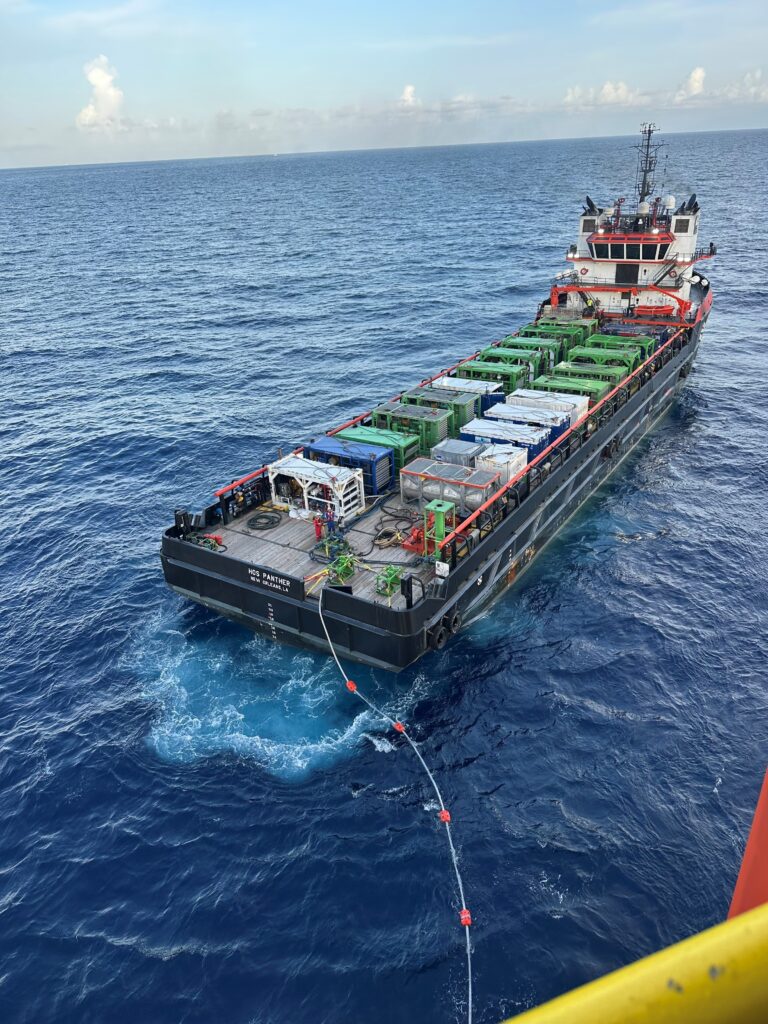
EnerMech joins Subsea7 on Mexico’s first deepwater oil project

In 60 seconds

Top move

EnerMech’s award to Subsea7 for Trion makes Mexico’s first deepwater pre-commissioning a real, near‑term buyer demand that needs shore-base logistics and specialist spreads to be confirmed

Key takeaways

  • EnerMech’s award to Subsea7 for Trion makes Mexico’s first deepwater pre-commissioning a real, near‑term buyer demand that needs shore-base logistics and specialist spreads to be confirmed.[4]
  • Valaris’ new contracts and backlog increase point to sustained rig demand and fewer short‑notice rig options, which reduces buyer flexibility on timing and day‑rate posture.[1]
  • INEOS acquiring a working interest close to Shell’s Appomattox platform strengthens the infrastructure-led tieback path — meaning more projects will aim to use existing facilities and can move from planning to execution faster.[2]
  • Petrobras’ AIP for the Sururu/Berbigão reservoirs formalises partner shares and shifts how past costs and future contracting will be settled — suppliers on Brazil work should expect clarified partner billing and scope boundaries.[3]
  • Taken together the set of announcements tightens specialist resource windows (pre‑commissioning spreads, vessels, ROVs, rig slots) and increases the value of conditional holds or short‑term slot guarantees when negotiating.[4]

What changed since last run

  • Added Mexico Trion pre‑commissioning award that creates a first‑of‑its‑kind demand stream for shore bases and pre‑commissioning spreads.
  • Observed a reported uplift in Valaris contract backlog versus the prior fleet status, strengthening the rig‑availability signal.
  • Noted INEOS’s stake near Appomattox as a fresh infrastructure‑led tieback signal that can accelerate near‑platform developments.

Key facts

  • Supports Trion deepwater development
  • Scope includes flooding, cleaning, hydrotesting and nitrogen dewatering
  • Execution supported from Houston and Villahermosa; tied to multi‑well programme
  • New contracts and extensions across Brazil, Brunei, Indonesia and North Sea
  • Backlog increase reported since the previous fleet status
  • Includes multi‑year extensions that continue existing programmes

Why it matters

EnerMech’s award to Subsea7 for Trion makes Mexico’s first deepwater pre-commissioning a real, near‑term buyer demand that needs shore-base logistics and specialist spreads to be confirmed. Valaris’ new contracts and backlog increase point to sustained rig demand and fewer short‑notice rig options, which reduces buyer flexibility on timing and day‑rate posture. INEOS acquiring a working interest close to Shell’s Appomattox platform strengthens the infrastructure-led tieback path — meaning more projects will aim to use existing facilities and can move from planning to execution faster. Petrobras’ AIP for the Sururu/Berbigão reservoirs formalises partner shares and shifts how past costs and future contracting will be settled — suppliers on Brazil work should expect clarified partner billing and scope boundaries

Cost / money

  • Trion’s pre‑commissioning scope increases mobilization and base costs in Houston and Villahermosa because local staging, flooding and hydrotesting services must be in place ahead of subsea commissioning.[4]
  • Higher reported rig backlog reduces access to short‑notice rigs, which can shift buyers toward higher day‑rate commitments or longer mobilization windows when scheduling wells.[1]

Supplier / commercial

  • EnerMech’s embedded planners working with Subsea7 signal integrated delivery scopes where subcontractors may compete for sequenced work rather than one‑off lots, lowering spot sourcing opportunities.[4]
  • INEOS’s Appomattox interest and stated focus on tiebacks makes operators more likely to bundle tieback installation and pipeline tie‑ins with platform incumbents, concentrating commercial leverage in fewer suppliers.[2]

Safety / operations

  • Deepwater pre‑commissioning for Trion adds SIMOPS complexity (flooding, cleaning, hydrotesting, nitrogen dewatering) that creates uptime dependency on timely land‑based support and specialist crews.[4]
  • Longer rig contracts and extensions increase the need to align rig maintenance windows and certification schedules with buyer interventions to avoid unplanned downtime during planned campaigns.[1]

What to watch

  • Watch for suppliers to shorten quote validity and require mobilisation deposits as project schedules firm up and specialist vessels/crews get allocated.[1]
  • Early signal: tieback‑led execution (INEOS/Shell) could compress sourcing windows for subsea installation and spares if follow‑on wells are awarded quickly; verify planned well cadence with operators.[2]

Top stories

Story 1Offshore EnergyMay 5, 2026

EnerMech joins Subsea7 on Mexico’s first deepwater oil project

Signal strongSource-grounded

What happened

Subsea7 awarded EnerMech a subsea pre‑commissioning contract for the Trion deepwater development off Mexico. The scope covers flooding, cleaning, gauging, hydrotesting, nitrogen dewatering and pre‑commissioning works, supported from Houston and Villahermosa and tied to Trion’s multi‑well development and first‑oil timeline. Treat this as an operational demand signal: shore‑base readiness, customs/logistics and sequencing with the main installation contractor are the next procurement items to watch

Buyer takeaway

This is a real, executable demand stream for pre‑commissioning and local staging because work is already contracted and planners are embedded with Subsea7

Cost / money

Expect higher near‑term mobilisation and base costs as equipment and crews are staged across two countries and customs/logistics are settled

Supplier / commercial

Subsea7’s integrated award with an embedded specialist reduces the depth of competitive spot bids for early pre‑commissioning tasks

Safety / operations

Pre‑commissioning adds SIMOPS and uptime dependency on shore‑based specialists and tightly sequenced offshore windows

What to watch

Watch customs, local content constraints and the sequencing of flooding/hydrotesting relative to vessel arrival and ROV availability

Key facts

  • Supports Trion deepwater development
  • Scope includes flooding, cleaning, hydrotesting and nitrogen dewatering
  • Execution supported from Houston and Villahermosa; tied to multi‑well programme

Source excerpts

Home Fossil Energy EnerMech joins Subsea7 on Mexico’s first deepwater oil project May 5, 2026, by Subsea7 has awarded Aberdeen-headquartered integrated solutions specialist EnerMech with a subsea pre-commissioning contract for what is described as the first ultra-deepwater oil development in Mexico. Source: EnerMech EnerMech will deploy its pre‑commissioning spreads and will deliver flooding, cleaning, gauging, hydrotesting, nitrogen dewatering services, and pre-commissioning activities for the Trion development
Source: EnerMech EnerMech will deploy its pre‑commissioning spreads and will deliver flooding, cleaning, gauging, hydrotesting, nitrogen dewatering services, and pre-commissioning activities for the Trion development, aligned with Subsea7’s subsea umbilicals, risers, and flowlines (SURF) installation program. The company will support the work from its Houston base in Texas and its facility in Villahermosa, Mexico
According to EnerMech, embedded project planners and engineers will work directly with Subsea7’s teams to optimize sequencing, minimize SIMOPS impacts and safeguard the offshore critical path. EnerMech CEO Charles ‘Chuck’ Davison, Jnr
Story 2Offshore EnergyMay 5, 2026

Valaris’ batch of rig deals lifts total contract backlog to $4.9 billion

Signal strongSource-grounded

What happened

Valaris reported a batch of new rig awards and extensions that raised its contract backlog and included long continuations in Brazil and other regions. The company highlighted multi‑year extensions and fleet assignments that reduce the pool of immediately available rigs and can affect mobilisation windows. Buyers should watch contract continuity and mobilisation timing when planning well campaigns

Buyer takeaway

Longer rig bookings reduce the pool of short‑notice rigs and increase the value of early slot confirmations

Cost / money

Reduced access to spot rigs can push buyers into longer commitments or paying premiums to meet drilling schedules

Supplier / commercial

Rig owners with increasing backlog can shorten quote validity and press for mobilisation fees or tighter commercial windows

Safety / operations

Extended contracts can help continuity but require careful alignment of maintenance and certification schedules with buyer interventions

What to watch

Watch mobilisation dates and clause alignment between rig schedules and buyer well windows to avoid schedule slip or premium re‑rates

Key facts

  • New contracts and extensions across Brazil, Brunei, Indonesia and North Sea
  • Backlog increase reported since the previous fleet status
  • Includes multi‑year extensions that continue existing programmes

Source excerpts

The day rate is $80,000
The rig owner claims that its contract backlog increased to around $4
“We continue to execute our commercial strategy, adding over $500 million of new contract backlog since reporting our fourth quarter results, including a multi-year extension for Valaris DS-4 offshore Brazil that secures continuous work for the rig into 2030
Story 3Offshore TechnologyMay 5, 2026

INEOS, Shell to develop Gulf of Mexico oil and gas prospects

Signal moderateDirectional

What happened

INEOS Energy agreed to acquire a 21% working interest in assets within tieback distance of Shell’s Appomattox platform in the US Gulf, aiming to use existing pipeline infrastructure to move quickly and control costs. The transaction is framed to speed development by integrating early production with existing facilities, which makes tiebacks commercially attractive. Monitor whether upcoming wells follow tieback plans that require rapid procurement of subsea tie‑in and installation services

Buyer takeaway

Treat this as an execution‑first signal: tiebacks will prioritise speed and use of existing facilities over standalone build‑outs

Cost / money

Tiebacks can lower total capex but increase short‑term mobilisation and spares needs to meet compressed schedules

Supplier / commercial

Operators may bundle tieback, subsea installation and pipeline work with an incumbent operator or preferred vendor, narrowing sourcing paths

Safety / operations

Tie‑ins to live platforms raise SIMOPS and certification dependencies; spares and crew readiness become critical to avoid production impact

What to watch

Watch for quick awards of tieback installation packages and shortened negotiation windows for mobilization and testing scope

Key facts

  • INEOS to acquire a 21% working interest in tieback‑proximate assets
  • Transaction aims to use existing Appomattox infrastructure to accelerate production
  • Part of INEOS’s broader upstream expansion across multiple basins

Source excerpts

INEOS Energy has signed an agreement with Shell Offshore, a subsidiary of Shell, to co-invest in oil and gas exploration and development near the Appomattox platform in the Gulf of Mexico (GoM). Under the terms of the arrangement, INEOS will acquire a 21% working interest in certain assets located within tie-back distance of the platform
Credit: INEOS Energy. INEOS Energy has signed an agreement with Shell Offshore, a subsidiary of Shell, to co-invest in oil and gas exploration and development near the Appomattox platform in the Gulf of Mexico (GoM)
We are focusing on areas close to existing infrastructure where we can move quickly, control costs and unlock new production
Story 4Offshore EnergyMay 5, 2026

Petrobras, Shell, TotalEnergies, and Petrogal formalize production split for Brazilian oil field duo

Signal strongSource-grounded

What happened

Brazil’s regulator approved an AIP formalising the production split for the Sururu and Berbigão shared reservoirs, setting partner interests and the rules for joint execution effective May 1. The AIP affects how expenses and revenues up to the effective date will be negotiated and allocated, which has cash‑flow and contracting implications. Procurement teams on Brazil packages should track the settlement negotiations and any reallocation of execution responsibilities between partners

Buyer takeaway

Contracting and invoicing lines may shift as partners finalise settlements; clarify who owns which execution scopes before awarding suppliers

Cost / money

Settlements over past costs can influence cashflow and supplier payment risk during contract transitions

Supplier / commercial

Partners may reshuffle scopes between operators, affecting incumbent supplier positions and necessitating re‑validation of vendor agreements

Safety / operations

Production continuity depends on partner coordination; gaps in spare allocations or crew transitions can create uptime risk

What to watch

Watch the negotiation outcomes and any changes to which partner will manage commissioning, spares and maintenance contracts

Key facts

  • AIP effective date recorded as May 1
  • Sets partner interests for Sururu and Berbigão shared reservoirs
  • Affects negotiation of expenses and revenues tied to produced volumes

Source excerpts

The AIP effective date is May 1, 2026. The agreement sets forth the interests of each party and the rules governing the joint execution of oil and natural gas development and production operations in the shared reservoir
The agreement sets forth the interests of each party and the rules governing the joint execution of oil and natural gas development and production operations in the shared reservoir
The AIP effective date is May 1, 2026

VP Snapshot

Executive Risk & Action View

EnerMech’s award to Subsea7 for Trion makes Mexico’s first deepwater pre-commissioning a real, near‑term buyer demand that needs shore-base logistics and specialist spreads to be confirmed.

Overall
66
Cost
61
Supply
25
Schedule
56
Compliance
15

Top signals

30-180dcost

Signal 1: Cost / money

Trion’s pre‑commissioning scope increases mobilization and base costs in Houston and Villahermosa because local staging, flooding and hydrotesting services must be in place ahead of subsea commissioning.

180d+cost

Signal 2: Cost / money

Higher reported rig backlog reduces access to short‑notice rigs, which can shift buyers toward higher day‑rate commitments or longer mobilization windows when scheduling wells.

30-180dschedule

Signal 3: Supplier / commercial

EnerMech’s embedded planners working with Subsea7 signal integrated delivery scopes where subcontractors may compete for sequenced work rather than one‑off lots, lowering spot sourcing opportunities.

Signal 5: Safety / operations

Deepwater pre‑commissioning for Trion adds SIMOPS complexity (flooding, cleaning, hydrotesting, nitrogen dewatering) that creates uptime dependency on timely land‑based support and specialist crews.

30-180dcommercial

Signal 4: Supplier / commercial

INEOS’s Appomattox interest and stated focus on tiebacks makes operators more likely to bundle tieback installation and pipeline tie‑ins with platform incumbents, concentrating commercial leverage in fewer suppliers.

180d+supplier

Signal 6: Safety / operations

Longer rig contracts and extensions increase the need to align rig maintenance windows and certification schedules with buyer interventions to avoid unplanned downtime during planned campaigns.

Recommended actions

CategoryDue 3d

Contact incumbent and alternate pre‑commissioning suppliers to confirm shore‑base capacity and mobilisation lead times for Houston and Villahermosa.

Shortlist of suppliers with confirmed base capacity, mobilisation flags and critical equipment availability

ContractsDue 21d

Ask Contracts to draft and circulate mobilisation‑deposit and limited‑quote‑validity clause templates for subsea pre‑commissioning and ROV lots.

Standard contract clauses ready to insert into upcoming award negotiations

CategoryDue 21d

Run supplier capacity and vessel availability checks for ROV/IMR, pre‑commissioning spreads, and pipelay support in the Mexico and US Gulf corridors.

Documented capacity matrix showing confirmed slots, conditional holds, and critical skill gaps

OpsDue 60d

Build a contingency roster and activation triggers for alternate subsea pre‑commissioning and installation suppliers, including provisional commercial terms.

Contingency roster with activation criteria and provisional terms to shorten replacement lead time

Risk register

RiskTriggerMitigation
Watch for suppliers to shorten quote validity and require mobilisation deposits as project schedules firm up and specialist vessels/crews get allocated.Watch for suppliers to shorten quote validity and require mobilisation deposits as project schedules firm up and specialist vessels/crews get allocated.Confirm exposure with category, contracts, and operations before the next supplier commitment.
Early signal: tieback‑led execution (INEOS/Shell) could compress sourcing windows for subsea installation and spares if follow‑on wells are awarded quickly; verify planned well cadence with operators.Early signal: tieback‑led execution (INEOS/Shell) could compress sourcing windows for subsea installation and spares if follow‑on wells are awarded quickly; verify planned well cadence with operators.Confirm exposure with category, contracts, and operations before the next supplier commitment.

CM Snapshot

Category Manager Decision Detail

Today's priorities

Contact incumbent and alternate pre‑commissioning suppliers to confirm shore‑base capacity and mobilisation lead times for Houston and Villahermosa.

Do this because EnerMech’s Trion award creates a defined demand for pre‑commissioning spreads and shore‑base support that will lock specialist resources if left unverified.

Due 3d

high

CM move

Use this as the immediate supplier or contract action to move before the next sourcing gate.

Ask Contracts to draft and circulate mobilisation‑deposit and limited‑quote‑validity clause templates for subsea pre‑commissioning and ROV lots.

Do this because contract language preserves buyer leverage when suppliers shorten validity or seek deposits as project schedules firm up and vessel time is committed.

Due 21d

high

CM move

Use this as the immediate supplier or contract action to move before the next sourcing gate.

Run supplier capacity and vessel availability checks for ROV/IMR, pre‑commissioning spreads, and pipelay support in the Mexico and US Gulf corridors.

Do this because first‑of‑its‑kind deepwater developments and growing rig backlogs increase the risk of slot and crew shortages that affect mobilisation dates and cost exposure.

Due 21d

high

CM move

Use this as the immediate supplier or contract action to move before the next sourcing gate.

Build a contingency roster and activation triggers for alternate subsea pre‑commissioning and installation suppliers, including provisional commercial terms.

Do this because concentrated awards and longer rig contracts reduce spot options; having pre‑negotiated alternates shortens time to replace or augment suppliers if primary vendo...

Due 60d

high

CM move

Use this as the immediate supplier or contract action to move before the next sourcing gate.

Supplier radar

Offshore Energy

high

Observed supplier signal

EnerMech’s embedded planners working with Subsea7 signal integrated delivery scopes where subcontractors may compete for sequenced work rather than one‑off lots, lowering spot sourcing opportunities.

Commercial implication

EnerMech’s embedded planners working with Subsea7 signal integrated delivery scopes where subcontractors may compete for sequenced work rather than one‑off lots, lowering spot sourcing opportunities.

Next step: Validate the source-backed signal with incumbents and alternates before the next award or pricing decision.

Offshore Technology

high

Observed supplier signal

INEOS’s Appomattox interest and stated focus on tiebacks makes operators more likely to bundle tieback installation and pipeline tie‑ins with platform incumbents, concentrating commercial leverage in fewer suppliers.

Commercial implication

INEOS’s Appomattox interest and stated focus on tiebacks makes operators more likely to bundle tieback installation and pipeline tie‑ins with platform incumbents, concentrating commercial leverage in fewer suppliers.

Next step: Validate the source-backed signal with incumbents and alternates before the next award or pricing decision.

Negotiation levers

Contact incumbent and alternate pre‑commissioning suppliers to confirm shore‑base capacity and mobilisation lead times for Houston and Villahermosa.

When to use: Do this because EnerMech’s Trion award creates a defined demand for pre‑commissioning spreads and shore‑base support that will lock specialist resources if left unverified.

Expected outcome: Shortlist of suppliers with confirmed base capacity, mobilisation flags and critical equipment availability

Commercial mechanism to carry into the next supplier conversation

Ask Contracts to draft and circulate mobilisation‑deposit and limited‑quote‑validity clause templates for subsea pre‑commissioning and ROV lots.

When to use: Do this because contract language preserves buyer leverage when suppliers shorten validity or seek deposits as project schedules firm up and vessel time is committed.

Expected outcome: Standard contract clauses ready to insert into upcoming award negotiations

Commercial mechanism to carry into the next supplier conversation

Run supplier capacity and vessel availability checks for ROV/IMR, pre‑commissioning spreads, and pipelay support in the Mexico and US Gulf corridors.

When to use: Do this because first‑of‑its‑kind deepwater developments and growing rig backlogs increase the risk of slot and crew shortages that affect mobilisation dates and cost exposure.

Expected outcome: Documented capacity matrix showing confirmed slots, conditional holds, and critical skill gaps

Commercial mechanism to carry into the next supplier conversation

Build a contingency roster and activation triggers for alternate subsea pre‑commissioning and installation suppliers, including provisional commercial terms.

When to use: Do this because concentrated awards and longer rig contracts reduce spot options; having pre‑negotiated alternates shortens time to replace or augment suppliers if primary vendo...

Expected outcome: Contingency roster with activation criteria and provisional terms to shorten replacement lead time

Commercial mechanism to carry into the next supplier conversation

Talking points

EnerMech’s award to Subsea7 for Trion makes Mexico’s first deepwater pre-commissioning a real, near‑term buyer demand that needs shore-base logistics and specialist spreads to be confirmed.
Valaris’ new contracts and backlog increase point to sustained rig demand and fewer short‑notice rig options, which reduces buyer flexibility on timing and day‑rate posture.
INEOS acquiring a working interest close to Shell’s Appomattox platform strengthens the infrastructure-led tieback path — meaning more projects will aim to use existing facilities and can move from planning to execution faster.
Petrobras’ AIP for the Sururu/Berbigão reservoirs formalises partner shares and shifts how past costs and future contracting will be settled — suppliers on Brazil work should expect clarified partner billing and scope boundaries.

Supplier radar

SupplierSignalImplicationNext stepConfidence
Offshore EnergyEnerMech’s embedded planners working with Subsea7 signal integrated delivery scopes where subcontractors may compete for sequenced work rather than one‑off lots, lowering spot sourcing opportunities.EnerMech’s embedded planners working with Subsea7 signal integrated delivery scopes where subcontractors may compete for sequenced work rather than one‑off lots, lowering spot sourcing opportunities.Validate the source-backed signal with incumbents and alternates before the next award or pricing decision.high
Offshore TechnologyINEOS’s Appomattox interest and stated focus on tiebacks makes operators more likely to bundle tieback installation and pipeline tie‑ins with platform incumbents, concentrating commercial leverage in fewer suppliers.INEOS’s Appomattox interest and stated focus on tiebacks makes operators more likely to bundle tieback installation and pipeline tie‑ins with platform incumbents, concentrating commercial leverage in fewer suppliers.Validate the source-backed signal with incumbents and alternates before the next award or pricing decision.high

Negotiation levers

  • Contact incumbent and alternate pre‑commissioning suppliers to confirm shore‑base capacity and mobilisation lead times for Houston and Villahermosa.Do this because EnerMech’s Trion award creates a defined demand for pre‑commissioning spreads and shore‑base support that will lock specialist resources if left unverified.Shortlist of suppliers with confirmed base capacity, mobilisation flags and critical equipment availability

    high confidence

  • Ask Contracts to draft and circulate mobilisation‑deposit and limited‑quote‑validity clause templates for subsea pre‑commissioning and ROV lots.Do this because contract language preserves buyer leverage when suppliers shorten validity or seek deposits as project schedules firm up and vessel time is committed.Standard contract clauses ready to insert into upcoming award negotiations

    high confidence

  • Run supplier capacity and vessel availability checks for ROV/IMR, pre‑commissioning spreads, and pipelay support in the Mexico and US Gulf corridors.Do this because first‑of‑its‑kind deepwater developments and growing rig backlogs increase the risk of slot and crew shortages that affect mobilisation dates and cost exposure.Documented capacity matrix showing confirmed slots, conditional holds, and critical skill gaps

    high confidence

  • Build a contingency roster and activation triggers for alternate subsea pre‑commissioning and installation suppliers, including provisional commercial terms.Do this because concentrated awards and longer rig contracts reduce spot options; having pre‑negotiated alternates shortens time to replace or augment suppliers if primary vendo...Contingency roster with activation criteria and provisional terms to shorten replacement lead time

    high confidence

What to do / What to watch

What to do now

  • Contact incumbent and alternate pre‑commissioning suppliers to confirm shore‑base capacity and mobilisation lead times for Houston and Villahermosa.

    Why: Do this because EnerMech’s Trion award creates a defined demand for pre‑commissioning spreads and shore‑base support that will lock specialist resources if left unverified.

    Owner: Category

    Expected outcome: Shortlist of suppliers with confirmed base capacity, mobilisation flags and critical equipment availability

    [4]

Next few weeks

  • Ask Contracts to draft and circulate mobilisation‑deposit and limited‑quote‑validity clause templates for subsea pre‑commissioning and ROV lots.

    Why: Do this because contract language preserves buyer leverage when suppliers shorten validity or seek deposits as project schedules firm up and vessel time is committed.

    Owner: Contracts

    Expected outcome: Standard contract clauses ready to insert into upcoming award negotiations

    [1]
  • Run supplier capacity and vessel availability checks for ROV/IMR, pre‑commissioning spreads, and pipelay support in the Mexico and US Gulf corridors.

    Why: Do this because first‑of‑its‑kind deepwater developments and growing rig backlogs increase the risk of slot and crew shortages that affect mobilisation dates and cost exposure.

    Owner: Category

    Expected outcome: Documented capacity matrix showing confirmed slots, conditional holds, and critical skill gaps

    [4]

Longer view

  • Build a contingency roster and activation triggers for alternate subsea pre‑commissioning and installation suppliers, including provisional commercial terms.

    Why: Do this because concentrated awards and longer rig contracts reduce spot options; having pre‑negotiated alternates shortens time to replace or augment suppliers if primary vendo...

    Owner: Ops

    Expected outcome: Contingency roster with activation criteria and provisional terms to shorten replacement lead time

    [1]

What to watch

  • Watch for suppliers to shorten quote validity and require mobilisation deposits as project schedules firm up and specialist vessels/crews get allocated
  • Early signal: tieback‑led execution (INEOS/Shell) could compress sourcing windows for subsea installation and spares if follow‑on wells are awarded quickly; verify planned well cadence with operators
  • Watch for suppliers to shorten quote validity and require mobilisation deposits as project schedules firm up and specialist vessels/crews get allocated.: Watch for suppliers to shorten quote validity and require mobilisation deposits as project schedules firm up and specialist vessels/crews get allocated
  • Early signal: tieback‑led execution (INEOS/Shell) could compress sourcing windows for subsea installation and spares if follow‑on wells are awarded quickly; verify planned well cadence with operators.: Early signal: tieback‑led execution (INEOS/Shell) could compress sourcing windows for subsea installation and spares if follow‑on wells are awarded quickly; verify planned well cadence with operators
  • EnerMech’s award to Subsea7 for Trion makes Mexico’s first deepwater pre-commissioning a real, near‑term buyer demand that needs shore-base logistics and specialist spreads to be confirmed
  • Valaris’ new contracts and backlog increase point to sustained rig demand and fewer short‑notice rig options, which reduces buyer flexibility on timing and day‑rate posture
  • INEOS acquiring a working interest close to Shell’s Appomattox platform strengthens the infrastructure-led tieback path — meaning more projects will aim to use existing facilities and can move from planning to execution faster
  • Petrobras’ AIP for the Sururu/Berbigão reservoirs formalises partner shares and shifts how past costs and future contracting will be settled — suppliers on Brazil work should expect clarified partner billing and scope boundaries

Market pulse

IndexLatestChangeAs of
WTI Crude (WTI)71.23 /bbl+0.00 (+0.00%)May 6, 2026, 10:03 AM
Brent Crude (BRENT)74.89 /bbl+0.00 (+0.00%)May 6, 2026, 10:03 AM
Natural Gas (NG)3.12 /MMBtu+0.00 (+0.00%)May 6, 2026, 10:03 AM
Henry Hub Gas (NG)3.12 /MMBtu+0.00 (+0.00%)May 6, 2026, 10:03 AM
Cheniere (LNG) (LNG)185 +0.00 (+0.00%)May 6, 2026, 10:03 AM
Brent Crude (BRENT)74.89 /bbl+0.00 (+0.00%)May 6, 2026, 10:03 AM
  • Brent Crude: Higher offshore development activity reinforces sensitivity to crude price corridors and cost of vessel/time charter markets
  • Dry Bulk Shipping (BDRY): Pipeline and pipelay demand connects to dry‑bulk charter dynamics for large pipelay and heavy‑lift vessels

Sources

Inline citations jump here. Expand a source to read the excerpt, the AI interpretation, and the original link.

[1] Valaris’ batch of rig deals lifts total contract backlog to $4.9 billion

offshore-energy.biz · May 5, 2026

Expand

AI reading

Valaris reported a batch of new rig awards and extensions that raised its contract backlog and included long continuations in Brazil and other regions. The company highlighted multi‑year extensions and fleet assignments that reduce the pool of immediately available rigs and can affect mobilisation windows. Buyers should watch contract continuity and mobilisation timing when planning well campaigns

Buyer takeaway

Longer rig bookings reduce the pool of short‑notice rigs and increase the value of early slot confirmations

Cost / money

Reduced access to spot rigs can push buyers into longer commitments or paying premiums to meet drilling schedules

Supplier / commercial

Rig owners with increasing backlog can shorten quote validity and press for mobilisation fees or tighter commercial windows

Safety / operations

Extended contracts can help continuity but require careful alignment of maintenance and certification schedules with buyer interventions

What to watch

Watch mobilisation dates and clause alignment between rig schedules and buyer well windows to avoid schedule slip or premium re‑rates

Key facts

  • New contracts and extensions across Brazil, Brunei, Indonesia and North Sea
  • Backlog increase reported since the previous fleet status
  • Includes multi‑year extensions that continue existing programmes

Source excerpts

The day rate is $80,000
The rig owner claims that its contract backlog increased to around $4
“We continue to execute our commercial strategy, adding over $500 million of new contract backlog since reporting our fourth quarter results, including a multi-year extension for Valaris DS-4 offshore Brazil that secures continuous work for the rig into 2030

Used in this brief

  • Cost / money: Higher reported rig backlog reduces access to short‑notice rigs, which can shift buyers toward higher day‑rate commitments or longer mobilization windows when scheduling wells
  • Next 2-4 weeks — Ask Contracts to draft and circulate mobilisation‑deposit and limited‑quote‑validity clause templates for subsea pre‑commissioning and ROV lots.. Rationale: Do this because contract language preserves buyer leverage when suppliers shorten validity or seek deposits as project schedules firm up and vessel time is committed.. Owner: Contracts. KPI: Standard contract clauses ready to insert into upcoming award negotiations
  • Next quarter — Build a contingency roster and activation triggers for alternate subsea pre‑commissioning and installation suppliers, including provisional commercial terms.. Rationale: Do this because concentrated awards and longer rig contracts reduce spot options; having pre‑negotiated alternates shortens time to replace or augment suppliers if primary vendo.... Owner: Ops. KPI: Contingency roster with activation criteria and provisional terms to shorten replacement lead time
Open original source

[2] INEOS, Shell to develop Gulf of Mexico oil and gas prospects

offshore-technology.com · May 5, 2026

Expand

AI reading

INEOS Energy agreed to acquire a 21% working interest in assets within tieback distance of Shell’s Appomattox platform in the US Gulf, aiming to use existing pipeline infrastructure to move quickly and control costs. The transaction is framed to speed development by integrating early production with existing facilities, which makes tiebacks commercially attractive. Monitor whether upcoming wells follow tieback plans that require rapid procurement of subsea tie‑in and installation services

Buyer takeaway

Treat this as an execution‑first signal: tiebacks will prioritise speed and use of existing facilities over standalone build‑outs

Cost / money

Tiebacks can lower total capex but increase short‑term mobilisation and spares needs to meet compressed schedules

Supplier / commercial

Operators may bundle tieback, subsea installation and pipeline work with an incumbent operator or preferred vendor, narrowing sourcing paths

Safety / operations

Tie‑ins to live platforms raise SIMOPS and certification dependencies; spares and crew readiness become critical to avoid production impact

What to watch

Watch for quick awards of tieback installation packages and shortened negotiation windows for mobilization and testing scope

Key facts

  • INEOS to acquire a 21% working interest in tieback‑proximate assets
  • Transaction aims to use existing Appomattox infrastructure to accelerate production
  • Part of INEOS’s broader upstream expansion across multiple basins

Source excerpts

INEOS Energy has signed an agreement with Shell Offshore, a subsidiary of Shell, to co-invest in oil and gas exploration and development near the Appomattox platform in the Gulf of Mexico (GoM). Under the terms of the arrangement, INEOS will acquire a 21% working interest in certain assets located within tie-back distance of the platform
Credit: INEOS Energy. INEOS Energy has signed an agreement with Shell Offshore, a subsidiary of Shell, to co-invest in oil and gas exploration and development near the Appomattox platform in the Gulf of Mexico (GoM)
We are focusing on areas close to existing infrastructure where we can move quickly, control costs and unlock new production

Used in this brief

  • Supplier / commercial: INEOS’s Appomattox interest and stated focus on tiebacks makes operators more likely to bundle tieback installation and pipeline tie‑ins with platform incumbents, concentrating commercial leverage in fewer suppliers
  • Early signal: tieback‑led execution (INEOS/Shell) could compress sourcing windows for subsea installation and spares if follow‑on wells are awarded quickly; verify planned well cadence with operators
  • Noted INEOS’s stake near Appomattox as a fresh infrastructure‑led tieback signal that can accelerate near‑platform developments
Open original source

[3] Petrobras, Shell, TotalEnergies, and Petrogal formalize production split for Brazilian oil field duo

offshore-energy.biz · May 5, 2026

Expand

AI reading

Brazil’s regulator approved an AIP formalising the production split for the Sururu and Berbigão shared reservoirs, setting partner interests and the rules for joint execution effective May 1. The AIP affects how expenses and revenues up to the effective date will be negotiated and allocated, which has cash‑flow and contracting implications. Procurement teams on Brazil packages should track the settlement negotiations and any reallocation of execution responsibilities between partners

Buyer takeaway

Contracting and invoicing lines may shift as partners finalise settlements; clarify who owns which execution scopes before awarding suppliers

Cost / money

Settlements over past costs can influence cashflow and supplier payment risk during contract transitions

Supplier / commercial

Partners may reshuffle scopes between operators, affecting incumbent supplier positions and necessitating re‑validation of vendor agreements

Safety / operations

Production continuity depends on partner coordination; gaps in spare allocations or crew transitions can create uptime risk

What to watch

Watch the negotiation outcomes and any changes to which partner will manage commissioning, spares and maintenance contracts

Key facts

  • AIP effective date recorded as May 1
  • Sets partner interests for Sururu and Berbigão shared reservoirs
  • Affects negotiation of expenses and revenues tied to produced volumes

Source excerpts

The AIP effective date is May 1, 2026. The agreement sets forth the interests of each party and the rules governing the joint execution of oil and natural gas development and production operations in the shared reservoir
The agreement sets forth the interests of each party and the rules governing the joint execution of oil and natural gas development and production operations in the shared reservoir
The AIP effective date is May 1, 2026

Used in this brief

  • Brazil’s regulator approved an AIP formalising the production split for the Sururu and Berbigão shared reservoirs, setting partner interests and the rules for joint execution effective May 1. The AIP affects how expenses and revenues up to the effective date will be negotiated and allocated, which has cash‑flow and contracting implications. Procurement teams on Brazil packages should track the settlement negotiations and any reallocation of execution responsibilities between partners
  • Buyer bottom line: official partner shares change who pays for what and can reshape supplier invoicing, scope ownership and execution responsibility
  • Contracting and invoicing lines may shift as partners finalise settlements; clarify who owns which execution scopes before awarding suppliers
Open original source

[4] EnerMech joins Subsea7 on Mexico’s first deepwater oil project

offshore-energy.biz · May 5, 2026

Expand

AI reading

Subsea7 awarded EnerMech a subsea pre‑commissioning contract for the Trion deepwater development off Mexico. The scope covers flooding, cleaning, gauging, hydrotesting, nitrogen dewatering and pre‑commissioning works, supported from Houston and Villahermosa and tied to Trion’s multi‑well development and first‑oil timeline. Treat this as an operational demand signal: shore‑base readiness, customs/logistics and sequencing with the main installation contractor are the next procurement items to watch

Buyer takeaway

This is a real, executable demand stream for pre‑commissioning and local staging because work is already contracted and planners are embedded with Subsea7

Cost / money

Expect higher near‑term mobilisation and base costs as equipment and crews are staged across two countries and customs/logistics are settled

Supplier / commercial

Subsea7’s integrated award with an embedded specialist reduces the depth of competitive spot bids for early pre‑commissioning tasks

Safety / operations

Pre‑commissioning adds SIMOPS and uptime dependency on shore‑based specialists and tightly sequenced offshore windows

What to watch

Watch customs, local content constraints and the sequencing of flooding/hydrotesting relative to vessel arrival and ROV availability

Key facts

  • Supports Trion deepwater development
  • Scope includes flooding, cleaning, hydrotesting and nitrogen dewatering
  • Execution supported from Houston and Villahermosa; tied to multi‑well programme

Source excerpts

Home Fossil Energy EnerMech joins Subsea7 on Mexico’s first deepwater oil project May 5, 2026, by Subsea7 has awarded Aberdeen-headquartered integrated solutions specialist EnerMech with a subsea pre-commissioning contract for what is described as the first ultra-deepwater oil development in Mexico. Source: EnerMech EnerMech will deploy its pre‑commissioning spreads and will deliver flooding, cleaning, gauging, hydrotesting, nitrogen dewatering services, and pre-commissioning activities for the Trion development
Source: EnerMech EnerMech will deploy its pre‑commissioning spreads and will deliver flooding, cleaning, gauging, hydrotesting, nitrogen dewatering services, and pre-commissioning activities for the Trion development, aligned with Subsea7’s subsea umbilicals, risers, and flowlines (SURF) installation program. The company will support the work from its Houston base in Texas and its facility in Villahermosa, Mexico
According to EnerMech, embedded project planners and engineers will work directly with Subsea7’s teams to optimize sequencing, minimize SIMOPS impacts and safeguard the offshore critical path. EnerMech CEO Charles ‘Chuck’ Davison, Jnr

Used in this brief

  • EnerMech’s award to Subsea7 for Trion makes Mexico’s first deepwater pre-commissioning a real, near‑term buyer demand that needs shore-base logistics and specialist spreads to be confirmed. Valaris’ new contracts and backlog increase point to sustained rig demand and fewer short‑notice rig options, which reduces buyer flexibility on timing and day‑rate posture. INEOS acquiring a working interest close to Shell’s Appomattox platform strengthens the infrastructure-led tieback path — meaning more projects will aim to use existing facilities and can move from planning to execution faster. Petrobras’ AIP for the Sururu/Berbigão reservoirs formalises partner shares and shifts how past costs and future contracting will be settled — suppliers on Brazil work should expect clarified partner billing and scope boundaries
  • Cost / money: Trion’s pre‑commissioning scope increases mobilization and base costs in Houston and Villahermosa because local staging, flooding and hydrotesting services must be in place ahead of subsea commissioning
  • Supplier / commercial: EnerMech’s embedded planners working with Subsea7 signal integrated delivery scopes where subcontractors may compete for sequenced work rather than one‑off lots, lowering spot sourcing opportunities
Open original source

[5] Brent Crude

finance.yahoo.com · n.d.

Expand

[6] Dry Bulk Shipping (BDRY)

finance.yahoo.com · n.d.

Expand