Wells Materials & OCTG · Australia (Perth)

Lock Mobilisation Terms for OCTG and Large‑Diameter Pipeline Work

Published May 5, 2026, 6:08 AM AWSTAPACFull category signal
Ask AI
Bringing pipelines into the future

In 60 seconds

Top move

A tested BISEP + bypass isolation sequence is now a repeatable execution template buyers can contract against; include explicit tool, bypass pipe and mobilisation line items in RFQs to avoid later scope change

Key takeaways

  • A tested BISEP + bypass isolation sequence is now a repeatable execution template buyers can contract against; include explicit tool, bypass pipe and mobilisation line items in RFQs to avoid later scope change.[3]
  • Snowy 2 shows extreme HDD work can require purpose‑built, high‑capacity rigs and engineered containment, which raises mobilisation complexity and hire risk that should be scoped separately from standard HDD packages.[1]
  • Sector coverage of centralised remote access and cloud SCADA is a clear contract negotiation point: require staged OT acceptance and minimum cyber controls where vendors propose remote commissioning.[4]
  • Weld traceability tools and HDPE DataLogger features create a practical acceptance and quality lever—buyers can ask for documented fusion records and weld IDs as part of supplier deliverables.[2]
  • These operational patterns reduce supply disruption risk but create supplier leverage on mobilisation windows and surcharge mechanics; verify those commercial mechanics before award to avoid premium surprises.[3]

What changed since last run

  • Article 2 provides a concrete operational template (BISEP double block‑and‑bleed + temporary bypass) that buyers can reference in OCTG and support RFQs; this is new project‑level evidence versus prior thematic coverage.
  • Article 3 adds vendor‑level detail on extreme HDD: purpose‑built rigs with very high push/pull capacity and engineered concrete pits for fluid containment, which raises mobilisation and site‑prep constraints not previ...
  • Article 4 surfaces weld traceability and DataLogger features for HDPE assemblies as a procurement lever for quality and acceptance—this is a new, practical specification item to consider in supplier scoring.

Key facts

  • BISEP double block‑and‑bleed isolation deployed
  • Temporary 30‑inch bypass lines used to maintain supply
  • Welded hot‑tap fittings prepared at both tie‑in locations
  • Three complex HDDs executed for Snowy 2
  • Two rigs designed with nearly 400 tonnes push/pull force
  • Engineered concrete pits used for drilling fluid containment

Why it matters

A tested BISEP + bypass isolation sequence is now a repeatable execution template buyers can contract against; include explicit tool, bypass pipe and mobilisation line items in RFQs to avoid later scope change. Snowy 2 shows extreme HDD work can require purpose‑built, high‑capacity rigs and engineered containment, which raises mobilisation complexity and hire risk that should be scoped separately from standard HDD packages. Sector coverage of centralised remote access and cloud SCADA is a clear contract negotiation point: require staged OT acceptance and minimum cyber controls where vendors propose remote commissioning. Weld traceability tools and HDPE DataLogger features create a practical acceptance and quality lever—buyers can ask for documented fusion records and weld IDs as part of supplier deliverables

Cost / money

  • Using BISEP isolation plus temporary bypass converts simple replacement projects into multi‑line mobilisation scopes that must carry explicit hire and bypass‑pipe cost lines in bids.[3]
  • Custom HDD rigs and engineered containment add transport, site‑prep and hire risk compared with standard HDD packages; without pre‑agreed terms buyers face higher short‑notice premiums.[1]

Supplier / commercial

  • Suppliers providing isolation tools, bypass pipe and hot‑tap crews can shorten quote validity or insert mobilisation surcharges as demand concentrates; lock these mechanics into commercial terms to preserve negotiation room.[3]
  • Vendors that bundle remote commissioning or cloud SCADA can shift acceptance and uptime obligations; use staged acceptance gates and minimum cyber controls to keep responsibility and liabilities clear.[4]
  • HDPE and fabrication vendors offering welded traceability (DataLogger features, weld IDs) create a scoring advantage—buyers can convert that capability into contractual acceptance criteria or reduced rework allowances.[2]

Safety / operations

  • BISEP + bypass preserves customer supply during remediation but requires disciplined welding, excavation and bypass management; poor execution risks tool hangups, rework and unsafe remediation steps.[3]
  • Long or high‑differential HDD profiles demand engineered containment and bespoke safety controls to manage drilling fluids and elevation change; inadequate containment increases environmental and personnel hazards.[1]

What to watch

  • Watch for suppliers to tighten availability windows and shorten quote validity as regionally similar integrity projects schedule up—this typically compresses buyer negotiation leverage.[3]
  • Watch RFQs that accept bundled remote commissioning without staged OT acceptance gates; these proposals can transfer cyber and uptime risk onto operations if left unaddressed.[4]

Top stories

Story 1The Australian PipelinerApr 20, 2026

Bringing pipelines into the future

Signal strongSource-grounded

What happened

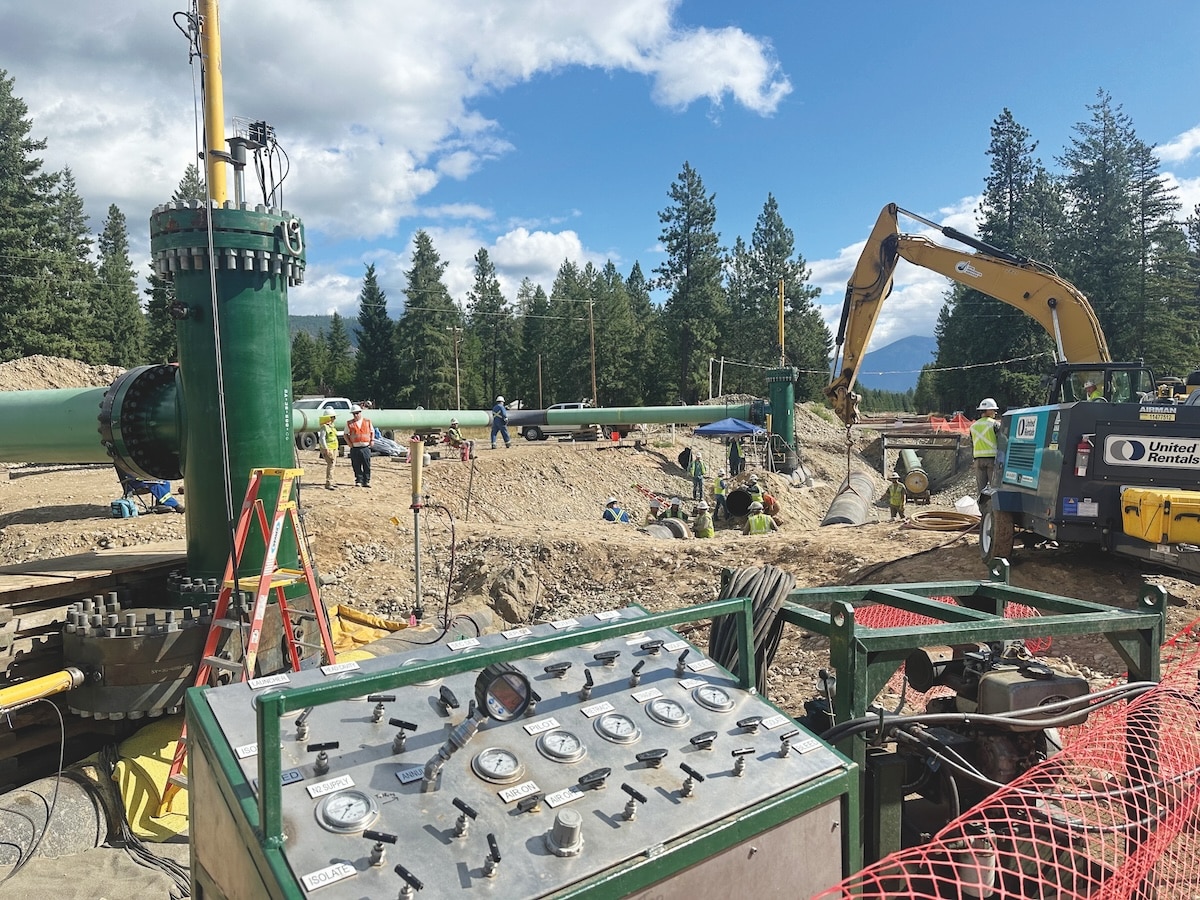
A North American operator used BISEP double block‑and‑bleed isolation tools with temporary 30‑inch bypass lines and welded hot‑tap fittings to replace a pipeline segment while avoiding customer supply disruption. The work included disciplined excavation, welding and bypass connections at paired north/south tie‑in points, making the sequence an operational template buyers can reuse. Watch whether vendors start to standardise mobilisation and surcharge terms around this model as regional integrity work firms up

Buyer takeaway

Treat this as a reusable execution template to capture scope, equipment and bypass needs in RFQs because it defines the exact tools and sequence required for compliance‑driven replacement

Cost / money

Mobilisation and bypass pipe are material cost drivers for this method and should be priced separately or covered by pre‑agreed surcharge rules

Supplier / commercial

Suppliers of BISEP, bypass pipe and hot‑tap crews can gain leverage; lock quote validity, depot access and surcharge mechanics into contracts

Safety / operations

When executed to the template, the method maintains supply but requires competent welding and excavation teams to avoid rework or unsafe interventions

What to watch

Watch for suppliers to shorten quote validity or insert mobilisation surcharges as similar projects are scheduled regionally

Key facts

  • BISEP double block‑and‑bleed isolation deployed
  • Temporary 30‑inch bypass lines used to maintain supply
  • Welded hot‑tap fittings prepared at both tie‑in locations

Source excerpts

Temporary 30-inch bypass lines were then connected between the BISEPs on Line A and those on the original Line B
STATS Group deployed two 36-inch BISEP double block and bleed line stop tools at each site, each incorporating a 30-inch integral bypass. This arrangement enabled product flow to continue during the remediation process
36-inch hot tap fittings were welded onto Line A at the same North and South locations
Story 2The Australian PipelinerApr 27, 2026

Getting technical at Snowy 2.0

Signal strongSource-grounded

What happened

Michels Trenchless completed three complex horizontal directional drills for Snowy 2 using two purpose‑built rigs with nearly 400 tonnes of push/pull force and engineered concrete pits to separate drilling fluids from the ground. The work handled an unusually large elevation differential and required bespoke rig design and fluid containment, showing that extreme HDD profiles need specialised equipment and site preparation. Buyers should pre‑qualify vendors and capture rig and containment specs to avoid substitution or mobilisation surprises

Buyer takeaway

Treat extreme HDDs as a specialist service line requiring pre‑qualified vendors and confirmed rig specifications because standard HDD availability may be insufficient

Cost / money

Custom rigs, transport and engineered containment increase hire and site‑prep cost exposure relative to standard HDD scopes

Supplier / commercial

HDD specialists with custom rigs can command premium mobilisation terms and may require longer lead times; consider retained agreements or early booking

Safety / operations

Elevation change and fluid management require enhanced environmental controls and site‑specific safety plans to avoid spills and hazards

What to watch

Watch for last‑minute rig substitution or containerised containment proposals that could increase scope creep if not pre‑approved

Key facts

  • Three complex HDDs executed for Snowy 2
  • Two rigs designed with nearly 400 tonnes push/pull force
  • Engineered concrete pits used for drilling fluid containment

Source excerpts

This allows it to flow back out of the hole into the pit by the rig
Michels designed and fabricated two drill rigs, each with nearly 400 tonnes of push/pull force
In standard HDD profiles, elevation changes of about 50m between entry and exit locations are considered significant
Story 3The Australian PipelinerApr 27, 2026

The future of water

Signal moderateDirectional

What happened

McElroy highlighted welded HDPE and new DataLogger features that add Vault ID Tags and fabrication workflow traceability to weld records, improving quality control on water pipeline assemblies. The DataLogger records fusion parameters and the new Vault ID Tags make it easier to link welds within an assembly, giving buyers a practical acceptance and traceability tool. Watch how suppliers price traceability features and whether buyers can convert them into acceptance conditions to reduce rework risk

Buyer takeaway

Treat weld traceability as a contractable deliverable that can be used to speed acceptance and limit rework

Cost / money

Traceability reduces hidden rework costs by creating objective acceptance records, and can be used as a differentiator in supplier scoring

Supplier / commercial

Vendors offering embedded traceability will gain preference; include these capabilities in evaluation weightings and delivery terms

Safety / operations

Better records of fusion parameters reduce the risk of joint failure in service and lower remedial excavation exposure

What to watch

Watch supplier proposals for added fees for DataLogger or traceability features; negotiate clear deliverable expectations

Key facts

  • Welded HDPE used on major water pipeline pulls
  • DataLogger adds Vault ID Tags and Fabrication Workflow features
  • Examples show traceability applied during in‑field fusion operations

Source excerpts

Welded HDPE fits all three of those criteria
The DataLogger 7 records all pertinent parameters during the fusion process, providing an added level of quality control and oversight to the project
The DataLogger 7 records all pertinent parameters during the fusion process, providing an added level of quality control and oversight to the project. Image: McElroy The latest innovations In February 2026, McElroy officially rolled out two new DataLogger features to assist in identifying related welds in an assembly: Vault ID Tags and Fabrication Workflow
Story 4Processonline

The Magazine :: Process Online

Signal moderateDirectional

What happened

Process Online publishes thematic coverage on centralised remote access, cloud SCADA and rising OT cyber risk across process industries, emphasizing staged commissioning and practical cyber controls. The coverage is broad and sectoral rather than project‑specific, but it flags consistent contract and acceptance issues buyers will see in vendor proposals. Verify vendor remote commissioning plans and require staged OT acceptance where these services are offered

Buyer takeaway

Treat remote commissioning as a contract negotiation point and require staged OT acceptance to protect uptime and cyber responsibility

Cost / money

Remote commissioning can shift hidden costs to buyers for OT access and staged testing unless acceptance criteria are specified

Supplier / commercial

Vendors may propose bundled remote services—use staged acceptance and minimum cyber controls to prevent absorbing uptime and security risk

Safety / operations

Increased remote access raises dependency on OT controls and incident response; include OT sign‑off to protect operations

What to watch

The evidence is thematic; verify specific vendor commitments at RFQ stage rather than assuming uniform behaviour

Key facts

  • Multiple articles on centralised remote access, cloud SCADA and OT cyber risk
  • Guidance content on staged commissioning and practical OT controls
  • Industry emphasis on skills, calibration and secure remote access

Source excerpts

0 Virtual capabilities change practices for processing operations Remote connectivity in the post-COVID world PDF Digital transformation and data analytics in the process industries Industrial-strength MQTT networks — Part 1 Remote commissioning will continue after COVID-19 Vibrating fork level instruments come of age Automotive parts manufacturer combines IT and Operations PDF Manufacturing operations transformation M12 connections — the workhorse of digitalisation Open path toxic gas detectors — key to an inte
Building cyber-resilient energy delivery systems How algorithms can improve our responses to environmental incidents Can Australia lead the world in storage?
au/subscribe How to centralise remote access Ensuring reliable level measurement in tanks with internal obstructions Calibration explained Is machine monitoring worthwhile? AI won’t restart your plant: Why practical skills matter more than ever PDF Seeing with AI Open Process Automation: How and where to start Virtual PLCs – a big step forward Five common mistakes in industrial temperature monitoring Cyber risk is rising faster than Australian manufacturers can respond PDF December 2025/January 2026 The environ

VP Snapshot

Executive Risk & Action View

A tested BISEP + bypass isolation sequence is now a repeatable execution template buyers can contract against; include explicit tool, bypass pipe and mobilisation line items in RFQs to avoid later scope change.

Overall
56
Cost
61
Supply
61
Schedule
56
Compliance
15

Top signals

30-180dcost

Signal 1: Cost / money

Using BISEP isolation plus temporary bypass converts simple replacement projects into multi‑line mobilisation scopes that must carry explicit hire and bypass‑pipe cost lines in bids.

Signal 2: Cost / money

Custom HDD rigs and engineered containment add transport, site‑prep and hire risk compared with standard HDD packages; without pre‑agreed terms buyers face higher short‑notice premiums.

30-180dcommercial

Signal 3: Supplier / commercial

Suppliers providing isolation tools, bypass pipe and hot‑tap crews can shorten quote validity or insert mobilisation surcharges as demand concentrates; lock these mechanics into commercial terms to preserve negotiation room.

Signal 5: Supplier / commercial

HDPE and fabrication vendors offering welded traceability (DataLogger features, weld IDs) create a scoring advantage—buyers can convert that capability into contractual acceptance criteria or reduced rework allowances.

30-180dschedule

Signal 4: Supplier / commercial

Vendors that bundle remote commissioning or cloud SCADA can shift acceptance and uptime obligations; use staged acceptance gates and minimum cyber controls to keep responsibility and liabilities clear.

30-180dsupply

Signal 6: Safety / operations

BISEP + bypass preserves customer supply during remediation but requires disciplined welding, excavation and bypass management; poor execution risks tool hangups, rework and unsafe remediation steps.

Recommended actions

ContractsDue 3d

Confirm mobilisation windows, depot locations and surcharge mechanics with primary suppliers of isolation tools and hot‑tap crews.

Documented mobilisation windows, depot coverage and explicit surcharge rules for priority suppliers to use in award negotiations.

OpsDue 3d

Request rig‑spec and containment requirements from shortlisted HDD vendors and capture any custom rig or pit prerequisites in a procurement checklist.

A verified list of rig specifications and containment needs to include in tenders and site‑prep plans.

ContractsDue 21d

Update RFQ and shortlist templates to require staged OT acceptance, minimum cyber controls and explicit handover gates where remote commissioning or cloud SCADA is proposed.

RFQ templates that force vendor disclosure of remote commissioning plans and include staged OT acceptance criteria for technical sign‑off.

CategoryDue 21d

Add weld‑traceability and DataLogger deliverables to evaluation criteria for HDPE and welding‑supply vendors (fusion records, weld IDs, fabrication workflow access).

Procurement scoring that rewards suppliers who provide traceable fusion records and weld identification as part of delivery.

CategoryDue 60d

Negotiate preferred‑supplier agreements that include reserved mobilisation slots, depot allocation options and explicit mobilisation surcharge triggers for isolation and heavy H...

Preferred agreements that limit short‑notice premium exposure and provide clearer mobilisation commitments from key suppliers.

Risk register

RiskTriggerMitigation
Watch for suppliers to tighten availability windows and shorten quote validity as regionally similar integrity projects schedule up—this typically compresses buyer negotiation leverage.Watch for suppliers to tighten availability windows and shorten quote validity as regionally similar integrity projects schedule up—this typically compresses buyer negotiation leverage.Confirm exposure with category, contracts, and operations before the next supplier commitment.
Watch RFQs that accept bundled remote commissioning without staged OT acceptance gates; these proposals can transfer cyber and uptime risk onto operations if left unaddressed.Watch RFQs that accept bundled remote commissioning without staged OT acceptance gates; these proposals can transfer cyber and uptime risk onto operations if left unaddressed.Confirm exposure with category, contracts, and operations before the next supplier commitment.

CM Snapshot

Category Manager Decision Detail

Today's priorities

Confirm mobilisation windows, depot locations and surcharge mechanics with primary suppliers of isolation tools and hot‑tap crews.

because the BISEP + bypass template creates specialised mobilisation needs and suppliers may narrow availability or add mobilisation surcharges as schedules firm up.

Due 3d

high

CM move

Use this as the immediate supplier or contract action to move before the next sourcing gate.

Request rig‑spec and containment requirements from shortlisted HDD vendors and capture any custom rig or pit prerequisites in a procurement checklist.

because Snowy 2 used purpose‑built high‑capacity rigs and engineered containment, and similar scopes will need those specifications to avoid mobilisation mismatch or scope gaps.

Due 3d

high

CM move

Use this as the immediate supplier or contract action to move before the next sourcing gate.

Update RFQ and shortlist templates to require staged OT acceptance, minimum cyber controls and explicit handover gates where remote commissioning or cloud SCADA is proposed.

because Process Online sector coverage shows increasing remote commissioning and OT dependency that can shift uptime and cyber obligations unless contractually gated.

Due 21d

high

CM move

Use this as the immediate supplier or contract action to move before the next sourcing gate.

Add weld‑traceability and DataLogger deliverables to evaluation criteria for HDPE and welding‑supply vendors (fusion records, weld IDs, fabrication workflow access).

Act because the cited source changes the timing, capacity, or commercial assumptions behind the next sourcing decision.

Due 21d

high

CM move

Use this as the immediate supplier or contract action to move before the next sourcing gate.

Supplier radar

The Australian Pipeliner

high

Observed supplier signal

Suppliers providing isolation tools, bypass pipe and hot‑tap crews can shorten quote validity or insert mobilisation surcharges as demand concentrates; lock these mechanics into commercial terms to preserve negotiation room.

Commercial implication

Suppliers providing isolation tools, bypass pipe and hot‑tap crews can shorten quote validity or insert mobilisation surcharges as demand concentrates; lock these mechanics into commercial terms to preserve negotiation room.

Next step: Validate the source-backed signal with incumbents and alternates before the next award or pricing decision.

Processonline

high

Observed supplier signal

Vendors that bundle remote commissioning or cloud SCADA can shift acceptance and uptime obligations; use staged acceptance gates and minimum cyber controls to keep responsibility and liabilities clear.

Commercial implication

Vendors that bundle remote commissioning or cloud SCADA can shift acceptance and uptime obligations; use staged acceptance gates and minimum cyber controls to keep responsibility and liabilities clear.

Next step: Validate the source-backed signal with incumbents and alternates before the next award or pricing decision.

The Australian Pipeliner

high

Observed supplier signal

HDPE and fabrication vendors offering welded traceability (DataLogger features, weld IDs) create a scoring advantage—buyers can convert that capability into contractual acceptance criteria or reduced rework allowances.

Commercial implication

HDPE and fabrication vendors offering welded traceability (DataLogger features, weld IDs) create a scoring advantage—buyers can convert that capability into contractual acceptance criteria or reduced rework allowances.

Next step: Validate the source-backed signal with incumbents and alternates before the next award or pricing decision.

Negotiation levers

Confirm mobilisation windows, depot locations and surcharge mechanics with primary suppliers of isolation tools and hot‑tap crews.

When to use: because the BISEP + bypass template creates specialised mobilisation needs and suppliers may narrow availability or add mobilisation surcharges as schedules firm up.

Expected outcome: Documented mobilisation windows, depot coverage and explicit surcharge rules for priority suppliers to use in award negotiations.

Commercial mechanism to carry into the next supplier conversation

Request rig‑spec and containment requirements from shortlisted HDD vendors and capture any custom rig or pit prerequisites in a procurement checklist.

When to use: because Snowy 2 used purpose‑built high‑capacity rigs and engineered containment, and similar scopes will need those specifications to avoid mobilisation mismatch or scope gaps.

Expected outcome: A verified list of rig specifications and containment needs to include in tenders and site‑prep plans.

Commercial mechanism to carry into the next supplier conversation

Update RFQ and shortlist templates to require staged OT acceptance, minimum cyber controls and explicit handover gates where remote commissioning or cloud SCADA is proposed.

When to use: because Process Online sector coverage shows increasing remote commissioning and OT dependency that can shift uptime and cyber obligations unless contractually gated.

Expected outcome: RFQ templates that force vendor disclosure of remote commissioning plans and include staged OT acceptance criteria for technical sign‑off.

Commercial mechanism to carry into the next supplier conversation

Add weld‑traceability and DataLogger deliverables to evaluation criteria for HDPE and welding‑supply vendors (fusion records, weld IDs, fabrication workflow access).

When to use: Act because the cited source changes the timing, capacity, or commercial assumptions behind the next sourcing decision.

Expected outcome: Procurement scoring that rewards suppliers who provide traceable fusion records and weld identification as part of delivery.

Commercial mechanism to carry into the next supplier conversation

Talking points

A tested BISEP + bypass isolation sequence is now a repeatable execution template buyers can contract against; include explicit tool, bypass pipe and mobilisation line items in RFQs to avoid later scope change.
Snowy 2 shows extreme HDD work can require purpose‑built, high‑capacity rigs and engineered containment, which raises mobilisation complexity and hire risk that should be scoped separately from standard HDD packages.
Sector coverage of centralised remote access and cloud SCADA is a clear contract negotiation point: require staged OT acceptance and minimum cyber controls where vendors propose remote commissioning.
Weld traceability tools and HDPE DataLogger features create a practical acceptance and quality lever—buyers can ask for documented fusion records and weld IDs as part of supplier deliverables.

Supplier radar

SupplierSignalImplicationNext stepConfidence
The Australian PipelinerSuppliers providing isolation tools, bypass pipe and hot‑tap crews can shorten quote validity or insert mobilisation surcharges as demand concentrates; lock these mechanics into commercial terms to preserve negotiation room.Suppliers providing isolation tools, bypass pipe and hot‑tap crews can shorten quote validity or insert mobilisation surcharges as demand concentrates; lock these mechanics into commercial terms to preserve negotiation room.Validate the source-backed signal with incumbents and alternates before the next award or pricing decision.high
ProcessonlineVendors that bundle remote commissioning or cloud SCADA can shift acceptance and uptime obligations; use staged acceptance gates and minimum cyber controls to keep responsibility and liabilities clear.Vendors that bundle remote commissioning or cloud SCADA can shift acceptance and uptime obligations; use staged acceptance gates and minimum cyber controls to keep responsibility and liabilities clear.Validate the source-backed signal with incumbents and alternates before the next award or pricing decision.high
The Australian PipelinerHDPE and fabrication vendors offering welded traceability (DataLogger features, weld IDs) create a scoring advantage—buyers can convert that capability into contractual acceptance criteria or reduced rework allowances.HDPE and fabrication vendors offering welded traceability (DataLogger features, weld IDs) create a scoring advantage—buyers can convert that capability into contractual acceptance criteria or reduced rework allowances.Validate the source-backed signal with incumbents and alternates before the next award or pricing decision.high

Negotiation levers

  • Confirm mobilisation windows, depot locations and surcharge mechanics with primary suppliers of isolation tools and hot‑tap crews.because the BISEP + bypass template creates specialised mobilisation needs and suppliers may narrow availability or add mobilisation surcharges as schedules firm up.Documented mobilisation windows, depot coverage and explicit surcharge rules for priority suppliers to use in award negotiations.

    high confidence

  • Request rig‑spec and containment requirements from shortlisted HDD vendors and capture any custom rig or pit prerequisites in a procurement checklist.because Snowy 2 used purpose‑built high‑capacity rigs and engineered containment, and similar scopes will need those specifications to avoid mobilisation mismatch or scope gaps.A verified list of rig specifications and containment needs to include in tenders and site‑prep plans.

    high confidence

  • Update RFQ and shortlist templates to require staged OT acceptance, minimum cyber controls and explicit handover gates where remote commissioning or cloud SCADA is proposed.because Process Online sector coverage shows increasing remote commissioning and OT dependency that can shift uptime and cyber obligations unless contractually gated.RFQ templates that force vendor disclosure of remote commissioning plans and include staged OT acceptance criteria for technical sign‑off.

    high confidence

  • Add weld‑traceability and DataLogger deliverables to evaluation criteria for HDPE and welding‑supply vendors (fusion records, weld IDs, fabrication workflow access).Act because the cited source changes the timing, capacity, or commercial assumptions behind the next sourcing decision.Procurement scoring that rewards suppliers who provide traceable fusion records and weld identification as part of delivery.

    high confidence

What to do / What to watch

What to do now

  • Confirm mobilisation windows, depot locations and surcharge mechanics with primary suppliers of isolation tools and hot‑tap crews.

    Why: because the BISEP + bypass template creates specialised mobilisation needs and suppliers may narrow availability or add mobilisation surcharges as schedules firm up.

    Owner: Contracts

    Expected outcome: Documented mobilisation windows, depot coverage and explicit surcharge rules for priority suppliers to use in award negotiations.

    [3]
  • Request rig‑spec and containment requirements from shortlisted HDD vendors and capture any custom rig or pit prerequisites in a procurement checklist.

    Why: because Snowy 2 used purpose‑built high‑capacity rigs and engineered containment, and similar scopes will need those specifications to avoid mobilisation mismatch or scope gaps.

    Owner: Ops

    Expected outcome: A verified list of rig specifications and containment needs to include in tenders and site‑prep plans.

    [1]

Next few weeks

  • Update RFQ and shortlist templates to require staged OT acceptance, minimum cyber controls and explicit handover gates where remote commissioning or cloud SCADA is proposed.

    Why: because Process Online sector coverage shows increasing remote commissioning and OT dependency that can shift uptime and cyber obligations unless contractually gated.

    Owner: Contracts

    Expected outcome: RFQ templates that force vendor disclosure of remote commissioning plans and include staged OT acceptance criteria for technical sign‑off.

    [4]
  • Add weld‑traceability and DataLogger deliverables to evaluation criteria for HDPE and welding‑supply vendors (fusion records, weld IDs, fabrication workflow access).

    Why: Act because the cited source changes the timing, capacity, or commercial assumptions behind the next sourcing decision.

    Owner: Category

    Expected outcome: Procurement scoring that rewards suppliers who provide traceable fusion records and weld identification as part of delivery.

    [2]

Longer view

  • Negotiate preferred‑supplier agreements that include reserved mobilisation slots, depot allocation options and explicit mobilisation surcharge triggers for isolation and heavy H...

    Why: because regulatory remediation and specialist equipment demand increase mobilisation risk and pre‑agreed slots or depot access reduce last‑minute premium exposure.

    Owner: Category

    Expected outcome: Preferred agreements that limit short‑notice premium exposure and provide clearer mobilisation commitments from key suppliers.

    [3]

What to watch

  • Watch for suppliers to tighten availability windows and shorten quote validity as regionally similar integrity projects schedule up—this typically compresses buyer negotiation leverage
  • Watch RFQs that accept bundled remote commissioning without staged OT acceptance gates; these proposals can transfer cyber and uptime risk onto operations if left unaddressed
  • Watch for suppliers to tighten availability windows and shorten quote validity as regionally similar integrity projects schedule up—this typically compresses buyer negotiation leverage.: Watch for suppliers to tighten availability windows and shorten quote validity as regionally similar integrity projects schedule up—this typically compresses buyer negotiation leverage
  • Watch RFQs that accept bundled remote commissioning without staged OT acceptance gates; these proposals can transfer cyber and uptime risk onto operations if left unaddressed.: Watch RFQs that accept bundled remote commissioning without staged OT acceptance gates; these proposals can transfer cyber and uptime risk onto operations if left unaddressed
  • A tested BISEP + bypass isolation sequence is now a repeatable execution template buyers can contract against; include explicit tool, bypass pipe and mobilisation line items in RFQs to avoid later scope change
  • Snowy 2 shows extreme HDD work can require purpose‑built, high‑capacity rigs and engineered containment, which raises mobilisation complexity and hire risk that should be scoped separately from standard HDD packages
  • Sector coverage of centralised remote access and cloud SCADA is a clear contract negotiation point: require staged OT acceptance and minimum cyber controls where vendors propose remote commissioning
  • Weld traceability tools and HDPE DataLogger features create a practical acceptance and quality lever—buyers can ask for documented fusion records and weld IDs as part of supplier deliverables

Market pulse

IndexLatestChangeAs of
HRC Steel (HRC)740 /ton+0.00 (+0.00%)May 4, 2026, 10:12 PM
Copper (COPPER)3.85 /lb+0.00 (+0.00%)May 4, 2026, 10:12 PM
Iron Ore (IRON)108.5 /t+0.00 (+0.00%)May 4, 2026, 10:12 PM
Tenaris (TS)32 +0.00 (+0.00%)May 4, 2026, 10:12 PM
  • HRC Steel: HRC steel trends directly affect OCTG raw material cost and lead‑time risk for large‑diameter pipe procurements
  • Tenaris: Tenaris activity can signal supplier pricing posture and capacity tightness among major OCTG producers

Sources

Inline citations jump here. Expand a source to read the excerpt, the AI interpretation, and the original link.

[1] Getting technical at Snowy 2.0

pipeliner.com.au · Apr 27, 2026

Expand

AI reading

Michels Trenchless completed three complex horizontal directional drills for Snowy 2 using two purpose‑built rigs with nearly 400 tonnes of push/pull force and engineered concrete pits to separate drilling fluids from the ground. The work handled an unusually large elevation differential and required bespoke rig design and fluid containment, showing that extreme HDD profiles need specialised equipment and site preparation. Buyers should pre‑qualify vendors and capture rig and containment specs to avoid substitution or mobilisation surprises

Buyer takeaway

Treat extreme HDDs as a specialist service line requiring pre‑qualified vendors and confirmed rig specifications because standard HDD availability may be insufficient

Cost / money

Custom rigs, transport and engineered containment increase hire and site‑prep cost exposure relative to standard HDD scopes

Supplier / commercial

HDD specialists with custom rigs can command premium mobilisation terms and may require longer lead times; consider retained agreements or early booking

Safety / operations

Elevation change and fluid management require enhanced environmental controls and site‑specific safety plans to avoid spills and hazards

What to watch

Watch for last‑minute rig substitution or containerised containment proposals that could increase scope creep if not pre‑approved

Key facts

  • Three complex HDDs executed for Snowy 2
  • Two rigs designed with nearly 400 tonnes push/pull force
  • Engineered concrete pits used for drilling fluid containment

Source excerpts

This allows it to flow back out of the hole into the pit by the rig
Michels designed and fabricated two drill rigs, each with nearly 400 tonnes of push/pull force
In standard HDD profiles, elevation changes of about 50m between entry and exit locations are considered significant

Used in this brief

  • Next 72 hours — Request rig‑spec and containment requirements from shortlisted HDD vendors and capture any custom rig or pit prerequisites in a procurement checklist.. Rationale: because Snowy 2 used purpose‑built high‑capacity rigs and engineered containment, and similar scopes will need those specifications to avoid mobilisation mismatch or scope gaps.. Owner: Ops. KPI: A verified list of rig specifications and containment needs to include in tenders and site‑prep plans
  • Michels Trenchless completed three complex horizontal directional drills for Snowy 2 using two purpose‑built rigs with nearly 400 tonnes of push/pull force and engineered concrete pits to separate drilling fluids from the ground. The work handled an unusually large elevation differential and required bespoke rig design and fluid containment, showing that extreme HDD profiles need specialised equipment and site preparation. Buyers should pre‑qualify vendors and capture rig and containment specs to avoid substitution or mobilisation surprises
  • Buyer bottom line: extreme HDD profiles should be treated as specialist procurements with separate scope and pricing for custom rigs and containment
Open original source

[2] The future of water

pipeliner.com.au · Apr 27, 2026

Expand

AI reading

McElroy highlighted welded HDPE and new DataLogger features that add Vault ID Tags and fabrication workflow traceability to weld records, improving quality control on water pipeline assemblies. The DataLogger records fusion parameters and the new Vault ID Tags make it easier to link welds within an assembly, giving buyers a practical acceptance and traceability tool. Watch how suppliers price traceability features and whether buyers can convert them into acceptance conditions to reduce rework risk

Buyer takeaway

Treat weld traceability as a contractable deliverable that can be used to speed acceptance and limit rework

Cost / money

Traceability reduces hidden rework costs by creating objective acceptance records, and can be used as a differentiator in supplier scoring

Supplier / commercial

Vendors offering embedded traceability will gain preference; include these capabilities in evaluation weightings and delivery terms

Safety / operations

Better records of fusion parameters reduce the risk of joint failure in service and lower remedial excavation exposure

What to watch

Watch supplier proposals for added fees for DataLogger or traceability features; negotiate clear deliverable expectations

Key facts

  • Welded HDPE used on major water pipeline pulls
  • DataLogger adds Vault ID Tags and Fabrication Workflow features
  • Examples show traceability applied during in‑field fusion operations

Source excerpts

Welded HDPE fits all three of those criteria
The DataLogger 7 records all pertinent parameters during the fusion process, providing an added level of quality control and oversight to the project
The DataLogger 7 records all pertinent parameters during the fusion process, providing an added level of quality control and oversight to the project. Image: McElroy The latest innovations In February 2026, McElroy officially rolled out two new DataLogger features to assist in identifying related welds in an assembly: Vault ID Tags and Fabrication Workflow

Used in this brief

  • Supplier / commercial: HDPE and fabrication vendors offering welded traceability (DataLogger features, weld IDs) create a scoring advantage—buyers can convert that capability into contractual acceptance criteria or reduced rework allowances
  • Next 2-4 weeks — Add weld‑traceability and DataLogger deliverables to evaluation criteria for HDPE and welding‑supply vendors (fusion records, weld IDs, fabrication workflow access).. Rationale: Act because the cited source changes the timing, capacity, or commercial assumptions behind the next sourcing decision.. Owner: Category. KPI: Procurement scoring that rewards suppliers who provide traceable fusion records and weld identification as part of delivery
  • McElroy highlighted welded HDPE and new DataLogger features that add Vault ID Tags and fabrication workflow traceability to weld records, improving quality control on water pipeline assemblies. The DataLogger records fusion parameters and the new Vault ID Tags make it easier to link welds within an assembly, giving buyers a practical acceptance and traceability tool. Watch how suppliers price traceability features and whether buyers can convert them into acceptance conditions to reduce rework risk
Open original source

[3] Bringing pipelines into the future

pipeliner.com.au · Apr 20, 2026

Expand

AI reading

A North American operator used BISEP double block‑and‑bleed isolation tools with temporary 30‑inch bypass lines and welded hot‑tap fittings to replace a pipeline segment while avoiding customer supply disruption. The work included disciplined excavation, welding and bypass connections at paired north/south tie‑in points, making the sequence an operational template buyers can reuse. Watch whether vendors start to standardise mobilisation and surcharge terms around this model as regional integrity work firms up

Buyer takeaway

Treat this as a reusable execution template to capture scope, equipment and bypass needs in RFQs because it defines the exact tools and sequence required for compliance‑driven replacement

Cost / money

Mobilisation and bypass pipe are material cost drivers for this method and should be priced separately or covered by pre‑agreed surcharge rules

Supplier / commercial

Suppliers of BISEP, bypass pipe and hot‑tap crews can gain leverage; lock quote validity, depot access and surcharge mechanics into contracts

Safety / operations

When executed to the template, the method maintains supply but requires competent welding and excavation teams to avoid rework or unsafe interventions

What to watch

Watch for suppliers to shorten quote validity or insert mobilisation surcharges as similar projects are scheduled regionally

Key facts

  • BISEP double block‑and‑bleed isolation deployed
  • Temporary 30‑inch bypass lines used to maintain supply
  • Welded hot‑tap fittings prepared at both tie‑in locations

Source excerpts

Temporary 30-inch bypass lines were then connected between the BISEPs on Line A and those on the original Line B
STATS Group deployed two 36-inch BISEP double block and bleed line stop tools at each site, each incorporating a 30-inch integral bypass. This arrangement enabled product flow to continue during the remediation process
36-inch hot tap fittings were welded onto Line A at the same North and South locations

Used in this brief

  • Cost / money: Using BISEP isolation plus temporary bypass converts simple replacement projects into multi‑line mobilisation scopes that must carry explicit hire and bypass‑pipe cost lines in bids
  • Safety / operations: BISEP + bypass preserves customer supply during remediation but requires disciplined welding, excavation and bypass management; poor execution risks tool hangups, rework and unsafe remediation steps
  • Next 72 hours — Confirm mobilisation windows, depot locations and surcharge mechanics with primary suppliers of isolation tools and hot‑tap crews.. Rationale: because the BISEP + bypass template creates specialised mobilisation needs and suppliers may narrow availability or add mobilisation surcharges as schedules firm up.. Owner: Contracts. KPI: Documented mobilisation windows, depot coverage and explicit surcharge rules for priority suppliers to use in award negotiations
Open original source

[4] The Magazine :: Process Online

processonline.com.au · n.d.

Expand

AI reading

Process Online publishes thematic coverage on centralised remote access, cloud SCADA and rising OT cyber risk across process industries, emphasizing staged commissioning and practical cyber controls. The coverage is broad and sectoral rather than project‑specific, but it flags consistent contract and acceptance issues buyers will see in vendor proposals. Verify vendor remote commissioning plans and require staged OT acceptance where these services are offered

Buyer takeaway

Treat remote commissioning as a contract negotiation point and require staged OT acceptance to protect uptime and cyber responsibility

Cost / money

Remote commissioning can shift hidden costs to buyers for OT access and staged testing unless acceptance criteria are specified

Supplier / commercial

Vendors may propose bundled remote services—use staged acceptance and minimum cyber controls to prevent absorbing uptime and security risk

Safety / operations

Increased remote access raises dependency on OT controls and incident response; include OT sign‑off to protect operations

What to watch

The evidence is thematic; verify specific vendor commitments at RFQ stage rather than assuming uniform behaviour

Key facts

  • Multiple articles on centralised remote access, cloud SCADA and OT cyber risk
  • Guidance content on staged commissioning and practical OT controls
  • Industry emphasis on skills, calibration and secure remote access

Source excerpts

0 Virtual capabilities change practices for processing operations Remote connectivity in the post-COVID world PDF Digital transformation and data analytics in the process industries Industrial-strength MQTT networks — Part 1 Remote commissioning will continue after COVID-19 Vibrating fork level instruments come of age Automotive parts manufacturer combines IT and Operations PDF Manufacturing operations transformation M12 connections — the workhorse of digitalisation Open path toxic gas detectors — key to an inte
Building cyber-resilient energy delivery systems How algorithms can improve our responses to environmental incidents Can Australia lead the world in storage?
au/subscribe How to centralise remote access Ensuring reliable level measurement in tanks with internal obstructions Calibration explained Is machine monitoring worthwhile? AI won’t restart your plant: Why practical skills matter more than ever PDF Seeing with AI Open Process Automation: How and where to start Virtual PLCs – a big step forward Five common mistakes in industrial temperature monitoring Cyber risk is rising faster than Australian manufacturers can respond PDF December 2025/January 2026 The environ

Used in this brief

  • Next 2-4 weeks — Update RFQ and shortlist templates to require staged OT acceptance, minimum cyber controls and explicit handover gates where remote commissioning or cloud SCADA is proposed.. Rationale: because Process Online sector coverage shows increasing remote commissioning and OT dependency that can shift uptime and cyber obligations unless contractually gated.. Owner: Contracts. KPI: RFQ templates that force vendor disclosure of remote commissioning plans and include staged OT acceptance criteria for technical sign‑off
  • Watch RFQs that accept bundled remote commissioning without staged OT acceptance gates; these proposals can transfer cyber and uptime risk onto operations if left unaddressed
  • Process Online publishes thematic coverage on centralised remote access, cloud SCADA and rising OT cyber risk across process industries, emphasizing staged commissioning and practical cyber controls. The coverage is broad and sectoral rather than project‑specific, but it flags consistent contract and acceptance issues buyers will see in vendor proposals. Verify vendor remote commissioning plans and require staged OT acceptance where these services are offered
Open original source

[5] HRC Steel

cmegroup.com · n.d.

Expand

[6] Tenaris

finance.yahoo.com · n.d.

Expand