Subsea, SURF & Offshore · Australia (Perth)

Lock In Regional SURF Capacity and Fuel Risk Exposure

Published Apr 28, 2026, 6:06 AM AWSTAPACFull category signal
Ask AI
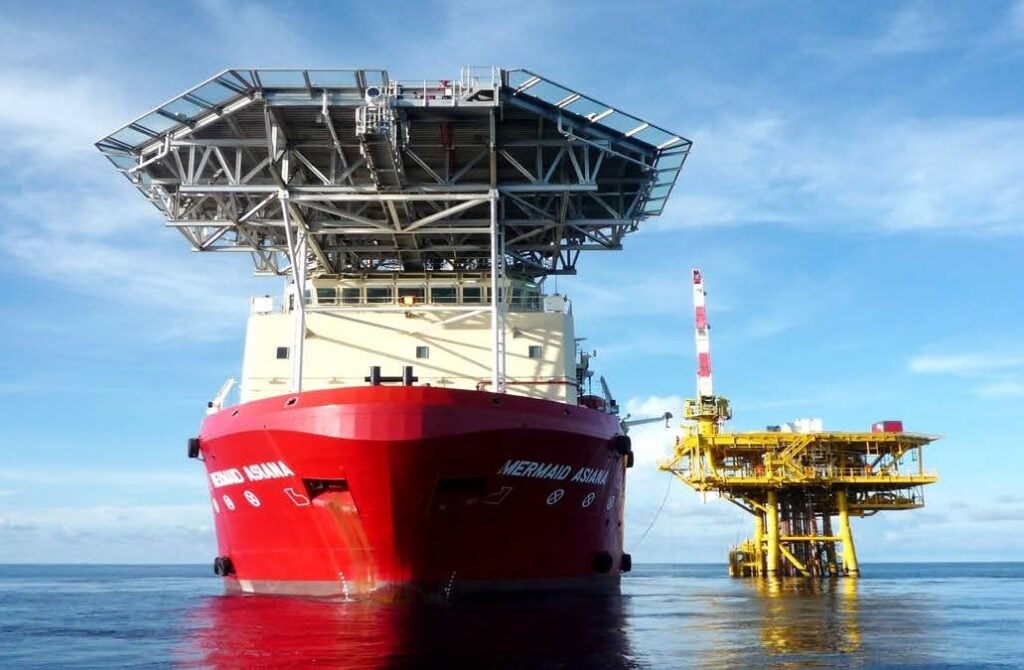
Mermaid Maritime continues global expansion with joint venture in Brunei

In 60 seconds

Top move

A new Mermaid joint venture in Brunei creates an on‑island subsea T&I and IRM capability buyers can source locally, meaning fewer cross‑border mobilisations for work scoped in Brunei

Key takeaways

  • A new Mermaid joint venture in Brunei creates an on‑island subsea T&I and IRM capability buyers can source locally, meaning fewer cross‑border mobilisations for work scoped in Brunei.[1]
  • Seatrium completed the sale of its Singapore tug fleet, removing owner‑operated tugs from a local pool and changing how buyers will secure towage and harbour support (more third‑party charter reliance).[3]
  • A Japanese‑led ammonia bunkering demo in Singapore signals a practical shift in vessel fuel options; procurement should expect new safety, certification and contractual pass‑through requirements if trials scale.[2]
  • Mermaid funded the JV from internal resources, so the capability is immediately available without a financing delay; treat it as an operational supply change rather than a future plan.[1]
  • Seatrium framed the tug sale as part of wider non‑core divestments and cost savings, which may indicate more commercial re‑positioning of regional vessel owners over the coming months.[3]

What changed since last run

  • Added Mermaid Maritime Brunei joint venture as a new local IRM/T&I supplier option (Article 1).
  • Noted Seatrium completed sale of 17 tugboats in Singapore, finalising a previously announced divestment (Article 6).
  • Flagged Japanese consortium ammonia bunkering demonstration project in Singapore entering funded trial phase (Article 12).

Key facts

  • 50% ownership by Mermaid Subsea Services (Thailand) Ltd
  • Activities: offshore T&I, installation, IRM, decommissioning and pipeline projects
  • Investment funded from Mermaid's internal resources
  • Sale completed for Seatrium's fleet of 17 tugboats
  • Transaction expected to generate S$104 million in proceeds
  • Part of a wider non‑core divestment programme

Why it matters

A new Mermaid joint venture in Brunei creates an on‑island subsea T&I and IRM capability buyers can source locally, meaning fewer cross‑border mobilisations for work scoped in Brunei. Seatrium completed the sale of its Singapore tug fleet, removing owner‑operated tugs from a local pool and changing how buyers will secure towage and harbour support (more third‑party charter reliance). A Japanese‑led ammonia bunkering demo in Singapore signals a practical shift in vessel fuel options; procurement should expect new safety, certification and contractual pass‑through requirements if trials scale. Mermaid funded the JV from internal resources, so the capability is immediately available without a financing delay; treat it as an operational supply change rather than a future plan

Cost / money

  • Local IRM/T&I from Mermaid's JV can cut cross‑border mobilization costs and import logistics for Brunei projects because services and local assets become available on‑island.[1]
  • Seatrium's tug sale shifts buyers toward third‑party charter markets, which can increase short‑notice charter exposure and change pass‑through cost dynamics for harbour/transit services.[3]

Supplier / commercial

  • The Brunei JV, partly owned by a domestic provider, strengthens local content options and gives buyers a supplier that can win regionally scoped SURF/pipe work with locally aligned commercial terms.[1]
  • Ammonia bunkering trials create an emerging supplier category (alternative‑fuel bunkering operators) and will shift commercial requirements toward fuel certification, liability allocation and safety audits.[2]

Safety / operations

  • Ammonia bunkering is explicitly scoped as a safety and procedural trial, so operational readiness, emergency response plans and specialist training become prequalification gates for vessel work.[2]
  • Mermaid’s local IRM and diving services increase the need to verify local qualifications, permits and exclusion‑zone procedures to avoid mobilisation and regulatory delays in Brunei.[1]

What to watch

  • Seatrium’s divestment programme may continue beyond the tug sale; further asset exits would further reduce owner‑operated support capacity in the region.[3]
  • The ammonia project is a demonstration with grant support; commercial bunkering supply and standards are not guaranteed to scale quickly — treat it as an early transition signal, not a replacement fuel option yet.[2]

Top stories

Story 1Offshore EnergyApr 27, 2026

Mermaid Maritime continues global expansion with joint venture in Brunei

Signal strongSource-grounded

What happened

Mermaid Maritime formed a 50:50 joint venture in Brunei to offer offshore transport & installation, IRM, decommissioning and pipeline project services on‑island. The JV is funded from Mermaid’s internal resources, so the capability is operational rather than contingent on external financing. Watch whether the JV becomes the preferred local partner on upcoming Brunei SURF scopes and how quickly it is published on tender prequalification lists

Buyer takeaway

Treat this as an actionable local supply option for Brunei packages because the JV is funded and scoped for immediate T&I and IRM work

Cost / money

Directional: local sourcing can reduce cross‑border mobilization and customs/logistics costs, but may come with premium local content pricing

Supplier / commercial

New local partner means opportunities to negotiate scope, local labour clauses and continuity discounts, but also watch exclusivity or preferred supplier terms

Safety / operations

Operational reality requires verifying local diving/ROV certifications, permits and exclusion‑zone procedures to avoid mobilisation hold‑ups

What to watch

Confirm the JV’s published capabilities and insurance/indemnity details early; if not yet on prequalification lists, mobilisation lead times may still be long

Key facts

  • 50% ownership by Mermaid Subsea Services (Thailand) Ltd
  • Activities: offshore T&I, installation, IRM, decommissioning and pipeline projects
  • Investment funded from Mermaid's internal resources

Source excerpts

Home Subsea Mermaid Maritime continues global expansion with joint venture in Brunei April 27, 2026, by After establishing joint venture companies in Taiwan and Equatorial Guinea, Thailand-headquartered subsea and offshore drilling services company Mermaid Maritime Public Company Limited has done the same in Brunei. The primary activities of the entity named Serikandi Mermaid SDN BHD are offshore transport and installation (T&I), installation, repair, and maintenance (IRM), decommissioning, and pipeline project
The primary activities of the entity named Serikandi Mermaid SDN BHD are offshore transport and installation (T&I), installation, repair, and maintenance (IRM), decommissioning, and pipeline projects in Brunei. Mermaid Subsea Services (Thailand) Ltd
The primary activities of the entity named Serikandi Mermaid SDN BHD are offshore transport and installation (T&I), installation, repair, and maintenance (IRM), decommissioning, and pipeline projects in Brunei
Story 2Offshore EnergyApr 27, 2026

Seatrium ticks tugboat fleet sale off non-core asset divestment list

Signal strongSource-grounded

What happened

Seatrium completed the divestment of its 17‑vessel tugboat fleet in Singapore as part of non‑core asset sales. The sale is presented as delivering cash proceeds and annualised cost savings and removes owner‑operated tug capacity from the local market. Watch for follow‑on sales or new charter patterns from buyers who historically relied on Seatrium‑owned tugs

Buyer takeaway

Reassess short‑notice towage and port support sources in Singapore because owner‑operated units that supported past tenders are no longer on the balance sheet

Cost / money

Divestment can tighten spot availability and push buyers toward third‑party charter rates or longer lead times for guaranteed bookings

Supplier / commercial

Charter providers and independent tug operators gain negotiating leverage on availability and conditional rates; consider framework charters or block bookings

Safety / operations

Operational impact is limited if charters maintain standards, but buyers should verify new providers’ maintenance and crewing records during prequalification

What to watch

This is part of a broader restructuring; monitor whether other owners follow with asset exits that further affect regional marine support capacity

Key facts

  • Sale completed for Seatrium's fleet of 17 tugboats
  • Transaction expected to generate S$104 million in proceeds
  • Part of a wider non‑core divestment programme

Source excerpts

Seatrium yard; Source: Seatrium Seatrium completed the divestment of its fleet of 17 tugboats in Singapore on April 24, 2026
Home Fossil Energy Seatrium ticks tugboat fleet sale off non-core asset divestment list April 27, 2026, by Singapore-based offshore, marine, and energy solutions provider Seatrium has brought to a close the disposal of its tugboat fleet as it continues its mission to part ways with non-core assets in its portfolio. Seatrium yard; Source: Seatrium Seatrium completed the divestment of its fleet of 17 tugboats in Singapore on April 24, 2026
This move, alongside other non-core asset divestments disclosed earlier, such as the AmFELS yard in Texas and Guanabara Navegação Ltda (GNL), a special-purpose vehicle that owns two units of platform supply vessels (PSVs), is expected to deliver over S$50 million ($39
Story 3Offshore EnergyApr 27, 2026

Japanese trio launches demo project on ammonia supply for vessels in Singapore

Signal moderateSource-grounded

What happened

A Japanese consortium began a funded demonstration project for ammonia fuel supply to vessels in Singapore, using ship‑to‑ship transfer and a bunkering vessel compliant with Singapore requirements. The project is grant‑supported and will run feasibility and safety studies to validate operations; treat this as an advanced trial rather than a commercial supply roll‑out. Watch test outcomes and any regulatory guidance that would affect contractual safety and liability terms for ammonia bunkering

Buyer takeaway

Treat ammonia bunkering as a near‑term supply risk vector and a source of new contractual safety obligations because trials are actively funded and scoped

Cost / money

Early‑phase trials are grant‑supported, but commercial scaling will add new fuel procurement complexity and verification costs for buyers accepting alternative fuels

Supplier / commercial

New bunkering service providers will require distinct commercial terms for safety certification, liability and pass‑through of third‑party testing and training costs

Safety / operations

Ammonia bunkering materially changes operational risk profile; approvals, emergency procedures and crew training must be contractually mandated before accepting bunkered vessels

What to watch

This is a demonstration project with grant support—commercial availability, insurance treatment and standards are not yet established

Key facts

  • Demo project involves ship‑to‑ship ammonia transfer using a compliant bunkering vessel
  • Selected for FY2024 supplementary budget grant (financial support for demonstration phase)
  • Builds on an earlier MoU and FEED study workstream

Source excerpts

Sumitomo Corporation Coordinated by Sumitomo, the project will see the companies conduct a trial supply of ammonia fuel using the ship-to-ship (STS) transfer method, employing a bunkering vessel that complies with the requirements set by the Singapore Government, marking the first demonstration of ammonia bunkering by the collaborators. The feasibility studies will assess supply facilities while managing operational risks, establishing procedures, and evaluating environmental and safety factors to confirm the v
Home Clean Fuel Japanese trio launches demo project on ammonia supply for vessels in Singapore April 27, 2026, by Japan’s Sumitomo Corporation, Kawasaki Kisen Kaisha (“K” Line), and Nippon Yusen Kabushiki Kaisha (NYK Line) have jointly applied to run a demonstration project on the supply of ammonia fuel for vessels in Singapore, building on their memorandum of understanding (MoU) from last month to conduct a front-end engineering design (FEED) study and explore the ownership of a newbuild ammonia bunkering vesse
Home Clean Fuel Japanese trio launches demo project on ammonia supply for vessels in Singapore April 27, 2026, by Japan’s Sumitomo Corporation, Kawasaki Kisen Kaisha (“K” Line), and Nippon Yusen Kabushiki Kaisha (NYK Line) have jointly applied to run a demonstration project on the supply of ammonia fuel for vessels in Singapore, building on their memorandum of understanding (MoU) from last month to conduct a front-end engineering design (FEED) study and explore the ownership of a newbuild ammonia bunkering vessel

VP Snapshot

Executive Risk & Action View

A new Mermaid joint venture in Brunei creates an on‑island subsea T&I and IRM capability buyers can source locally, meaning fewer cross‑border mobilisations for work scoped in Brunei.

Overall
64
Cost
61
Supply
61
Schedule
20
Compliance
15

Top signals

30-180dcost

Signal 1: Cost / money

Local IRM/T&I from Mermaid's JV can cut cross‑border mobilization costs and import logistics for Brunei projects because services and local assets become available on‑island.

Signal 2: Cost / money

Seatrium's tug sale shifts buyers toward third‑party charter markets, which can increase short‑notice charter exposure and change pass‑through cost dynamics for harbour/transit services.

30-180dcommercial

Signal 3: Supplier / commercial

The Brunei JV, partly owned by a domestic provider, strengthens local content options and gives buyers a supplier that can win regionally scoped SURF/pipe work with locally aligned commercial terms.

Signal 4: Supplier / commercial

Ammonia bunkering trials create an emerging supplier category (alternative‑fuel bunkering operators) and will shift commercial requirements toward fuel certification, liability allocation and safety audits.

30-180dsupplier

Signal 5: Safety / operations

Ammonia bunkering is explicitly scoped as a safety and procedural trial, so operational readiness, emergency response plans and specialist training become prequalification gates for vessel work.

Signal 6: Safety / operations

Mermaid’s local IRM and diving services increase the need to verify local qualifications, permits and exclusion‑zone procedures to avoid mobilisation and regulatory delays in Brunei.

Recommended actions

CategoryDue 3d

Request Mermaid JV contact list and scope matrix, and verify on‑island asset and crew availability for planned Brunei packages.

Verified capability matrix and mobilisation readiness note for Serikandi Mermaid covering T&I, IRM, ROV and diving services.

CategoryDue 21d

Run a Singapore harbour support availability and charter exposure scan to update sourcing plans for tugs and PSVs post‑Seatrium sale.

Availability map and shortlist of charter providers with indicative lead times to inform RFQs and mobilisation contingencies.

ContractsDue 21d

Ask Contracts to add alternative‑fuel and bunkering safety pass‑through clauses into offshore vessel RFQs, including requirements for trial compliance and liability allocation.

RFQ/contract templates updated to include alternative fuel acceptance criteria, safety verification steps and contingency liability language.

ContractsDue 60d

Develop a framework agreement template for regional IRM/T&I suppliers that includes mobilisation SLAs, prepositioned spares terms and local regulatory compliance checkpoints.

Framework term sheet and negotiation playbook ready to deploy for Brunei and adjacent APAC IRM/T&I procurements.

OpsDue 60d

Work with Ops to build an ammonia and low‑carbon fuel safety evaluation checklist and run a pilot assessment with a trusted operator in Singapore.

Operational checklist and pilot report to inform tender prequalification, safety plans and insurance discussions for alternative‑fuel operations.

Risk register

RiskTriggerMitigation
Seatrium’s divestment programme may continue beyond the tug sale; further asset exits would further reduce owner‑operated support capacity in the region.Seatrium’s divestment programme may continue beyond the tug sale; further asset exits would further reduce owner‑operated support capacity in the region.Confirm exposure with category, contracts, and operations before the next supplier commitment.
The ammonia project is a demonstration with grant support; commercial bunkering supply and standards are not guaranteed to scale quickly — treat it as an early transition signal, not a replacement fuel option yet.The ammonia project is a demonstration with grant support; commercial bunkering supply and standards are not guaranteed to scale quickly — treat it as an early transition signal, not a replacement fuel option yet.Confirm exposure with category, contracts, and operations before the next supplier commitment.

CM Snapshot

Category Manager Decision Detail

Today's priorities

Request Mermaid JV contact list and scope matrix, and verify on‑island asset and crew availability for planned Brunei packages.

Do this because the JV is funded internally and represents an available local supplier whose immediate capabilities affect mobilisation and sourcing decisions.

Due 3d

high

CM move

Use this as the immediate supplier or contract action to move before the next sourcing gate.

Run a Singapore harbour support availability and charter exposure scan to update sourcing plans for tugs and PSVs post‑Seatrium sale.

Do this because Seatrium’s completed tug sale removes owner‑operated units from the market and may increase reliance on third‑party charters or change lead times.

Due 21d

high

CM move

Use this as the immediate supplier or contract action to move before the next sourcing gate.

Ask Contracts to add alternative‑fuel and bunkering safety pass‑through clauses into offshore vessel RFQs, including requirements for trial compliance and liability allocation.

Do this because the ammonia bunkering demo introduces new fuel supply models and safety/contractual obligations that need explicit pass‑through terms.

Due 21d

high

CM move

Use this as the immediate supplier or contract action to move before the next sourcing gate.

Develop a framework agreement template for regional IRM/T&I suppliers that includes mobilisation SLAs, prepositioned spares terms and local regulatory compliance checkpoints.

Do this because Mermaid’s Brunei JV and similar regional partnerships can accelerate demand for local execution and suppliers may narrow availability windows.

Due 60d

high

CM move

Use this as the immediate supplier or contract action to move before the next sourcing gate.

Supplier radar

Offshore Energy

high

Observed supplier signal

The Brunei JV, partly owned by a domestic provider, strengthens local content options and gives buyers a supplier that can win regionally scoped SURF/pipe work with locally aligned commercial terms.

Commercial implication

The Brunei JV, partly owned by a domestic provider, strengthens local content options and gives buyers a supplier that can win regionally scoped SURF/pipe work with locally aligned commercial terms.

Next step: Validate the source-backed signal with incumbents and alternates before the next award or pricing decision.

Offshore Energy

high

Observed supplier signal

Ammonia bunkering trials create an emerging supplier category (alternative‑fuel bunkering operators) and will shift commercial requirements toward fuel certification, liability allocation and safety audits.

Commercial implication

Ammonia bunkering trials create an emerging supplier category (alternative‑fuel bunkering operators) and will shift commercial requirements toward fuel certification, liability allocation and safety audits.

Next step: Validate the source-backed signal with incumbents and alternates before the next award or pricing decision.

Negotiation levers

Request Mermaid JV contact list and scope matrix, and verify on‑island asset and crew availability for planned Brunei packages.

When to use: Do this because the JV is funded internally and represents an available local supplier whose immediate capabilities affect mobilisation and sourcing decisions.

Expected outcome: Verified capability matrix and mobilisation readiness note for Serikandi Mermaid covering T&I, IRM, ROV and diving services.

Commercial mechanism to carry into the next supplier conversation

Run a Singapore harbour support availability and charter exposure scan to update sourcing plans for tugs and PSVs post‑Seatrium sale.

When to use: Do this because Seatrium’s completed tug sale removes owner‑operated units from the market and may increase reliance on third‑party charters or change lead times.

Expected outcome: Availability map and shortlist of charter providers with indicative lead times to inform RFQs and mobilisation contingencies.

Commercial mechanism to carry into the next supplier conversation

Ask Contracts to add alternative‑fuel and bunkering safety pass‑through clauses into offshore vessel RFQs, including requirements for trial compliance and liability allocation.

When to use: Do this because the ammonia bunkering demo introduces new fuel supply models and safety/contractual obligations that need explicit pass‑through terms.

Expected outcome: RFQ/contract templates updated to include alternative fuel acceptance criteria, safety verification steps and contingency liability language.

Commercial mechanism to carry into the next supplier conversation

Develop a framework agreement template for regional IRM/T&I suppliers that includes mobilisation SLAs, prepositioned spares terms and local regulatory compliance checkpoints.

When to use: Do this because Mermaid’s Brunei JV and similar regional partnerships can accelerate demand for local execution and suppliers may narrow availability windows.

Expected outcome: Framework term sheet and negotiation playbook ready to deploy for Brunei and adjacent APAC IRM/T&I procurements.

Commercial mechanism to carry into the next supplier conversation

Talking points

A new Mermaid joint venture in Brunei creates an on‑island subsea T&I and IRM capability buyers can source locally, meaning fewer cross‑border mobilisations for work scoped in Brunei.
Seatrium completed the sale of its Singapore tug fleet, removing owner‑operated tugs from a local pool and changing how buyers will secure towage and harbour support (more third‑party charter reliance).
A Japanese‑led ammonia bunkering demo in Singapore signals a practical shift in vessel fuel options; procurement should expect new safety, certification and contractual pass‑through requirements if trials scale.
Mermaid funded the JV from internal resources, so the capability is immediately available without a financing delay; treat it as an operational supply change rather than a future plan.

Supplier radar

SupplierSignalImplicationNext stepConfidence
Offshore EnergyThe Brunei JV, partly owned by a domestic provider, strengthens local content options and gives buyers a supplier that can win regionally scoped SURF/pipe work with locally aligned commercial terms.The Brunei JV, partly owned by a domestic provider, strengthens local content options and gives buyers a supplier that can win regionally scoped SURF/pipe work with locally aligned commercial terms.Validate the source-backed signal with incumbents and alternates before the next award or pricing decision.high
Offshore EnergyAmmonia bunkering trials create an emerging supplier category (alternative‑fuel bunkering operators) and will shift commercial requirements toward fuel certification, liability allocation and safety audits.Ammonia bunkering trials create an emerging supplier category (alternative‑fuel bunkering operators) and will shift commercial requirements toward fuel certification, liability allocation and safety audits.Validate the source-backed signal with incumbents and alternates before the next award or pricing decision.high

Negotiation levers

  • Request Mermaid JV contact list and scope matrix, and verify on‑island asset and crew availability for planned Brunei packages.Do this because the JV is funded internally and represents an available local supplier whose immediate capabilities affect mobilisation and sourcing decisions.Verified capability matrix and mobilisation readiness note for Serikandi Mermaid covering T&I, IRM, ROV and diving services.

    high confidence

  • Run a Singapore harbour support availability and charter exposure scan to update sourcing plans for tugs and PSVs post‑Seatrium sale.Do this because Seatrium’s completed tug sale removes owner‑operated units from the market and may increase reliance on third‑party charters or change lead times.Availability map and shortlist of charter providers with indicative lead times to inform RFQs and mobilisation contingencies.

    high confidence

  • Ask Contracts to add alternative‑fuel and bunkering safety pass‑through clauses into offshore vessel RFQs, including requirements for trial compliance and liability allocation.Do this because the ammonia bunkering demo introduces new fuel supply models and safety/contractual obligations that need explicit pass‑through terms.RFQ/contract templates updated to include alternative fuel acceptance criteria, safety verification steps and contingency liability language.

    high confidence

  • Develop a framework agreement template for regional IRM/T&I suppliers that includes mobilisation SLAs, prepositioned spares terms and local regulatory compliance checkpoints.Do this because Mermaid’s Brunei JV and similar regional partnerships can accelerate demand for local execution and suppliers may narrow availability windows.Framework term sheet and negotiation playbook ready to deploy for Brunei and adjacent APAC IRM/T&I procurements.

    high confidence

What to do / What to watch

What to do now

  • Request Mermaid JV contact list and scope matrix, and verify on‑island asset and crew availability for planned Brunei packages.

    Why: Do this because the JV is funded internally and represents an available local supplier whose immediate capabilities affect mobilisation and sourcing decisions.

    Owner: Category

    Expected outcome: Verified capability matrix and mobilisation readiness note for Serikandi Mermaid covering T&I, IRM, ROV and diving services.

    [1]

Next few weeks

  • Run a Singapore harbour support availability and charter exposure scan to update sourcing plans for tugs and PSVs post‑Seatrium sale.

    Why: Do this because Seatrium’s completed tug sale removes owner‑operated units from the market and may increase reliance on third‑party charters or change lead times.

    Owner: Category

    Expected outcome: Availability map and shortlist of charter providers with indicative lead times to inform RFQs and mobilisation contingencies.

    [3]
  • Ask Contracts to add alternative‑fuel and bunkering safety pass‑through clauses into offshore vessel RFQs, including requirements for trial compliance and liability allocation.

    Why: Do this because the ammonia bunkering demo introduces new fuel supply models and safety/contractual obligations that need explicit pass‑through terms.

    Owner: Contracts

    Expected outcome: RFQ/contract templates updated to include alternative fuel acceptance criteria, safety verification steps and contingency liability language.

    [2]

Longer view

  • Develop a framework agreement template for regional IRM/T&I suppliers that includes mobilisation SLAs, prepositioned spares terms and local regulatory compliance checkpoints.

    Why: Do this because Mermaid’s Brunei JV and similar regional partnerships can accelerate demand for local execution and suppliers may narrow availability windows.

    Owner: Contracts

    Expected outcome: Framework term sheet and negotiation playbook ready to deploy for Brunei and adjacent APAC IRM/T&I procurements.

    [1]
  • Work with Ops to build an ammonia and low‑carbon fuel safety evaluation checklist and run a pilot assessment with a trusted operator in Singapore.

    Why: Do this because the ammonia bunkering demo changes operational and safety dependencies for vessel bunkering and insurance acceptance.

    Owner: Ops

    Expected outcome: Operational checklist and pilot report to inform tender prequalification, safety plans and insurance discussions for alternative‑fuel operations.

    [2]

What to watch

  • Seatrium’s divestment programme may continue beyond the tug sale; further asset exits would further reduce owner‑operated support capacity in the region
  • The ammonia project is a demonstration with grant support; commercial bunkering supply and standards are not guaranteed to scale quickly — treat it as an early transition signal, not a replacement fuel option yet
  • Seatrium’s divestment programme may continue beyond the tug sale; further asset exits would further reduce owner‑operated support capacity in the region.: Seatrium’s divestment programme may continue beyond the tug sale; further asset exits would further reduce owner‑operated support capacity in the region
  • The ammonia project is a demonstration with grant support; commercial bunkering supply and standards are not guaranteed to scale quickly — treat it as an early transition signal, not a replacement fuel option yet.: The ammonia project is a demonstration with grant support; commercial bunkering supply and standards are not guaranteed to scale quickly — treat it as an early transition signal, not a replacement fuel option yet
  • A new Mermaid joint venture in Brunei creates an on‑island subsea T&I and IRM capability buyers can source locally, meaning fewer cross‑border mobilisations for work scoped in Brunei
  • Seatrium completed the sale of its Singapore tug fleet, removing owner‑operated tugs from a local pool and changing how buyers will secure towage and harbour support (more third‑party charter reliance)
  • A Japanese‑led ammonia bunkering demo in Singapore signals a practical shift in vessel fuel options; procurement should expect new safety, certification and contractual pass‑through requirements if trials scale
  • Mermaid funded the JV from internal resources, so the capability is immediately available without a financing delay; treat it as an operational supply change rather than a future plan

Market pulse

IndexLatestChangeAs of
WTI Crude (WTI)71.23 /bbl+0.00 (+0.00%)Apr 27, 2026, 10:09 PM
Brent Crude (BRENT)74.89 /bbl+0.00 (+0.00%)Apr 27, 2026, 10:09 PM
Natural Gas (NG)3.12 /MMBtu+0.00 (+0.00%)Apr 27, 2026, 10:09 PM
Dry Bulk Shipping (BDRY) (BDRY)0 +0.00 (+0.00%)Apr 27, 2026, 10:09 PM
WTI (Fuel) (WTI)71.23 /bbl+0.00 (+0.00%)Apr 27, 2026, 10:09 PM
TechnipFMC (FTI)22 +0.00 (+0.00%)Apr 27, 2026, 10:09 PM
  • Dry Bulk Shipping (BDRY): Dry‑bulk shipping tightness affects mobilization windows and barge/cargo movement costs for SURF projects
  • WTI Crude: Fuel price direction impacts vessel day rates and charter pass‑throughs for offshore support fleets

Sources

Inline citations jump here. Expand a source to read the excerpt, the AI interpretation, and the original link.

[1] Mermaid Maritime continues global expansion with joint venture in Brunei

offshore-energy.biz · Apr 27, 2026

Expand

AI reading

Mermaid Maritime formed a 50:50 joint venture in Brunei to offer offshore transport & installation, IRM, decommissioning and pipeline project services on‑island. The JV is funded from Mermaid’s internal resources, so the capability is operational rather than contingent on external financing. Watch whether the JV becomes the preferred local partner on upcoming Brunei SURF scopes and how quickly it is published on tender prequalification lists

Buyer takeaway

Treat this as an actionable local supply option for Brunei packages because the JV is funded and scoped for immediate T&I and IRM work

Cost / money

Directional: local sourcing can reduce cross‑border mobilization and customs/logistics costs, but may come with premium local content pricing

Supplier / commercial

New local partner means opportunities to negotiate scope, local labour clauses and continuity discounts, but also watch exclusivity or preferred supplier terms

Safety / operations

Operational reality requires verifying local diving/ROV certifications, permits and exclusion‑zone procedures to avoid mobilisation hold‑ups

What to watch

Confirm the JV’s published capabilities and insurance/indemnity details early; if not yet on prequalification lists, mobilisation lead times may still be long

Key facts

  • 50% ownership by Mermaid Subsea Services (Thailand) Ltd
  • Activities: offshore T&I, installation, IRM, decommissioning and pipeline projects
  • Investment funded from Mermaid's internal resources

Source excerpts

Home Subsea Mermaid Maritime continues global expansion with joint venture in Brunei April 27, 2026, by After establishing joint venture companies in Taiwan and Equatorial Guinea, Thailand-headquartered subsea and offshore drilling services company Mermaid Maritime Public Company Limited has done the same in Brunei. The primary activities of the entity named Serikandi Mermaid SDN BHD are offshore transport and installation (T&I), installation, repair, and maintenance (IRM), decommissioning, and pipeline project
The primary activities of the entity named Serikandi Mermaid SDN BHD are offshore transport and installation (T&I), installation, repair, and maintenance (IRM), decommissioning, and pipeline projects in Brunei. Mermaid Subsea Services (Thailand) Ltd
The primary activities of the entity named Serikandi Mermaid SDN BHD are offshore transport and installation (T&I), installation, repair, and maintenance (IRM), decommissioning, and pipeline projects in Brunei

Used in this brief

  • A new Mermaid joint venture in Brunei creates an on‑island subsea T&I and IRM capability buyers can source locally, meaning fewer cross‑border mobilisations for work scoped in Brunei. Seatrium completed the sale of its Singapore tug fleet, removing owner‑operated tugs from a local pool and changing how buyers will secure towage and harbour support (more third‑party charter reliance). A Japanese‑led ammonia bunkering demo in Singapore signals a practical shift in vessel fuel options; procurement should expect new safety, certification and contractual pass‑through requirements if trials scale. Mermaid funded the JV from internal resources, so the capability is immediately available without a financing delay; treat it as an operational supply change rather than a future plan
  • Cost / money: Local IRM/T&I from Mermaid's JV can cut cross‑border mobilization costs and import logistics for Brunei projects because services and local assets become available on‑island
  • Next 72 hours — Request Mermaid JV contact list and scope matrix, and verify on‑island asset and crew availability for planned Brunei packages.. Rationale: Do this because the JV is funded internally and represents an available local supplier whose immediate capabilities affect mobilisation and sourcing decisions.. Owner: Category. KPI: Verified capability matrix and mobilisation readiness note for Serikandi Mermaid covering T&I, IRM, ROV and diving services
Open original source

[2] Japanese trio launches demo project on ammonia supply for vessels in Singapore

offshore-energy.biz · Apr 27, 2026

Expand

AI reading

A Japanese consortium began a funded demonstration project for ammonia fuel supply to vessels in Singapore, using ship‑to‑ship transfer and a bunkering vessel compliant with Singapore requirements. The project is grant‑supported and will run feasibility and safety studies to validate operations; treat this as an advanced trial rather than a commercial supply roll‑out. Watch test outcomes and any regulatory guidance that would affect contractual safety and liability terms for ammonia bunkering

Buyer takeaway

Treat ammonia bunkering as a near‑term supply risk vector and a source of new contractual safety obligations because trials are actively funded and scoped

Cost / money

Early‑phase trials are grant‑supported, but commercial scaling will add new fuel procurement complexity and verification costs for buyers accepting alternative fuels

Supplier / commercial

New bunkering service providers will require distinct commercial terms for safety certification, liability and pass‑through of third‑party testing and training costs

Safety / operations

Ammonia bunkering materially changes operational risk profile; approvals, emergency procedures and crew training must be contractually mandated before accepting bunkered vessels

What to watch

This is a demonstration project with grant support—commercial availability, insurance treatment and standards are not yet established

Key facts

  • Demo project involves ship‑to‑ship ammonia transfer using a compliant bunkering vessel
  • Selected for FY2024 supplementary budget grant (financial support for demonstration phase)
  • Builds on an earlier MoU and FEED study workstream

Source excerpts

Sumitomo Corporation Coordinated by Sumitomo, the project will see the companies conduct a trial supply of ammonia fuel using the ship-to-ship (STS) transfer method, employing a bunkering vessel that complies with the requirements set by the Singapore Government, marking the first demonstration of ammonia bunkering by the collaborators. The feasibility studies will assess supply facilities while managing operational risks, establishing procedures, and evaluating environmental and safety factors to confirm the v
Home Clean Fuel Japanese trio launches demo project on ammonia supply for vessels in Singapore April 27, 2026, by Japan’s Sumitomo Corporation, Kawasaki Kisen Kaisha (“K” Line), and Nippon Yusen Kabushiki Kaisha (NYK Line) have jointly applied to run a demonstration project on the supply of ammonia fuel for vessels in Singapore, building on their memorandum of understanding (MoU) from last month to conduct a front-end engineering design (FEED) study and explore the ownership of a newbuild ammonia bunkering vesse
Home Clean Fuel Japanese trio launches demo project on ammonia supply for vessels in Singapore April 27, 2026, by Japan’s Sumitomo Corporation, Kawasaki Kisen Kaisha (“K” Line), and Nippon Yusen Kabushiki Kaisha (NYK Line) have jointly applied to run a demonstration project on the supply of ammonia fuel for vessels in Singapore, building on their memorandum of understanding (MoU) from last month to conduct a front-end engineering design (FEED) study and explore the ownership of a newbuild ammonia bunkering vessel

Used in this brief

  • Supplier / commercial: Ammonia bunkering trials create an emerging supplier category (alternative‑fuel bunkering operators) and will shift commercial requirements toward fuel certification, liability allocation and safety audits
  • Safety / operations: Ammonia bunkering is explicitly scoped as a safety and procedural trial, so operational readiness, emergency response plans and specialist training become prequalification gates for vessel work
  • What to watch: The ammonia project is a demonstration with grant support; commercial bunkering supply and standards are not guaranteed to scale quickly — treat it as an early transition signal, not a replacement fuel option yet
Open original source

[3] Seatrium ticks tugboat fleet sale off non-core asset divestment list

offshore-energy.biz · Apr 27, 2026

Expand

AI reading

Seatrium completed the divestment of its 17‑vessel tugboat fleet in Singapore as part of non‑core asset sales. The sale is presented as delivering cash proceeds and annualised cost savings and removes owner‑operated tug capacity from the local market. Watch for follow‑on sales or new charter patterns from buyers who historically relied on Seatrium‑owned tugs

Buyer takeaway

Reassess short‑notice towage and port support sources in Singapore because owner‑operated units that supported past tenders are no longer on the balance sheet

Cost / money

Divestment can tighten spot availability and push buyers toward third‑party charter rates or longer lead times for guaranteed bookings

Supplier / commercial

Charter providers and independent tug operators gain negotiating leverage on availability and conditional rates; consider framework charters or block bookings

Safety / operations

Operational impact is limited if charters maintain standards, but buyers should verify new providers’ maintenance and crewing records during prequalification

What to watch

This is part of a broader restructuring; monitor whether other owners follow with asset exits that further affect regional marine support capacity

Key facts

  • Sale completed for Seatrium's fleet of 17 tugboats
  • Transaction expected to generate S$104 million in proceeds
  • Part of a wider non‑core divestment programme

Source excerpts

Seatrium yard; Source: Seatrium Seatrium completed the divestment of its fleet of 17 tugboats in Singapore on April 24, 2026
Home Fossil Energy Seatrium ticks tugboat fleet sale off non-core asset divestment list April 27, 2026, by Singapore-based offshore, marine, and energy solutions provider Seatrium has brought to a close the disposal of its tugboat fleet as it continues its mission to part ways with non-core assets in its portfolio. Seatrium yard; Source: Seatrium Seatrium completed the divestment of its fleet of 17 tugboats in Singapore on April 24, 2026
This move, alongside other non-core asset divestments disclosed earlier, such as the AmFELS yard in Texas and Guanabara Navegação Ltda (GNL), a special-purpose vehicle that owns two units of platform supply vessels (PSVs), is expected to deliver over S$50 million ($39

Used in this brief

  • What to watch: Seatrium’s divestment programme may continue beyond the tug sale; further asset exits would further reduce owner‑operated support capacity in the region
  • Next 2-4 weeks — Run a Singapore harbour support availability and charter exposure scan to update sourcing plans for tugs and PSVs post‑Seatrium sale.. Rationale: Do this because Seatrium’s completed tug sale removes owner‑operated units from the market and may increase reliance on third‑party charters or change lead times.. Owner: Category. KPI: Availability map and shortlist of charter providers with indicative lead times to inform RFQs and mobilisation contingencies
  • Seatrium’s divestment programme may continue beyond the tug sale; further asset exits would further reduce owner‑operated support capacity in the region
Open original source

[4] Dry Bulk Shipping (BDRY)

finance.yahoo.com · n.d.

Expand

[5] WTI Crude

finance.yahoo.com · n.d.

Expand