Oil & Gas / LNG Market Dashboard · Australia (Perth)

Adjust Procurement for APAC Offshore Services After Local JV and Asset Shifts

Published Apr 28, 2026, 6:06 AM AWSTAPACFull category signal
Ask AI
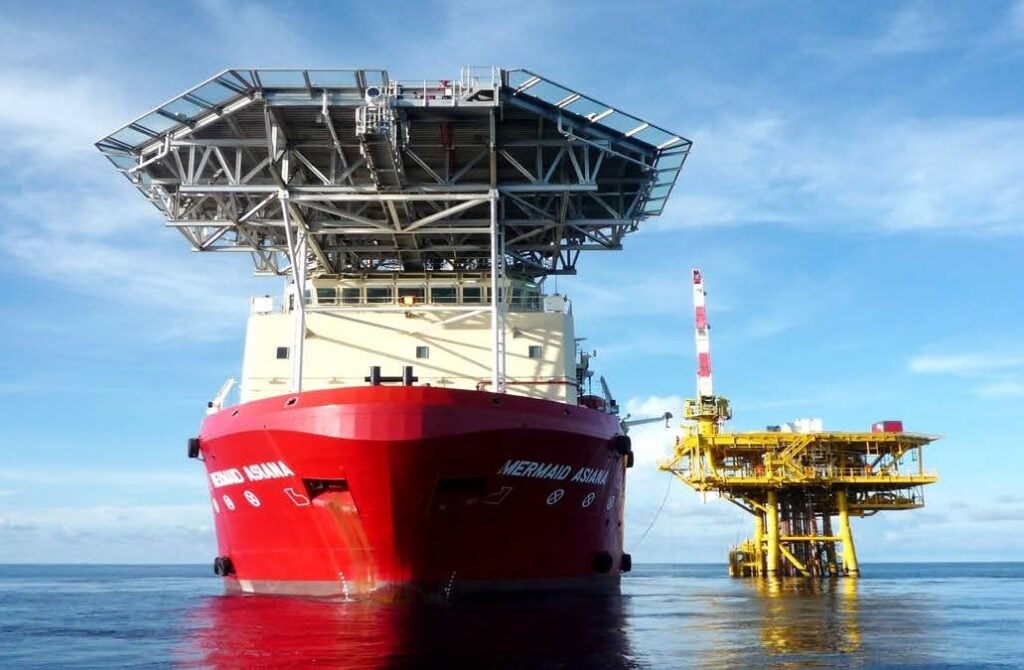
Mermaid Maritime continues global expansion with joint venture in Brunei

In 60 seconds

Top move

New regional capacity: Mermaid’s joint venture in Brunei creates a locally based supplier for transport, installation, maintenance and decommissioning services that buyers can tap for Brunei projects, shortening mobilization options versus importing crews from outside the region

Key takeaways

  • New regional capacity: Mermaid’s joint venture in Brunei creates a locally based supplier for transport, installation, maintenance and decommissioning services that buyers can tap for Brunei projects, shortening mobilization options versus importing crews from outside the region.[1]
  • Asset availability changed: Seatrium completed the sale of its Singapore tugboat fleet, removing owner-operated towage capacity and shifting demand toward third-party providers or spot hires for port maneuvers and small-vessel support.[3]
  • Fuel-supply trial advancing: A Japanese-led ammonia bunkering demonstration in Singapore has grant support and intends to test ship-to-ship ammonia fuel transfers, which makes safety, regulatory acceptance, and supplier structure increasingly relevant for future low-emission fuel sourcing.[2]
  • Commercial posture: Seatrium’s divestment is framed as cost-savings and portfolio focus rather than market exit; expect commercial re-pricing of towage services as market participants absorb the transferred assets.[3]
  • Scale uncertainty remains for ammonia: the Singapore demo is funded but still a demonstration—commercial bunkering and broad operational adoption are not yet assured, so treat near-term impacts as an early operational change to monitor.[2]

What changed since last run

  • Shift in this run from fuel-route and high-level fuel risk focus to concrete APAC supplier and asset changes: added Mermaid JV in Brunei and the completed Seatrium tug sale which were not in the prior brief.
  • Ammonia activity in APAC advanced from concept-level coverage in the prior brief to a funded Singapore demonstration, increasing operational relevance for bunker strategy.

Key facts

  • Joint venture company named Serikandi Mermaid SDN BHD
  • Activities: offshore transport and installation, IRM, decommissioning, pipeline projects
  • Ownership: 50% Mermaid Subsea Services (Thailand); funded from internal resources
  • Sale completed for Seatrium’s fleet of 17 tugboats in Singapore
  • Sale was expected to generate S$104 million and support annualised cost savings
  • Assets were divested alongside other non-core disposals

Why it matters

New regional capacity: Mermaid’s joint venture in Brunei creates a locally based supplier for transport, installation, maintenance and decommissioning services that buyers can tap for Brunei projects, shortening mobilization options versus importing crews from outside the region. Asset availability changed: Seatrium completed the sale of its Singapore tugboat fleet, removing owner-operated towage capacity and shifting demand toward third-party providers or spot hires for port maneuvers and small-vessel support. Fuel-supply trial advancing: A Japanese-led ammonia bunkering demonstration in Singapore has grant support and intends to test ship-to-ship ammonia fuel transfers, which makes safety, regulatory acceptance, and supplier structure increasingly relevant for future low-emission fuel sourcing. Commercial posture: Seatrium’s divestment is framed as cost-savings and portfolio focus rather than market exit; expect commercial re-pricing of towage services as market participants absorb the transferred assets

Cost / money

  • Seatrium’s tug fleet sale realizes stated proceeds and reduces its operating fleet, which may lower owner-operated towage supply and push buyers toward third-party towage premiums or pass-through clauses.[3]
  • Mermaid’s JV is internally funded and focused on local services; this can reduce buyer exposure to international mobilization premiums for Brunei projects but may also shorten competitive windows as a new local player bids work.[1]
  • If the ammonia demo progresses toward operational bunkering, expect future capex and operational cost considerations for ammonia-handling at berths and on vessels, shifting long-term fuel budgeting and contract clauses for fuel supply.[2]

Supplier / commercial

  • Local sourcing leverage increases for Brunei projects: the Mermaid JV creates a new counterparty for T&I and IRM work that can be included in shortlists and local content discussions.[1]
  • Loss of Seatrium-owned tugs removes a captive supplier option; existing contracts that relied on Seatrium’s internal fleet may need renegotiation or early reprocurement to secure towage capacity.[3]
  • The Japanese consortium’s demo (Sumitomo/K Line/NYK) signals upstream supplier alignment around ammonia bunkering, which will influence future supplier selection and potential joint-ownership or shared-bunker models in Singapore.[2]

Safety / operations

  • Ammonia ship-to-ship (STS) trial explicitly targets procedures and operational risk management; adopters will need updated HSE procedures, permit engagement, and emergency-response planning before any procurement that relies on ammonia supply.[2]
  • Mermaid’s stated scope (transport, installation, IRM and decommissioning) means buyers should verify local crew competence and certification early, as deploying T&I and IRM services carries direct uptime and execution dependency risks.[1]

What to watch

  • Ammonia commercial scale-up is not guaranteed—this is an early operational demo with grant support but still uncertain for wide commercial use; do not assume immediate supplier market opening for ammonia bunkering.[2]
  • Monitor Singapore towage market for rate or availability changes after Seatrium’s fleet sale; early reallocation of those assets to other operators could tighten short-term spot availability.[3]

Top stories

Story 1Offshore EnergyApr 27, 2026

Mermaid Maritime continues global expansion with joint venture in Brunei

Signal moderateSource-grounded

What happened

Mermaid Maritime has formed a joint venture in Brunei to offer offshore transport and installation, IRM (installation, repair and maintenance), decommissioning and pipeline services. The JV is 50% owned by Mermaid Subsea Services (Thailand) and is funded from internal resources, meaning the company intends to operate locally rather than import all services. This moves a regional supplier into direct competition for Brunei work—watch for how quickly the JV is included on local shortlists and for permit or crew-certification requirements

Buyer takeaway

Treat this as a genuine local supply option for Brunei work; include the JV in upcoming RFQs to capture potential mobilization and local-content advantages

Cost / money

Directionally lowers import mobilization costs for Brunei work and can compress windows for competitive bids as a new local vendor participates

Supplier / commercial

Creates a new regional counterparty that can be negotiated for alliance terms, local-content commitments, or preferred-supplier slots

Safety / operations

Operational readiness will depend on local crew certification and permits—verify before assigning critical path work

What to watch

Confirm actual vessel and crew availability versus company statements; early announcements can precede the full mobilisation of capabilities

Key facts

  • Joint venture company named Serikandi Mermaid SDN BHD
  • Activities: offshore transport and installation, IRM, decommissioning, pipeline projects
  • Ownership: 50% Mermaid Subsea Services (Thailand); funded from internal resources

Source excerpts

The primary activities of the entity named Serikandi Mermaid SDN BHD are offshore transport and installation (T&I), installation, repair, and maintenance (IRM), decommissioning, and pipeline projects in Brunei. Mermaid Subsea Services (Thailand) Ltd
Home Subsea Mermaid Maritime continues global expansion with joint venture in Brunei April 27, 2026, by After establishing joint venture companies in Taiwan and Equatorial Guinea, Thailand-headquartered subsea and offshore drilling services company Mermaid Maritime Public Company Limited has done the same in Brunei. The primary activities of the entity named Serikandi Mermaid SDN BHD are offshore transport and installation (T&I), installation, repair, and maintenance (IRM), decommissioning, and pipeline project
The primary activities of the entity named Serikandi Mermaid SDN BHD are offshore transport and installation (T&I), installation, repair, and maintenance (IRM), decommissioning, and pipeline projects in Brunei
Story 2Offshore EnergyApr 27, 2026

Seatrium ticks tugboat fleet sale off non-core asset divestment list

Signal strongSource-grounded

What happened

Seatrium completed the sale of its 17-tugfleet in Singapore as part of non-core asset divestments. The company framed the moves as delivering multi-million-dollar proceeds and annualised cost savings, which changes the ownership and operator landscape for tug services in the port. Buyers that previously relied on Seatrium’s owner-operated tugs should check contracts and local availability because service sourcing may now fall to third-party operators

Buyer takeaway

Do not assume continuity of owner-operated towage—verify whether service commitments continue under the new owners or require replacement procurement

Cost / money

May increase spot towage costs or require pass-through clauses as the market rebalances after the sale

Supplier / commercial

Opens a window to renegotiate towage tenders and to lock capacity with third-party operators or short-term contracts

Safety / operations

Operational continuity risk exists if operator transitions interrupt crewing or maintenance standards; verify continuity plans

What to watch

Monitor how the purchased fleet is integrated by buyers—rapid resale or redeployment could cause short-term availability crunches

Key facts

  • Sale completed for Seatrium’s fleet of 17 tugboats in Singapore
  • Sale was expected to generate S$104 million and support annualised cost savings
  • Assets were divested alongside other non-core disposals

Source excerpts

Home Fossil Energy Seatrium ticks tugboat fleet sale off non-core asset divestment list April 27, 2026, by Singapore-based offshore, marine, and energy solutions provider Seatrium has brought to a close the disposal of its tugboat fleet as it continues its mission to part ways with non-core assets in its portfolio. Seatrium yard; Source: Seatrium Seatrium completed the divestment of its fleet of 17 tugboats in Singapore on April 24, 2026
Seatrium yard; Source: Seatrium Seatrium completed the divestment of its fleet of 17 tugboats in Singapore on April 24, 2026
Home Fossil Energy Seatrium ticks tugboat fleet sale off non-core asset divestment list April 27, 2026, by Singapore-based offshore, marine, and energy solutions provider Seatrium has brought to a close the disposal of its tugboat fleet as it continues its mission to part ways with non-core assets in its portfolio
Story 3Offshore EnergyApr 27, 2026

Japanese trio launches demo project on ammonia supply for vessels in Singapore

Signal moderateSource-grounded

What happened

A Japanese consortium led by Sumitomo with K Line and NYK Line has launched a funded demonstration project to trial ammonia supply for vessels in Singapore using ship-to-ship transfer. The project is backed by an FY2024 supplementary budget grant and includes feasibility studies on supply facilities, procedures, environmental and safety factors. Buyers should watch regulatory outcomes and insurance acceptance as the main gating items before ammonia can be treated as an operational bunker option

Buyer takeaway

View this as progress on ammonia operationalisation but not as an immediately available commercial fuel option—build contract clauses and HSE checks now

Cost / money

Demonstration funding reduces immediate supplier credit risk for the trial but does not yet clarify long-run pricing or capex pass-through for ammonia handling

Supplier / commercial

Could create early partnership models or ownership structures for ammonia bunkering vessels and services, reshaping how suppliers bid future bunkering tenders

Safety / operations

STS ammonia transfers will require new procedures, emergency response plans, and likely insurance confirmation before being accepted at commercial scale

What to watch

Track permit approvals, insurance market responses, and whether demonstration results translate into commercial offers in Singapore port terminals

Key facts

  • Project selected for FY2024 Supplementary Budget Grant
  • Trial method: ship-to-ship (STS) ammonia transfer
  • Partners: Sumitomo Corporation, Kawasaki Kisen Kaisha (K Line), Nippon Yusen Kabushiki Kaisha

Source excerpts

Home Clean Fuel Japanese trio launches demo project on ammonia supply for vessels in Singapore April 27, 2026, by Japan’s Sumitomo Corporation, Kawasaki Kisen Kaisha (“K” Line), and Nippon Yusen Kabushiki Kaisha (NYK Line) have jointly applied to run a demonstration project on the supply of ammonia fuel for vessels in Singapore, building on their memorandum of understanding (MoU) from last month to conduct a front-end engineering design (FEED) study and explore the ownership of a newbuild ammonia bunkering vesse
Sumitomo Corporation Coordinated by Sumitomo, the project will see the companies conduct a trial supply of ammonia fuel using the ship-to-ship (STS) transfer method, employing a bunkering vessel that complies with the requirements set by the Singapore Government, marking the first demonstration of ammonia bunkering by the collaborators. The feasibility studies will assess supply facilities while managing operational risks, establishing procedures, and evaluating environmental and safety factors to confirm the v
The tripartite partnership is now working to advance detailed studies covering the vessel’s basic design, technical specifications, safety and operational requirements, as well as the structuring and ownership model tailored to the Singapore ammonia bunker market. View post tag: ammonia View post tag: demonstration project View post tag: K Line View post tag: NYK Line View post tag: singapore View post tag: Sumitomo Corporation

VP Snapshot

Executive Risk & Action View

New regional capacity: Mermaid’s joint venture in Brunei creates a locally based supplier for transport, installation, maintenance and decommissioning services that buyers can tap for Brunei projects, shortening mobilization options versus importing crews from outside the region.

Overall
51
Cost
97
Supply
79
Schedule
20
Compliance
15

Top signals

30-180dcost

Signal 1: Cost / money

Seatrium’s tug fleet sale realizes stated proceeds and reduces its operating fleet, which may lower owner-operated towage supply and push buyers toward third-party towage premiums or pass-through clauses.

Signal 2: Cost / money

Mermaid’s JV is internally funded and focused on local services; this can reduce buyer exposure to international mobilization premiums for Brunei projects but may also shorten competitive windows as a new local player bids work.

Signal 3: Cost / money

If the ammonia demo progresses toward operational bunkering, expect future capex and operational cost considerations for ammonia-handling at berths and on vessels, shifting long-term fuel budgeting and contract clauses for fuel supply.

30-180dcommercial

Signal 4: Supplier / commercial

Local sourcing leverage increases for Brunei projects: the Mermaid JV creates a new counterparty for T&I and IRM work that can be included in shortlists and local content discussions.

Signal 6: Supplier / commercial

The Japanese consortium’s demo (Sumitomo/K Line/NYK) signals upstream supplier alignment around ammonia bunkering, which will influence future supplier selection and potential joint-ownership or shared-bunker models in Singapore.

30-180dsupply

Signal 5: Supplier / commercial

Loss of Seatrium-owned tugs removes a captive supplier option; existing contracts that relied on Seatrium’s internal fleet may need renegotiation or early reprocurement to secure towage capacity.

Recommended actions

CategoryDue 3d

Inventory and tag active port, towage and vetting clauses that reference Seatrium or owner-operated tug performance.

Short list of contracts referencing Seatrium-owned towage and a risk flag for each

ContractsDue 21d

Engage Mermaid JV contacts to confirm service offerings, capacity windows, certificates and mobilisation terms for Brunei projects and include them in upcoming RFQs where relevant.

Validated supplier capability statements and recommended contract inclusion for Brunei tenders

LegalDue 21d

Request technical, regulatory and insurance readiness inputs from shortlisted bunker and fuel suppliers about ammonia handling and STS transfers to inform contract terms and HSE...

Checklist of supplier technical proofs, insurance positions, and gaps to be closed before awarding ammonia-related services

ContractsDue 60d

Update port-service and fuel-supply contract templates to include clearer mobilisation SLAs, pass-through mechanics for towage or bunkering changes, and explicit safety/STS tran...

Revised contract templates with mobilisation, pass-through and fuel-handling clauses ready for next RFQ cycle

Risk register

RiskTriggerMitigation
Ammonia commercial scale-up is not guaranteed—this is an early operational demo with grant support but still uncertain for wide commercial use; do not assume immediate supplier market opening for ammonia bunkering.Ammonia commercial scale-up is not guaranteed—this is an early operational demo with grant support but still uncertain for wide commercial use; do not assume immediate supplier market opening for ammonia bunkering.Confirm exposure with category, contracts, and operations before the next supplier commitment.
Monitor Singapore towage market for rate or availability changes after Seatrium’s fleet sale; early reallocation of those assets to other operators could tighten short-term spot availability.Monitor Singapore towage market for rate or availability changes after Seatrium’s fleet sale; early reallocation of those assets to other operators could tighten short-term spot availability.Confirm exposure with category, contracts, and operations before the next supplier commitment.

CM Snapshot

Category Manager Decision Detail

Today's priorities

Inventory and tag active port, towage and vetting clauses that reference Seatrium or owner-operated tug performance.

because Seatrium completed sale of its Singapore tug fleet and contracts may be exposed to changed availability or service models after the divestment (Seatrium sale), we need t...

Due 3d

high

CM move

Use this as the immediate supplier or contract action to move before the next sourcing gate.

Engage Mermaid JV contacts to confirm service offerings, capacity windows, certificates and mobilisation terms for Brunei projects and include them in upcoming RFQs where relevant.

because Mermaid’s new Brunei JV targets T&I, IRM and decommissioning and can materially shorten mobilization and local content requirements, confirming capabilities lets procure...

Due 21d

high

CM move

Use this as the immediate supplier or contract action to move before the next sourcing gate.

Request technical, regulatory and insurance readiness inputs from shortlisted bunker and fuel suppliers about ammonia handling and STS transfers to inform contract terms and HSE...

because the Japanese-led Singapore ammonia demo is testing STS transfer and safety procedures, pre-validating supplier technical and insurance positions reduces downstream contr...

Due 21d

high

CM move

Use this as the immediate supplier or contract action to move before the next sourcing gate.

Update port-service and fuel-supply contract templates to include clearer mobilisation SLAs, pass-through mechanics for towage or bunkering changes, and explicit safety/STS tran...

because asset divestments (Seatrium) and funded fuel trials (ammonia demo) change commercial and safety dependencies, updating templates will standardise risk transfer and reduc...

Due 60d

high

CM move

Use this as the immediate supplier or contract action to move before the next sourcing gate.

Supplier radar

Offshore Energy

high

Observed supplier signal

Local sourcing leverage increases for Brunei projects: the Mermaid JV creates a new counterparty for T&I and IRM work that can be included in shortlists and local content discussions.

Commercial implication

Local sourcing leverage increases for Brunei projects: the Mermaid JV creates a new counterparty for T&I and IRM work that can be included in shortlists and local content discussions.

Next step: Validate the source-backed signal with incumbents and alternates before the next award or pricing decision.

Offshore Energy

high

Observed supplier signal

Loss of Seatrium-owned tugs removes a captive supplier option; existing contracts that relied on Seatrium’s internal fleet may need renegotiation or early reprocurement to secure towage capacity.

Commercial implication

Loss of Seatrium-owned tugs removes a captive supplier option; existing contracts that relied on Seatrium’s internal fleet may need renegotiation or early reprocurement to secure towage capacity.

Next step: Validate the source-backed signal with incumbents and alternates before the next award or pricing decision.

Offshore Energy

high

Observed supplier signal

The Japanese consortium’s demo (Sumitomo/K Line/NYK) signals upstream supplier alignment around ammonia bunkering, which will influence future supplier selection and potential joint-ownership or shared-bunker models in Singapore.

Commercial implication

The Japanese consortium’s demo (Sumitomo/K Line/NYK) signals upstream supplier alignment around ammonia bunkering, which will influence future supplier selection and potential joint-ownership or shared-bunker models in Singapore.

Next step: Validate the source-backed signal with incumbents and alternates before the next award or pricing decision.

Negotiation levers

Inventory and tag active port, towage and vetting clauses that reference Seatrium or owner-operated tug performance.

When to use: because Seatrium completed sale of its Singapore tug fleet and contracts may be exposed to changed availability or service models after the divestment (Seatrium sale), we need t...

Expected outcome: Short list of contracts referencing Seatrium-owned towage and a risk flag for each

Commercial mechanism to carry into the next supplier conversation

Engage Mermaid JV contacts to confirm service offerings, capacity windows, certificates and mobilisation terms for Brunei projects and include them in upcoming RFQs where relevant.

When to use: because Mermaid’s new Brunei JV targets T&I, IRM and decommissioning and can materially shorten mobilization and local content requirements, confirming capabilities lets procure...

Expected outcome: Validated supplier capability statements and recommended contract inclusion for Brunei tenders

Commercial mechanism to carry into the next supplier conversation

Request technical, regulatory and insurance readiness inputs from shortlisted bunker and fuel suppliers about ammonia handling and STS transfers to inform contract terms and HSE...

When to use: because the Japanese-led Singapore ammonia demo is testing STS transfer and safety procedures, pre-validating supplier technical and insurance positions reduces downstream contr...

Expected outcome: Checklist of supplier technical proofs, insurance positions, and gaps to be closed before awarding ammonia-related services

Commercial mechanism to carry into the next supplier conversation

Update port-service and fuel-supply contract templates to include clearer mobilisation SLAs, pass-through mechanics for towage or bunkering changes, and explicit safety/STS tran...

When to use: because asset divestments (Seatrium) and funded fuel trials (ammonia demo) change commercial and safety dependencies, updating templates will standardise risk transfer and reduc...

Expected outcome: Revised contract templates with mobilisation, pass-through and fuel-handling clauses ready for next RFQ cycle

Commercial mechanism to carry into the next supplier conversation

Talking points

New regional capacity: Mermaid’s joint venture in Brunei creates a locally based supplier for transport, installation, maintenance and decommissioning services that buyers can tap for Brunei projects, shortening mobilization options versus importing crews from outside the region.
Asset availability changed: Seatrium completed the sale of its Singapore tugboat fleet, removing owner-operated towage capacity and shifting demand toward third-party providers or spot hires for port maneuvers and small-vessel support.
Fuel-supply trial advancing: A Japanese-led ammonia bunkering demonstration in Singapore has grant support and intends to test ship-to-ship ammonia fuel transfers, which makes safety, regulatory acceptance, and supplier structure increasingly relevant for future low-emission fuel sourcing.
Commercial posture: Seatrium’s divestment is framed as cost-savings and portfolio focus rather than market exit; expect commercial re-pricing of towage services as market participants absorb the transferred assets.

Supplier radar

SupplierSignalImplicationNext stepConfidence
Offshore EnergyLocal sourcing leverage increases for Brunei projects: the Mermaid JV creates a new counterparty for T&I and IRM work that can be included in shortlists and local content discussions.Local sourcing leverage increases for Brunei projects: the Mermaid JV creates a new counterparty for T&I and IRM work that can be included in shortlists and local content discussions.Validate the source-backed signal with incumbents and alternates before the next award or pricing decision.high
Offshore EnergyLoss of Seatrium-owned tugs removes a captive supplier option; existing contracts that relied on Seatrium’s internal fleet may need renegotiation or early reprocurement to secure towage capacity.Loss of Seatrium-owned tugs removes a captive supplier option; existing contracts that relied on Seatrium’s internal fleet may need renegotiation or early reprocurement to secure towage capacity.Validate the source-backed signal with incumbents and alternates before the next award or pricing decision.high
Offshore EnergyThe Japanese consortium’s demo (Sumitomo/K Line/NYK) signals upstream supplier alignment around ammonia bunkering, which will influence future supplier selection and potential joint-ownership or shared-bunker models in Singapore.The Japanese consortium’s demo (Sumitomo/K Line/NYK) signals upstream supplier alignment around ammonia bunkering, which will influence future supplier selection and potential joint-ownership or shared-bunker models in Singapore.Validate the source-backed signal with incumbents and alternates before the next award or pricing decision.high

Negotiation levers

  • Inventory and tag active port, towage and vetting clauses that reference Seatrium or owner-operated tug performance.because Seatrium completed sale of its Singapore tug fleet and contracts may be exposed to changed availability or service models after the divestment (Seatrium sale), we need t...Short list of contracts referencing Seatrium-owned towage and a risk flag for each

    high confidence

  • Engage Mermaid JV contacts to confirm service offerings, capacity windows, certificates and mobilisation terms for Brunei projects and include them in upcoming RFQs where relevant.because Mermaid’s new Brunei JV targets T&I, IRM and decommissioning and can materially shorten mobilization and local content requirements, confirming capabilities lets procure...Validated supplier capability statements and recommended contract inclusion for Brunei tenders

    high confidence

  • Request technical, regulatory and insurance readiness inputs from shortlisted bunker and fuel suppliers about ammonia handling and STS transfers to inform contract terms and HSE...because the Japanese-led Singapore ammonia demo is testing STS transfer and safety procedures, pre-validating supplier technical and insurance positions reduces downstream contr...Checklist of supplier technical proofs, insurance positions, and gaps to be closed before awarding ammonia-related services

    high confidence

  • Update port-service and fuel-supply contract templates to include clearer mobilisation SLAs, pass-through mechanics for towage or bunkering changes, and explicit safety/STS tran...because asset divestments (Seatrium) and funded fuel trials (ammonia demo) change commercial and safety dependencies, updating templates will standardise risk transfer and reduc...Revised contract templates with mobilisation, pass-through and fuel-handling clauses ready for next RFQ cycle

    high confidence

What to do / What to watch

What to do now

  • Inventory and tag active port, towage and vetting clauses that reference Seatrium or owner-operated tug performance.

    Why: because Seatrium completed sale of its Singapore tug fleet and contracts may be exposed to changed availability or service models after the divestment (Seatrium sale), we need t...

    Owner: Category

    Expected outcome: Short list of contracts referencing Seatrium-owned towage and a risk flag for each

    [3]

Next few weeks

  • Engage Mermaid JV contacts to confirm service offerings, capacity windows, certificates and mobilisation terms for Brunei projects and include them in upcoming RFQs where relevant.

    Why: because Mermaid’s new Brunei JV targets T&I, IRM and decommissioning and can materially shorten mobilization and local content requirements, confirming capabilities lets procure...

    Owner: Contracts

    Expected outcome: Validated supplier capability statements and recommended contract inclusion for Brunei tenders

    [1]
  • Request technical, regulatory and insurance readiness inputs from shortlisted bunker and fuel suppliers about ammonia handling and STS transfers to inform contract terms and HSE...

    Why: because the Japanese-led Singapore ammonia demo is testing STS transfer and safety procedures, pre-validating supplier technical and insurance positions reduces downstream contr...

    Owner: Legal

    Expected outcome: Checklist of supplier technical proofs, insurance positions, and gaps to be closed before awarding ammonia-related services

    [2]

Longer view

  • Update port-service and fuel-supply contract templates to include clearer mobilisation SLAs, pass-through mechanics for towage or bunkering changes, and explicit safety/STS tran...

    Why: because asset divestments (Seatrium) and funded fuel trials (ammonia demo) change commercial and safety dependencies, updating templates will standardise risk transfer and reduc...

    Owner: Contracts

    Expected outcome: Revised contract templates with mobilisation, pass-through and fuel-handling clauses ready for next RFQ cycle

    [3][2]

What to watch

  • Ammonia commercial scale-up is not guaranteed—this is an early operational demo with grant support but still uncertain for wide commercial use; do not assume immediate supplier market opening for ammonia bunkering
  • Monitor Singapore towage market for rate or availability changes after Seatrium’s fleet sale; early reallocation of those assets to other operators could tighten short-term spot availability
  • Ammonia commercial scale-up is not guaranteed—this is an early operational demo with grant support but still uncertain for wide commercial use; do not assume immediate supplier market opening for ammonia bunkering.: Ammonia commercial scale-up is not guaranteed—this is an early operational demo with grant support but still uncertain for wide commercial use; do not assume immediate supplier market opening for ammonia bunkering
  • Monitor Singapore towage market for rate or availability changes after Seatrium’s fleet sale; early reallocation of those assets to other operators could tighten short-term spot availability.: Monitor Singapore towage market for rate or availability changes after Seatrium’s fleet sale; early reallocation of those assets to other operators could tighten short-term spot availability
  • New regional capacity: Mermaid’s joint venture in Brunei creates a locally based supplier for transport, installation, maintenance and decommissioning services that buyers can tap for Brunei projects, shortening mobilization options versus importing crews from outside the region
  • Asset availability changed: Seatrium completed the sale of its Singapore tugboat fleet, removing owner-operated towage capacity and shifting demand toward third-party providers or spot hires for port maneuvers and small-vessel support
  • Fuel-supply trial advancing: A Japanese-led ammonia bunkering demonstration in Singapore has grant support and intends to test ship-to-ship ammonia fuel transfers, which makes safety, regulatory acceptance, and supplier structure increasingly relevant for future low-emission fuel sourcing
  • Commercial posture: Seatrium’s divestment is framed as cost-savings and portfolio focus rather than market exit; expect commercial re-pricing of towage services as market participants absorb the transferred assets

Market pulse

IndexLatestChangeAs of
WTI Crude (WTI)71.23 /bbl+0.00 (+0.00%)Apr 27, 2026, 10:07 PM
Brent Crude (BRENT)74.89 /bbl+0.00 (+0.00%)Apr 27, 2026, 10:07 PM
Natural Gas (NG)3.12 /MMBtu+0.00 (+0.00%)Apr 27, 2026, 10:07 PM
Henry Hub Gas (NG)3.12 /MMBtu+0.00 (+0.00%)Apr 27, 2026, 10:07 PM
Cheniere (LNG) (LNG)185 +0.00 (+0.00%)Apr 27, 2026, 10:07 PM
Brent Crude (BRENT)74.89 /bbl+0.00 (+0.00%)Apr 27, 2026, 10:07 PM
  • WTI Crude: Fuel-price risks flow through bunker costs and day-rates; watch for pass-through clauses in charters and towage contracts
  • Dry Bulk Shipping (BDRY): Shipping and towage market tightness affects spot vessel availability and short-notice mobilisation costs

Sources

Inline citations jump here. Expand a source to read the excerpt, the AI interpretation, and the original link.

[1] Mermaid Maritime continues global expansion with joint venture in Brunei

offshore-energy.biz · Apr 27, 2026

Expand

AI reading

Mermaid Maritime has formed a joint venture in Brunei to offer offshore transport and installation, IRM (installation, repair and maintenance), decommissioning and pipeline services. The JV is 50% owned by Mermaid Subsea Services (Thailand) and is funded from internal resources, meaning the company intends to operate locally rather than import all services. This moves a regional supplier into direct competition for Brunei work—watch for how quickly the JV is included on local shortlists and for permit or crew-certification requirements

Buyer takeaway

Treat this as a genuine local supply option for Brunei work; include the JV in upcoming RFQs to capture potential mobilization and local-content advantages

Cost / money

Directionally lowers import mobilization costs for Brunei work and can compress windows for competitive bids as a new local vendor participates

Supplier / commercial

Creates a new regional counterparty that can be negotiated for alliance terms, local-content commitments, or preferred-supplier slots

Safety / operations

Operational readiness will depend on local crew certification and permits—verify before assigning critical path work

What to watch

Confirm actual vessel and crew availability versus company statements; early announcements can precede the full mobilisation of capabilities

Key facts

  • Joint venture company named Serikandi Mermaid SDN BHD
  • Activities: offshore transport and installation, IRM, decommissioning, pipeline projects
  • Ownership: 50% Mermaid Subsea Services (Thailand); funded from internal resources

Source excerpts

The primary activities of the entity named Serikandi Mermaid SDN BHD are offshore transport and installation (T&I), installation, repair, and maintenance (IRM), decommissioning, and pipeline projects in Brunei. Mermaid Subsea Services (Thailand) Ltd
Home Subsea Mermaid Maritime continues global expansion with joint venture in Brunei April 27, 2026, by After establishing joint venture companies in Taiwan and Equatorial Guinea, Thailand-headquartered subsea and offshore drilling services company Mermaid Maritime Public Company Limited has done the same in Brunei. The primary activities of the entity named Serikandi Mermaid SDN BHD are offshore transport and installation (T&I), installation, repair, and maintenance (IRM), decommissioning, and pipeline project
The primary activities of the entity named Serikandi Mermaid SDN BHD are offshore transport and installation (T&I), installation, repair, and maintenance (IRM), decommissioning, and pipeline projects in Brunei

Used in this brief

  • Supplier / commercial: Local sourcing leverage increases for Brunei projects: the Mermaid JV creates a new counterparty for T&I and IRM work that can be included in shortlists and local content discussions
  • Safety / operations: Mermaid’s stated scope (transport, installation, IRM and decommissioning) means buyers should verify local crew competence and certification early, as deploying T&I and IRM services carries direct uptime and execution dependency risks
  • Next 2-4 weeks — Engage Mermaid JV contacts to confirm service offerings, capacity windows, certificates and mobilisation terms for Brunei projects and include them in upcoming RFQs where relevant.. Rationale: because Mermaid’s new Brunei JV targets T&I, IRM and decommissioning and can materially shorten mobilization and local content requirements, confirming capabilities lets procure.... Owner: Contracts. KPI: Validated supplier capability statements and recommended contract inclusion for Brunei tenders
Open original source

[2] Japanese trio launches demo project on ammonia supply for vessels in Singapore

offshore-energy.biz · Apr 27, 2026

Expand

AI reading

A Japanese consortium led by Sumitomo with K Line and NYK Line has launched a funded demonstration project to trial ammonia supply for vessels in Singapore using ship-to-ship transfer. The project is backed by an FY2024 supplementary budget grant and includes feasibility studies on supply facilities, procedures, environmental and safety factors. Buyers should watch regulatory outcomes and insurance acceptance as the main gating items before ammonia can be treated as an operational bunker option

Buyer takeaway

View this as progress on ammonia operationalisation but not as an immediately available commercial fuel option—build contract clauses and HSE checks now

Cost / money

Demonstration funding reduces immediate supplier credit risk for the trial but does not yet clarify long-run pricing or capex pass-through for ammonia handling

Supplier / commercial

Could create early partnership models or ownership structures for ammonia bunkering vessels and services, reshaping how suppliers bid future bunkering tenders

Safety / operations

STS ammonia transfers will require new procedures, emergency response plans, and likely insurance confirmation before being accepted at commercial scale

What to watch

Track permit approvals, insurance market responses, and whether demonstration results translate into commercial offers in Singapore port terminals

Key facts

  • Project selected for FY2024 Supplementary Budget Grant
  • Trial method: ship-to-ship (STS) ammonia transfer
  • Partners: Sumitomo Corporation, Kawasaki Kisen Kaisha (K Line), Nippon Yusen Kabushiki Kaisha

Source excerpts

Home Clean Fuel Japanese trio launches demo project on ammonia supply for vessels in Singapore April 27, 2026, by Japan’s Sumitomo Corporation, Kawasaki Kisen Kaisha (“K” Line), and Nippon Yusen Kabushiki Kaisha (NYK Line) have jointly applied to run a demonstration project on the supply of ammonia fuel for vessels in Singapore, building on their memorandum of understanding (MoU) from last month to conduct a front-end engineering design (FEED) study and explore the ownership of a newbuild ammonia bunkering vesse
Sumitomo Corporation Coordinated by Sumitomo, the project will see the companies conduct a trial supply of ammonia fuel using the ship-to-ship (STS) transfer method, employing a bunkering vessel that complies with the requirements set by the Singapore Government, marking the first demonstration of ammonia bunkering by the collaborators. The feasibility studies will assess supply facilities while managing operational risks, establishing procedures, and evaluating environmental and safety factors to confirm the v
The tripartite partnership is now working to advance detailed studies covering the vessel’s basic design, technical specifications, safety and operational requirements, as well as the structuring and ownership model tailored to the Singapore ammonia bunker market. View post tag: ammonia View post tag: demonstration project View post tag: K Line View post tag: NYK Line View post tag: singapore View post tag: Sumitomo Corporation

Used in this brief

  • New regional capacity: Mermaid’s joint venture in Brunei creates a locally based supplier for transport, installation, maintenance and decommissioning services that buyers can tap for Brunei projects, shortening mobilization options versus importing crews from outside the region. Asset availability changed: Seatrium completed the sale of its Singapore tugboat fleet, removing owner-operated towage capacity and shifting demand toward third-party providers or spot hires for port maneuvers and small-vessel support. Fuel-supply trial advancing: A Japanese-led ammonia bunkering demonstration in Singapore has grant support and intends to test ship-to-ship ammonia fuel transfers, which makes safety, regulatory acceptance, and supplier structure increasingly relevant for future low-emission fuel sourcing. Commercial posture: Seatrium’s divestment is framed as cost-savings and portfolio focus rather than market exit; expect commercial re-pricing of towage services as market participants absorb the transferred assets
  • Cost / money: If the ammonia demo progresses toward operational bunkering, expect future capex and operational cost considerations for ammonia-handling at berths and on vessels, shifting long-term fuel budgeting and contract clauses for fuel supply
  • Supplier / commercial: The Japanese consortium’s demo (Sumitomo/K Line/NYK) signals upstream supplier alignment around ammonia bunkering, which will influence future supplier selection and potential joint-ownership or shared-bunker models in Singapore
Open original source

[3] Seatrium ticks tugboat fleet sale off non-core asset divestment list

offshore-energy.biz · Apr 27, 2026

Expand

AI reading

Seatrium completed the sale of its 17-tugfleet in Singapore as part of non-core asset divestments. The company framed the moves as delivering multi-million-dollar proceeds and annualised cost savings, which changes the ownership and operator landscape for tug services in the port. Buyers that previously relied on Seatrium’s owner-operated tugs should check contracts and local availability because service sourcing may now fall to third-party operators

Buyer takeaway

Do not assume continuity of owner-operated towage—verify whether service commitments continue under the new owners or require replacement procurement

Cost / money

May increase spot towage costs or require pass-through clauses as the market rebalances after the sale

Supplier / commercial

Opens a window to renegotiate towage tenders and to lock capacity with third-party operators or short-term contracts

Safety / operations

Operational continuity risk exists if operator transitions interrupt crewing or maintenance standards; verify continuity plans

What to watch

Monitor how the purchased fleet is integrated by buyers—rapid resale or redeployment could cause short-term availability crunches

Key facts

  • Sale completed for Seatrium’s fleet of 17 tugboats in Singapore
  • Sale was expected to generate S$104 million and support annualised cost savings
  • Assets were divested alongside other non-core disposals

Source excerpts

Home Fossil Energy Seatrium ticks tugboat fleet sale off non-core asset divestment list April 27, 2026, by Singapore-based offshore, marine, and energy solutions provider Seatrium has brought to a close the disposal of its tugboat fleet as it continues its mission to part ways with non-core assets in its portfolio. Seatrium yard; Source: Seatrium Seatrium completed the divestment of its fleet of 17 tugboats in Singapore on April 24, 2026
Seatrium yard; Source: Seatrium Seatrium completed the divestment of its fleet of 17 tugboats in Singapore on April 24, 2026
Home Fossil Energy Seatrium ticks tugboat fleet sale off non-core asset divestment list April 27, 2026, by Singapore-based offshore, marine, and energy solutions provider Seatrium has brought to a close the disposal of its tugboat fleet as it continues its mission to part ways with non-core assets in its portfolio

Used in this brief

  • Cost / money: Seatrium’s tug fleet sale realizes stated proceeds and reduces its operating fleet, which may lower owner-operated towage supply and push buyers toward third-party towage premiums or pass-through clauses
  • Supplier / commercial: Loss of Seatrium-owned tugs removes a captive supplier option; existing contracts that relied on Seatrium’s internal fleet may need renegotiation or early reprocurement to secure towage capacity
  • What to watch: Monitor Singapore towage market for rate or availability changes after Seatrium’s fleet sale; early reallocation of those assets to other operators could tighten short-term spot availability
Open original source

[4] WTI Crude

finance.yahoo.com · n.d.

Expand

[5] Dry Bulk Shipping (BDRY)

finance.yahoo.com · n.d.

Expand