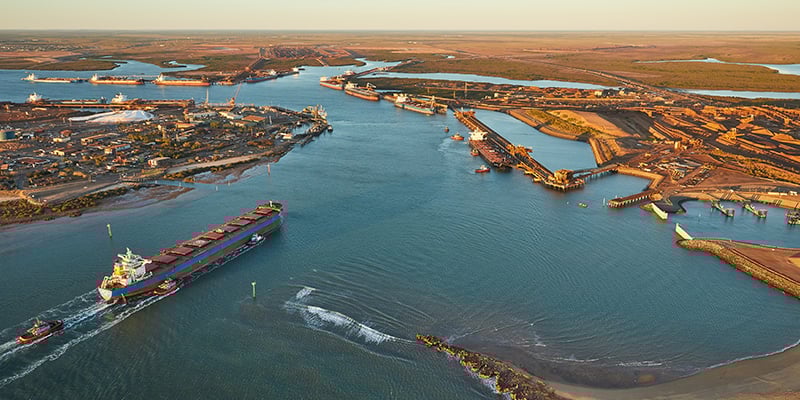
Operations changes help boost Pilbara Ports
What happened
OPERATIONAL changes have helped Pilbara Ports to a total monthly throughput of 55. Imports through Port of Port Hedland totalled 168,000 tonnes, a decrease of 8% compared with February 2025. This matters for Logistics, Marine & Aviation because capacity and lead-time signals can move supplier prioritization, award timing, and contingency lanes with 55.9, 2026, 13 as the clearest commercial anchors; buyers should plan for surcharge updates
Buyer takeaway
For Logistics, Marine & Aviation, the buyer read-through is commercial leverage: scope, validity windows, reopeners, and term structure may now matter as much as headline pricing
Cost / money
The money issue may come through term structure rather than base price alone, especially if suppliers push for escalation language, shorter validity, or broader pass-through
Supplier / commercial
This is primarily a contracting story: revisit scope boundaries, extension mechanics, and which party carries volatility before those assumptions harden in a live tender
Safety / operations
The main operations question is whether the contract still matches field reality. If scope, response times, or liabilities are vague, the risk usually shows up during execution
What to watch
Watch scope creep, liability pushback, and term changes that move volatility back onto the buyer even if the base rate looks manageable
Key facts
- OPERATIONAL changes have helped Pilbara Ports to a total monthly throughput of 55
- Imports through Port of Port Hedland totalled 168,000 tonnes, a decrease of 8% compared with
- Imports through the Port of Dampier totalled 131,000 tonnes, an increase of 40% on February 2025
- A Pilbara Ports statement said operational changes include revised vessel movement guidelines