Subsea, SURF & Offshore · International (Houston)

Texas Gulflink port gets approval from US Maritime Administration reshape Subsea, SURF & Offshore sourcing priorities

Published Feb 16, 2026, 6:10 AM CSTINTERNATIONALLight-signal edition
Ask AI
Texas Gulflink port gets approval from US Maritime Administration

Coverage note

No material category-specific items detected today; relevant oil & gas context that could affect this category is: Texas Gulflink port gets approval from US Maritime Administration (Offshore-mag). Procurement implication: keep supplier-risk monitoring active, maintain contract flexibility, and use index-linked guardrails until category-specific volume improves.

In 60 seconds

Top move

Email TechnipFMC to reconfirm vessel day rates, keep quote validity short around Texas Gulflink port gets approval from, and push for epci risk allocation instead of open-ended surcharge language

Key takeaways

  • Email TechnipFMC to reconfirm vessel day rates, keep quote validity short around Texas Gulflink port gets approval from, and push for epci risk allocation instead of open-ended surcharge language.[1]

What changed since last run

  • Lead coverage has rotated toward "Texas Gulflink port gets approval from US Maritime Administration", shifting the brief toward more immediate execution implications.

Key facts

  • Sentinel Midstream reports that the US Maritime Administration (MARAD) has issued the license
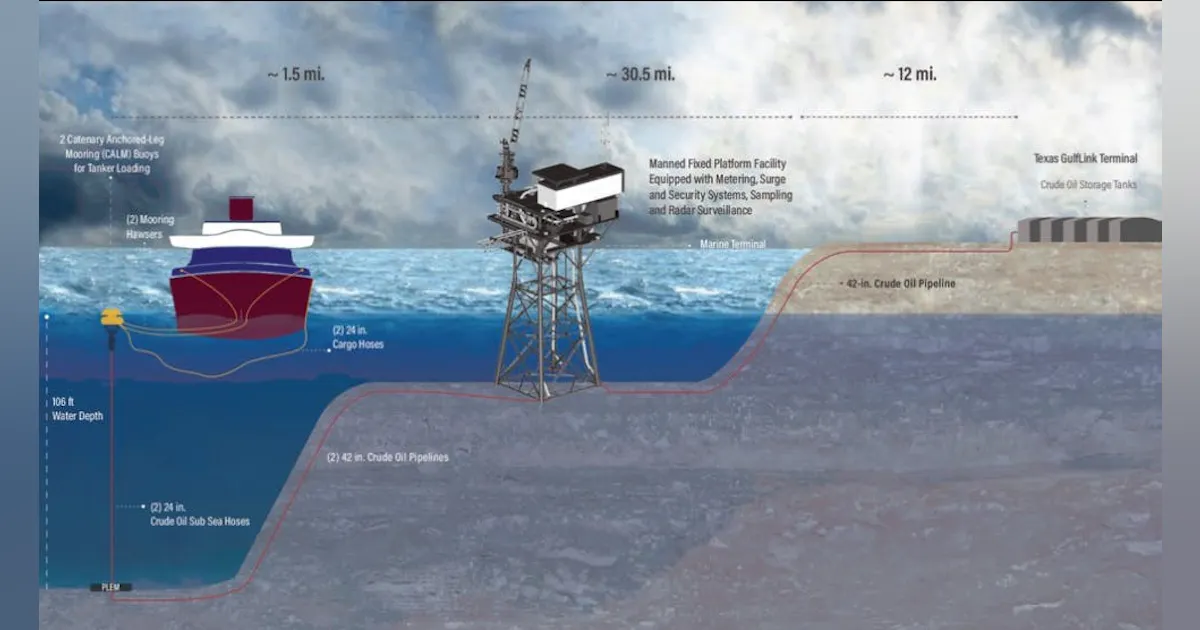
  • If the project moves forward, the crude oil export terminal will be sited in approximately 10
  • It will feature a manned platform, two SPM buoys, and over 50 miles of pipeline, allowing for
  • The project must also reach FID, and Sentinel says that it is engaging with customers and sta

Why it matters

The lead signals for Subsea, SURF & Offshore are no longer just descriptive; they point to immediate sourcing implications around cost pressure. Lead move: Sentinel Midstream reports that the US Maritime Administration (MARAD) has issued the license (Record of Decision, or ROD) to construct and operate its proposed Texas GulfLink facility. That shifts Subsea, SURF & Offshore focus toward cost pressure and changes the ask to TechnipFMC. The practical read-through is that buyers should tighten supplier challenge, pricing discipline, and contract optionality before the next decision gate

Cost / money

  • Lead move: Sentinel Midstream reports that the US Maritime Administration (MARAD) has issued the license (Record of Decision, or ROD) to construct and operate its proposed Texas GulfLink facility. That shifts Subsea, SURF & Offshore focus toward cost pressure and changes the ask to TechnipFMC.[1]
  • Use this to refresh should-cost views and challenge any fast repricing. Keep the read-through directional unless the source itself provides hard commercial numbers.[1]

Supplier / commercial

  • This matters for Subsea, SURF & Offshore because fresh price movement and input-cost detail should reset bid assumptions, epci risk allocation, and negotiation guardrails with 104, 30, 50 as the clearest commercial anchors; expect backlog-driven pricing.[1]
  • Use EPCI risk allocation. Limit upside cost exposure while preserving awardability for time-sensitive work and keeping the supplier commercially engaged.[1]
  • Suppliers with fresh cost justification may push harder on reopeners, indexation, shorter quote validity, or pass-through language. Buyers should separate real drivers from negotiation posture.[1]

Safety / operations

  • The operational risk is indirect: tight budgets or repricing battles often reappear later as reduced slack, substitutions, or execution compromises that buyers then have to manage.[1]

What to watch

  • Watch whether TechnipFMC starts using Texas Gulflink port gets approval from as a repricing reference in quotes, escalator asks, or budget resets.[1]
  • Texas Gulflink port gets approval from creates cost pressure. Trigger: Sentinel Midstream reports that the US Maritime Administration (MARAD) has issued the license (Record of Decision, or ROD) to construct and operate its proposed Texas GulfLink facility.[1]
  • Watch for shorter quote validity, reopeners, pass-through requests, or attempts to reset pricing on the back of weak evidence.[1]

Top stories

Story 1Offshore-mag

Texas Gulflink port gets approval from US Maritime Administration

Signal strongSource-grounded

What happened

Sentinel Midstream reports that the US Maritime Administration (MARAD) has issued the license (Record of Decision, or ROD) to construct and operate its proposed Texas GulfLink facility. If the project moves forward, the crude oil export terminal will be sited in approximately 104 feet of water some 30 miles off Brazoria County along the Texas Gulf Coast. This matters for Subsea, SURF & Offshore because fresh price movement and input-cost detail should reset bid assumptions, epci risk allocation, and negotiation guardrails with 104, 30, 50 as the clearest commercial anchors; expect backlog-driven pricing

Buyer takeaway

For Subsea, SURF & Offshore, treat this as a cost-boundary signal rather than just a headline; buyer assumptions may need refreshing before the next quote or award decision

Cost / money

Use this to refresh should-cost views and challenge any fast repricing. Keep the read-through directional unless the source itself provides hard commercial numbers

Supplier / commercial

Suppliers with fresh cost justification may push harder on reopeners, indexation, shorter quote validity, or pass-through language. Buyers should separate real drivers from negotiation posture

Safety / operations

The operational risk is indirect: tight budgets or repricing battles often reappear later as reduced slack, substitutions, or execution compromises that buyers then have to manage

What to watch

Watch for shorter quote validity, reopeners, pass-through requests, or attempts to reset pricing on the back of weak evidence

Key facts

  • Sentinel Midstream reports that the US Maritime Administration (MARAD) has issued the license
  • If the project moves forward, the crude oil export terminal will be sited in approximately 10
  • It will feature a manned platform, two SPM buoys, and over 50 miles of pipeline, allowing for
  • The project must also reach FID, and Sentinel says that it is engaging with customers and sta

Source excerpts

Texas GulfLink is a proposed offshore crude oil export terminal designed to facilitate the loading of VLCCs (very large crude carriers)
The project must also reach FID, and Sentinel says that it is engaging with customers and stakeholders to secure long-term contracts to support the terminal to advance that goal
By enabling VLCCs to receive crude oil offshore at the terminal, Sentinel Midstream says that the Texas GulfLink facility will set a new standard for crude loading efficiency. It will do this, the company says, by substantially reducing costs, improving vessel traffic in crowded US Gulf Coast ship channels, and reducing air emissions typically associated with lightering operations

VP Snapshot

Executive Risk & Action View

The biggest executive exposure for Subsea, SURF & Offshore is cost pressure because today's lead stories point to faster-moving supplier and commercial decisions than the current brief cadence alone would suggest.

Overall
71
Cost
53
Supply
30
Schedule
22
Compliance
15

Top signals

30-180dcost

Signal 1: Texas Gulflink port gets approval from

This matters for Subsea, SURF & Offshore because fresh price movement and input-cost detail should reset bid assumptions, epci risk allocation, and negotiation guardrails with 104, 30, 50 as the clearest commercial anchors; expect backlog-driven pricing.

Recommended actions

Category ManagerDue 5d

Email TechnipFMC to reconfirm vessel day rates, keep quote validity short around Texas Gulflink port gets approval from, and push for epci risk allocation instead of open-ended surcharge language.

This should improve negotiating posture and reduce surprise exposure against the supplier capacity now visible in the brief.

Risk register

RiskTriggerMitigation
Texas Gulflink port gets approval from creates cost pressure.Sentinel Midstream reports that the US Maritime Administration (MARAD) has issued the license (Record of Decision, or ROD) to construct and operate its proposed Texas GulfLink facility.Email TechnipFMC to reconfirm vessel day rates, keep quote validity short around Texas Gulflink port gets approval from, and push for epci risk allocation instead of open-ended surcharge language.

CM Snapshot

Category Manager Decision Detail

Today's priorities

Email TechnipFMC to reconfirm vessel day rates, keep quote validity short around Texas Gulflink port gets approval from, and push for epci risk allocation instead of open-ended surcharge language.

This matters for Subsea, SURF & Offshore because fresh price movement and input-cost detail should reset bid assumptions, epci risk allocation, and negotiation guardrails with 104, 30, 50 as the clearest commercial anchors; expect backlog-driven pricing.

Due 3d

high

CM move

Use this as the immediate supplier or contract action to move before the next sourcing gate.

Supplier radar

TechnipFMC

high

Observed supplier signal

Sentinel Midstream reports that the US Maritime Administration (MARAD) has issued the license (Record of Decision, or ROD) to construct and operate its proposed Texas GulfLink facility.

Commercial implication

This matters for Subsea, SURF & Offshore because fresh price movement and input-cost detail should reset bid assumptions, epci risk allocation, and negotiation guardrails with 104, 30, 50 as the clearest commercial anchors; expect backlog-driven pricing.

Next step: Email TechnipFMC to reconfirm vessel day rates, keep quote validity short around Texas Gulflink port gets approval from, and push for epci risk allocation instead of open-ended surcharge language.

Negotiation levers

Use EPCI risk allocation

When to use: Use when TechnipFMC cites Texas Gulflink port gets approval from to justify immediate repricing or wider surcharge language.

Expected outcome: Limit upside cost exposure while preserving awardability for time-sensitive work and keeping the supplier commercially engaged.

Commercial mechanism to carry into the next supplier conversation

Talking points

Subsea, SURF & Offshore conditions are now tactical: the latest signals justify immediate outreach to TechnipFMC and a clause-by-clause contract refresh.
Use today's signal mix to challenge vessel day rates, confirm installation vessel schedules, and preserve fallback options before leverage deteriorates.

Supplier radar

SupplierSignalImplicationNext stepConfidence
TechnipFMCSentinel Midstream reports that the US Maritime Administration (MARAD) has issued the license (Record of Decision, or ROD) to construct and operate its proposed Texas GulfLink facility.This matters for Subsea, SURF & Offshore because fresh price movement and input-cost detail should reset bid assumptions, epci risk allocation, and negotiation guardrails with 104, 30, 50 as the clearest commercial anchors; expect backlog-driven pricing.Email TechnipFMC to reconfirm vessel day rates, keep quote validity short around Texas Gulflink port gets approval from, and push for epci risk allocation instead of open-ended surcharge language.high

Negotiation levers

  • Use EPCI risk allocationUse when TechnipFMC cites Texas Gulflink port gets approval from to justify immediate repricing or wider surcharge language.Limit upside cost exposure while preserving awardability for time-sensitive work and keeping the supplier commercially engaged.

    high confidence

What to do / What to watch

What to do now

  • Email TechnipFMC to reconfirm vessel day rates, keep quote validity short around Texas Gulflink port gets approval from, and push for epci risk allocation instead of open-ended surcharge language.

    Why: This matters for Subsea, SURF & Offshore because fresh price movement and input-cost detail should reset bid assumptions, epci risk allocation, and negotiation guardrails with 104, 30, 50 as the clearest commercial anchors; expect backlog-driven pricing.

    Owner: Category

    Expected outcome: Complete this within 3 days to reduce buyer surprise and tighten near-term sourcing control.

    [1]

Next few weeks

  • Email TechnipFMC to reconfirm vessel day rates, keep quote validity short around Texas Gulflink port gets approval from, and push for epci risk allocation instead of open-ended surcharge language.

    Why: Move now because This should improve negotiating posture and reduce surprise exposure against the supplier capacity now visible in the brief.

    Owner: Category

    Expected outcome: This should improve negotiating posture and reduce surprise exposure against the supplier capacity now visible in the brief.

    [1]
  • Prepare use epci risk allocation for the next negotiation cycle.

    Why: Deploy it because Use when TechnipFMC cites Texas Gulflink port gets approval from to justify immediate repricing or wider surcharge language.

    Owner: Contracts

    Expected outcome: Limit upside cost exposure while preserving awardability for time-sensitive work and keeping the supplier commercially engaged.

    [1]

Longer view

  • Use the current signal mix to tighten quarter-ahead sourcing scenarios and supplier optionality plans.

    Why: Prepare now because repeated cross-source signals are pointing to a more fragile commercial environment than a headline-only read suggests.

    Owner: Category

    Expected outcome: A cleaner quarter-ahead demand, budget, and fallback-supplier plan.

    [1]

What to watch

  • Watch whether TechnipFMC starts using Texas Gulflink port gets approval from as a repricing reference in quotes, escalator asks, or budget resets
  • Texas Gulflink port gets approval from creates cost pressure.: Sentinel Midstream reports that the US Maritime Administration (MARAD) has issued the license (Record of Decision, or ROD) to construct and operate its proposed Texas GulfLink facility
  • Subsea, SURF & Offshore conditions are now tactical: the latest signals justify immediate outreach to TechnipFMC and a clause-by-clause contract refresh
  • Use today's signal mix to challenge vessel day rates, confirm installation vessel schedules, and preserve fallback options before leverage deteriorates

Market pulse

IndexLatestChangeAs of
WTI Crude (WTI)71.23 /bbl+0.00 (+0.00%)Feb 16, 2026, 12:10 PM
Brent Crude (BRENT)74.89 /bbl+0.00 (+0.00%)Feb 16, 2026, 12:10 PM
Natural Gas (NG)3.12 /MMBtu+0.00 (+0.00%)Feb 16, 2026, 12:10 PM
Dry Bulk Shipping (BDRY) (BDRY)0 +0.00 (+0.00%)Feb 16, 2026, 12:10 PM
WTI (Fuel) (WTI)71.23 /bbl+0.00 (+0.00%)Feb 16, 2026, 12:10 PM
TechnipFMC (FTI)22 +0.00 (+0.00%)Feb 16, 2026, 12:10 PM
  • WTI Crude: WTI Crude should be used as a negotiation boundary for Subsea, SURF & Offshore pricing, supplier challenge sessions, and contingency budgeting this cycle
  • Brent Crude: Brent Crude should be used as a negotiation boundary for Subsea, SURF & Offshore pricing, supplier challenge sessions, and contingency budgeting this cycle
  • Natural Gas: Natural Gas should be used as a negotiation boundary for Subsea, SURF & Offshore pricing, supplier challenge sessions, and contingency budgeting this cycle
  • Dry Bulk Shipping (BDRY): Dry Bulk Shipping (BDRY) should be used as a negotiation boundary for Subsea, SURF & Offshore pricing, supplier challenge sessions, and contingency budgeting this cycle
  • WTI (Fuel): WTI Crude should be used as a negotiation boundary for Subsea, SURF & Offshore pricing, supplier challenge sessions, and contingency budgeting this cycle

Sources

Inline citations jump here. Expand a source to read the excerpt, the AI interpretation, and the original link.

[1] Texas Gulflink port gets approval from US Maritime Administration

offshore-mag.com · n.d.

Expand

AI reading

Sentinel Midstream reports that the US Maritime Administration (MARAD) has issued the license (Record of Decision, or ROD) to construct and operate its proposed Texas GulfLink facility. If the project moves forward, the crude oil export terminal will be sited in approximately 104 feet of water some 30 miles off Brazoria County along the Texas Gulf Coast. This matters for Subsea, SURF & Offshore because fresh price movement and input-cost detail should reset bid assumptions, epci risk allocation, and negotiation guardrails with 104, 30, 50 as the clearest commercial anchors; expect backlog-driven pricing

Buyer takeaway

For Subsea, SURF & Offshore, treat this as a cost-boundary signal rather than just a headline; buyer assumptions may need refreshing before the next quote or award decision

Cost / money

Use this to refresh should-cost views and challenge any fast repricing. Keep the read-through directional unless the source itself provides hard commercial numbers

Supplier / commercial

Suppliers with fresh cost justification may push harder on reopeners, indexation, shorter quote validity, or pass-through language. Buyers should separate real drivers from negotiation posture

Safety / operations

The operational risk is indirect: tight budgets or repricing battles often reappear later as reduced slack, substitutions, or execution compromises that buyers then have to manage

What to watch

Watch for shorter quote validity, reopeners, pass-through requests, or attempts to reset pricing on the back of weak evidence

Key facts

  • Sentinel Midstream reports that the US Maritime Administration (MARAD) has issued the license
  • If the project moves forward, the crude oil export terminal will be sited in approximately 10
  • It will feature a manned platform, two SPM buoys, and over 50 miles of pipeline, allowing for
  • The project must also reach FID, and Sentinel says that it is engaging with customers and sta

Source excerpts

Texas GulfLink is a proposed offshore crude oil export terminal designed to facilitate the loading of VLCCs (very large crude carriers)
The project must also reach FID, and Sentinel says that it is engaging with customers and stakeholders to secure long-term contracts to support the terminal to advance that goal
By enabling VLCCs to receive crude oil offshore at the terminal, Sentinel Midstream says that the Texas GulfLink facility will set a new standard for crude loading efficiency. It will do this, the company says, by substantially reducing costs, improving vessel traffic in crowded US Gulf Coast ship channels, and reducing air emissions typically associated with lightering operations

Used in this brief

  • Texas GulfLink port approval boosts offshore crude export capabilities. Increased demand for floating production systems is straining supply chains. Consolidation in the offshore drilling sector is reshaping supply dynamics. Regulatory changes may complicate compliance and operational strategies
  • Next quarter — Evaluate potential partnerships with suppliers for long-term contracts.. Rationale: Secure supply chain stability amidst rising demand.. Owner: Contracts. KPI: Strengthened supplier relationships
  • The Texas GulfLink project aims to enhance offshore crude export capabilities, facilitating loading for VLCCs and improving efficiency
Open original source

[2] WTI Crude

finance.yahoo.com · n.d.

Expand

[3] Brent Crude

finance.yahoo.com · n.d.

Expand

[4] Natural Gas

finance.yahoo.com · n.d.

Expand

[5] Dry Bulk Shipping (BDRY)

finance.yahoo.com · n.d.

Expand

[6] TechnipFMC

finance.yahoo.com · n.d.

Expand